
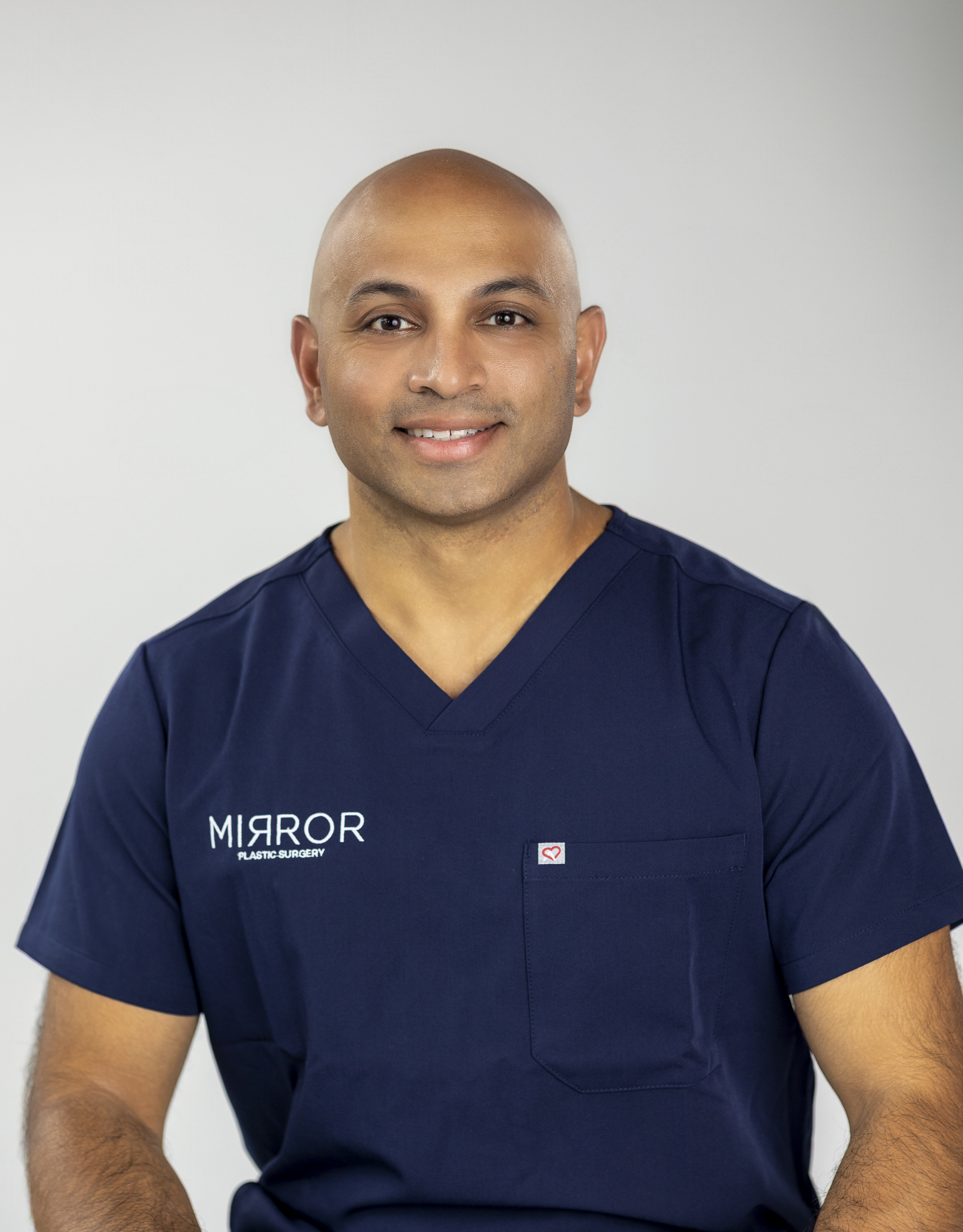
Written by: Dr. Akash Chandawarkar, Board Certified Plastic Surgeon, Mirror Plastic Surgery
Key Takeaways
- Buccal fat removal is a permanent surgery that removes fat pads through incisions inside the mouth to create a more sculpted facial contour. Results become fully visible over three to six months.1
- Candidacy matters. Ideal patients have persistently full lower cheeks despite stable weight, adequate midface volume, and realistic expectations. Those under 25 or over about 40–45 are usually poor candidates.
- Costs in Tampa Bay vary based on facility accreditation, anesthesia type, and whether the procedure is combined with other surgeries. Mirror Plastic Surgery provides personalized quotes during consultations.
- Most patients return to work within one to two weeks. Tampa Bay’s climate can prolong swelling, and final results emerge over three to six months.1
- Selecting an experienced, board-certified surgeon is essential for safety and long-term outcomes. Schedule your consultation at Mirror Plastic Surgery to receive an anatomy-based assessment.
How Buccal Fat Removal Slims the Lower Cheeks
The buccal fat pad is a discrete encapsulated structure in the lower cheek, and its prominence varies significantly by individual anatomy. When the pad is disproportionately large relative to the surrounding facial skeleton, it can create a persistently round or full lower-cheek appearance that does not respond to weight loss or exercise. Surgical removal is performed through an intraoral incision, which avoids external scarring. Surgeons can complete the procedure under local anesthesia when it is done alone or under general anesthesia when combined with complementary facial surgeries.
Tampa and St. Petersburg patients frequently seek buccal fat removal because it addresses a structural anatomical feature rather than generalized facial fat. This makes it a precise, targeted intervention for the right candidate.
Buccal Fat Removal Cost in Tampa Bay
Once you understand how buccal fat removal works, the next step is to consider cost and value. The American Society of Plastic Surgeons reports a national average surgeon fee of approximately $3,142 for buccal fat removal, a figure that excludes anesthesia and facility fees. Total procedure cost in the Tampa Bay area reflects several additional variables, including the accreditation level of the surgical facility, the type of anesthesia used, whether the procedure is combined with other facial surgeries, and the depth of pre- and post-operative care provided.
At Mirror Plastic Surgery, every patient receives a personalized quote during their consultation based on their specific anatomy, goals, and surgical plan. This individualized approach is possible because the practice limits itself to one to two surgeries per day, a deliberate model that keeps the entire clinical team focused on each patient before, during, and after the procedure instead of spreading attention across many cases. That focused care begins with the hour-long initial consultation, where Dr. Akash provides anatomical education and evidence-based planning that determine whether buccal fat removal is appropriate at all and how to structure a safe, effective plan.
Is Buccal Fat Removal Worth It for You?
Candidacy determines whether buccal fat removal is worthwhile. The best candidates have persistently round lower cheeks despite stable healthy weight, adequate upper-cheek and midface volume to balance the change, mature facial structure, and realistic expectations about a permanent result. Patients with naturally thin or narrow faces, those under approximately 25, and those over roughly 40–45 are generally poor candidates because the procedure is irreversible and natural age-related fat loss will compound the surgically removed volume over subsequent decades.
Contemporary technique refinements favor conservative excision of only the fat that protrudes under gentle pressure, typically 3–5 cc per side, rather than maximal removal. This approach preserves long-term facial harmony while still creating meaningful contour improvement.
Dr. Akash brings a training background that is rare in the Tampa Bay region. He completed a seven-year integrated plastic and reconstructive surgery residency at Johns Hopkins University and an aesthetic surgery fellowship at the Manhattan Eye, Ear and Throat Hospital (MEETH), one of the most competitive aesthetic fellowships in the country. He has been named to Newsweek’s America’s Best Plastic Surgeons list for two consecutive years, including 2025. His safety-function-aesthetics hierarchy means that a consultation at Mirror Plastic Surgery may conclude with a recommendation against surgery if your anatomy does not support a conservative, age-appropriate result.
Buccal Fat Removal Recovery Timeline in Tampa Bay
Swelling peaks in the first 7–10 days, most patients return to work or normal activity within one to two weeks, and final contour is typically visible after three to six months.1 Tampa Bay’s subtropical climate introduces a practical consideration. Heat and humidity can prolong swelling and increase discomfort during outdoor activity. Patients should minimize sun exposure, avoid strenuous outdoor exercise, and stay in climate-controlled environments during the first two weeks of recovery.
What to expect during buccal fat removal recovery:
- Days 1–3: Moderate swelling, mild discomfort, soft-food diet, and intraoral wound care1
- Days 4–7: Swelling peaks, and most patients manage with over-the-counter pain relief1
- Days 7–14: Swelling begins to subside, and most patients return to desk work and light activity1
- Weeks 2–6: Gradual resolution of residual swelling, with continued avoidance of contact sports and heavy exertion
- Months 3–6: The final contour described above becomes visible as deeper tissue settles1
Mirror Plastic Surgery’s St. Petersburg location provides convenient follow-up access for Tampa Bay patients throughout recovery. Dr. Akash remains directly involved in post-operative monitoring rather than delegating this care to ancillary staff.
Risks and Long-Term Considerations of Buccal Fat Removal
A 2025 systematic review and meta-analysis published in the Journal of Cranio-Maxillo-Facial Surgery pooled 12 studies covering 308 patients and found an overall postoperative complication prevalence of 25%. The most common complication was edema or prolonged swelling at 38.4% of complications, with others including trismus or jaw restriction, pain beyond normal recovery, and facial asymmetry. Serious complications were rare.
The three anatomic structures that must be protected during removal are the branches of the maxillary artery, the parotid duct, and the buccal branches of the facial nerve. Conservative excision technique, precise anatomical knowledge, and operating in an accredited facility with a board-certified physician anesthesiologist are the primary risk-mitigation factors.
The longer-term risk is premature hollowing. Rohrich, Stuzin, et al. in Plastic and Reconstructive Surgery (2021) specifically flag the risk of premature aging and midface distortion, noting that long-term outcome evidence remains limited. Benjamin and Reish in Plastic and Reconstructive Surgery Global Open (2018) titled their clinical review “Buccal Fat Pad Excision: Proceed with Caution” due to these concerns. Mirror Plastic Surgery’s safety-first philosophy directly addresses this risk. Dr. Akash’s conservative excision approach and rigorous candidacy evaluation are designed to avoid outcomes that trade short-term definition for long-term hollowing.
Buccal Fat Removal vs. Jawtox for Facial Slimming
Buccal fat removal and masseter Botox, sometimes called Jawtox, address different anatomical targets and produce fundamentally different outcomes. Buccal fat removal permanently removes fat pad volume from the mid-cheek, while masseter Botox temporarily reduces the size of the masseter muscles at the jaw angle.
Masseter Botox typically requires 20–50 units per side and produces effects lasting three to six months, which means ongoing maintenance treatments are needed.1 It is best suited for individuals with a broad or square lower face caused by enlarged masseter muscles due to genetics, bruxism, or excessive chewing.
Buccal fat removal is the appropriate choice when facial fullness originates specifically from prominent buccal fat pads rather than jaw-muscle bulk. Masseter Botox is the appropriate choice when lower-face width is driven by masseter hypertrophy or when a patient prefers a reversible, non-surgical option before committing to a permanent structural change. Some Tampa Bay patients benefit from a combination of both to address complementary concerns. Dr. Akash’s hour-long consultation includes the anatomical assessment needed to distinguish between these causes and recommend the correct intervention.
Choosing a Board-Certified Facial Plastic Surgeon in Tampa Bay
Surgeon selection for buccal fat removal carries outsized importance because the procedure is permanent and the margin for error is narrow. Several criteria distinguish elite facial plastic surgeons from general aesthetic providers.
Key qualifications to evaluate when selecting a surgeon:
- Board certification by the American Board of Plastic Surgery, which requires completing an accredited residency and passing comprehensive written and oral examinations
- Fellowship training specifically in aesthetic facial surgery, where face-specific procedural volume and subspecialization are concentrated
- Hospital privileges at accredited facilities, providing a safety net for rare complications that require hospital-level resources
- A practice model that limits daily surgical volume, ensuring focused attention on each patient
- Hour-long consultations that include anatomical education and evidence-based candidacy assessment
- A documented willingness to decline surgery when anatomy does not support a safe, conservative outcome
Dr. Akash meets every criterion above. His training background detailed earlier, combined with his American Board of Plastic Surgery certification and his Newsweek recognition, establishes a credential profile that is uncommon in the Tampa Bay market. Mirror Plastic Surgery operates in an accredited surgical facility with board-certified physician anesthesiologists and maintains the low-volume surgical model described earlier, a structural commitment to patient safety that high-volume practices cannot replicate.
Frequently Asked Questions
Am I a good candidate for buccal fat removal?
Good candidates typically have persistently full lower cheeks despite a stable, healthy weight, adequate midface volume above the cheeks to balance the reduction, good skin elasticity, and realistic expectations about a permanent result. Most experienced surgeons recommend waiting until at least the mid-20s, as cheek fullness that appears excessive in the early 20s often diminishes naturally. Patients with naturally thin or narrow faces, those over approximately 40–45, and those planning significant future weight loss are generally not good candidates. A thorough in-person assessment with Dr. Akash is the only reliable way to determine candidacy for your specific anatomy.
How long is the downtime after buccal fat removal?
Most patients return to desk work and light daily activity within one to two weeks. Swelling peaks in the first seven to ten days and gradually resolves over the following weeks. Full results, with final contour visible, typically emerge over three to six months. Tampa Bay’s heat and humidity can extend outdoor activity restrictions, and patients are advised to remain in climate-controlled environments and avoid strenuous exercise for at least two weeks after the procedure.
Will buccal fat removal make me look older as I age?
This question captures the most important long-term consideration. The buccal fat pad contributes to midface volume that naturally declines with age. Removing it permanently eliminates a structural foundation the face may need later in life. A face that appears elegantly sculpted in the late 20s can look gaunt or prematurely aged by the late 30s or 40s if the procedure was performed on an unsuitable candidate or with excessive excision. Conservative partial removal in a well-selected candidate significantly reduces this risk. At Mirror Plastic Surgery, Dr. Akash’s candidacy evaluation and conservative technique are specifically designed to avoid trading short-term definition for long-term hollowing.
Is buccal fat removal covered by insurance?
Buccal fat removal is an elective cosmetic procedure and is not covered by health insurance. All costs, including surgeon fees, anesthesia, and facility fees, are the patient’s responsibility. Mirror Plastic Surgery provides a personalized, transparent cost estimate during the consultation based on each patient’s specific surgical plan.
What happens if I am unhappy with my results?
The buccal fat pad does not regenerate once removed, so the procedure is essentially irreversible. Fat grafting can partially restore lost volume but cannot recreate the original anatomy. This reality makes conservative excision and rigorous patient selection non-negotiable at Mirror Plastic Surgery. The goal of the consultation process is to ensure that patients who proceed with surgery have anatomy and expectations that support a result they will be satisfied with for decades, not just in the first year after surgery.
Making an Informed Decision About Buccal Fat Removal
Buccal fat removal is a permanent structural procedure with meaningful long-term implications. The evidence base for long-term aging outcomes remains limited, and professional consensus has shifted toward conservative patient selection, partial excision, and careful anatomical evaluation. For Tampa Bay residents, the most consequential variable is not the procedure itself but the surgeon performing it and the rigor of the candidacy assessment that precedes it.
Mirror Plastic Surgery’s safety-function-aesthetics hierarchy, Dr. Akash’s Johns Hopkins and MEETH training, his Newsweek recognition, and the practice’s one-to-two-surgeries-per-day model represent a standard of care that prioritizes long-term outcomes over short-term volume.
1 Results may vary from person to person. Editorial content, before and after images, and patient testimonials do not constitute a guarantee of specific results.