
Written by: Dr. Akash Chandawarkar, Board Certified Plastic Surgeon, Mirror Plastic Surgery
Key Takeaways for Natural-Looking Buccal Fat Removal
- Natural buccal fat removal results create subtle lower-cheek refinement that improves mid-face definition without dramatic change or jawline alteration.1
- Results usually stabilize between three and six months, and conservative removal can create a stable contour that lasts in well-selected patients.1
- Only about 10% of patients seeking the procedure meet strict criteria: ages 25–40, confirmed buccal fat excess, stable weight, strong skeletal support, and good midface volume.
- Aggressive removal or poor patient selection can cause premature hollowing that is difficult to reverse.1 Conservative technique and realistic expectations protect long-term results.
- Schedule your anatomical evaluation with Dr. Akash at Mirror Plastic Surgery to receive a thorough facial assessment and honest guidance on whether buccal fat removal fits your structure and long-term goals.
How Buccal Fat Removal Results Change Over Time
Swelling after buccal fat removal can temporarily hide the true outcome. The table below outlines what patients typically experience at each stage, from the day of surgery through the first decade.
| Phase | What Happens | Visible Change | Notes |
|---|---|---|---|
| Day 0 – Day 7 | Swelling peaks in the first few days, then begins to subside, and the face may appear fuller than before surgery. | No visible contouring yet | Most patients return to desk work within 3–5 days. |
| Week 2 – Week 6 | External swelling reduces over the following days and weeks after peak, and the cheek may feel firm from internal healing. | Early contour begins to emerge by weeks 4–6. | Morning puffiness may persist through week 4. |
| Month 2 – Month 6 | Scar tissue matures, cheek tissue softens, and final results typically become visible after several months. | Subtle sculpted definition becomes apparent. | Results stabilize as the fat pad does not regrow. |
| Year 1 – Year 5 | Natural facial aging continues, and in well-selected patients, lower-face refinement typically persists.1 | Stable contour in appropriate candidates. | Weight fluctuations can affect outcome, so stable weight remains essential. |
| Year 5 – Year 10 | Conservative resection in well-selected patients produces stable results, while aggressive resection in non-ideal candidates can cause visible hollowing over time.1 | Outcome diverges sharply based on technique and patient selection. | Natural midface volume loss accelerates after age 40, and some patients seek corrective volume restoration in the years following surgery. |
Anatomy-First Checklist for Buccal Fat Removal Candidacy
The buccal fat pad, formally the corpus adiposum buccae, is a deep, encapsulated fat structure inside the cheek at the level of the molars that extends into the temporal region and sits beneath the buccinator muscle. Its size varies significantly between individuals. Conservative buccal fat removal and rigorous patient selection most reliably predict natural, lasting outcomes. The criteria below reflect consensus across published clinical literature and experienced surgeons.
Strong candidates for conservative buccal fat removal typically meet all of the following:
- Age 25–40: Facial growth and natural buccal fat reduction continue into the mid-20s, so operating earlier risks removing volume the face would redistribute on its own. Surgeons are increasingly cautious with patients over roughly 40–45 because natural age-related fat loss will compound with surgically removed volume.
- Genuine buccal fat excess confirmed clinically: Prominence must be confirmed through direct clinical palpation and visual examination, not patient self-perception alone. Cheek fullness caused by dental infections, salivary gland disorders, facial muscle enlargement from clenching, or inflammatory conditions must be ruled out first.
- Stable weight for 12 months: Fluctuating body weight makes reliable evaluation of facial fat compartments impossible.
- Strong skeletal support: The ideal candidate has strong malar bones hidden by prominent cheeks, and the procedure is contraindicated in patients with weak cheekbones.
- Adequate upper-cheek and midface volume: Good volume in the upper cheeks, temples, and under-eye area with no early hollowing is required to balance the lower-cheek reduction.
- Good skin quality and elasticity: Non-smokers with good skin quality and adequate elasticity are preferred candidates.
- Family history of volume-stable aging: A family history of preserved facial fullness with aging is one of the strongest predictors of long-term success, while significant age-related volume loss patterns in relatives make buccal fat removal almost never appropriate.
- Realistic expectations for subtle change: Buccal fat removal produces subtle, proportionate cheek definition that is more noticeable in photographs than in person.
Get your candidacy assessment from Dr. Akash to receive a thorough anatomical evaluation and honest guidance on whether buccal fat removal aligns with your facial structure and long-term goals.
How Buccal Fat Removal Relates to Facial Aging
Most patients researching this procedure worry about aging, and the anatomical answer is nuanced. Buccal fat removal does not accelerate the cellular aging process, and skin laxity, collagen loss, and soft tissue descent continue at their normal rate after surgery. The risk is structural, not biological, because the procedure removes volume that would otherwise support the face as it ages.
The face naturally loses volume with aging. The buccal fat pad is one of the more stable deep fat compartments, and it does not fluctuate with body weight or regenerate once removed, so it serves as built-in structural support through midlife. Removing buccal fat in the twenties does not stop future aging but accelerates its visual effect because the face starts from a lower baseline of structural support, which makes a gaunt or prematurely aged appearance more likely by the forties and fifties.1
A peer-reviewed study published in the Aesthetic Surgery Journal raised concerns that buccal fat removal in younger, non-aging patients could lead to long-term facial deformities and warned against aggressive removal in patients who have not yet experienced natural age-related volume loss. In contrast, conservative buccal fat extraction performed by an experienced surgeon does not inherently cause premature aging when individual facial aging patterns are respected.
The distinction lies in patient selection and volume removed, not in the procedure itself.
Regret After Buccal Fat Removal and How to Avoid It
Regret after buccal fat removal is documented and correlates directly with poor patient selection and aggressive technique. Some patients report dissatisfaction years after surgery because surgical reduction combines with natural age-related volume loss to create hollowing. Some patients later seek corrective volume-restoration procedures, primarily through fat grafting or fillers.
Hollow cheek syndrome after buccal fat removal is difficult to reverse because injectable fillers rarely replicate the natural structure of the original fat pad. Regret rates are substantially lower in patients who met rigorous candidacy criteria, underwent conservative partial removal, and had realistic expectations from the outset. The irreversibility discussed earlier makes pre-operative honesty the most important safeguard against long-term dissatisfaction.
Conservative vs Aggressive Technique and Result Longevity
Technique variation in buccal fat removal centers on two decisions: the surgical approach and the volume removed.
The standard approach uses an intraoral incision near the upper gum line or inner cheek, positioned to avoid the parotid duct, with gentle external pressure to deliver the fat pad for clamping and removal without excessive pulling. This approach leaves no external scar and allows direct anatomical visualization. The critical variable is how much fat the surgeon removes.
Conservative resection in well-selected patients produces stable, satisfying long-term results, whereas aggressive resection, especially in non-ideal candidates, can cause visible hollowing over time. Studies measuring buccal fat removal objectively with ultrasound have found surgeons typically remove a conservative volume of fat per cheek, and the large majority of patients rate their facial contour as much improved at six months.
The buccal fat pad has multiple anatomical extensions. An experienced surgeon removes only the appropriate volume while preserving extensions needed to maintain healthy facial support and avoid a cadaveric appearance. Complete excision of all extensions is associated with the highest rates of long-term hollowing. This conservative-versus-aggressive distinction ages differently because the decision points determining outcome are made before surgery, not during healing.
The Mirror Plastic Surgery Care Model for Buccal Fat Removal
Mirror Plastic Surgery operates on a defined hierarchy: safety first, function second, aesthetics third. For buccal fat removal, the team pursues the aesthetic goal of lower-cheek definition only when anatomical and functional prerequisites, such as adequate skeletal support, sufficient midface volume, and stable soft tissue, are confirmed. The practice limits itself to one to two surgeries per day, which creates the capacity for extended patient engagement and focused care.
This scheduling approach enables consultations that typically run up to an hour, which allows time for a thorough top-to-bottom facial assessment rather than an isolated cheek evaluation. This model directly addresses the primary risk factor in buccal fat removal: decisions made too quickly, on the wrong patient, with insufficient anatomical context.
Experience Dr. Akash’s concierge-level evaluation that examines your full facial anatomy, aging trajectory, and long-term goals before any recommendation is made.
Dr. Akash’s Background and Philosophy on Natural Outcomes
Dr. Akash completed his medical degree through the Harvard-MIT Division of Health Sciences and Technology and graduated from Harvard Medical School with Honors. His surgical training included a seven-year integrated plastic and reconstructive surgery residency at Johns Hopkins University, followed by a specialized aesthetic surgery fellowship at the Manhattan Eye, Ear and Throat Hospital (MEETH), one of the most competitive aesthetic training programs in the United States. He has been recognized by Newsweek as one of America’s Best Plastic Surgeons for two consecutive years, including 2025.
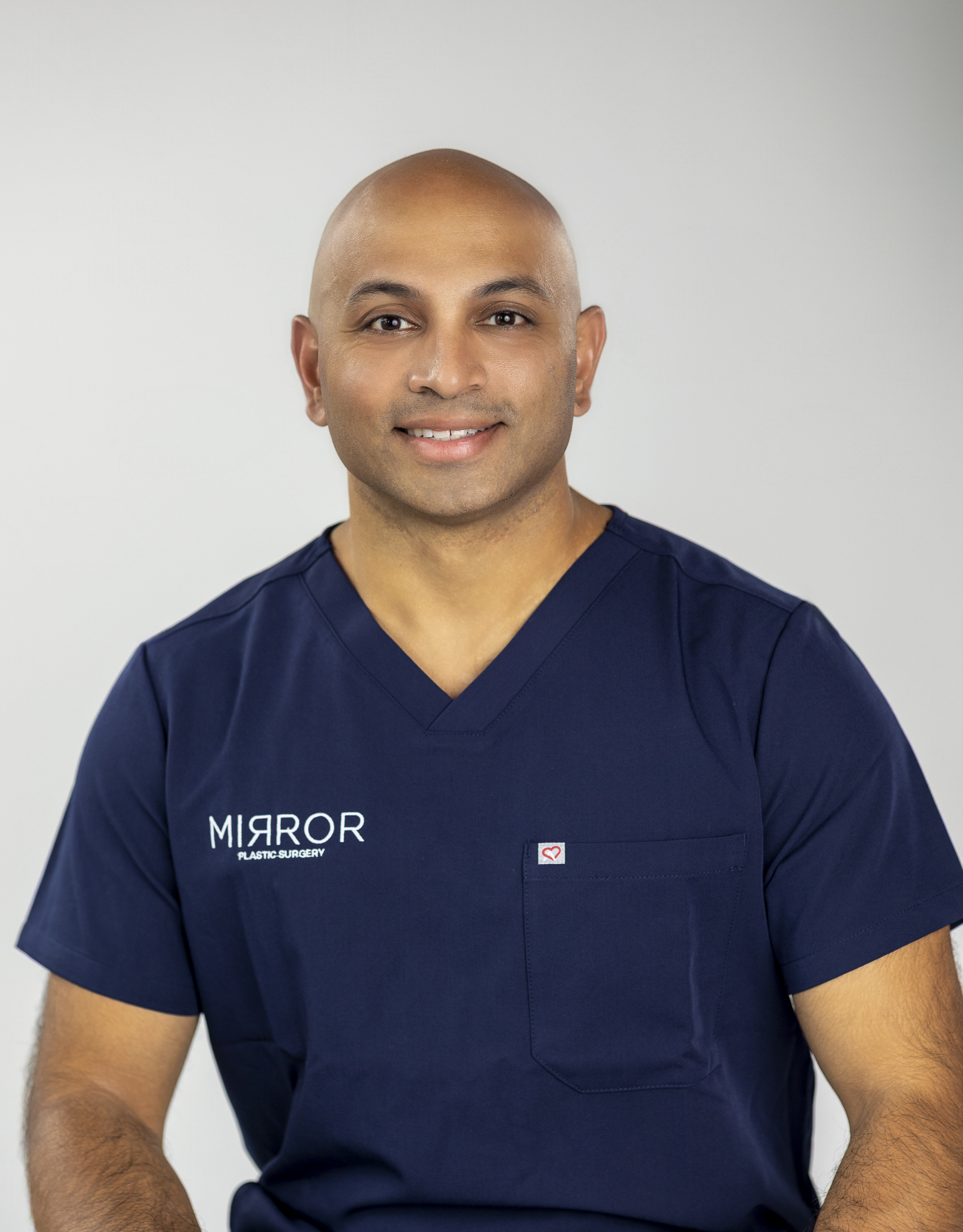
Dr. Akash serves as a Next Generation Editor for the Aesthetic Surgery Journal and has testified before the U.S. Food and Drug Administration on implant safety. His approach to buccal fat removal reflects the same anatomy-first philosophy applied across all procedures at Mirror Plastic Surgery. He evaluates the full face, quantifies the structural support available, assesses the likely aging trajectory, and recommends surgery only when the long-term projection genuinely favors a balanced, natural outcome.
Mirror Plastic Surgery utilizes advanced in-office diagnostic tools, including ultrasound for pre-operative assessment of the buccal fat pad.
Risks and Common Misconceptions About Buccal Fat Removal
A common misconception states that buccal fat removal automatically produces a gaunt or prematurely aged appearance. The evidence does not support this as a universal outcome. In well-selected patients, the lower face generally remains more refined after buccal fat removal, and such patients usually age normally, with the reduction in lower-cheek fullness typically persisting ten years later.
The documented risks of buccal fat removal include:
- Facial nerve involvement that can cause temporary or permanent weakness or numbness
- Salivary duct injury leading to swelling or saliva pooling
- A recent meta-analysis reported an overall complication rate around 25%, with edema as the most common complication.
- Chronic hollowness from over-resection, which is difficult to reverse with fillers or fat grafting.
Systematic reviews have reported varying complication rates. The variation across different study populations underscores how strongly patient selection and surgical technique determine outcomes.
Frequently Asked Questions About Buccal Fat Removal
Am I a good candidate for buccal fat removal?
Good candidates are adults between approximately 25 and 40 years old with genuinely prominent buccal fat pads confirmed through clinical examination, not simply a perception of facial roundness. The fullness should persist despite stable, healthy body weight, which indicates the source is the buccal fat pad rather than generalized adiposity. Strong underlying cheekbones, adequate midface volume, good skin elasticity, and a family history of volume-stable aging are all favorable indicators.
Patients with naturally narrow or thin faces, early midface hollowing, or relatives who experienced significant facial volume loss in their 40s and 50s are generally not suitable candidates. A thorough in-person evaluation is the only reliable way to determine candidacy.
How long does swelling last after buccal fat removal, and when will I see my final result?
Swelling peaks at approximately 48–72 hours after surgery and then begins to subside through the first two weeks. Most patients feel comfortable returning to desk work within three to five days. External swelling is largely resolved by weeks three to six, and the early contour of the result becomes visible.
The final, settled result, with fully matured scar tissue and redistributed soft tissue, is typically visible between three and six months after the procedure. Any changes after that point reflect natural facial aging rather than ongoing healing.
Does buccal fat removal look natural long-term, or will I look gaunt as I age?
Long-term outcome depends almost entirely on two factors: whether the patient was an appropriate candidate and how much fat the surgeon removed. In well-selected patients who underwent conservative partial removal, the lower-face refinement typically persists gracefully as the face ages naturally.1 The risk of a gaunt appearance rises when the procedure is performed on patients with already lean or narrow faces, when aggressive volumes are removed, or when the surgeon does not account for the patient’s likely aging trajectory.
The buccal fat pad naturally decreases in volume with age, so surgical removal compounds that natural loss. Conservative technique and rigorous patient selection therefore serve as the primary safeguards against premature hollowing.
What is the difference between conservative and aggressive buccal fat removal?
Conservative buccal fat removal involves partial excision of the main body lobe of the fat pad, typically one to two grams per side, while preserving the anatomical extensions that provide structural support to the mid and lower cheek. Aggressive removal excises larger volumes, including extensions, and is associated with significantly higher rates of visible hollowing over time. The surgical approach in both cases is typically intraoral, which leaves no external scar.
The distinction lies in how much tissue is removed and whether the surgeon has evaluated the patient’s long-term volume trajectory before making that decision.
How do I evaluate whether a surgeon will give me natural results from buccal fat removal?
Several indicators distinguish anatomy-guided surgeons from trend-driven practices. Look for a board-certified plastic surgeon who performs a comprehensive facial evaluation, not just an assessment of the cheeks in isolation, and who discusses your family’s aging patterns, your skeletal structure, and your midface volume before recommending the procedure. A surgeon who declines to perform the procedure on patients whose anatomy does not support it provides a meaningful signal of appropriate judgment.
Ask specifically about the volume they plan to remove and whether they use preoperative imaging or ultrasound to assess the fat pad. Surgeons who limit their daily case volume and spend extended time in consultation are better positioned to provide the individualized assessment this procedure requires.
Summary: Making an Informed Decision About Buccal Fat Removal
Buccal fat removal can produce subtle, balanced, and lasting cheek definition when surgeons perform it conservatively on patients whose anatomy genuinely supports the outcome. The evidence base for the procedure remains limited in long-term follow-up data, and the gap between natural results and premature hollowing is determined almost entirely before surgery, through patient selection and planned resection volume. Patients who approach this procedure with a clear understanding of its permanence, its aging implications, and the anatomical criteria that predict success are best positioned to make an informed decision.
Start with an anatomy-first evaluation at Mirror Plastic Surgery in St. Petersburg, Florida, to receive honest guidance on candidacy and a personalized plan that prioritizes your long-term facial health alongside your aesthetic goals.
1 Results may vary from person to person. Editorial content, before and after images, and patient testimonials do not constitute a guarantee of specific results.