
Written by: Dr. Akash Chandawarkar, Board Certified Plastic Surgeon, Mirror Plastic Surgery
Key Takeaways
- Combining brachioplasty with a mommy makeover is possible only when total operative time stays within safe limits, so staging is often safer.
- Candidacy depends on stable weight, controlled medical conditions, and realistic expectations about permanent inner-arm scarring.
- Arm mobility restrictions are strict for the first four weeks, which makes tummy tuck recovery more complex and often requires extra home support.
- Scar care with silicone sheets, massage, and sun protection should continue for 12 months to support the best long-term appearance.
- Schedule a personalized consultation at Mirror Plastic Surgery to decide whether a single-session or staged approach fits your health profile and goals.
Brachioplasty Mommy Makeover Candidacy Criteria
Surgeons evaluate several overlapping factors before approving a combined case, and weight stability anchors that assessment. Body weight must be stable before surgery, and patients should be close to their goal weight, because large changes afterward can affect results and complication risk. Elevated BMI compounds this concern, since combining multiple procedures is rarely appropriate when BMI already requires careful evaluation for a single surgery.
Active tobacco or nicotine use increases complication risks for brachioplasty, and preoperative cessation of at least 4 weeks is recommended to reduce those risks. Patients with uncontrolled diabetes, significant anemia, active infection, or untreated nutritional deficiencies need medical treatment first. Post-bariatric patients benefit from targeted nutritional optimization to support wound healing. Candidates also need realistic expectations about permanent inner-arm scarring as a trade-off for improved contour.
Schedule your candidacy evaluation with Dr. Akash to determine whether you qualify for combined or staged surgery based on your anatomy, health history, and goals.
Arm Lift with Tummy Tuck: Why Staging May Be Safer
Even when a patient meets all candidacy criteria, the decision to combine procedures in one session or stage them separately requires additional clinical judgment. A tummy tuck combined with brachioplasty needs careful planning or staging because patients rely on their arms to push themselves out of bed, stand, and walk after abdominoplasty. These movements become significantly harder when arms are sore and tight from an arm lift.
Combining a tummy tuck, thigh lift, arm lift, and breast surgery in one session is considered high risk because total operative time can be substantial, and cumulative blood loss and tissue trauma can exceed safe limits. Staging surgeries protects blood supply, reduces anesthesia time, and simplifies aftercare. When a classic mommy makeover of breast surgery plus abdominoplasty already occupies several hours, adding brachioplasty often increases operative time enough that a staged approach becomes the safer choice.
Arm Mobility Rules for the First 4 Weeks
Arm mobility restrictions after brachioplasty are strict and become more complex when abdominoplasty is performed at the same time. The following rules apply during the first four weeks of recovery:
- Keep arm movements to an absolute minimum during days 1–3, and arrange a trusted adult to assist with eating, dressing, and restroom use.
- Do not raise arms above shoulder level at any point during the first four weeks.
- Do not lift anything heavier than 5 pounds for the full first four weeks.
- Avoid overhead reaching, sudden stretching, heavy pushing, and pulling.
- Do not push up from a bed or chair using the operated arm; use the unaffected arm or request assistance.
- Live a “waist-level life”: place medications, water, and daily essentials at counter height, wear front-opening tops, and prop elbows on pillows.
- Wear compression garments 24 hours per day to support tissue adherence and reduce swelling.
- Parents should arrange home assistance for lifting toddlers and carrying infants for at least three to four weeks.
- Do not drive until the four-week follow-up appointment confirms full range of motion and you are off prescription pain medication.
Week-by-Week Brachioplasty Recovery During a Mommy Makeover
- Days 1–3: Keep arm movements to an absolute minimum, and plan for full-time adult assistance with basic tasks. Sleep slightly elevated with elbows supported on pillows to reduce incision tension and swelling.
- Week 1–2: Keep arms below shoulder height while you resume light tasks such as meal prep or computer work. When brachioplasty is combined with abdominoplasty, greater fatigue and added activity limits usually mean more home support during this period.
- Weeks 3–4: Most patients can return to desk work and may resume driving once full range of motion is confirmed and prescription painkillers are discontinued. Heavy lifting remains strictly prohibited.
- Weeks 4–6: Gradually increase range of motion below shoulder height, while still treating this as a modified-activity period with limited arm use.
- Week 6+: Most patients regain the ability to reach overhead comfortably, which marks the end of the strict four-week arm-elevation restriction described earlier. Full activity is typically cleared at six weeks if healing is on track.1
- Months 3–12: Continue scar management with silicone sheets, daily massage, and SPF 50+ sun protection. Surgeons usually consider revision only after at least 12 months of full scar maturation.
Risks of Combining an Arm Lift with a Mommy Makeover
Seroma is the most frequent complication of the abdominal component of a mommy makeover. Common brachioplasty-specific complications include seroma, wound separation in high-tension areas near the armpit, infection, and rarely venous thromboembolism. Hematoma is another potential complication and may require surgical drainage.
Partial wound dehiscence can occur after a tummy tuck. Minor delayed wound healing and small areas of wound separation can occur after brachioplasty, although significant complications that require intervention are much less common in healthy nonsmoking patients treated by experienced surgeons. Patients who have lost 100 or more pounds experience greater tissue tension and a modestly higher rate of wound separation and seroma. Each additional hour of operative time increases risks of DVT, pulmonary embolism, anesthesia complications, hypothermia, surgical site infection, and surgeon fatigue.
Brachioplasty Scar Placement and 12-Month Maturation
The brachioplasty scar is typically placed along the inner surface of the upper arm and marked before surgery with the arm raised to 90 degrees so the scar stays hidden when the arm rests at the side. Patients who have lost 100 or more pounds may need an extended brachioplasty, where the incision continues from the inner arm through the axilla and onto the lateral chest wall.
Because the arm moves constantly, brachioplasty scars are prone to widening or thickening, so consistent scar care is essential during the first 12 months. Scar maturation occurs over time, with the scar usually red and raised at first, then softening and fading to a pale line.1 A one-year brachioplasty scar is considered mature: pale, flat, narrowly optimally 2–4 mm wide, and much less noticeable than in early healing stages, although it remains permanently visible.1 Advanced layered closure techniques place deep sutures to distribute tension internally rather than on the surface skin, which reduces the risk of scar widening.
Pain Control and Compression After Combined Surgery
Brachioplasty pain is usually moderate and often feels less intense than abdominoplasty recovery, with most patients switching from prescription pain medication to over-the-counter options within five to seven days.1 When both procedures are performed together, pain management must address two regions at once, and fatigue often increases. Compression garments should be worn 24 hours per day for the first several weeks after brachioplasty to support tissue adherence and reduce swelling.
Silicone sheets or gel, started at 6–8 weeks post-brachioplasty and used 12–24 hours daily for at least three months, offer a noninvasive option for scar improvement. Abdominoplasty compression garments and arm compression sleeves must be worn at the same time in combined cases, so preoperative planning should confirm that garments are compatible and easy to put on without overhead arm movement.
Cost Considerations and When to Stage Procedures
Combining brachioplasty with a mommy makeover in one session can reduce costs through shared anesthesia fees, a single recovery period, and one set of preoperative tests. The medical decision, however, must prioritize safety. Combining abdominoplasty, brachioplasty, and breast lift in a single operation can be appropriate for some patients when overall health, total operative length, and safe limits for one session align, while others benefit from staging.
The operative time concern raised earlier becomes a financial factor as well, because a complication that requires a return to the operating room, extended wound care, or a prolonged inability to work or care for children quickly erases any savings from combining procedures. Patients with extended projected operative time, elevated BMI, or post-bariatric nutritional concerns are strong candidates for a staged approach. The consultation visit is the right setting to compare both scenarios against your anatomy and health status.
Map out your staging plan with Dr. Akash or confirm single-session candidacy based on your specific health profile and goals.
How to Assess Surgeon Experience for Combined Cases
Surgeon selection for a combined brachioplasty mommy makeover should match the rigor of the procedure decision itself. Key criteria include board certification by the American Board of Plastic Surgery, fellowship-level training in aesthetic body contouring, experience with post-bariatric and post-pregnancy anatomy, accredited surgical facilities, and board-certified physician anesthesiologists rather than unsupervised CRNAs.
Dr. Akash at Mirror Plastic Surgery in St. Petersburg, Florida, offers a training background that aligns with the complexity of combined cases. His seven-year integrated plastic and reconstructive surgery residency at Johns Hopkins University included rotations at the Johns Hopkins Hospital for complex reconstruction and the R Adams Cowley Shock Trauma Center, which built a strong anatomical foundation for high-stakes combined procedures. His aesthetic surgery fellowship at the Manhattan Eye, Ear and Throat Hospital (MEETH) provided advanced training in breast surgery and body contouring at a highly competitive program.
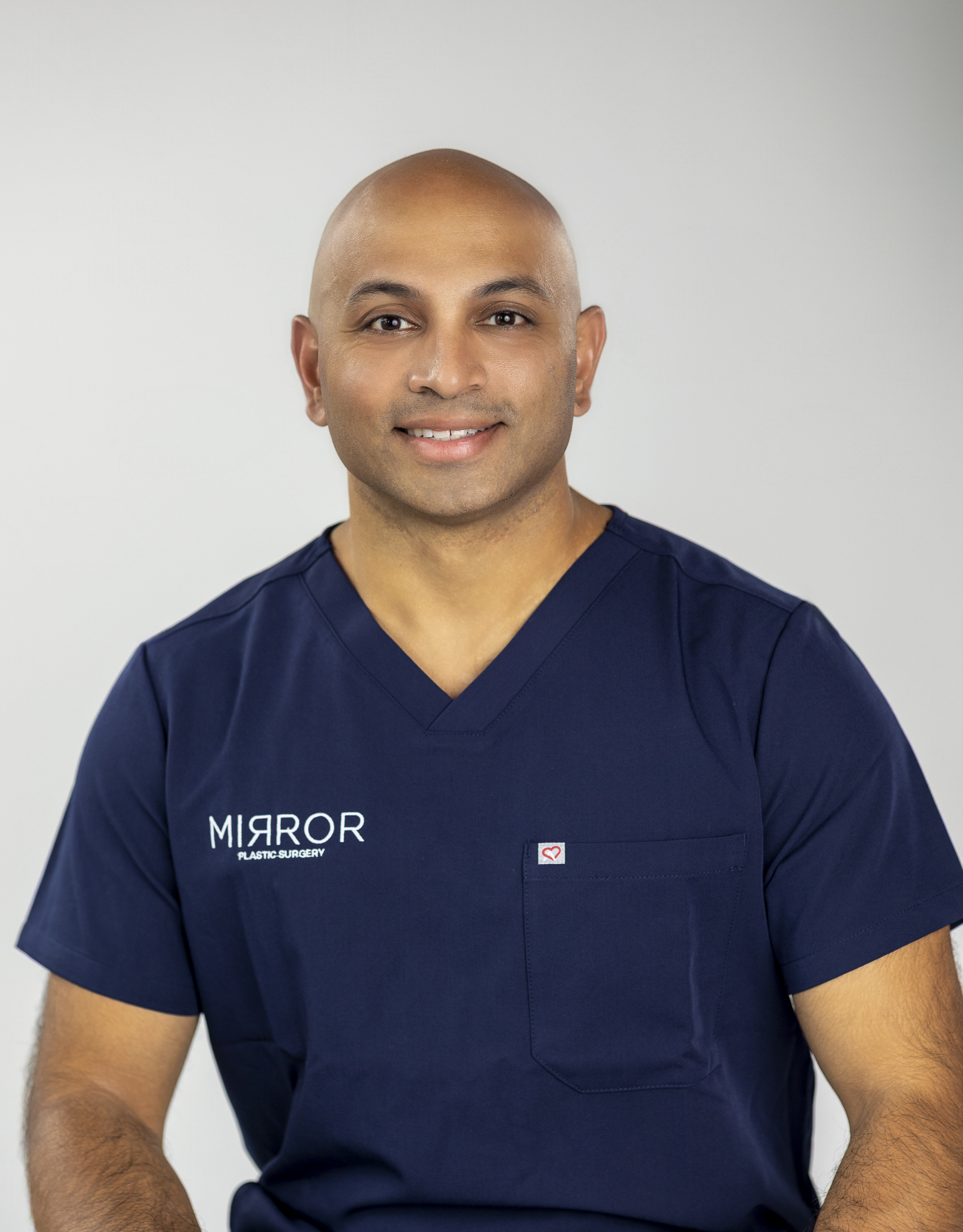
Mirror Plastic Surgery follows a concierge model and limits the practice to one to two surgeries per day, which reduces fatigue and divided attention. Preoperative planning includes ultrasound-assisted assessment for precise anatomical mapping. All procedures take place in accredited surgical facilities with board-certified physician anesthesiologists. This structure reflects Mirror’s guiding priorities: safety first, function second, aesthetics third.
Frequently Asked Questions
Is it safe to combine brachioplasty with a full mommy makeover in one surgery?
Safety depends on the individual patient’s health, BMI, and the projected total operative time. A classic mommy makeover of breast surgery, abdominoplasty, and flank liposuction typically requires several hours, and adding brachioplasty can increase that time enough to raise complication rates. For patients in excellent health with limited skin laxity and a shorter arm-lift procedure, same-session surgery may be reasonable. For patients with extensive skin excess, higher BMI, post-bariatric nutritional concerns, or extended projected operative time, staging is usually the safer choice. A thorough preoperative evaluation is the only way to determine which path fits a specific patient.
Why do arm mobility restrictions matter so much when brachioplasty is added to a tummy tuck?
After abdominoplasty, patients must use their arms to push themselves upright from bed, stand from a chair, and stabilize themselves while walking, which places direct tension on brachioplasty incisions. Tight, sore arms from an arm lift make these transfers harder and increase the risk of wound separation at the inner-arm incision. This functional conflict is one of the main reasons surgeons consider staging carefully. During the first four weeks, patients cannot raise arms above shoulder height, lift more than 5 pounds, push up from surfaces, or reach overhead. When both procedures are performed together, home assistance for childcare, driving, and daily tasks is essential for at least three to four weeks.
What does a brachioplasty scar look like at 12 months, and how is it managed?
At 12 months, a well-healed brachioplasty scar reaches the mature state described earlier in the article and appears far less noticeable than in the first three months.1 Scar management begins once incisions are fully closed, usually at 2–4 weeks, and includes silicone sheets or gel worn 12–24 hours daily for at least three months, gentle daily massage, and SPF 50+ sun protection for the first 12–18 months. Patients with darker skin tones or a history of keloids should discuss tension-free closure techniques with their surgeon before surgery. Scar revision, if needed, should wait until full maturation at 12 months.
How long after major weight loss should I wait before combining brachioplasty with a mommy makeover?
Weight should be stable before brachioplasty or combined procedures. Patients who are still actively losing weight should wait until their weight has plateaued, because continued loss after surgery can create new skin laxity that compromises results. Post-bariatric patients also need nutritional optimization before elective surgery to support wound healing. Losing body weight before surgery can reduce anesthesia risk, improve wound healing, and lower DVT risk. The consultation visit is the right time to set a timeline based on individual weight history and lab values.
What should I ask a surgeon during a consultation for a combined brachioplasty mommy makeover?
Ask whether the surgeon is board certified by the American Board of Plastic Surgery and whether they completed fellowship-level training in aesthetic body contouring. Ask how many combined brachioplasty-abdominoplasty cases they perform each year and what their personal complication rates are for seroma, wound separation, and DVT in combined cases. Confirm that the facility is accredited and that a board-certified physician anesthesiologist, not a CRNA alone, will manage anesthesia.
Ask how many surgeries the practice performs per day, since a concierge model that limits cases to one or two per day offers structural safeguards that high-volume practices cannot match. Request a walkthrough of the projected operative time for your specific combination of procedures and a clear explanation of the clinical reasoning for same-session versus staged surgery in your case.
Book a consultation with Dr. Akash at Mirror Plastic Surgery in St. Petersburg, Florida, to receive an evidence-based, anatomy-first evaluation of your brachioplasty mommy makeover candidacy.
1 Results may vary from person to person. Editorial content, before and after images, and patient testimonials do not constitute a guarantee of specific results.