Written by: Dr. Akash Chandawarkar, Board Certified Plastic Surgeon, Mirror Plastic Surgery
Key Takeaways
- Natural non-surgical results come from conservative dosing, precise anatomical placement, and long-term tissue health, not sheer volume.
- Board-certified plastic surgeon oversight, such as that provided by Dr. Akash at Mirror Plastic Surgery, keeps treatments aligned with facial anatomy and safety.
- Popular non-surgical options in Tampa include biostimulatory fillers, RF microneedling, EMFace, and liquid rhinoplasty, each with a specific role in subtle rejuvenation.
- Key decision factors include candidacy, longevity, maintenance needs, safety, and tailoring each plan to individual anatomy.
- Patients seeking natural, anatomy-based non-surgical results in Tampa can book a consultation at Mirror Plastic Surgery with Dr. Akash for a personalized evaluation.
Taking 10 Years Off Your Face Without Surgery
Modern aesthetic medicine shows that turning back the clock on your face depends more on restoring balance than adding product. Effective plans focus on specific fat compartments, skin quality, and muscle tone instead of blanket volume. This anatomy-led, conservative approach has replaced high-volume injection protocols with individualized plans that respect how each tissue layer ages.
Board-certified plastic surgeon oversight supports this approach because plastic surgeons train deeply in facial anatomy. That training covers the fat compartments, retaining ligaments, and neurovascular structures that control both safety and outcome for injectables and energy-based treatments. The American Board of Plastic Surgery sets the certification standard that separates this training from other aesthetic credentials.
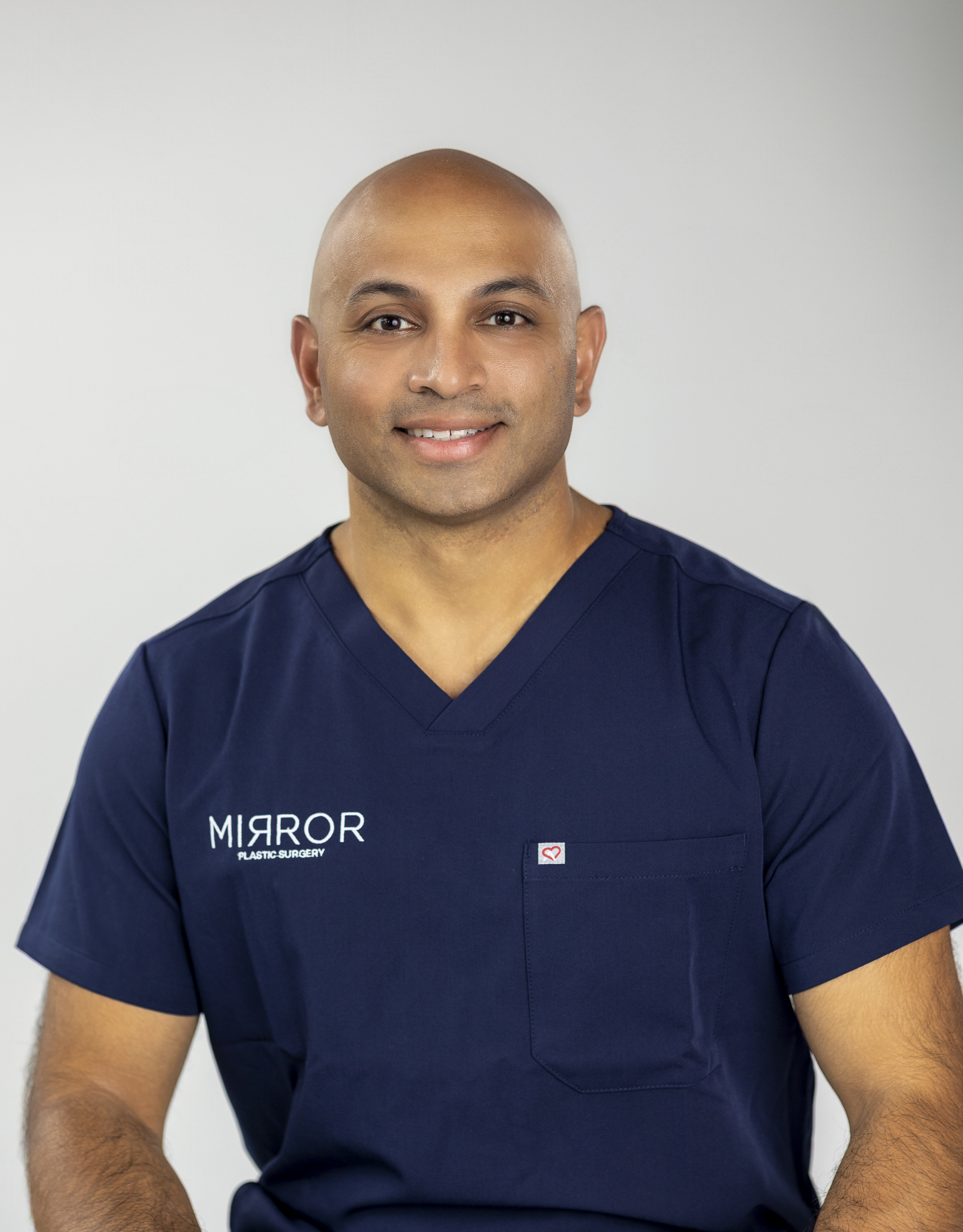
At Mirror Plastic Surgery in St. Petersburg, that oversight comes from Dr. Akash, a Harvard Medical School graduate and Johns Hopkins-trained plastic surgeon. He completed a dedicated aesthetic fellowship at the Manhattan Eye, Ear and Throat Hospital (MEETH), one of the most competitive aesthetic surgery fellowships in the country. He also completed the Stanford University Biodesign Innovation Fellowship and serves on advisory boards for companies developing next-generation aesthetic technologies, including Merz Aesthetics for biostimulatory fillers. He has been named to Newsweek’s America’s Best Plastic Surgeons list for two consecutive years, including 2025. His practice philosophy, summarized as safety first, function second, aesthetics third, guides every non-surgical treatment plan.
Book a consultation with Dr. Akash for a personalized, anatomy-based assessment of which non-surgical pathways fit your facial structure and goals.
Biostimulatory Fillers, RF Microneedling, EMFace, and Liquid Rhinoplasty Explained
Biostimulatory fillers, RF microneedling, EMFace, and liquid rhinoplasty appear frequently in non-surgical consultations and each term has a specific meaning. Biostimulatory fillers are injectable agents such as calcium hydroxylapatite (Radiesse) or poly-L-lactic acid (Sculptra). They work by stimulating your own collagen production rather than simply adding gel volume. Results build gradually and often last longer than traditional hyaluronic acid fillers.1
RF microneedling combines controlled micro-injuries with radiofrequency energy delivered at set depths in the skin. This pairing triggers collagen remodeling and skin tightening with limited surface disruption. EMFace is a device-based treatment that delivers radiofrequency energy to the skin while also providing synchronized electrical stimulation to facial muscles. This dual action addresses both skin laxity and muscle tone without needles.
Liquid rhinoplasty uses injectable filler to camouflage dorsal humps, refine tip projection, or improve nasal symmetry. The nose has complex vascular anatomy, so this technique requires exceptional precision and a clear plan for managing rare complications.
Key Factors That Guide Non-Surgical Treatment Choices
Several core criteria help guide non-surgical treatment selection across all categories. Candidacy depends on skin quality, tissue laxity, volume loss pattern, and any contraindications such as active skin infections, autoimmune conditions, or prior filler complications. Longevity varies by treatment type. Neuromodulators typically last three to four months. Hyaluronic acid fillers last six to eighteen months depending on product and placement. Biostimulatory agents often last one to two years or longer. Energy-based treatments create results that depend on the degree of collagen remodeling.1
Maintenance requirements should fit your lifestyle and long-term goals. Treatments that require frequent repetition at high doses can gradually change tissue architecture if not managed conservatively. Safety rests on the provider’s knowledge of vascular anatomy, access to reversal agents such as hyaluronidase, and a setting prepared to handle rare but serious complications. Personalization remains central. Matching treatment to your specific anatomical changes, rather than following a standard protocol, most reliably produces a natural result.
Most Requested Non-Surgical Pathways in Tampa
With these decision factors in mind, several non-surgical pathways come up most often among Tampa patients seeking natural facial rejuvenation. Subtle injectable volumization uses hyaluronic acid or biostimulatory fillers to restore volume in areas such as the temples, midface, and jawline. Conservative dosing in the correct anatomical plane addresses deflation and descent without creating an overfilled look.
Preventative neuromodulators, most commonly botulinum toxin type A, reduce repetitive muscle contractions that etch dynamic lines into the skin. Early, conservative use slows the formation of static lines rather than just masking existing ones. The goal is natural movement with less creasing, not a frozen expression.
Energy-based skin tightening includes radiofrequency platforms, ultrasound-based systems, and combination devices such as RF microneedling. These treatments stimulate new collagen in the dermis and subdermis. Patients often see improvements in texture, pore appearance, and mild laxity.1 Results tend to be strongest when treatments follow a planned series instead of a single session.1
Muscle-toning devices such as EMFace target the muscular component of facial aging, which injectables and many energy devices do not address directly. Facial muscles thin and weaken with age, which contributes to descent and loss of definition. Non-invasive stimulation can restore some lift and contour without changing tissue volume.
Non-surgical rhinoplasty uses precise filler placement to adjust nasal contour. This procedure carries higher risk because of the nose’s terminal vascular supply. Safe treatment requires detailed knowledge of nasal anatomy and immediate access to reversal protocols.
Common Misconceptions About Non-Surgical Aesthetics
One major misconception in non-surgical aesthetics is that more product creates better results. Repeated volume accumulation without a structural plan can distort facial proportions and compress tissues. This pattern often produces the familiar pillow face or duck lip appearance that many patients later seek to correct. Conservative dosing that respects natural anatomy consistently outperforms high-volume approaches for both aesthetics and safety.
A second misconception is that non-surgical treatments carry minimal risk and therefore require less expertise than surgery. Vascular occlusion from filler injection, while rare, can cause tissue loss or vision changes if not recognized and treated quickly. The American Society of Plastic Surgeons notes that provider training and clinical environment strongly influence complication outcomes.
A third misconception is that all providers using the same product or device achieve similar results. Outcomes depend heavily on the provider’s anatomical knowledge, dosing philosophy, and the depth of the pre-treatment assessment. High-volume settings that schedule multiple patients per hour limit the time available for careful, individualized evaluation.
Book a consultation with Dr. Akash to discuss your specific concerns with a board-certified plastic surgeon who maintains a low-volume, highly individualized practice model.
Frequently Asked Questions
How do I know if I am a candidate for non-surgical facial treatments?
Candidacy depends on the type and degree of changes you want to address, your skin quality, medical history, and anatomy. Mild to moderate volume loss, early skin laxity, and dynamic lines usually respond well to non-surgical options. More advanced laxity or major structural changes often benefit more from surgery. A thorough in-person evaluation by a board-certified plastic surgeon offers the most reliable guidance for your specific anatomy and goals.
How long do non-surgical results typically last?
Result duration varies by treatment. Neuromodulators usually last three to four months. Hyaluronic acid fillers often last six to eighteen months depending on formulation and placement. Biostimulatory agents such as Radiesse or Sculptra can last one to two years or longer because they stimulate your own collagen. Energy-based treatments like RF microneedling create gradual improvements over several months as collagen remodels, with results maintained through periodic sessions.1 Individual metabolism, lifestyle, and treatment volume also affect longevity.
What should I look for when comparing non-surgical providers in Tampa?
Focus on formal anatomical training, board certification, consultation depth, and dosing philosophy. A provider who spends adequate time on assessment, explains the anatomical reasoning behind each recommendation, and favors conservative dosing is more likely to deliver natural results. Physician oversight, especially by a board-certified plastic surgeon, adds a level of anatomical expertise and complication management that many aesthetic settings do not offer.
Are non-surgical treatments safe to combine?
Some combinations work very well together, such as pairing neuromodulators with conservative filler or following RF microneedling with targeted skincare. Other combinations can increase risk or create unpredictable tissue responses. A qualified physician should decide on combinations after reviewing your anatomy, treatment history, and how the modalities interact biologically. Stacking too many treatments in one session can raise complication rates and slow recovery.
What is the difference between a medspa and a physician-led plastic surgery practice for non-surgical treatments?
In a physician-led plastic surgery practice, the treating physician has completed medical school, surgical residency, and often an aesthetic fellowship. This path includes detailed study of facial anatomy, vascular structures, and complication management. In many medspa settings, nurses, physician assistants, or aestheticians perform treatments under varying levels of supervision. The depth of anatomical knowledge, complication management skills, and pre-treatment evaluation can differ significantly. For higher-risk areas such as the nose, eyes, or temples, the provider’s training level becomes a direct safety factor.
Conclusion: Choosing Thoughtful, Physician-Led Non-Surgical Care
Non-surgical facial treatments in Tampa now span a wide range of options and technologies. Biostimulatory fillers, preventative neuromodulators, RF microneedling, and muscle-toning devices all play specific roles. With this variety, the quality of the decision-making process matters as much as the treatments themselves. Patients who invest in a detailed, anatomy-based consultation with a qualified physician are better positioned to achieve subtle, sustainable results that match their natural structure.
Mirror Plastic Surgery’s concierge model centers on this kind of thoughtful care. Dr. Akash, a Newsweek-recognized plastic surgeon, dedicates up to an hour to each initial consultation and maintains the low-volume practice model discussed earlier. This structure supports truly individualized planning. His guiding philosophy ensures that every non-surgical recommendation prioritizes anatomical evidence and long-term tissue health over product volume or device trends.
Book a consultation with Dr. Akash at Mirror Plastic Surgery in St. Petersburg to begin a personalized, physician-led evaluation of the non-surgical options best suited to your anatomy and goals.
1 Results may vary from person to person. Editorial content, before and after images, and patient testimonials do not constitute a guarantee of specific results.