
Written by: Dr. Akash Chandawarkar, Board Certified Plastic Surgeon, Mirror Plastic Surgery
Key Takeaways
- Concierge plastic surgery is an operating model defined by low daily surgical volume, extended consultations, and direct after-hours access rather than a regulated credential.
- Patients can verify a true concierge practice by asking seven specific questions covering surgical volume, who performs the procedure, consultation length, facility accreditation, anesthesia credentials, after-hours access, and recovery support.
- Peer-reviewed research links longer operative times and higher daily case volumes to increased complication risks, so limited surgical volume functions as a measurable safety factor.1
- Board certification by the American Board of Plastic Surgery, hospital privileges, and accredited facilities provide independent verification layers that patients should confirm directly rather than accepting marketing claims.
- Mirror Plastic Surgery follows this concierge model with one to two surgeries per day, up to sixty-minute consultations conducted by Dr. Akash, and coordinated recovery support in St. Petersburg.
Plan Your Concierge Consultation At Mirror Plastic Surgery
What Concierge Plastic Surgery Actually Means
The word “concierge” migrated into aesthetic medicine from primary care. There, it describes a retainer-based model in which physicians deliberately limit their patient panels to 300–600 patients, compared with the roughly 1,800 to 3,500 patients typical of conventional primary care. The smaller panel allows longer appointments, same-day access, and direct physician contact.
The structural logic is similar in plastic surgery. A surgeon who performs one to two operations per day has very different capacity for pre-operative planning, intraoperative focus, and post-operative availability than one who performs five to ten.
Concierge plastic surgery in St. Petersburg functions as an operating model with measurable markers. Those markers include surgical volume per day, consultation length, who performs the surgery, facility accreditation status, anesthesia provider credentials, after-hours access structure, and recovery support. Because each marker is verifiable, patients can confirm them independently, yet they rarely appear on a practice homepage unless the practice chooses to disclose them. Patients therefore need to ask directly.
The contrast with high-volume practice affects safety as well as comfort. In a multivariable analysis of 15,289 plastic surgery procedures, every additional 30 minutes of operative time was associated with a 13% increase in the risk for overall complications. A surgeon performing five to ten cases per day is structurally incentivized to compress each case. A surgeon performing one to two has more room to protect operative time and attention.
Ask Dr. Akash Your Seven Questions In Person
How To Tell If A Plastic Surgeon Truly Practices Concierge Care
The seven questions below apply to any practice in the St. Petersburg and Tampa area. Clear, specific answers separate a genuine concierge operating model from a marketing label.
- How many surgeries does the surgeon perform per day? A genuine concierge practice limits itself to one to two surgeries per day. High-volume practices may perform five to ten. Ask the practice directly and expect a specific number rather than a vague range or a change of subject.
- Who performs my surgery, the surgeon or a delegate? In a concierge model, the surgeon who conducted your consultation performs your operation. Doctor swapping, where the consent form lists a different surgeon than the one consulted, is a documented practice at some high-volume clinics. Confirm the operating surgeon’s name on the consent form before signing.
- How long is the initial consultation? A concierge consultation runs up to sixty minutes and covers anatomy, goals, risks, and realistic outcomes in depth. Most conventional practices leave an average of 15 minutes per visit including charting, history review, and referrals. Ask at booking how long the appointment is scheduled for.
- Is the surgical facility accredited, and who administers anesthesia? A safe surgical facility is accredited by the American Association for Accreditation of Ambulatory Surgery Facilities (AAAASF), the Accreditation Association for Ambulatory Health Care (AAAHC), or is a licensed ambulatory surgical center or hospital. Anesthesia should be administered by a board-certified physician anesthesiologist or a certified registered nurse anesthetist, never by the operating surgeon simultaneously.
- Who answers the phone after hours? A genuine concierge practice provides direct access to the practice after hours. An answering service that routes calls to an on-call stranger reflects a different model. Call the practice after hours before booking to verify.
- What does post-operative recovery support include? Concierge recovery includes private-duty registered nurse care and coordinated follow-up. Ask specifically what is included and what is excluded, and request the details in writing.
- Is the surgeon board-certified by the American Board of Plastic Surgery, and does the surgeon hold hospital privileges? The American Board of Plastic Surgery maintains a public Verify Certification tool patients can use directly to confirm a surgeon’s active certification status. Hospital privileges serve as an independent verification layer because the hospital completes its own credentialing review of a surgeon’s qualifications and professional standing before granting them.
How Many Surgeries Per Day Fit A Concierge Plastic Surgery Model?
A genuinely concierge plastic surgery practice limits itself to one to two surgeries per day. High-volume practices may perform five to ten surgeries daily. That difference in volume shapes how much pre-operative planning time each patient receives, how rested and focused the surgical team is during the procedure, and how available the surgeon remains for post-operative questions the same evening.
The clinical rationale for limiting volume appears clearly in the peer-reviewed literature. A 2018 meta-analysis of 66 observational studies found that the risk for surgical complications approximately doubled when operative time exceeded two hours. When a surgeon stacks multiple cases in a single day, later cases are performed by a team that has already been operating for hours, a variable that volume-driven scheduling does not address.
Mirror Plastic Surgery’s documented policy is to perform only one to two surgeries per day so that the entire team’s focus remains on one patient before, during, and after the procedure. The policy functions as a structural safety decision with a measurable basis in the surgical outcomes literature.
Discuss Surgical Volume And Safety With Dr. Akash
How To Verify Board Certification And Read A Plastic Surgeon’s Credentials
The American Board of Plastic Surgery (ABPS) is one of 24 medical specialty boards recognized by the American Board of Medical Specialties (ABMS) and is the only ABMS-recognized board that certifies physicians across the full spectrum of plastic surgery, including cosmetic procedures. The title “cosmetic surgeon” is not a protected designation and may reflect a self-designated board rather than comprehensive surgical training. Patients should verify ABPS certification directly through the ABPS Verify Certification tool rather than relying on a practice’s marketing materials.
ABPS certification is not a one-time event: the board operates a Continuous Certification program requiring diplomates to complete ongoing self-assessment activities and continuing medical education to maintain their certification. Certification status should be checked at the time of evaluation because a credential listed on a website years ago may no longer be current.
Fellowship training is advanced, focused training layered on top of a completed plastic surgery residency. An aesthetic surgery fellowship at a program such as the Manhattan Eye, Ear and Throat Hospital (MEETH), for example, adds focused training in facial rejuvenation, breast surgery, and body contouring. Double- or triple-board status means a surgeon has met the certification requirements of more than one recognized specialty board, each with its own examination and training standards. When reading any surgeon’s biography, patients should distinguish between ABMS-recognized boards and self-designated certifying bodies, which have no standardized training or examination requirements.
Professional societies including The Aesthetic Society, the American Society of Plastic Surgeons, and the Florida Society of Plastic Surgeons each maintain surgeon directories that can serve as a starting point for credential verification alongside the ABPS tool. Credentials establish who is qualified to operate. The next question is what happens after the operation.
Dr. Akash’s Credentials At A Glance
- Board Certification
- American Board of Plastic Surgery (ABPS)
- Medical Degree
- Harvard Medical School, M.D., graduated cum laude with honors
- Residency
- Johns Hopkins University / University of Maryland Integrated Residency Program, integrated plastic and reconstructive surgery, seven-year program
- Aesthetic Surgery Fellowship
- Manhattan Eye, Ear and Throat Hospital (MEETH), advanced training in facial rejuvenation, breast surgery, and body contouring
- Innovation Fellowship
- Stanford University Biodesign Innovation Fellowship
- Regulatory Testimony
- Selected to testify before the U.S. Food and Drug Administration on breast implant safety
- Editorial Board
- Next Generation Editor, Aesthetic Surgery Journal
- National Recognition
- Named in America’s Best Plastic Surgeons 2025 by Newsweek for two consecutive years
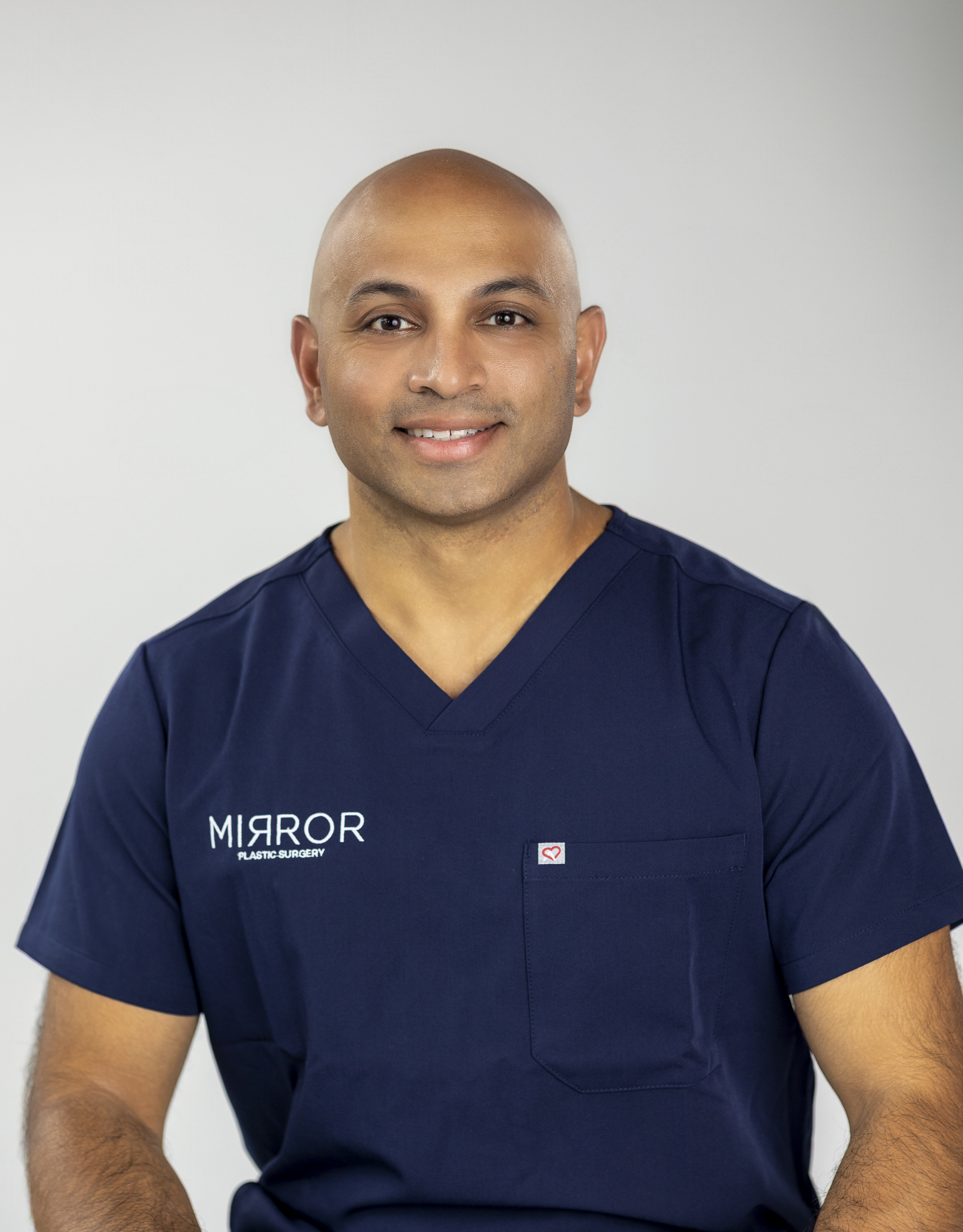
Dr. Akash is a board-certified plastic surgeon in St. Petersburg whose training spans Harvard, Johns Hopkins, MEETH, and Stanford, a combination that places him among a small number of surgeons in the country with credentials verifiable at every level described above.
What Concierge Recovery After Plastic Surgery Actually Includes
Recovery logistics in a genuine concierge practice differ from those in a high-volume setting in three concrete ways. Patients receive private-duty registered nurse care, direct after-hours access to the practice, and coordinated follow-up that does not route them through a general answering service. This infrastructure supports early identification of complications before they escalate.
Accredited surgical facilities must maintain emergency equipment and medications on-site, a defined emergency response plan, and clear protocols for transferring a patient to a hospital if a higher level of care becomes necessary. Hospital privileges extend that safety net. A surgeon with privileges at an accredited hospital can manage a post-operative complication at the appropriate level of care rather than directing a patient to an emergency department with no surgical context.
ABPS certification requires at least six years of surgical training after medical school, including a minimum of three years of plastic surgery training, plus board examinations and ongoing continuing medical education. That training depth matters most in recovery, when a surgeon’s ability to distinguish a normal post-operative finding from an early complication strongly influences outcomes.
Recovery difficulty varies by procedure. Facelift and complex body contouring procedures typically involve longer recovery windows than breast surgery or minimally invasive facial procedures. Patients who are not good candidates for a facelift, including those with uncontrolled medical conditions, active nicotine use, or unrealistic expectations about recovery timelines, are identified during the pre-operative evaluation in a concierge model. What patients should realistically expect is an individualized recovery plan, because anatomy, procedure complexity, and health status all affect the timeline.
Concierge Plastic Surgery Vs. High-Volume Med Spa: Operational Differences
A boutique plastic surgeon in Tampa Bay and a high-volume med spa or aesthetic mill occupy different positions on nearly every operational dimension that affects patient safety and outcomes. The differences are structural and extend far beyond décor.
In a concierge surgical practice, the initial consultation runs up to sixty minutes and is conducted by the operating surgeon. In a high-volume setting, consultations are typically fifteen to twenty minutes and may be conducted by a patient coordinator or nurse practitioner rather than the surgeon. The procedure itself is performed by the board-certified surgeon in a concierge model. In high-volume settings, delegation to less credentialed providers is possible and, in some cases, standard.
Facility accreditation is verifiable in a concierge surgical practice through AAAASF, AAAHC, or state licensure. Unaccredited office-based surgical suites have no external quality verification. Med spas performing injectable treatments are not surgical facilities and are not subject to the same accreditation standards, regardless of how they market their services.
Anesthesia in a concierge surgical practice is administered by a board-certified physician anesthesiologist or a certified registered nurse anesthetist. In a med spa context, the question of who monitors the patient during a procedure, and what emergency protocols exist, often remains unanswered before treatment begins. Complication protocols and long-term follow-up in a concierge practice are structured and documented. In a high-volume med spa, they are frequently absent or undefined.
The table below summarizes how the two models compare across the six operational criteria patients can verify directly.
| Operational Criterion | Concierge Model | High-Volume Model | How to Verify |
|---|---|---|---|
| Surgeries per day | 1–2 | 5–10 | Ask the practice directly |
| Initial consultation length | Up to 60 minutes | Typically 15–20 minutes | Ask at booking |
| Who performs the surgery | The surgeon | May be delegated | Confirm on the consent form |
| Facility accreditation | Accredited facility | Varies | Verify with AAAASF, AAAHC, or state licensure |
| After-hours access | Direct access to the practice | Answering service or none | Call after hours before booking |
| Recovery support | Private-duty registered nurse and coordinated care | Limited or self-directed | Ask what is included |
Matching The Concierge Model To Specific Procedures
The concierge model applies differently depending on procedure category. For facial surgery, including facelift, rhinoplasty, blepharoplasty, brow lift, and neck lift, the model’s emphasis on extended consultation time is particularly consequential because facial anatomy is highly individual and the margin for error in aesthetic outcome is narrow. Dr. Akash holds specialized fellowship training in facial surgery from MEETH and performs the full range of face and neck procedures at Mirror Plastic Surgery.
For breast surgery, including augmentation, lift, reduction, and revision, the concierge model’s supplier-neutral, evidence-based approach matters most. A practice with quota-driven relationships with implant manufacturers has a structural incentive to recommend a specific product regardless of whether it fits a patient’s anatomy. Mirror Plastic Surgery’s breast surgery practice is built on unbiased product selection and evidence-based technique.
For body contouring, including abdominoplasty, liposuction, body lift, and mommy makeover, the concierge model’s limit on combined procedures directly relates to safety. A 2014 case-control study identified surgery lasting longer than four hours and combined procedures as the main risk factors for postoperative complications. Mirror Plastic Surgery’s body contouring planning treats operative duration as a safety variable rather than a scheduling convenience.
Dr. Akash performs everything from injectables and lasers to complex breast and body surgery, as well as hair restoration. The practice’s guiding principle, safety first, function second, aesthetics third, applies uniformly across all procedures and all patient profiles.
Why Mirror Plastic Surgery Sets The Concierge Standard In St. Petersburg And Tampa
Mirror Plastic Surgery satisfies every criterion in the vetting framework above with verifiable facts. Dr. Akash is certified by the American Board of Plastic Surgery, trained at Harvard Medical School and Johns Hopkins University, completed an aesthetic surgery fellowship at MEETH, and holds a Stanford Biodesign Innovation Fellowship. He has been named in America’s Best Plastic Surgeons 2025 by Newsweek for two years in a row.
The practice performs one to two surgeries per day so that the entire team’s focus is on one patient before, during, and after the procedure. Initial consultations run up to sixty minutes and are conducted by Dr. Akash personally, rather than by a coordinator or mid-level provider. All surgical procedures take place in accredited facilities with board-certified physician anesthesiologists. Dr. Akash holds hospital privileges, providing an independent credentialing verification and a defined pathway for complication management if one is ever needed.
Mirror Plastic Surgery is a supplier-neutral practice, which means product and technique recommendations follow evidence and patient anatomy rather than vendor relationships or sales quotas. That same principle drives the treatment plan: each one is developed during consultation around the individual patient, so no procedure category follows a one-size-fits-all protocol.
Explore Concierge Care With Mirror Plastic Surgery
Risks, Limitations, And Misconceptions About Concierge Plastic Surgery
A common misconception about concierge plastic surgery is that it describes luxury amenities, such as a private waiting room, complimentary refreshments, or premium branding, rather than a surgical operating model. Amenities are not auditable. The seven criteria above are. Patients evaluating any practice should focus on the structural markers and treat the aesthetic presentation of the office as secondary.
A higher price does not guarantee a concierge operating model. Practices can charge premium fees while still performing high surgical volumes, delegating procedures, or operating in unaccredited facilities. Price does not substitute for any of the verifiable criteria described in this guide.
As noted earlier, “cosmetic surgeon” is not a protected designation. Some self-designated boards do not reflect comprehensive surgical training. Patients should verify ABPS certification directly through the board’s public tool rather than accepting a practice’s stated credentials at face value.
Concierge care does not fit every patient or every procedure. Low surgical volume means limited scheduling availability. Patients who need surgery quickly, or whose procedures are better suited to a high-volume specialist center, may not match well with a concierge model. A practice that operates with genuine integrity will explain this during the consultation rather than accepting every patient regardless of fit.
The anxiety revealed by common patient questions, including concerns about being upsold, fears of unnatural results, and uncertainty about who will answer the phone if something goes wrong, is addressed structurally in a genuine concierge model. A supplier-neutral practice has no financial incentive to recommend more product than a patient needs. A surgeon who performs one to two cases per day has the time to plan for natural, anatomically appropriate results. A practice with direct after-hours access has a defined answer to the question of who picks up the phone.
Frequently Asked Questions
What Does Concierge Plastic Surgery Mean?
Concierge plastic surgery is an operating model in which a board-certified plastic surgeon limits daily surgical volume to one to two cases, conducts consultations of up to sixty minutes, performs every procedure personally, operates in an accredited facility with a board-certified physician anesthesiologist, and provides patients with direct after-hours access and coordinated recovery support. The term has no regulatory definition, so patients need to verify each marker independently.
How Do I Verify A Plastic Surgeon’s Board Certification?
The American Board of Plastic Surgery maintains a public Verify Certification tool at abplasticsurgery.org that allows patients to confirm a surgeon’s active certification status directly with the board. Certification should be checked at the time of evaluation because ABPS operates a Continuous Certification program requiring ongoing education and self-assessment, so a surgeon’s status can change. The Federation of State Medical Boards can also be used to check licensure and disciplinary history.
What Does Concierge Recovery Include?
Concierge recovery typically includes private-duty registered nurse care, direct after-hours access to the practice rather than a general answering service, and coordinated follow-up appointments. It also means the operating surgeon holds hospital privileges, providing a defined pathway for complication management at the appropriate level of care if needed. Patients should ask specifically what recovery support is included and confirm it in writing before surgery.
Is Concierge Plastic Surgery Worth It Compared To A High-Volume Practice?
The value of a concierge model comes from structure rather than promotion. A surgeon performing one to two cases per day has more time for pre-operative planning, more focus during the procedure, and more availability for post-operative questions than one performing five to ten. For patients undergoing elective surgery, those structural differences affect both safety and outcome quality.1 Whether the model is the right fit depends on the patient’s procedure, timeline, and priorities, a question best answered during a consultation.
Who Is A Good Candidate For A Facelift?
Good candidates for facelift surgery are generally adults with visible facial laxity, such as loose skin along the jawline, jowling, or neck banding, who are in good general health, do not use nicotine, and have realistic expectations about recovery and outcomes. Patients with uncontrolled medical conditions, active smoking or vaping, or expectations of a dramatic transformation rather than a natural restoration are typically not good candidates. Candidacy is determined during a comprehensive pre-operative evaluation.
What Is The Difference Between A Boutique Plastic Surgeon And A Med Spa?
A boutique plastic surgeon is a board-certified physician who performs surgical procedures in an accredited facility with qualified anesthesia support, holds hospital privileges, and operates under the oversight of state medical boards and national certifying bodies. A med spa typically offers non-surgical injectable and energy-based treatments, is not a surgical facility, and may be operated by providers with varying levels of medical training. The two settings serve different purposes, so patients should not evaluate them using the same criteria.
Conclusion: Verify The Concierge Claim Before You Commit
Any practice in the St. Petersburg and Tampa area can place the word “concierge” on its website. Few define it clearly. The seven-question framework in this guide gives patients a repeatable method for identifying a genuine low-volume, high-access operating model rather than a marketing label, regardless of which practice they are evaluating.
The markers that matter are measurable: surgeries per day, consultation length, who performs the operation, facility accreditation, anesthesia provider credentials, after-hours access structure, and recovery support. Each can be verified before a patient commits to a consultation, let alone a procedure. Informed evaluation based on these markers offers the most reliable path to a safe surgical outcome and a result that holds up over time.1
Contact
Mirror Plastic Surgery is located in St. Petersburg, Florida, serving patients throughout the St. Petersburg and Tampa Bay area. Patients can text or call to secure an appointment.
Schedule Your Visit To Mirror Plastic Surgery
1 Results may vary from person to person. Editorial content, before and after images, and patient testimonials do not constitute a guarantee of specific results.