
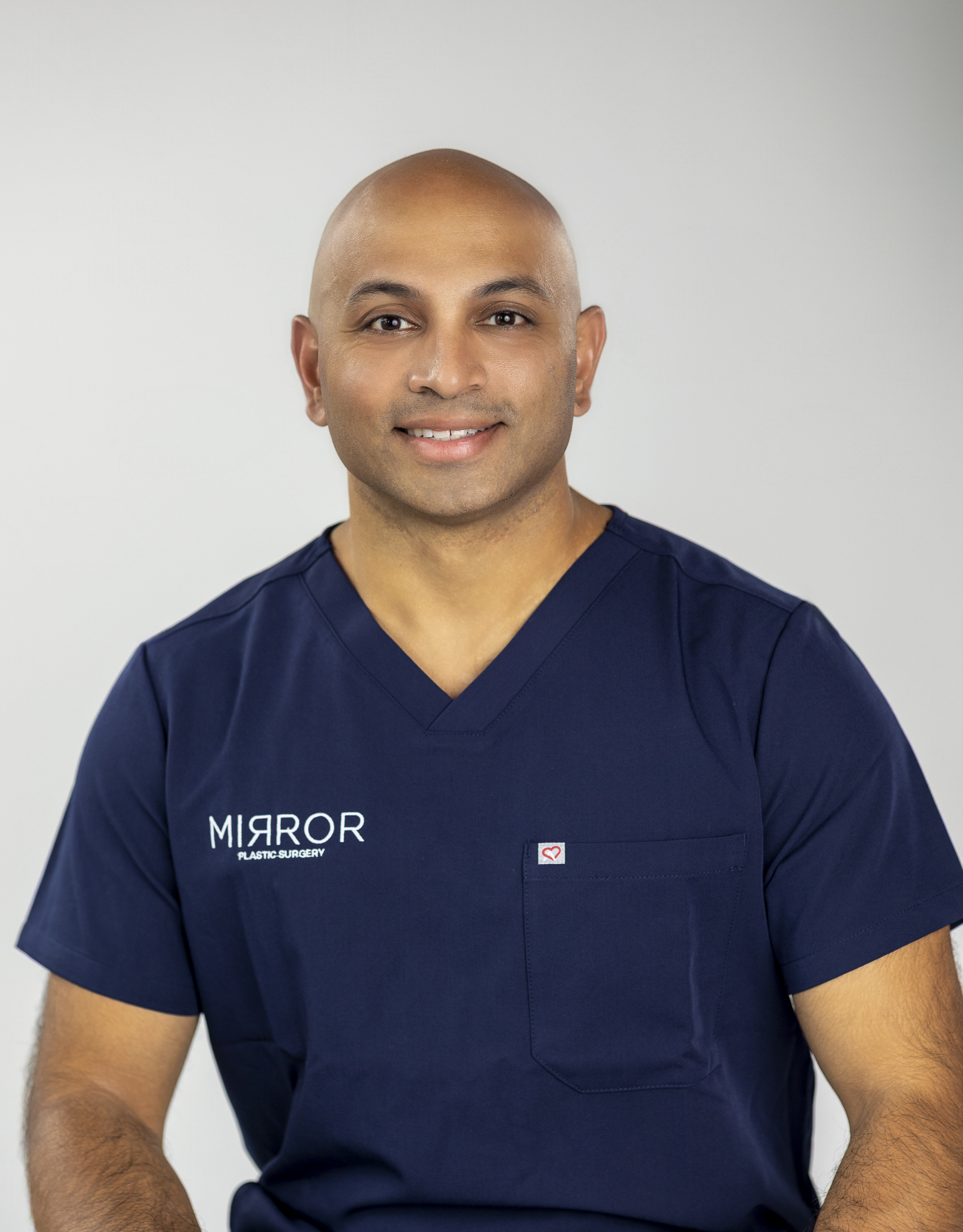
Written by: Dr. Akash Chandawarkar, Board Certified Plastic Surgeon, Mirror Plastic Surgery
Key BBL Safety Facts for 2026
- BBL mortality rates have declined when surgeons use real-time ultrasound guidance, subcutaneous-only fat placement, and accredited facilities.1
- Real-time ultrasound visualization during every fat injection pass is the single most critical safety protocol to confirm.
- Board certification by the American Board of Plastic Surgery and active hospital privileges remain core safeguards against BBL complications.
- High daily surgical volume increases risk. Practices that limit cases to one or two per day show better safety outcomes.
- Schedule your personalized consultation at Mirror Plastic Surgery to review whether BBL fits your anatomy, health history, and safety priorities.
Current BBL Safety Standards in 2026
BBL safety has improved substantially since the ASPS Task Force on BBL Safety issued guidelines that require ultrasound visualization and subcutaneous-only injection. The Aesthetic Surgery Journal has documented the decline in fatalities that followed broad adoption of these protocols.1 These benchmarks represent a major advance, yet they apply only to practices that follow every published safety criterion consistently.
The key step patients can take is simple. Ask whether the surgeon uses real-time ultrasound visualization for every cannula pass during fat injection. This protocol turns subcutaneous-only placement from a goal into a verified result that the surgeon can see on screen. Practices that cannot confirm continuous ultrasound use are not operating at the current safety standard.
At Mirror Plastic Surgery in St. Petersburg, Florida, Dr. Akash, named to Newsweek‘s America’s Best Plastic Surgeons list for two consecutive years, uses advanced ultrasound technology during every BBL. His Johns Hopkins residency and aesthetic surgery fellowship at the Manhattan Eye, Ear and Throat Hospital (MEETH) provide the anatomical training that makes ultrasound-guided technique precise and repeatable.
Fat Embolism Risk and How Ultrasound Reduces It
These ultrasound protocols exist specifically to prevent the most serious BBL complication: pulmonary fat embolism, the primary mechanism behind BBL-related mortality. Pulmonary fat embolism occurs when fat enters or approaches the gluteal blood vessels, travels through the venous system, and reaches the lungs, where it can cause fatal obstruction. The previously reported mortality risk from fat embolism in BBL was approximately 1 in 2500 procedures. That rate drops significantly when surgeons confirm subcutaneous-only injection with real-time imaging.1
The gluteal vasculature is dense and varies from patient to patient. No two anatomies match exactly, so static pre-operative planning cannot fully protect against vessel injury. Real-time ultrasound allows the surgeon to see the cannula tip at all times and confirm that it stays above the muscle fascia during every pass. Without this live confirmation, subcutaneous-only placement remains an intention instead of a documented outcome.
The patient action here is clear. Confirm that the surgeon injects fat only in the subcutaneous plane and uses live ultrasound imaging, not just pre-operative mapping, to verify placement during the procedure.
BBL vs. Butt Implants: Comparing Safety Profiles
Gluteal implant surgery and BBL carry different patterns of risk. Comparative analyses in the Aesthetic Surgery Journal show that gluteal implants have higher rates of implant displacement, infection, seroma, and revision surgery.1 BBL carries a more acute risk of fat embolism when surgeons use outdated or unsafe technique. Neither procedure is automatically safer for every patient. Surgeon technique, case volume, and facility standards determine the real-world risk for each option.
For BBL, the ASPS links lower complication rates to board certification by the American Board of Plastic Surgery and active hospital privileges.1 Hospital privileges indicate that the surgeon has passed independent credentialing review and can manage complications in a hospital setting when necessary.
Patients should confirm that the surgeon is board-certified by the American Board of Plastic Surgery and holds current hospital privileges. Dr. Akash meets both requirements and has testified before the U.S. Food and Drug Administration on implant safety, which reflects his role in evidence-based surgical practice.
Book a consultation with Dr. Akash to compare BBL and implant options based on your specific anatomy and goals at Mirror Plastic Surgery.
Safety-Focused Questions to Ask Your BBL Surgeon
A structured credential checklist gives you a practical way to vet a BBL surgeon. Each question below ties directly to safety mandates in current research and professional guidelines.
1. Are you board-certified by the American Board of Plastic Surgery? Board certification requires written and oral examinations and a verified surgical case log. Certification by other boards does not follow the same plastic surgery standards.
2. Do you hold active hospital privileges? Hospital privileges require independent credentialing and confirm that the surgeon can transfer and manage a patient in a hospital environment if a complication occurs.
3. How many BBL procedures do you perform per day? Evidence links five to ten daily cases with higher complication risk. A limit of one to two cases per day supports full team focus and reduces fatigue-related errors.
4. Is the facility accredited? Accredited surgical facilities meet external safety standards for equipment, staffing, and emergency protocols.
5. Will a board-certified anesthesiologist manage my anesthesia? A physician anesthesiologist, not a nurse anesthetist alone, offers the highest level of intraoperative monitoring and emergency response capability.
Mirror Plastic Surgery follows a safety-first, function-second, aesthetics-third philosophy as an operating rule, not as a slogan. The earlier volume limit of one to two surgeries per day supports this approach by preserving focus and reducing fatigue. Dr. Akash conducts consultations of up to one hour and operates only in accredited facilities with board-certified physician anesthesiologists. Every item on the checklist above is built into the practice model.
Why High-Volume BBL Clinics Report More Deaths
Peer-reviewed research, including published data, links high daily case volume to elevated BBL mortality.1 Practices that perform five to ten BBL procedures per day face compounding risk factors such as surgeon fatigue, reduced anesthesia team vigilance, shortened pre-operative assessment, and less individualized intraoperative decision-making.
The ASPS BBL Task Force identifies volume as a modifiable risk factor that clinics can control. High-volume centers may advertise the same technique as low-volume practices, yet execution quality often declines across a long operative day in ways that patients cannot easily observe.
Mirror Plastic Surgery uses a concierge model that limits daily surgical volume to one to two cases as a deliberate safety measure. This structure keeps the entire clinical team focused on a single patient at a time, from pre-operative preparation through recovery. Consultations of up to one hour give Dr. Akash time to complete a detailed anatomical assessment before finalizing any surgical plan.
Recovery Warning Signs After BBL Surgery
Certain post-operative symptoms require urgent medical evaluation and may signal fat embolism or other serious complications. Patients should seek emergency care if any of the following appear.
Respiratory symptoms: Sudden shortness of breath, chest pain, or a feeling of air hunger in the days after surgery are key signs of pulmonary fat embolism. These symptoms can appear within 72 hours of the procedure.
Neurological changes: Confusion, sudden severe headache, or loss of consciousness may indicate systemic fat embolism affecting the brain.
Cardiovascular signs: Rapid or irregular heartbeat, a sudden drop in blood pressure, or loss of consciousness require immediate emergency care.
Local wound signs: Excessive drainage, spreading skin discoloration beyond expected bruising, fever above 101.5°F, or pain that increases instead of improving after the first 48 hours may indicate infection or tissue necrosis.
Patients treated in accredited facilities by board-certified surgeons with hospital privileges have a clear escalation pathway if any of these signs develop. When a surgeon lacks hospital privileges, that pathway becomes far less defined.
Frequently Asked BBL Safety Questions
Is BBL surgery safe in 2026?
BBL surgery performed under current safety mandates, including ultrasound guidance, subcutaneous-only fat injection, accredited facility, board-certified anesthesiologist, and low daily case volume, has a significantly reduced mortality rate.1 These improved outcomes apply to practices that follow each requirement consistently, so patients should verify every criterion before choosing a surgeon.
What causes death from BBL surgery?
The main cause of BBL-related death is pulmonary fat embolism. This event occurs when fat enters or approaches the gluteal vasculature and travels to the lungs. Real-time ultrasound guidance and strict subcutaneous-only injection technique are the primary technical safeguards that reduce this risk.
How do I know if my BBL surgeon is qualified?
Confirm board certification by the American Board of Plastic Surgery, active hospital privileges, facility accreditation, use of a board-certified physician anesthesiologist, and a daily BBL volume of no more than one to two procedures. Ask directly whether the surgeon uses real-time ultrasound during every phase of fat injection.
Is BBL safer than butt implants?
BBL and gluteal implants carry different risks. BBL’s main acute risk is fat embolism, which depends heavily on technique. Gluteal implants have higher rates of displacement, infection, and revision surgery. Neither procedure is universally safer. Surgeon credentials, technique, and facility standards shape the actual risk for each patient.
Summary: Your 2026 BBL Safety Checklist
The 2026 BBL safety benchmark rests on three core mandates: real-time ultrasound guidance, subcutaneous-only fat placement, and surgery in an accredited facility with a board-certified anesthesiologist. These conditions match the settings in which improved safety rates have been documented.
Mirror Plastic Surgery’s protocols align with each element of this benchmark. Dr. Akash, a Harvard Medical School graduate, Johns Hopkins-trained plastic surgeon, and MEETH aesthetic surgery fellow, operates within the volume limits described earlier in an accredited facility with a board-certified physician anesthesiologist, using ultrasound guidance as a standard tool. The practice’s safety-function-aesthetics hierarchy ensures that no cosmetic goal overrides patient safety. For women in the Tampa Bay and St. Petersburg area who are comparing BBL surgeons against current safety standards, Mirror Plastic Surgery is structured to meet every item on that checklist.
Book a consultation with Dr. Akash at Mirror Plastic Surgery in St. Petersburg, Florida, and receive a detailed, up-to-one-hour anatomical assessment before any surgical plan is discussed.
Medical Disclaimer: The information provided in this article is for educational purposes only and does not constitute medical advice, diagnosis, or treatment. Individual results, risks, and candidacy vary. Consult a board-certified plastic surgeon to evaluate your specific anatomy, health history, and surgical goals before making any medical decisions.
1 Results may vary from person to person. Editorial content, before and after images, and patient testimonials do not constitute a guarantee of specific results.