
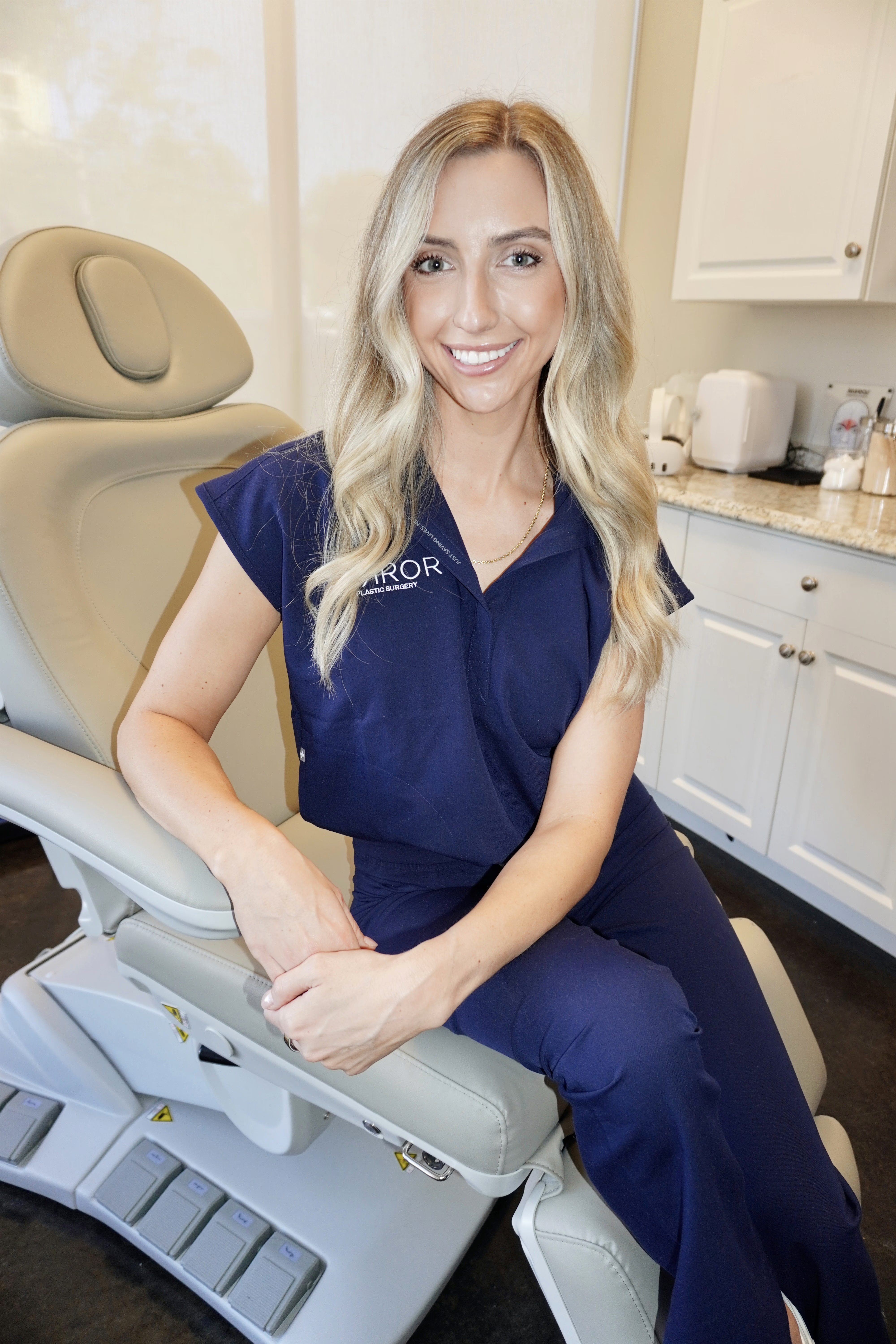
Written by: Ellie Pranckevicius, FNP-BC, Aesthetic Nurse Practitioner & Aesthetic Injector | Facial Restoration & Regenerative Injectable Specialist, Mirror Plastic Surgery
Key Takeaways
- Peptide biohacking falls into three main categories: oral dietary peptides, FDA-approved prescription therapeutics, and grey-market injectables, each with very different risk levels.
- The only responsible starting point is personalized medical supervision that includes full evaluation, baseline labs, and structured follow-up.
- Oral hydrolyzed collagen peptides and FDA-approved GLP-1 receptor agonists are the lowest-risk starting options when prescribed or recommended through legitimate medical channels.
- Grey-market research injectables carry the highest risk because they lack regulatory oversight, may be contaminated, and have no standardized safety data or dosing protocols.
- Begin your peptide journey safely with a personalized consultation at Mirror Plastic Surgery, where you receive lab-driven evaluation and concierge medical oversight.
How Peptide Categories Differ in Risk
The table below shows how regulatory status and sourcing standards create very different risk profiles across peptide categories. The safest options for beginners are FDA-approved prescription drugs and reputable oral supplements, while grey-market injectables lack the safety checks that make the other two categories viable.
| Category | Risk Level | Regulatory Status | Monitoring Needs | Sourcing Standard |
|---|---|---|---|---|
| Oral dietary peptides (e.g., hydrolyzed collagen) | Lowest | Often classified as GRAS nutritional supplements for specific uses | None mandated, general health baseline recommended | Third-party tested supplement brands |
| FDA-approved prescription peptides (e.g., semaglutide, tirzepatide, tesamorelin) | Low-to-moderate under supervision | FDA-reviewed NDA, cGMP manufacturing, prescription required | HbA1c, fasting glucose, lipid panel, kidney function every 3–6 months | Licensed pharmacy, FDA-approved manufacturer |
| Grey-market research injectables (e.g., unlicensed BPC-157, CJC-1295, retatrutide) | Highest | Classified as unapproved new drugs under FD&C Act section 505(a) when administered to humans | No standardized protocol, contamination and dosing errors documented | No mandated sterility testing, batch records, or regulatory oversight |
Research-grade lyophilized peptides are sold for laboratory use only and usually lack cGMP sterility or endotoxin testing. The FDA received 605 adverse-event reports for compounded semaglutide as of July 31, 2025.
Safest Peptide Starting Points for Beginners
A peptide is a short chain of amino acids that signals specific biological processes such as tissue repair, hormone secretion, immune modulation, or metabolic regulation. In this context, biohacking means using these compounds intentionally to improve or correct body functions beyond what diet and exercise alone provide. Compounding means a licensed pharmacy prepares a customized medication for a specific patient under a physician’s prescription within 503A or 503B regulatory frameworks in the United States.
For first-time users, two categories offer the lowest-risk starting points.
Oral hydrolyzed collagen peptides provide the most accessible entry. No 2026 review in Nutrients was identified that summarizes human clinical trials on collagen peptide benefits for skin, hair, nails, or wound healing. Benefits appear most consistent with low-molecular-weight hydroxyproline-rich peptides.1 Evidence remains limited by short study durations, varied designs, and frequent use of multi-ingredient formulas. Because specific hydrolyzed collagen peptides are often classified as Generally Recognized as Safe (GRAS) for nutritional use, oral collagen avoids procedural injection risks.
For users ready to move beyond oral supplements to injectable therapies, FDA-approved GLP-1 receptor agonists such as semaglutide (Wegovy, Ozempic) and tirzepatide (Zepbound, Mounjaro) form the second lowest-risk category when prescribed and monitored by a licensed clinician. These drugs have undergone FDA review for safety, manufacturing consistency, labeling, and efficacy and follow established regulatory pathways. They are not interchangeable with compounded or research-grade versions of the same molecules.
Grey-market injectables marketed as research chemicals, including unlicensed BPC-157, TB-500, CJC-1295, and ipamorelin, remain the highest-risk option for beginners. Analyses show that about 9% of unregulated research peptide products contain no active substance, with even higher rates of underdosing or incorrect amounts. Long-term safety data for these compounds are unreliable or absent, so unmonitored use becomes a personal uncontrolled experiment.
Mirror Plastic Surgery’s Five-Step Safe Peptide Workflow
The safest way to obtain and use peptides is through a structured clinical workflow that prioritizes evaluation before any prescription. Mirror Plastic Surgery’s protocol with Ellie Pranckevicius follows five clear stages.
- Comprehensive evaluation: A 30–60 minute consultation covers full medical history, current medications, health goals, contraindications, and lifestyle factors. People with a history of cancer, cardiovascular disease, sleep apnea, liver or kidney disease, endocrine disorders, or hormone-sensitive conditions receive especially careful screening before any injectable peptide is considered.
- Baseline laboratory review: Labs are reviewed or ordered before any protocol begins. A safety-focused baseline often includes CBC, comprehensive metabolic panel with liver enzymes (AST/ALT) and kidney function, lipid panel, fasting glucose, HbA1c, thyroid panel (TSH, Free T4, Free T3), and CRP. IGF-1 is added for any growth hormone secretagogue protocol.
- Protocol design: Custom peptide stacks are built around individual lab results, health goals, and risk profile. Dosing instructions stay within a supervised clinical relationship. Two to three peptides usually form the practical maximum for most people, while larger stacks are reserved for experienced users under close supervision.
- Administration education: Patients receive detailed instructions for reconstitution and self-administration, often with video demonstrations. Injected peptides are riskier than oral or topical routes because they bypass normal immune barriers, and patients should never attempt intravenous injection. Lipohypertrophy from repeated injections at the same site is common among chronic injectors and can impair absorption, so proper site rotation is taught.
- Ongoing monitoring and sourcing: Follow-up labs are scheduled at 4–8 weeks and again at 3–6 months, depending on peptide class. Ellie remains available via text or telemedicine throughout the protocol. Peptides are sourced exclusively from reputable compounding pharmacies with third-party batch testing, 503A or 503B facilities that operate under USP 797 and cGMP standards with physician prescriptions, batch records, and state or FDA oversight, not from research vendors.
Mirror Plastic Surgery’s remote delivery model makes this supervised workflow available across the United States, including Hawaii and Alaska.
Book an appointment with Ellie to move through this five-stage clinical workflow with full concierge support.
Peptide Combinations and Medications to Avoid
Certain peptide combinations and medication pairings carry documented risks that beginners must understand before starting any protocol.
Absolute contraindicated combinations include:
- Two GLP-1 agonists simultaneously, such as semaglutide plus tirzepatide, which causes dangerous receptor overstimulation
- Multiple GHRH analogs together, such as CJC-1295 plus Sermorelin, which create redundant receptor targeting and amplified side effects
- GLP-1 agonists in people with personal or family history of medullary thyroid carcinoma (MTC) or MEN2 syndrome, which carry an FDA boxed warning
- Growth-factor peptides such as BPC-157, TB-500, and GH secretagogues in patients with active malignancy or recent cancer history because of angiogenesis and IGF-1 elevation mechanisms
- IGF-1 LR3 combined with insulin, which can cause life-threatening hypoglycemia
- Thymosin Alpha-1 in organ transplant patients, where it directly opposes required immunosuppression and risks graft rejection
- GLP-1 agonists combined with insulin or sulfonylureas without clinician supervision, which can trigger dangerous hypoglycemia
Baseline labs recommended before any injectable peptide protocol include:
- CBC with differential
- Comprehensive metabolic panel (CMP)
- Fasting glucose and HbA1c
- Lipid panel
- Thyroid panel (TSH, Free T4, Free T3)
- IGF-1 for any GH secretagogue protocol
- CRP or hsCRP for inflammatory baseline
These baseline markers show whether any of the contraindications above are already present and create a reference point for tracking changes during treatment. Baseline and periodic monitoring of IGF-1, liver enzymes (ALT/AST), and complete blood count help detect early safety signals during sustained peptide protocols. Warning signs that require immediate medical evaluation include expanding injection-site redness, severe upper abdominal pain radiating to the back, right upper quadrant pain with fever or jaundice, allergic reactions such as hives or difficulty breathing, and new lumps or lymph node enlargement during GH secretagogue use.
2026 Peptide Trends and Realistic Outcomes
Two categories of peptides are generating significant clinical interest in 2026. GLP-3R compounding represents a newer generation of metabolic peptide therapy. Compared with earlier GLP-1 formulations, newer GLP-3R formulations are reported to cause fewer gastrointestinal side effects, be less likely to cause muscle wasting, and support broader indications such as insulin resistance, weight management, and cardiovascular risk factors. Retatrutide, a triple GIP/GLP-1/glucagon agonist, remains in Phase III trials with no FDA approval and cannot be legally compounded or administered. Clinicians and patients must distinguish between legitimately compounded newer-generation formulations and unapproved research compounds marketed with similar names.
Beyond metabolic peptides, a second category gaining traction in 2026 is mitochondrial-support compounds. Mitochondrial-support peptides, including NAD (Nicotinamide Adenine Dinucleotide), target cellular energy production and are used at Mirror Plastic Surgery for energy support and anti-aging applications. These compounds act at the cellular level rather than through hormonal axes, which gives them a different risk profile from GH secretagogues.
Three common misconceptions require direct correction:
- “All peptides are the same.” Oral collagen peptides, FDA-approved GLP-1 agonists, and grey-market research injectables differ in mechanism, regulatory status, safety data, and risk profile.
- “Results are permanent.” Receptor desensitization risk with continuous GHRP/GHRH use varies by peptide, with rapid desensitization for hexarelin and no desensitization for tesamorelin over 52 weeks, and no specific cycling schedule such as 8–12 weeks on and 4 off has been validated by human trials. GLP-1 agonists require ongoing use until goal weight is reached, followed by tapering. Benefits from most peptide protocols fade after discontinuation.
- “Peptides are only for weight loss.” Mirror Plastic Surgery’s peptide offerings address systemic inflammation, autoimmune conditions, post-surgical recovery, collagen and elastin production, anxiety, energy, sexual wellness, and fertility, not just metabolic concerns.
In semaglutide clinical trials, gastrointestinal side effects are common but usually resolve during dose stabilization and cause discontinuation in a minority of cases. This pattern offers a realistic benchmark for supervised management of side effects in practice.
Monitoring, Regulation, and Long-Term Safety
Sourcing standard is the single most consequential safety variable for injectable peptides. Up to 40% of online peptide products contain incorrect dosages or undeclared ingredients according to FDA testing, which makes product quality a primary risk factor for adverse events rather than the peptides themselves. Mirror Plastic Surgery sources exclusively from the licensed compounding pharmacies described in the protocol section above, using rigorous batch testing to ensure product quality, purity, and accurate dosage.
This sourcing standard operates within a regulatory landscape that shifted significantly in 2026. In February 2026, HHS Secretary Robert F. Kennedy Jr. announced that 14 of 19 peptides previously restricted from compounding, including BPC-157, TB-500, and CJC-1295, are expected to return to FDA Category 1 status, allowing licensed pharmacies to prepare them with prescriptions. This regulatory shift does not make research-vendor versions of these compounds safe or legal for human use. It only expands access through legitimate compounding channels.
Expected timelines vary by peptide class and individual physiology, and monitoring frequency reflects each compound’s mechanism and known safety signals. Inflammation-targeting peptides such as BPC-157 and TB-500 are typically used in short 4–8 week courses with CBC and CMP monitoring to detect blood or metabolic changes. GH secretagogue protocols require more extended monitoring because IGF-1 elevation develops gradually, so retesting at 6–8 weeks after initiation captures the peak response, and testing every 3–4 months tracks sustained elevation. GLP-1 metabolic protocols follow a similar extended timeline, with metabolic marker review at 8–12 weeks after reaching target dose, then every 3 months to monitor ongoing metabolic changes. Risk factors for peptide-related harm include dose, route of administration, duration of use, product quality, and the individual’s overall health status. Medical supervision functions as the defining safety factor.
Frequently Asked Questions
Are peptides FDA-approved?
Some peptides are FDA-approved prescription medications, including semaglutide, tirzepatide, tesamorelin, liraglutide, sermorelin, oxytocin, and desmopressin, with rigorous long-term human safety data from clinical trials and post-market surveillance. Many other peptides used in wellness contexts, including BPC-157, TB-500, CJC-1295, and ipamorelin, are not FDA-approved drugs. They may be legally compounded by licensed 503A or 503B pharmacies under a physician’s prescription, but they are not equivalent to FDA-approved medications. Research-grade versions of these compounds sold online without a prescription are classified as unapproved new drugs when administered to humans, regardless of “research use only” labeling. Mirror Plastic Surgery sources only from licensed compounding pharmacies with batch testing and follows applicable prescribing and sourcing regulations.
What are the real risks of using peptides without medical supervision?
Unsupervised peptide use carries several documented risk categories. Product quality is the primary hazard, because up to 40% of online peptide products contain incorrect dosages or undeclared ingredients, and research-grade injectables may contain bacterial endotoxins and other contaminants. Dosing errors are common, and documented adverse events from compounded formulations, including the 605 semaglutide reports mentioned earlier, highlight this problem. Without baseline labs, pre-existing conditions that contraindicate specific peptides, such as active malignancy, uncontrolled diabetes, thyroid disease, or cardiovascular disease, remain undetected. Without ongoing monitoring, early safety signals such as rising IGF-1, worsening insulin resistance, or liver enzyme elevation go unaddressed. Medical supervision at Mirror Plastic Surgery addresses these risks through evaluation, lab review, quality-assured sourcing, and concierge follow-up.
What should I not mix with peptides?
Several combinations carry specific documented risks. Two GLP-1 agonists should never be used together because they cause dangerous receptor overstimulation. Multiple GHRH analogs used together create redundant receptor targeting and amplified side effects such as water retention, joint pain, and insulin resistance. Growth-factor peptides such as BPC-157, TB-500, and GH secretagogues are contraindicated in active malignancy or recent cancer history because their angiogenic and IGF-1-elevating mechanisms could theoretically accelerate tumor growth. GLP-1 agonists combined with insulin or sulfonylureas without physician supervision risk dangerous hypoglycemia. Thymosin Alpha-1 directly opposes immunosuppressive medications and is contraindicated in organ transplant patients. Any stack involving peptides that affect the same receptor or biological pathway multiplies side effects without proportional benefit. Ellie reviews all current medications and supplements before designing any protocol at Mirror Plastic Surgery.
How long does it take to see results from peptide therapy?
Timelines vary significantly by peptide class, individual physiology, health status, and the condition being addressed. Some clients report early changes in inflammation or energy within the first week of use.1 Skin and connective tissue improvements from collagen-supporting peptides typically require 8–12 weeks of consistent use.1 Metabolic changes from GLP-1 therapies are assessed at 8–12 weeks after reaching target dose.1 Growth hormone secretagogue effects on body composition and recovery are evaluated at 6–8 weeks with IGF-1 retesting.1 Results are not permanent, and most benefits diminish after discontinuation, so maintenance protocols are often needed to sustain outcomes.1 Individual variation in genetics, diet, lifestyle, and adherence means no two patients experience identical results.1 Mirror Plastic Surgery sets realistic expectations during the initial consultation and adjusts protocols based on lab data and patient-reported outcomes.
Can peptide therapy help with conditions other than weight loss?
Peptide therapy addresses a wide range of health concerns beyond weight management. Mirror Plastic Surgery’s protocols include BPC-157 and TB-500 for systemic inflammation and muscle, tendon, ligament, and joint repair; GHK-Cu for collagen and elastin production, skin health, hair, and nail rejuvenation; KPV for gut microbiome inflammation and conditions associated with irritable bowel disease; Selank for anxiety and depression management through nootropic pathways without the dependency risks of benzodiazepines; NAD for cellular energy production and mitochondrial anti-aging; Sermorelin and Ipamorelin for natural growth hormone stimulation and muscle retention; Kisspeptin for fertility support; and PT-141 for sexual wellness. The appropriate peptide or stack depends entirely on individual lab results, health history, and goals, which is why Mirror Plastic Surgery’s consultation process starts with a comprehensive evaluation rather than a pre-set menu.
Conclusion: Safe, Personalized Peptide Decisions
Peptide biohacking occupies a complex regulatory and clinical landscape in 2026. Oral collagen peptides carry the lowest risk profile and the most accessible evidence base. FDA-approved GLP-1 therapies provide the strongest regulatory backing for metabolic indications. Compounded peptides from licensed 503A and 503B pharmacies offer a legitimate middle pathway when prescribed and monitored by a qualified clinician. Grey-market research injectables carry documented contamination, dosing, and legal risks that personal research cannot offset.
The defining safety factor across all categories is personalized medical supervision that includes evaluation before prescription, baseline labs before administration, quality-assured sourcing, and structured monitoring throughout. Peptide stacking should only follow a thorough medical assessment that includes hormone levels, metabolic health, inflammation markers, sleep, stress, and lifestyle factors. Peptides do not replace foundational health habits, and results vary significantly between individuals based on genetics, lifestyle, and adherence.1
Regulatory status and clinical evidence for individual peptide compounds continue to evolve. This article reflects information available as of August 2026 and does not constitute medical advice. Individual suitability for any peptide protocol must be determined through direct clinical evaluation.
Book an appointment with Ellie at Mirror Plastic Surgery to receive a personalized, lab-driven peptide evaluation and begin the only responsible entry point into peptide therapy.
1 Results may vary from person to person. Editorial content, before and after images, and patient testimonials do not constitute a guarantee of specific results.
Peptide therapy is intended for wellness and optimization purposes and is not prescribed to diagnose, treat, cure, or prevent disease unless specifically stated. Many peptides are not FDA-approved and may be used off-label. Some have limited long-term safety data, with a potential for unknown risks, complications, or desensitization with prolonged use.