
Written by: Ellie Pranckevicius, FNP-BC, Aesthetic Nurse Practitioner & Aesthetic Injector | Facial Restoration & Regenerative Injectable Specialist, Mirror Plastic Surgery
Key Takeaways
- Personalized peptide therapy at Mirror Plastic Surgery uses short amino-acid chains as targeted signaling molecules to direct cellular repair, regulate metabolic and inflammatory pathways, and support recovery, cognitive balance, and cellular aging.
- Each peptide binds specific receptors with high selectivity, triggers precise downstream effects, and is then broken down into amino acids, which lowers long-term toxicity risk compared with many synthetic drugs.
- The personalization process includes a 30–60 minute consultation, comprehensive lab review, custom peptide stack design, batch-tested pharmacy sourcing, and ongoing monitoring with Ellie Pranckevicius, FNP-BC.
- Evidence ranges from robust Phase 3 randomized controlled trial data for FDA-approved agents like semaglutide and tirzepatide to promising but still limited preclinical and early human data for investigational peptides such as BPC-157 and GHK-Cu.
- Patients who want lab-guided, supervised peptide protocols can schedule a consultation at Mirror Plastic Surgery and receive a custom plan built around their unique biomarker profile.
How Peptides Work as Targeted Signaling Molecules
Peptides act as precise messengers rather than blunt instruments. Each molecule binds to a defined receptor with high selectivity, triggers a cascade of downstream effects, and is then degraded into amino acids after use, a property that reduces long-term toxicity risk compared with many synthetic drugs. This receptor specificity makes peptides attractive tools for precision wellness and recovery.
The mechanisms differ by peptide class but follow the same principle of targeted receptor binding. BPC-157 supports tissue repair by promoting angiogenesis via VEGF and VEGFR2 upregulation, modulating nitric oxide synthesis, accelerating collagen deposition, and reducing local inflammation in tendons, muscles, ligaments, and gastrointestinal mucosa. GHK-Cu focuses on structural support by stimulating collagen I and III, elastin, fibronectin, and glycosaminoglycan synthesis, and gene-expression studies indicate it can regulate numerous genes. In contrast, growth hormone-releasing peptides such as ipamorelin and CJC-1295 act on the ghrelin GHSR-1a and GHRH receptors to amplify pulsatile growth hormone secretion, which influences muscle gain, fat loss, and glucose metabolism.
At the neurological level, Selank allosterically modulates GABA-A receptors, suppresses orexin signaling, inhibits enkephalin-degrading enzymes, and elevates hippocampal BDNF, a mechanism that supports anxiolytic effects without the dependency profile of benzodiazepines. KPV enters cells, accumulates in the nucleus, and directly blocks NF-κB from binding DNA, which reduces expression of NF-κB-dependent inflammatory genes including TNF-α, IL-1β, and IL-6.
This receptor-level precision separates peptide therapy from broad-spectrum anti-inflammatory drugs. Peptides regulate pathological signaling while preserving the body’s capacity to respond to genuine threats. Because each peptide targets specific receptors and pathways, selecting the right combination requires matching those mechanisms to an individual’s biomarker profile, which is where personalized protocol design becomes essential.
How Mirror Plastic Surgery Personalizes Your Peptide Plan
Mirror Plastic Surgery follows a clear, stepwise clinical workflow for peptide therapy led by Ellie Pranckevicius, FNP-BC. No protocol moves forward without a thorough evaluation.
- 30–60 minute consultation: Ellie reviews your complete medical history, current medications, chronic conditions, family history, and wellness goals. She identifies contraindications such as elevated PSA before growth hormone secretagogue use or uncontrolled autoimmune markers at this stage.
- Lab panel review or ordering: Baseline panels often include CBC, CMP, hormone profiles (testosterone, estradiol, DHEA-S), thyroid function (TSH, free T4, free T3), inflammatory markers (CRP, IL-6), metabolic markers (fasting insulin, HbA1c), and IGF-1. For weight management or inflammatory conditions, Ellie reviews or orders thyroid, liver, kidney, diabetes, and hormone panels if they are not already available.
- Custom peptide stack design: Ellie uses patient-specific factors such as IGF-1 levels below 150 ng/mL to consider higher-dose CJC-1295, elevated CRP or IL-6 to prioritize BPC-157 or thymosin beta-4, and HbA1c above 5.7% to adjust GLP-1 agonist protocols. She calculates dosing from age, body composition, and lab results and starts conservatively.
- Batch-tested sourcing: Peptides come from reputable compounding pharmacies that perform rigorous batch testing for purity, sterility, and accurate dosage, which provides a critical safeguard in the current regulatory environment.
- Ongoing monitoring and adjustment: Monitoring often includes symptom check-ins at weeks 1–2, first follow-up labs at week 4 for fast-acting peptides, comprehensive re-checks at week 8 for growth hormone secretagogues, and quarterly labs for long-term protocols. Ellie remains available via text or telemedicine throughout your treatment.
Start your personalized peptide evaluation to begin a lab-guided consultation and receive a protocol built around your specific biomarker profile.
Current Evidence for Key Peptide Applications
The strength of the evidence for peptide therapy varies by application. FDA-approved agents rest on robust Phase 3 trial data, while many investigational peptides rely on preclinical and early human studies. The table below summarizes the current landscape.
| Application Area | Key Peptides | Evidence Level | Notable Finding |
|---|---|---|---|
| Metabolic health / weight | Semaglutide, Tirzepatide | Phase 3 RCTs (FDA-approved) | Tirzepatide produced substantial mean weight reduction versus placebo at 72 weeks in SURMOUNT-11 |
| Inflammation / tissue repair | BPC-157, TB-500 | Preclinical + limited early human data | Animal and early human studies show reduced pain and improved joint function, while long-term safety in large populations remains under study1 |
| Cellular aging / skin | GHK-Cu, Epitalon | Preclinical + observational | GHK-Cu gene-expression studies indicate regulation of numerous genes involved in skin health |
| Cognitive balance / neuroprotection | Selank, Semax | Preclinical + small human trials | Selank and Semax converge on CREB phosphorylation, BDNF/TrkB activation, and MAPK/ERK effectors that govern long-term potentiation and neuronal survival |
A 2026 narrative review by Mavrych, Shypilova, and Bolgova concluded that FDA-approved peptide agents demonstrated robust safety profiles from large-scale clinical trials, while non-approved peptides showed promising preclinical and limited clinical evidence but lack long-term safety data and systematic validation. Renke and Chinellato reached a similar conclusion and called for further studies before most new peptides can be used safely in humans.
How Peptides Are Delivered and Monitored Over Time
Most therapeutic peptides are administered via subcutaneous injection, which bypasses gastrointestinal degradation and provides predictable bioavailability. Ellie gives detailed reconstitution and self-administration instructions, often with video demonstrations, so patients feel confident managing their protocols at home.
Follow-up testing at 4–6 weeks, 3 months, and every 3–6 months thereafter can reveal whether organs such as the liver and kidneys are under stress even when a patient feels well. For growth hormone-releasing peptides, IGF-1 levels should stay within the age-adjusted reference range, and continued rises at the 3-month recheck may signal a need for dose adjustment or discontinuation.
Monitoring intensity scales with the risk profile of each peptide. GLP-1 receptor agonists usually follow a lean program aligned with approved labeling, while investigational peptides such as BPC-157 and MOTS-c warrant more comprehensive monitoring despite limited known biomarkers. Monitoring protects safety and also documents outcomes so patients can see measurable biomarker changes over time.
Regulation, Safety, and What Patients Need to Know
The regulatory landscape for peptide therapy in the United States continues to evolve, and patients benefit from understanding the basics before starting treatment.
FDA-approved peptide drugs, including semaglutide (Ozempic/Wegovy), tirzepatide (Mounjaro/Zepbound), and bremelanotide (Vyleesi), have completed Phase 1–3 trials, are manufactured under current Good Manufacturing Practice (cGMP), carry approved labeling, and are available by prescription. Since 2016, the FDA has approved 31 peptide therapeutics, which account for almost 9% of total new molecular entities approved from 2016 to 2023.
Compounded peptides occupy a more complex category. Under FD&C Act Section 503A, compounded drugs may be prepared by a licensed pharmacist or physician only when there is a valid patient-specific prescription, the product is not commercially available, and it is not an essentially identical copy of an FDA-approved drug. In April 2026, the FDA announced removal of BPC-157, TB-500, KPV, GHK-Cu, and others from Category 2. As of mid-2026, FDA staff reviewers stated there is little evidence to support allowing compounding pharmacies to manufacture seven popular peptides including BPC-157, KPV, and TB-500, while the FDA Pharmacy Compounding Advisory Committee’s recommendations remain non-binding and interim enforcement discretion continues during the review period.
The FDA states that a compounded drug is not FDA-approved and is not reviewed by the agency for safety, effectiveness, or quality before it is marketed. Patients should treat any claim that a compounded peptide is “FDA-approved” or “clinically proven to produce the same result as an FDA-approved drug” as a red flag.
Common side effects across peptide classes include injection site reactions, mild headache or fatigue, and theoretical risks of uncontrolled cell growth if used improperly. Medical supervision, quality-controlled sourcing, and regular blood monitoring remain the main safeguards against these risks.
What to Expect When You Pause Therapy and Why Results Differ
Peptide therapy works as an ongoing support system rather than a one-time fix. When a protocol stops, the physiological benefits it maintained gradually fade as the signaling support is removed. Inflammation that was being modulated trends back toward baseline, and growth hormone axis support from secretagogues stops. Maintenance protocols usually play a role in preserving hard-won outcomes.
Results vary widely between individuals.1 Pharmacogenomic testing shows that genetic factors can account for 20% to 95% of variability in drug response, with CYP450 enzyme variants, receptor polymorphisms, and transporter genes influencing peptide selection and dosing. IGF-1 levels decline with age and often require higher doses or different timing of ipamorelin or CJC-1295 in patients over 401. Genetics, diet, lifestyle, body composition, and the specific peptide stack all shape outcomes, which is why a personalized, lab-driven approach tends to produce more reliable results than generic protocols.
Supervised Care vs Online Peptides: Practical Differences
The online peptide market introduces risks that differ from the pharmacology of the peptides themselves. Research-grade peptides from chemical suppliers are not tested for sterility or endotoxins at levels suitable for human injection. Without a baseline lab panel, clinicians cannot detect contraindications such as elevated PSA, uncontrolled glucose, or compromised kidney function that would alter or rule out certain peptides.
Supervised care at Mirror Plastic Surgery differs from unsupervised sourcing in several concrete ways:
- Quality assurance: Peptides come from compounding pharmacies with batch testing for purity, sterility, heavy metals, and accurate dosage. Industry standards increasingly require minimum 98% HPLC purity and mass spectrometry confirmation for injectable formulations.
- Contraindication screening: Lab panels identify conditions that may affect interpretation or contraindicate treatment before the first dose.
- Dose calibration: Starting doses are conservative and adjusted based on tolerance, lab response, and symptom tracking rather than generic online guides.
- Ongoing support: Ellie is available via text for questions, side effect management, and refill requests, with scheduled telemedicine appointments for formal reassessments.
- Regulatory awareness: Protocols evolve as FDA compounding guidance changes so patients are not unknowingly using substances that have been restricted.
Schedule supervised peptide care with Ellie to receive a lab-guided protocol with batch-tested peptides and ongoing clinical support.
Ellie Pranckevicius, FNP-BC: Clinical Lead for Peptides
Ellie Pranckevicius is a board-certified Family Nurse Practitioner and the lead practitioner for peptide therapies and non-surgical aesthetics at Mirror Plastic Surgery. She earned her Bachelor’s in Health Science from Boston University on the premedical track, completed an aesthetics licensure program, and obtained both her Bachelor’s and Master’s in Nursing from the University of South Florida. Four years in the Neuroscience ICU at Tampa General Hospital gave her deep experience with physiology, metabolic health, and the body’s capacity for recovery under complex conditions.
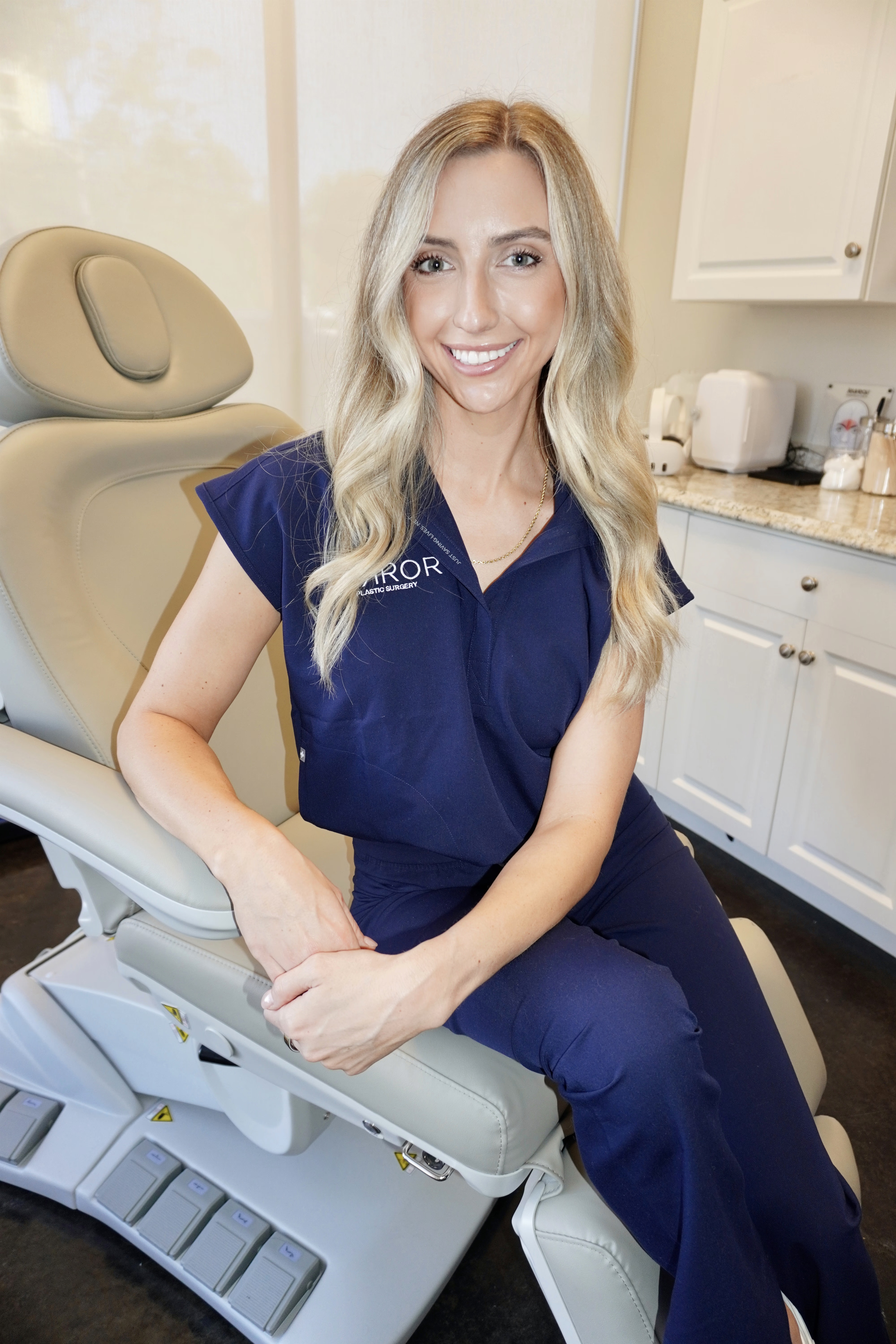
Ellie began her career at a high-end medical spa in Boston, where she developed expertise in skin physiology and aesthetic assessment before pursuing her nurse practitioner credentials. This dual background, combining esthetician training with advanced clinical nursing, helps her connect the aesthetic outcomes patients want with the clinical science required to reach them safely.
Her approach to peptide therapy centers on education and transparency. She explains the physiology behind each recommendation in plain language so patients understand what they are taking and why. She also tells patients when a peptide or protocol is not yet necessary for them, which builds trust and prioritizes long-term outcomes over short-term revenue. When surgical needs arise, Ellie’s work pairs seamlessly with Dr. Akash Chandawarkar, MD, a Harvard-educated physician, Johns Hopkins-trained plastic surgeon, and fellowship-trained aesthetic surgeon at Manhattan Eye Ear & Throat Hospital.
Mirror Plastic Surgery serves patients in St. Petersburg and Tampa Bay in person and remotely across the United States, including Hawaii and Alaska.
Frequently Asked Questions
Are peptides approved by the FDA, and how does that affect use?
Some peptides are FDA-approved and supported by full Phase 3 trial data, as discussed in the regulatory section above. Many others used in wellness protocols are not FDA-approved and are compounded under Section 503A of the Federal Food, Drug, and Cosmetic Act, which requires a valid patient-specific prescription and sourcing from a licensed, registered pharmacy. The FDA does not review compounded drugs for safety, effectiveness, or quality before marketing, so the source and supervision model matter greatly. At Mirror Plastic Surgery, Ellie reviews the current regulatory status of every peptide in a protocol and relies on the batch-tested pharmacy sourcing described earlier. The main risk in peptide therapy often comes from unregulated sources and lack of medical oversight rather than from the molecules alone.
What lab tests are needed before starting peptide therapy, and why?
A baseline lab panel creates the personal reference point for all future comparisons. Without it, clinicians cannot confirm that a peptide is producing the intended physiological effect, detect early organ stress before symptoms appear, or identify contraindications that would change the protocol. At Mirror Plastic Surgery, baseline panels typically include a Complete Blood Count, Comprehensive Metabolic Panel, hormone profiles, thyroid function, inflammatory markers such as CRP and IL-6, metabolic markers including fasting insulin and HbA1c, and IGF-1. For weight management or inflammatory conditions, Ellie may review or order additional thyroid, liver, kidney, diabetes, and hormone panels. Follow-up labs at weeks 4–8 and then quarterly allow her to adjust dosing based on objective biomarker responses rather than symptoms alone.
What happens if I stop taking peptides, and will I lose the benefits?
The benefits of peptide therapy depend on continued signaling support. Peptides work by nudging specific biological pathways on an ongoing basis. When that support stops, those pathways gradually return toward their pre-treatment baseline. Inflammation that was being modulated rises toward prior levels, growth hormone axis stimulation from secretagogues stops, and collagen synthesis support from GHK-Cu slows. This pattern mirrors other health maintenance strategies, where consistent application produces consistent results. Ellie designs maintenance protocols that balance efficacy with long-term sustainability and adjusts them over time based on labs and patient feedback.
Can peptide therapy replace my current medications for inflammation or anxiety?
Peptide therapy does not function as a direct one-to-one replacement for prescription medications, and protocols at Mirror Plastic Surgery are not designed to abruptly substitute for existing regimens. Peptides can sometimes work alongside current medications or support a gradual transition away from certain drugs under medical supervision. For example, nootropic peptides such as Selank act on some of the same brain pathways as benzodiazepines without the same dependency profile, and some patients have transitioned away from SSRIs or benzodiazepines with careful guidance. Any transition requires a detailed review of current medications, dosing history, and lab markers to maintain safety. Ellie evaluates all medications during the initial consultation to identify interactions and contraindications before starting a protocol.
How is Mirror Plastic Surgery’s approach different from ordering peptides online?
Online peptide retailers typically sell research-grade compounds that are not tested for sterility, endotoxin levels, or accurate dosage at standards appropriate for human injection. These platforms do not provide medical history review, lab panels, contraindication screening, or monitoring of organ function and biomarkers. Dosing becomes self-directed and based on generic guides rather than individual physiology. Mirror Plastic Surgery uses the opposite model: a 30–60 minute consultation with Ellie, a comprehensive lab review, a custom peptide stack designed around your biomarker profile, the batch-tested sourcing described earlier, and ongoing concierge support via text and telemedicine. The entire process, from consultation to prescription and shipping, can occur remotely across the United States, so patients can access supervised care without traveling to St. Petersburg.
Summary of Personalized Peptide Therapy at Mirror
Personalized peptide therapy protocols at Mirror Plastic Surgery use targeted amino-acid signaling, lab-guided customization, and ongoing biomarker monitoring to support inflammation control, metabolic health, tissue recovery, cognitive balance, and cellular aging. The evidence base spans robust Phase 3 randomized controlled trial data for FDA-approved agents like semaglutide and tirzepatide and promising but still limited preclinical data for investigational peptides such as BPC-157 and GHK-Cu. Regulatory status continues to evolve, and the safety of any protocol depends on sourcing quality, thorough initial evaluation, and consistent follow-up monitoring. Generic or unsupervised approaches cannot match these safeguards.
Regulatory disclaimer: The information in this article is educational and does not constitute medical advice. Many peptides discussed are not FDA-approved for the indications described. Compounded peptides are not reviewed by the FDA for safety, effectiveness, or quality prior to marketing. Consult a licensed healthcare provider before beginning any peptide therapy protocol. Regulatory status of specific peptides may change; confirm current compounding eligibility with your provider at the time of consultation.
Book an appointment with Ellie at Mirror Plastic Surgery to receive a comprehensive lab-guided evaluation, a custom peptide protocol built around your unique physiology, and ongoing concierge support throughout your wellness journey.
1 Results may vary from person to person. Editorial content, before and after images, and patient testimonials do not constitute a guarantee of specific results.
Peptide therapy is intended for wellness and optimization purposes and is not prescribed to diagnose, treat, cure, or prevent disease unless specifically stated. Many peptides are not FDA-approved and may be used off-label. Some have limited long-term safety data, with a potential for unknown risks, complications, or desensitization with prolonged use.