
Written by: Ellie Pranckevicius, FNP-BC, Aesthetic Nurse Practitioner & Aesthetic Injector | Facial Restoration & Regenerative Injectable Specialist, Mirror Plastic Surgery
Key Points Before You Book
- Peptides act as targeted biological signals for tissue repair, hormone regulation, and inflammation control. Safe use requires credentialed medical oversight and licensed compounding sources.
- The 2026 FDA regulatory landscape remains fluid, with peptides like BPC-157 moving between restricted and recommended lists. Provider expertise and transparent sourcing are essential.
- Ellie Pranckevicius, FNP-BC at Mirror Plastic Surgery, combines neuroscience ICU experience with advanced aesthetic training to deliver precise, physiology-first peptide protocols.
- Thorough consultation includes goal clarification, credential verification, baseline lab panels, and ongoing concierge support with scheduled follow-up testing.
- To explore how a personalized peptide protocol may align with your health goals, schedule your personalized consultation and take the first step toward medically supervised, individualized care at Mirror Plastic Surgery.
Meet Ellie Pranckevicius, FNP-BC
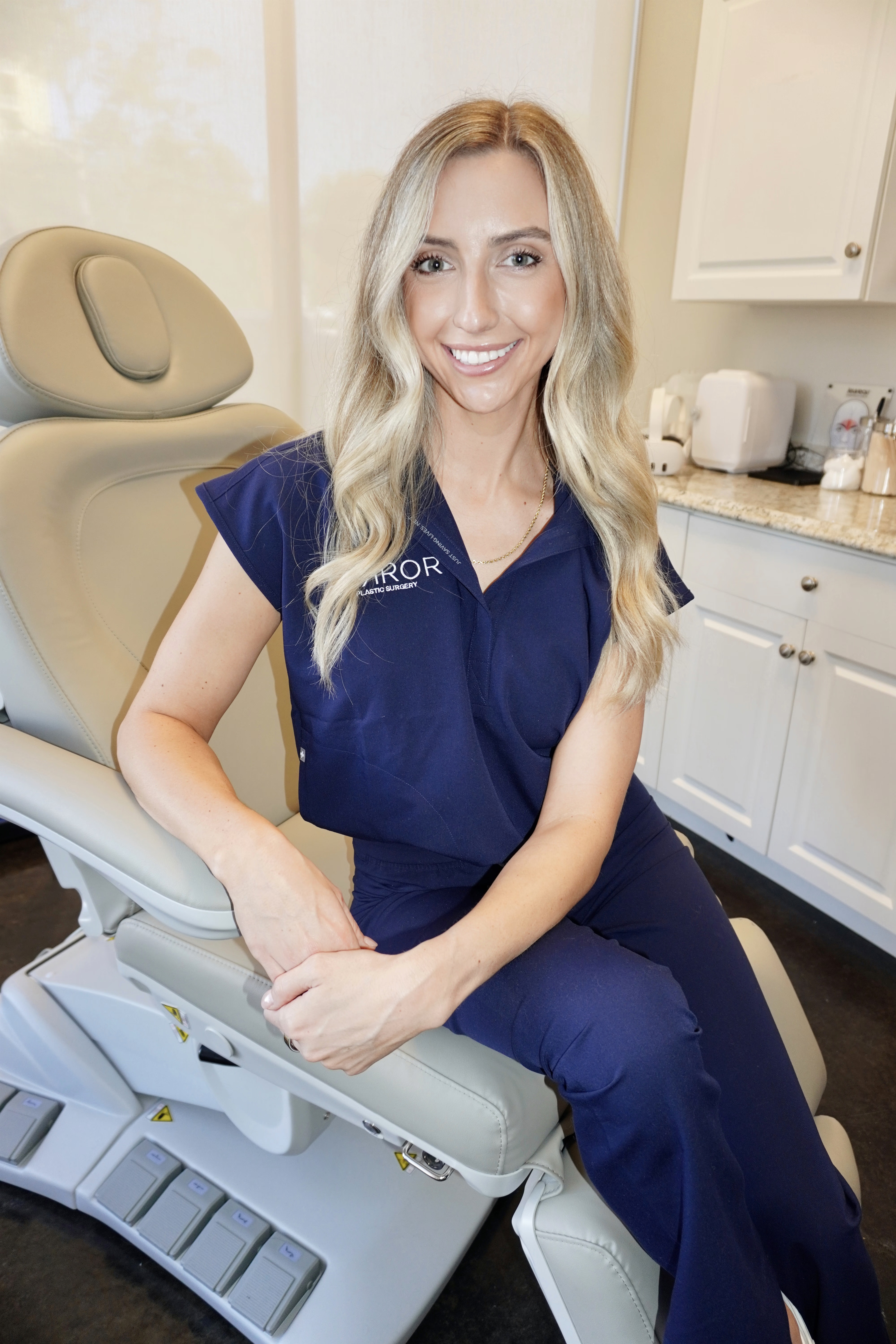
Ellie Pranckevicius, FNP-BC, leads peptide therapy and non-surgical aesthetics at Mirror Plastic Surgery. She earned her Bachelor’s in Health Science from Boston University on the premedical track, then completed both her Bachelor’s and Master’s in Nursing at the University of South Florida. Before her nurse practitioner credentials, Ellie spent four years in the Neuroscience ICU at Tampa General Hospital managing complex critical-care patients. That experience shapes her precise, physiology-first approach to peptide protocols. Her rare combination of esthetician training and advanced clinical expertise allows her to address both the aesthetic goals patients want and the medical science required to reach them safely.
Peptides, Safety, and the 2026 Regulatory Landscape
Peptides are chains of amino acids that are shorter than full proteins, and they function as highly targeted messengers within the body. Unlike many conventional pharmaceuticals, most compounded peptides are not FDA-approved drugs and have not completed the full New Drug Application process.
The regulatory environment shifted significantly between 2023 and 2026. In late 2023, the FDA placed numerous peptides, including TB-500, CJC-1295, and ipamorelin, on its Category 2 restricted compounding list, citing unresolved questions about immunogenicity, impurities, and safety data.
In April 2026, the FDA formally removed BPC-157 and eleven other peptides from the Category 2 list after their nominations were withdrawn, though removal from Category 2 does not constitute FDA approval or automatic authorization for compounding. On July 23, 2026, the FDA’s Pharmacy Compounding Advisory Committee voted 8–6 to recommend adding BPC-157 to the Section 503A Bulks List. That vote is a non-binding recommendation and still requires a final FDA rulemaking process before compounding is formally authorized. Removal from a restricted list does not place a peptide on the positive 503A Bulks List, so the legal compounding pathway remains distinct from any deregulatory announcement.
This evolving landscape makes provider expertise and sourcing transparency non-negotiable. The FDA issued warning letters to peptide sellers, compounding pharmacies, and clinics marketing research-use-only peptides for human therapeutic use. This enforcement climate makes it essential to work with a provider who sources from licensed compounding pharmacies and maintains full regulatory compliance, which is why the consultation process at Mirror Plastic Surgery begins with credential and sourcing verification.
Steps to Schedule a Consultation With Ellie
- Clarify your goals and match them to peptide categories. Identify your primary concern before your first appointment. Common categories include systemic inflammation and autoimmune conditions (BPC-157, TB-500, KPV), weight management and metabolic health (GLP-3R compounding), anti-aging and collagen support (GHK-Cu, NAD), recovery and tissue repair (BPC-157, TB-500), and anxiety or energy (Selank, NAD). A clear goal helps Ellie design a targeted protocol rather than a generic stack.
- Verify provider credentials and compounding sourcing standards. The single most reliable verification step is to search the prescriber’s name on the relevant state medical or nursing board public lookup tool to confirm the license is active, unrestricted, and in good standing. Once you have verified the prescriber’s credentials, turn your attention to the supply chain. Confirm that peptides are sourced from a licensed 503A compounding pharmacy or 503B outsourcing facility, and request a batch-specific Certificate of Analysis showing identity, purity, sterility, and endotoxin testing. A clinic that cannot disclose its compounding pharmacy source operates below accepted U.S. regulatory oversight standards.
- Prepare or request current lab panels. Baseline bloodwork is required before any protocol begins. See the Lab Checklist section below for the specific panels Ellie reviews. If you do not have recent results, Mirror Plastic Surgery can order them on your behalf before your consultation.
- Book a 30–60 minute consultation. Mirror Plastic Surgery offers in-person appointments at its St. Petersburg, Florida location serving the Tampa Bay area, as well as HIPAA-compliant telehealth visits. The consultation covers your full medical history, current medications, lab results, and health goals.
- Review your custom protocol and written instructions. After the consultation, Ellie builds a personalized peptide stack and written protocol tailored to your lab results and goals. She explains the physiology behind each recommendation in plain language, so you understand not just what you are taking but why. She also provides detailed reconstitution and self-administration instructions, often with video demonstrations.
- Arrange ongoing concierge support and follow-up labs. You will have direct access to Ellie for questions, refill requests, and protocol adjustments, which forms part of the concierge support described earlier. Follow-up lab panels are scheduled at clinically appropriate intervals, typically 6–8 weeks for growth hormone secretagogues and inflammatory markers, and every 3–6 months thereafter. These checkpoints help monitor response and detect any adverse trends.
- Understand maintenance expectations and when to reassess. Peptide therapy is not a one-time intervention. Sustained benefits require ongoing maintenance protocols, and reassessment is built into the concierge model.1 Ellie defines clear benchmarks for evaluating progress and adjusts the protocol as your physiology and goals evolve.
Lab Checklist for Safe Peptide Therapy
Baseline lab work establishes your physiological starting point so Ellie can tailor peptide selection and dosing. It also provides reference values to track benefits and catch any metabolic shifts early. The specific panels include:
- Complete Blood Count (CBC)
- Comprehensive Metabolic Panel (CMP), including liver enzymes (AST, ALT, GGT) and kidney function (creatinine, BUN, eGFR)
- Fasting glucose and insulin, with HOMA-IR calculation for growth hormone secretagogues
- HbA1c
- Full lipid panel plus ApoB
- Full thyroid panel: TSH, Free T3, Free T4, and optionally Reverse T3
- IGF-1, required for growth hormone peptides such as Sermorelin and Ipamorelin
- Sex hormone panel: total and free testosterone, estradiol, LH, FSH, SHBG, DHEA-S, and progesterone where relevant
- Morning cortisol, drawn between 7 and 9 AM while fasted
- High-sensitivity CRP (hs-CRP) for systemic inflammation tracking
IGF-1 is the single most important baseline test for growth hormone peptide therapy, serving as the preferred surrogate marker for GH axis activity per Endocrine Society guidelines. Clinics that prescribe peptides without requiring baseline bloodwork fail to meet the standard of care for monitoring response and adverse effects such as insulin resistance.
Red-Flag Warnings When Choosing a Peptide Provider
The following situations indicate inadequate oversight and represent meaningful patient safety risks.
- No baseline lab requirement. Any provider who prescribes peptides without first reviewing bloodwork is not meeting the standard of care. Failure to order labs is a recognized red flag for inadequate oversight.
- Unverifiable compounding source. As noted in the consultation steps, any provider who cannot name their compounding pharmacy or supply a Certificate of Analysis fails the sourcing transparency test. Every compliant informed consent form must include the compounding pharmacy name, license number, and lot number.
- No medical history review. A legitimate first appointment must include a structured medical history covering personal and family cancer history, current medications, and contraindications. GLP-1 receptor agonists are contraindicated in individuals with a history of pancreatitis or medullary thyroid cancer, and growth hormone peptides are contraindicated in active malignancy or uncontrolled diabetes.
- Research-chemical labeling. Products labeled “not for human consumption” or “research use only” are unregulated and lack mandatory quality controls required for dietary supplements, let alone injectable therapeutics.
- No direct practitioner access after prescribing. Ongoing monitoring is a clinical requirement, not an optional add-on. Providers who do not offer scheduled follow-up or direct communication channels after the initial prescription leave patients without recourse if adverse effects arise.
- Claims of FDA approval for compounded peptides. FDA states that compounded drugs, including peptides, are not reviewed for safety, effectiveness, or quality before marketing. Any provider implying otherwise is making a misleading claim.
Florida In-Person Care and Nationwide Telehealth
Mirror Plastic Surgery serves patients through two access pathways, and both deliver the same concierge standard of care.
Patients in the Tampa Bay area can attend in-person consultations at the St. Petersburg office at 780 4th Ave S, St. Petersburg, FL 33701. In-person visits allow for a physical assessment alongside the full medical history review and lab panel evaluation that precede every protocol.
For patients outside Florida, Mirror Plastic Surgery conducts HIPAA-compliant telehealth consultations. Telehealth peptide prescribing is legal in most U.S. states when a valid patient-provider relationship is established through intake, labs, and synchronous consultation, with medication shipped from a licensed compounding pharmacy. Ellie holds the prescriptive authority and clinical oversight required for compliant remote care, and patients receive the same direct text access and follow-up lab scheduling included in the concierge model.
Frequently Asked Questions
How does a clinician prescribe peptides?
A licensed clinician, such as a board-certified family nurse practitioner like Ellie Pranckevicius, prescribes compounded peptides by first establishing a valid patient-provider relationship through a structured intake, medical history review, and baseline lab evaluation. After identifying a documented clinical indication and reviewing contraindications, the provider writes a patient-specific prescription sent to a licensed 503A compounding pharmacy. The pharmacy prepares the peptide to the prescribed specifications, verifies purity and sterility through batch testing, and ships directly to the patient. The prescribing clinician remains responsible for ongoing monitoring, dose adjustments, and follow-up lab review throughout the protocol.
What are the common downsides of peptide therapy?
The downsides of peptide therapy fall into two categories: therapy-related effects and oversight-related risks. On the therapy side, the most commonly reported effects across peptide classes include injection-site reactions, gastrointestinal upset such as nausea or diarrhea, headache, and fluid retention. Most of these issues are transient and manageable with proper dosing guidance. Growth hormone secretagogues carry a specific risk of insulin resistance and elevated IGF-1 levels if not monitored, which is why follow-up labs are required. On the oversight side, the most significant downside is using peptides without medical supervision. Unregulated products lack quality controls, dosing accuracy, and third-party sterility testing, which introduces risks that relate to sourcing rather than the peptide itself. At Mirror Plastic Surgery, Ellie’s concierge model is designed to mitigate both categories through individualized protocols, quality-verified sourcing, and scheduled monitoring.
Will peptide therapy results last if I stop treatment?
Peptide therapy benefits are generally sustained only with continued use or a structured maintenance protocol.1 If you stop taking a peptide that was managing systemic inflammation, the underlying inflammatory process is likely to return to its prior state once the peptide is no longer active.1 This pattern is comparable to discontinuing any health regimen, because the physiological support it provided does not persist indefinitely without it. Ellie builds maintenance expectations into every protocol from the outset, so patients understand the long-term commitment involved and can make informed decisions about their care.
What makes Mirror Plastic Surgery different from a telehealth peptide subscription service?
Most telehealth peptide platforms operate at volume, offering quick sign-ups with minimal lab requirements and limited ongoing provider access. Mirror Plastic Surgery’s model is the opposite. Consultations run 30–60 minutes, every protocol is preceded by a full lab panel review, peptides are sourced from licensed compounding pharmacies with batch-specific Certificates of Analysis, and patients receive direct text access to Ellie rather than a general support inbox. The practice intentionally limits patient volume to preserve the depth of attention that concierge care requires. If a surgical complement to a wellness protocol is ever appropriate, the board-certified plastic surgeon within the same practice is available for coordinated care.
Making an Informed Decision About Peptide Therapy
Scheduling personalized peptide therapy is a medical decision that warrants the same diligence applied to any supervised treatment. The 2026 regulatory environment remains active and evolving, with advisory committee votes, compounding pharmacy standards, and enforcement actions all shaping what responsible access looks like. Patients who prioritize credentialed oversight, lab-informed protocols, and transparent sourcing are best positioned to benefit from peptide therapy while minimizing avoidable risks.
Mirror Plastic Surgery’s concierge model, anchored by Ellie Pranckevicius’s clinical expertise and available in-person in St. Petersburg or via telehealth nationwide, is built around that standard. Every protocol begins with a thorough evaluation and ends with a defined plan for ongoing support, because lasting outcomes require more than a single prescription.1
To explore how a personalized peptide protocol may align with your health goals, schedule your personalized consultation and take the first step toward medically supervised, individualized care.
1 Results may vary from person to person. Editorial content, before and after images, and patient testimonials do not constitute a guarantee of specific results.
Peptide therapy is intended for wellness and optimization purposes and is not prescribed to diagnose, treat, cure, or prevent disease unless specifically stated. Many peptides are not FDA-approved and may be used off-label. Some have limited long-term safety data, with a potential for unknown risks, complications, or desensitization with prolonged use.