
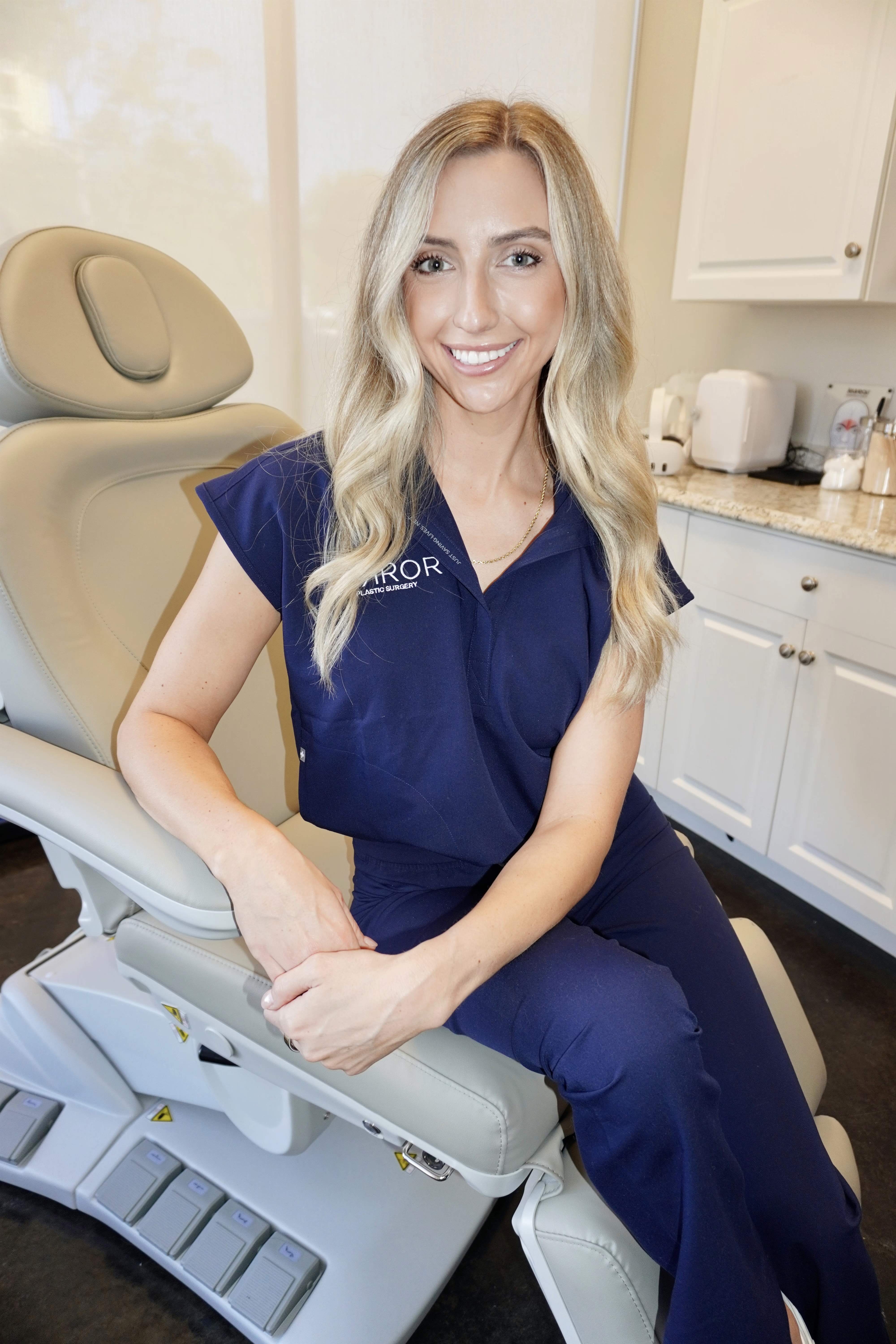
Written by: Ellie Pranckevicius, FNP-BC, Aesthetic Nurse Practitioner & Aesthetic Injector | Facial Restoration & Regenerative Injectable Specialist, Mirror Plastic Surgery | Last updated: March 13, 2026
Key Takeaways
- Medically supervised peptide therapy protects you from risks like contamination, mislabeling, and incorrect dosing from gray market sources.
- Core peptides such as BPC-157, TB-500, GHK-Cu, GLP-3R, and NAD+ target inflammation, healing, aging, weight management, and energy with tailored dosing.
- Safe use follows a “start low, go slow” approach with careful reconstitution, subcutaneous injections, site rotation, and 4-6 week on / 2-4 week off cycles.
- Custom stacks like Mirror’s Glow Stack combine specific peptides to support skin health, recovery, and autoimmune conditions based on your lab results.
- For safe, personalized peptide protocols with concierge support, schedule a consultation at Mirror Plastic Surgery today.
Why Supervised Peptide Therapy Matters for Safe Biohacking
Medically guided peptide therapy addresses chronic inflammation, autoimmune issues, weight changes, and aging concerns at the root level instead of masking symptoms. Unregulated gray market peptides create serious risks, including contamination, inaccurate dosing, mislabeling, and no meaningful quality control. Mirror Plastic Surgery begins every protocol with a 30-60 minute consultation that includes a detailed medical history and targeted lab work. These panels evaluate thyroid function, hormone balance, and metabolic markers to create a clear health baseline.
This assessment allows Ellie to design personalized peptide plans using products from vetted pharmacies that perform rigorous batch testing. “Start low, go slow, personalization via labs ensures safety and efficacy,” explains Ellie Pranckevicius. Her four years in Tampa General Hospital’s Neuroscience ICU provide a strong foundation in physiology and patient safety. Mirror’s concierge model gives you direct text access to Ellie for ongoing support, plus step-by-step reconstitution instructions and video demonstrations. Schedule a consultation to experience the difference between supervised care and risky DIY peptide use.
Core Biohacking Peptides, Dosing, and Treatment Cycles
| Peptide | Benefits | Safe Dosage Range | Administration/Cycle |
|---|---|---|---|
| BPC-157 | Systemic inflammation, tissue repair | Individualized based on consultation and labs | SubQ near injury or abdomen, 4-6 weeks on / 2 off |
| TB-500 | Soft tissue healing, wound repair | Individualized based on consultation and labs | SubQ systemic injection, 4-6 week cycles |
| GHK-Cu | Collagen production, anti-aging | Individualized based on consultation and labs | SubQ injection, continuous or cycled |
| GLP-3R | Weight management, reduced GI side effects | Individualized based on response | SubQ weekly, gradual titration |
| NAD+ | Energy, cellular mitochondria support | Individualized based on consultation and labs | SubQ or IV, weekly protocols |
The “start low, go slow” rule sits at the center of safe peptide dosing. BPC-157 protocols usually begin at the lower end of the range and adjust based on tolerance and symptom response. Body weight and overall health guide these adjustments so dosing stays both effective and safe. Subcutaneous injections use 27-30 gauge needles and require correct technique with consistent site rotation to reduce irritation and tissue changes.
Cycling patterns help prevent receptor desensitization and keep results stable over time. Many protocols follow about 30 days of daily injections, then a 15-day break before the next cycle. The 2026 updates feature refined GLP-3R formulations that reduce gastrointestinal side effects compared with earlier GLP-1 options. These improvements make long-term weight management more comfortable and sustainable for many patients.
Custom Peptide Stacks for Skin, Energy, and Weight Goals
| Stack/Components | Combined Dosages | Admin Sequence | Benefits |
|---|---|---|---|
| Glow Stack (GHK-Cu, BPC-157, TB-500) | Individualized based on lab results and consultation | Personalized protocol provided | Systemic inflammation reduction, collagen support, skin and hair health |
| Energy Stack (NAD+, Sermorelin) | Individualized based on lab results and consultation | Personalized protocol provided | Mitochondrial function, natural growth hormone stimulation |
| Weight Management (GLP-3R, KPV) | Individualized based on lab results and consultation | Personalized protocol provided | Appetite regulation, reduced gut inflammation |
Mirror’s Glow Stack blends three complementary peptides that target inflammation and regeneration at the same time. This stack supports melasma improvement, boosts collagen and elastin production, and promotes healthier skin texture and tone. Patients have reported striking changes in autoimmune conditions, including psoriasis reversal and marked drops in systemic inflammation markers.
Post-surgical patients also benefit from these peptides, which can speed healing and help minimize scarring alongside Mirror’s aesthetic procedures. Every stack is tailored using detailed lab analysis and a full review of your health history and goals. Schedule a consultation to find the peptide stack that best fits your specific biohacking plan.
Safe Peptide Mixing, Injection Technique, and Storage
Correct reconstitution keeps peptides stable, effective, and safe. Reconstituted peptides should be stored at 4°C for up to 30 days, using sterile technique to limit bacterial growth. The process includes adding bacteriostatic water to the lyophilized powder using accurate calculations, then gently swirling the vial until dissolved. Vigorous shaking can damage the peptide structure, so gentle handling matters. Refrigerated storage and light protection help preserve potency.
Subcutaneous injections work best when you rotate sites across the abdomen and other approved areas to avoid lipodystrophy and irritation. Use 27-30 gauge needles for comfort and precise dosing, and follow sterile technique from start to finish. Cycling protocols prevent receptor desensitization, with most peptides following 4-6 week active phases and 2-4 week breaks.
| Common Error | Risk | Fix | Mirror Tip |
|---|---|---|---|
| Incorrect reconstitution volume | Wrong dosing, ineffective treatment | Use precise calculations, measure carefully | Video demonstrations provided |
| Poor storage conditions | Peptide degradation, loss of potency | Refrigerate at 4°C, protect from light | Detailed storage instructions included |
| Reusing needles | Infection, contamination | Always use sterile, single-use supplies | Supply kits include all necessary materials |
Real Patient Outcomes With Supervised Peptide Therapy
Patients at Mirror see measurable changes when peptides are paired with medical oversight. Weight management protocols using GLP-3R often show early water retention loss within the first week, followed by gradual and sustained fat reduction over the next several months. NAD+ therapy supports mitochondrial function, and many patients describe higher daily energy, clearer thinking, and a more refreshed appearance.
Recovery-focused plans that combine BPC-157 and TB-500 often shorten healing time for both post-surgical patients and those with chronic soft tissue injuries. Each person responds differently, so outcomes vary, which reinforces the need for individualized dosing and close monitoring. Ongoing follow-up allows Ellie to adjust protocols as your body and goals change.
Frequently Asked Questions
Safe BPC-157 Dosing for Healing and Recovery
Safe BPC-157 dosing usually ranges from 200 to 500 mcg daily via subcutaneous injection, calculated at about 2 to 5 mcg per kilogram of body weight. Treatment cycles typically last 4 to 6 weeks, followed by about 2 weeks off to reduce receptor desensitization. Injections are placed near the injury site or in the abdomen using strict sterile technique.
Recommended TB-500 Dosing for Recovery Support
TB-500 is often dosed at 2 to 5 mg weekly, divided into several subcutaneous injections across the week. This systemic approach supports soft tissue healing and wound repair throughout the body. TB-500 pairs well with BPC-157 in many recovery protocols, and both usually follow 4 to 6 week active cycles with planned breaks.
Peptide Regulation, FDA Status, and Safety
Many peptides used for biohacking are not regulated by the FDA, even though some have more than a decade of clinical research behind them. The main safety concern comes from products sourced from unregulated suppliers that skip quality control and batch testing. Medical supervision adds screening for pre-existing conditions, careful dosing, and ongoing monitoring to support safer and more predictable outcomes.
Risks of Unsupervised Peptide Use
Using peptides without medical guidance can expose you to contamination, inaccurate dosing, and hidden interactions with medications or health conditions. Incorrect dosing may cause side effects or simply fail to deliver results. Professional oversight provides vetted sourcing, personalized protocols, and real-time support to reduce these risks.
Peptide Cycling for Long-Term Effectiveness
Most peptides stay effective when used in cycles of 4 to 6 weeks of treatment followed by 2 to 4 weeks off. Exact timing depends on the specific peptide, your response, and your goals. Some options, such as GHK-Cu, may be used more continuously, while others require strict cycling. Medical supervision helps set the right schedule for each compound and adjusts it as needed.
Next Steps With Mirror Plastic Surgery
Safe peptide dosing and administration for biohacking rely on medical supervision, trusted sourcing, and personalized plans. Mirror Plastic Surgery’s comprehensive process supports strong results while lowering the risks linked to unregulated peptide use. Schedule a consultation to begin your medically supervised peptide journey with Ellie Pranckevicius and experience concierge-level care.
Contact Mirror Plastic Surgery at 727-361-6515 or email hello@mirrorplasticsurgery.com. Visit the practice at 780 4th Ave S, St. Petersburg, FL 33701, or book a remote consultation from anywhere in the United States. Follow @mirrorplasticsurgery and @dr.akashplasticsurgery on Instagram for current updates and patient stories.
Disclaimer: Results may vary from person to person. Editorial content, before and after images, and patient testimonials do not constitute a guarantee of specific results.
Disclaimer: Peptide therapy is intended for wellness and optimization purposes and is not prescribed to diagnose, treat, cure, or prevent disease unless specifically stated. Many peptides are not FDA-approved and may be used off-label. Some have limited long-term safety data, with a potential for unknown risks, complications, or desensitization with prolonged use.