Written by: Ellie Pranckevicius, FNP-BC, Aesthetic Nurse Practitioner & Aesthetic Injector | Facial Restoration & Regenerative Injectable Specialist, Mirror Plastic Surgery
Key Takeaways
- Medical spa follow-up care covers the first 72 hours, treatment-specific timelines, red-flag monitoring, scheduled reassessments, and long-term maintenance tailored to each patient.
- Immediate post-treatment rules focus on avoiding strenuous activity, heat, exfoliating actives, sun exposure, alcohol, and makeup to protect healing tissue and reduce complications.
- Aftercare varies by procedure: injectables require upright positioning and delayed assessment, lasers and peels need extended sun protection, and microneedling requires strict barrier care for 7–14 days.
- Warning signs such as disproportionate pain, skin blanching, visual changes, fever, or worsening redness require same-day provider contact to prevent serious complications such as vascular occlusion.
- Schedule a personalized consultation at Mirror Plastic Surgery to receive a written, individualized recovery plan and ongoing concierge support.
Immediate Post-Treatment Care: The First 72 Hours
The first 24 to 72 hours after any medical spa procedure represent the highest-risk and most variable phase of recovery. During this window, the body initiates an acute inflammatory cascade, a necessary biological process that, when managed well, creates the foundation for healthy healing. Mismanaging this phase through heat exposure, pressure, or inappropriate skincare actives can disrupt tissue repair and increase complication risk. To protect the inflammatory cascade and minimize these risks, the following rules apply broadly across most med spa treatments during the first 72 hours.
- Avoid strenuous physical activity and elevated heart rate for at least 24 to 48 hours to limit swelling and bruising at treatment sites.
- Sleep with the head slightly elevated to reduce dependent edema, especially after facial injectables or energy-based treatments.
- Use only gentle, pH-balanced, fragrance-free cleansers and moisturizers, and avoid exfoliating acids, retinoids, and AHAs for 5 to 14 days depending on treatment intensity.
- Avoid direct sun exposure entirely for the first 48 to 72 hours, and apply a mineral broad-spectrum SPF 50+ sunscreen as soon as the skin barrier permits.
- Skip alcohol, saunas, steam rooms, and high-heat environments, which dilate vessels and amplify swelling.
- Do not apply makeup to treated areas during the first 24 hours to reduce infection risk.
- Photograph treated areas in consistent, well-lit conditions to support remote triage if symptoms change.
- Keep the provider’s contact information immediately accessible and reach out at the first sign of any symptom outside the expected range.
Book a consultation to receive a written, individualized 72-hour aftercare plan before your procedure, not after.
Treatment-Specific Aftercare for Common Procedures
Generic aftercare checklists overlook the distinct tissue responses triggered by different procedure types. The following variations reflect clinically relevant differences in recovery requirements for common med spa treatments.
- Injectables (Botox/Neuromodulators): Remain upright for at least four hours after injection to reduce the chance of product migration to unintended muscles. Avoid pressure, massage, and facial manipulation. Assess results at two weeks rather than immediately, because full effect develops gradually.1
- Dermal Fillers: Restrict strenuous activity for 24 to 48 hours. Avoid dental procedures, flights, and high heat during the first 48 hours. Plan a follow-up visit at two to four weeks to assess recovery and symmetry.1
- Laser Resurfacing and IPL: Reapply SPF 30 to 50+ every two to three hours and avoid strong UV exposure for at least two weeks, extending to several months for pigment lasers. Avoid swimming and activities that compromise the skin barrier during active recovery.
- Chemical Peels: Expect heightened UV sensitivity for two to four weeks after superficial peels, four to eight weeks after medium-depth peels, and eight to twelve weeks after deep peels. Each level requires SPF 50+ and physical barriers such as hats and shade during this period.
- Microneedling: Channels created during treatment remain open for 24 to 72 hours, which allows deeper UV penetration. Maintain strict sun avoidance and mineral SPF 50+ for seven to fourteen days. Avoid pressure and active skincare ingredients during the initial healing phase.
Warning Signs That Require Immediate Contact
Most redness, mild swelling, tenderness, and transient asymmetry after med spa treatments are normal, self-limiting, and resolve within one to two weeks. The following symptoms fall outside the expected range and require same-day provider contact or emergency evaluation.
- Disproportionate or increasing pain beyond what the procedure should cause, which is a primary indicator of vascular compromise after filler injection.
- Skin blanching with white or pale patches, or dusky, mottled, blotchy discoloration following the course of a vessel rather than the injection site, which can signal vascular occlusion that may progress to tissue necrosis within hours.
- Any visual disturbance, eye pain, or diplopia (double vision) after filler injection, which represents a potential emergency given the risk of irreversible vision loss.
- Fever above 101°F, rapidly increasing one-sided swelling, skin that feels hot to the touch, or any discharge that is not clear.
- Unexpected blistering, oozing, or a rash that spreads rapidly or persists beyond two weeks despite home care.
- Neurologic symptoms or difficulty breathing or swallowing after any injectable treatment.
- Worsening redness or warmth after the first 48 hours instead of gradual improvement.
Vascular occlusion after dermal filler is a time-critical emergency. Clinics that manage filler complications need hyaluronidase on site, in date, and in adequate quantity, along with a written occlusion management protocol that includes immediate high-dose administration and clear escalation thresholds.
The Role of Follow-Up Appointments in Safer Outcomes
Recognizing and responding to emergency warning signs is essential, and preventing complications also requires structured, ongoing monitoring. A single set of discharge instructions does not constitute follow-up care. Structured, timed reassessments serve distinct clinical purposes at each interval and form a core element of evidence-based med spa aftercare.
Standard follow-up timing across common procedures includes the following checkpoints.
- First week: An initial assessment to confirm swelling stabilization, answer recovery questions, and identify early complications before they escalate.
- Two weeks: The standard review point for neuromodulators, as noted in the treatment-specific guidelines, to assess full effect and address asymmetry or under-dosing. This window also suits HA filler patients for evaluation of recovery and results.
- Four to six weeks: Filler longevity evaluation and determination of whether volumetric correction is achieving the intended aesthetic effect.
- Six to eight weeks: Continuity assessment for laser treatment series and review of early collagen remodeling progress.
- Three to six months: Ongoing monitoring for microneedling and RF microneedling patients during the active remodeling phase.
Continuity of care with the same provider across these intervals is clinically advantageous. The practitioner understands the patient’s treatment history, baseline anatomy, and individual response patterns, which supports faster recognition of unusual reactions without requiring the patient to re-explain their history.
Long-Term Maintenance and Daily Sun Protection Habits
Final results from many med spa treatments become most visible between four and twelve weeks post-procedure as collagen remodeling continues.1 Protecting those results requires a permanent maintenance commitment rather than a short recovery window.
Core long-term maintenance principles include the following habits.
- Daily broad-spectrum SPF 30+ sunscreen is the single highest-return behavior for sustaining aesthetic treatment outcomes and preventing post-inflammatory hyperpigmentation. Reapply every two hours during outdoor exposure, year-round regardless of weather, because UVA radiation penetrates clouds and glass.
- While any broad-spectrum SPF 30+ is acceptable for long-term maintenance, mineral sunscreens containing zinc oxide or titanium dioxide are preferred in the immediate post-treatment phase because they sit on the skin’s surface, provide immediate protection, and are less likely to irritate compromised skin.
- Antioxidant serums such as stabilized vitamin C applied beneath sunscreen provide synergistic UV protection, with research in Photodermatology indicating this combination delivers four to eight times greater protection than sunscreen alone.
- Retinoids and AHAs should be reintroduced gradually starting two to four weeks after laser treatments or chemical peels, with procedure-specific clearance from the treating provider.
- Neuromodulator maintenance typically stabilizes at 12 to 14 weeks for most long-term patients. Hyaluronic acid filler reassessment usually occurs at six months and again at nine to twelve months for midface, cheek, jawline, and undereye areas.
- Lifestyle factors such as chronic low-grade inflammation from high-sugar diets, sustained stress, and insufficient sleep accelerate collagen and elastin breakdown and directly shorten treatment longevity.
How Advanced Recovery Options Like Peptides Support Healing
The maintenance strategies above represent the baseline standard of care. Beyond these fundamentals, a growing body of preclinical and clinical evidence supports the role of bioactive peptides in post-procedure recovery. Clear terminology helps patients evaluate these options accurately.
A peptide is a short chain of amino acids that functions as a biological signaling molecule, instructing cells to perform specific tasks such as producing collagen, modulating inflammation, or repairing tissue. An inflammation cascade is the sequential biological process triggered by tissue injury, including aesthetic procedures, in which the body releases signaling molecules to initiate repair. When this cascade becomes prolonged or dysregulated, healing can slow and outcomes can worsen. Collagen remodeling is the multi-week process in which the body replaces provisional repair tissue with organized, mature collagen, the structural protein responsible for skin firmness and texture.
Among the peptides with the most established evidence in post-procedure contexts, GHK-Cu (copper peptide) is the most clinically validated. Its plasma concentration declines from approximately 200 ng/mL at age 20 to 80 ng/mL by age 60, which correlates with reduced wound-healing capacity. A 2021 review by Widgerow and Ziegler in Aesthetic Surgery Journal Open Forum examined topical peptide regimens when used in conjunction with cosmetic procedures, and research published in the International Journal of Molecular Sciences has investigated GHK-Cu for its potential to support wound healing and scar quality. Clinical and dermatological studies have explored GHK-Cu’s effects on epithelialization in wound models and collagen production.
BPC-157 and TB-500 have extensive preclinical evidence supporting tissue repair and anti-inflammatory properties, though human clinical data remain more limited. As a board-certified plastic surgeon notes, regenerative peptides are gaining attention for enhancing surgical recovery and tissue regeneration, but rigorous clinical trials are lacking and the paucity of human studies highlights an urgent need for high-quality research.
The risks of obtaining peptides from unregulated online sources are significant. These products lack third-party testing for quality or purity, verification of active ingredient content, appropriate dosing guidance, and screening for contraindications with existing conditions or medications. Medically supervised peptide protocols, sourced from providers with documented batch testing, guided by lab panels, and monitored by a qualified clinician, represent a categorically different standard of care.
Book a consultation to discuss whether a peptide-supported recovery protocol fits your procedure and health profile.
Practitioner Bio: Ellie Pranckevicius, FNP-BC
Ellie Pranckevicius, FNP-BC, leads peptide therapies and non-surgical aesthetics at Mirror Plastic Surgery. She is a board-certified Family Nurse Practitioner whose clinical foundation includes four years in the Neuroscience ICU at Tampa General Hospital, an environment that demands precise understanding of physiology, metabolic health, and the body’s capacity for recovery under complex conditions.
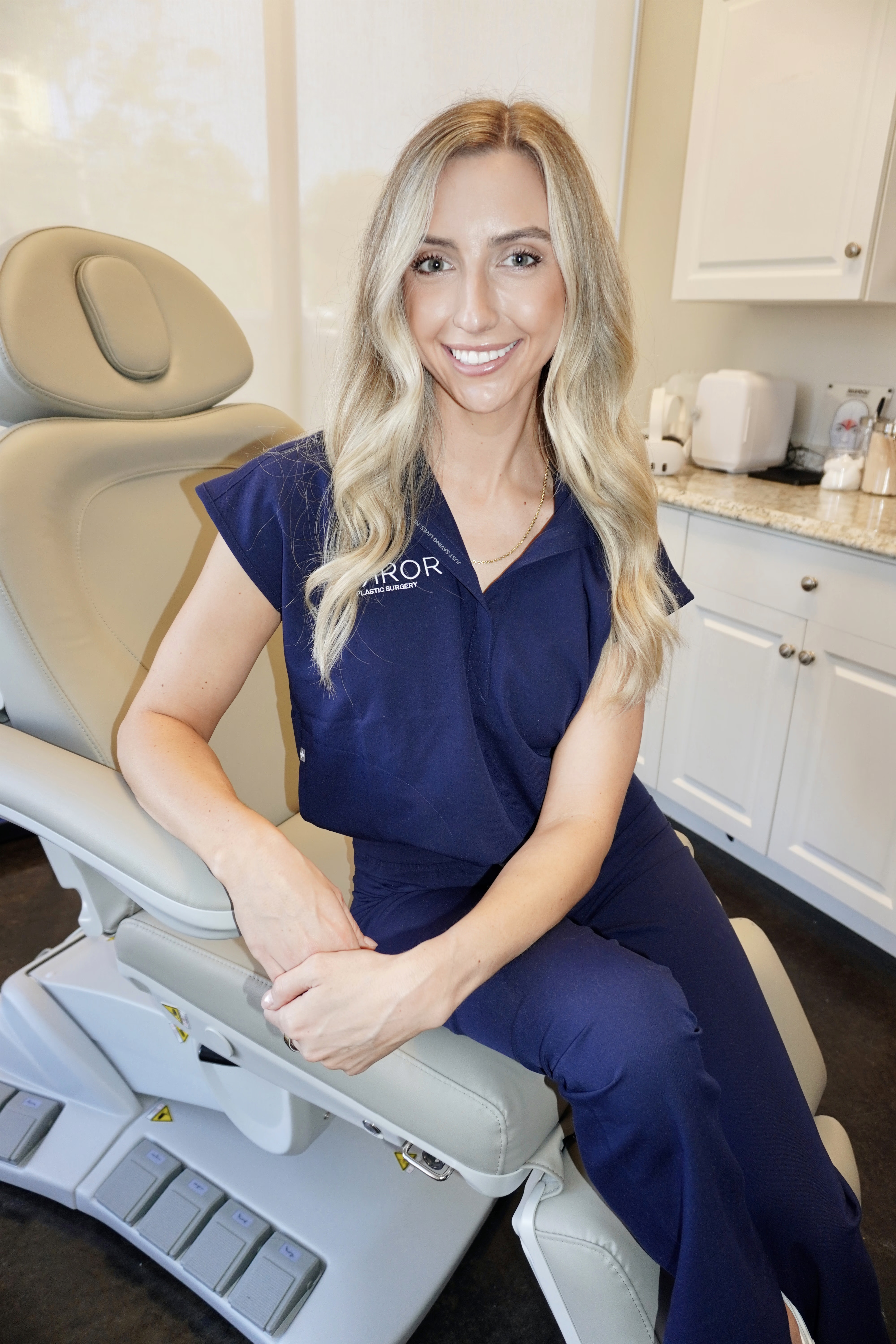
Before earning her nursing credentials, Ellie built her career at a high-end medical spa in Boston. That experience developed her command of skin physiology, aesthetic assessment, and client care, which she now integrates with her advanced clinical training.
Ellie earned her Bachelor’s in Health Science from Boston University on the premedical track, completed a rigorous aesthetics licensure program, and holds both her Bachelor’s and Master’s in Nursing from the University of South Florida. Her approach to patient care is grounded in education and transparency. She breaks down the physiology behind each recommendation in accessible terms so patients understand not just what they are taking, but why.
She is known for telling patients when a service or product is not yet necessary for them, and she prioritizes long-term outcomes over short-term revenue. At Mirror Plastic Surgery, Ellie offers comprehensive consultations that include in-depth lab analysis, custom peptide protocol design, and 24/7 direct text access throughout the patient’s journey. When surgical considerations arise, her work is complemented by a Harvard-educated physician, a Johns Hopkins-trained plastic surgeon, and a fellowship-trained aesthetic surgeon at Manhattan Eye Ear & Throat Hospital/Lenox Hill Hospital.
Frequently Asked Questions
How long does recovery take after common med spa treatments?
Recovery timelines vary significantly by treatment type.1 As discussed in the immediate post-treatment section, initial symptoms such as mild redness, swelling, and sensitivity typically resolve within one to two weeks. The biological process of collagen remodeling, which determines final results for treatments such as microneedling, RF microneedling, and chemical peels, follows the timeline detailed in the treatment-specific section.1 Neuromodulator effects are best assessed at two weeks, while filler results are evaluated at two to four weeks and again at six to twelve months.1 A structured follow-up schedule with your provider keeps each phase of recovery monitored rather than left to self-assessment.
What is the difference between expected side effects and a complication requiring urgent care?
Expected side effects after most med spa procedures include mild bruising, temporary swelling, localized tenderness, and transient redness, all of which are self-limiting and follow the timeline described in the warning signs section. A complication requiring urgent contact includes any symptom that worsens after the first 48 hours instead of improving, disproportionate or increasing pain, skin that turns white or pale or develops dusky mottled discoloration, any visual disturbance after filler injection, fever above 101°F, rapidly spreading warmth or redness, unexpected blistering, or discharge that is not clear. When uncertainty arises, contact your provider the same day. Vascular occlusion after dermal filler is a time-sensitive emergency where hours matter.
Why does personalized follow-up care matter more than a standard aftercare sheet?
Standardized aftercare checklists do not account for individual variables such as treatment zone, product type and dose, concurrent medications, skin type, medical history, and personal healing capacity. A patient with Fitzpatrick type IV skin undergoing a medium-depth peel has categorically different sun protection requirements and complication risks than a patient with Fitzpatrick type I undergoing a superficial peel. Personalized follow-up care, including timed reassessments, lab monitoring where indicated, and direct provider access, allows protocols to be adjusted based on actual clinical response rather than population averages. Clinics with structured aftercare programs often see improved client retention compared to those with no post-treatment follow-up, reflecting the impact of individualized care on patient outcomes and trust.
Are peptide therapies safe for post-procedure recovery, and how are they regulated?
Many peptides used in aesthetic recovery contexts, including GHK-Cu, BPC-157, and TB-500, are not FDA-approved as drugs for post-surgical or post-procedure recovery. GHK-Cu has the most established evidence base, appears in approved cosmetic and dermatological products, and is supported by both human and laboratory data on wound healing and collagen synthesis. BPC-157 and TB-500 are classified for research use only in the United States. The primary safety risk often lies in obtaining peptides from unregulated sources without medical supervision, where product purity, active ingredient content, and dosing accuracy cannot be verified. At Mirror Plastic Surgery, peptides are sourced from reputable providers with documented batch testing, prescribed following comprehensive lab evaluation, and monitored throughout the protocol by Ellie Pranckevicius, FNP-BC.
How often should I schedule follow-up appointments after med spa treatments to maintain my results?
Maintenance intervals depend on the treatment modality and your individual biological response.1 General guidelines include neuromodulators every 12 to 14 weeks once individual response patterns are established, hyaluronic acid filler reassessment at six months and nine to twelve months, microneedling and RF microneedling maintenance every three to six months after an initial series, and fractional laser maintenance annually or semi-annually. Sun protection, medical-grade skincare, and lifestyle habits such as sleep quality, diet, and stress management function as the daily maintenance layer that determines how long procedural results last between appointments. A comprehensive treatment plan review annually, with interim assessments at each visit, allows protocols to be adjusted as your skin, anatomy, and goals evolve.
Conclusion
Structured, personalized medical spa follow-up care is not an optional add-on. It is the mechanism by which procedure results are protected, complications are identified early, and long-term outcomes are sustained. The first 72 hours establish the foundation. Treatment-specific timelines determine when results mature. Red-flag monitoring prevents minor issues from becoming serious complications. Long-term maintenance, including sun protection, scheduled reassessments, and individualized protocols, determines whether your investment holds over months and years.
High-volume clinics that provide a single aftercare sheet and no structured follow-up cannot offer the individualized oversight that complex biological processes require. Mirror Plastic Surgery’s concierge model, with comprehensive lab analysis, custom peptide protocols sourced from batch-tested providers, and 24/7 direct text access, is built around the principle that every patient’s healing is as individual as their anatomy.
Book a consultation at Mirror Plastic Surgery in St. Petersburg, Florida, to build a personalized follow-up and recovery plan grounded in clinical evidence and concierge-level care.
Disclaimer: The information in this article is intended for educational purposes only and does not constitute medical advice. Peptide therapies discussed herein are not FDA-approved drugs for post-procedure recovery. Individual results vary. All treatment decisions should be made in consultation with a qualified, licensed medical provider who has reviewed your complete medical history, current medications, and health status. Mirror Plastic Surgery’s peptide protocols are administered under the supervision of Ellie Pranckevicius, FNP-BC, and are not a substitute for emergency medical care. If you experience any red-flag symptoms described in this article, contact your provider or seek emergency evaluation immediately.
1 Results may vary from person to person. Editorial content, before and after images, and patient testimonials do not constitute a guarantee of specific results.
Peptide therapy is intended for wellness and optimization purposes and is not prescribed to diagnose, treat, cure, or prevent disease unless specifically stated. Many peptides are not FDA-approved and may be used off-label. Some have limited long-term safety data, with a potential for unknown risks, complications, or desensitization with prolonged use.