
Written by: Ellie Pranckevicius, FNP-BC, Aesthetic Nurse Practitioner & Aesthetic Injector | Facial Restoration & Regenerative Injectable Specialist, Mirror Plastic Surgery | Last updated: July 9, 2026
Key Takeaways for Peptide Therapy at Mirror Plastic Surgery
- Peptide therapy at Mirror Plastic Surgery uses short-chain amino acids to address inflammation, tissue repair, metabolism, and skin aging under direct clinical supervision.
- Costs at licensed clinics typically range from $150–$500 per month, with higher pricing for complex weight-loss protocols.
- Most compounded peptides are not covered by insurance, although HSA/FSA funds and some lab work may qualify for reimbursement.
- Supervised care using verified 503A/503B pharmacies reduces risks such as contamination, incorrect dosing, and inaccurate potency that are common with unregulated sources.
- Schedule your personalized peptide evaluation at Mirror Plastic Surgery to receive lab-driven protocols and 24/7 clinical support.
Peptide Therapy Pricing at Licensed Clinics
Peptide therapy pricing depends on the specific peptide, protocol complexity, and level of clinical oversight. Licensed clinical programs using regulated compounding pharmacies typically charge separate fees for consultations, lab monitoring, supplies, and the peptides themselves. Monthly peptide therapy costs in licensed medical settings for compounded protocols generally range from $150 to $500, with specialized weight-loss protocols reaching up to around $1,350 per month.
Every patient at Mirror Plastic Surgery receives a personalized quote during their consultation because no two protocols are identical. Ellie Pranckevicius reviews each individual’s labs, health history, and goals before recommending a stack, so the investment reflects what is clinically appropriate and medically justified.
Get your personalized protocol and transparent cost breakdown during a consultation with Ellie.
Insurance, HSA, and FSA Coverage for Peptides
Most compounded and off-label peptide therapy is not covered by insurance, with coverage rates remaining below 15% across major plans. FDA-approved peptides prescribed on-label are the exception. For example, semaglutide for type 2 diabetes is covered by approximately 85% of commercial plans.
HSA and FSA funds can typically be applied to physician-prescribed peptide therapy when medical necessity is documented, which can reduce out-of-pocket cost by the patient’s marginal tax rate. Initial lab work ordered through a licensed physician is frequently covered under standard insurance plans even when the therapy itself is not.
Clinical Downsides and Risks of Peptide Therapy
Peptide therapy carries two main risk categories: sourcing risks and clinical risks. Third-party analyses of peptides from unregulated sources have documented quality failures including incorrect peptide identity, actual potency ranging from 50 to 200 percent of labeled concentration, bacterial endotoxin contamination, heavy metal contamination, and non-sterile preparations.
On the clinical side, common side effects of therapeutic peptides include injection site reactions, mild gastrointestinal symptoms, and fatigue. More serious considerations apply to specific peptides. BPC-157 is not prescribed to patients with known active cancer due to its angiogenesis-promoting mechanism, and absolute contraindications for GH secretagogues include active malignancy, uncontrolled diabetes, and proliferative diabetic retinopathy.
Columbia sports medicine specialist Dr. Elan Goldwaser states that synthetic peptide use in humans is still in its infancy, with extremely limited research supporting safety and efficacy, and recommends approaching peptide therapies with caution while consulting a licensed physician first. Medically supervised care with baseline labs, contraindication screening, and ongoing monitoring provides the main safeguard for managing these risks.
Celebrity Interest: Jennifer Aniston and GHK-Cu
Jennifer Aniston has publicly discussed using peptide injections as part of her skin and anti-aging regimen. GHK-Cu is one of the most studied wellness peptides. It reduces inflammatory markers in tissue, lowering levels of TNF-alpha, IL-6, and other pro-inflammatory cytokines, and it influences genes involved in tissue repair and inflammation resolution.
At Mirror Plastic Surgery, GHK-Cu is available individually or as part of the Glow Stack alongside BPC-157 and TB500. This combination targets systemic inflammation, melasma, and collagen and elastin production under Ellie’s clinical supervision. The effectiveness and safety of any stack, celebrity-associated or not, depend heavily on the expertise of the prescribing practitioner.
Practitioner Expertise at Mirror Plastic Surgery
The clinical outcomes of any peptide protocol depend as much on practitioner expertise as on the peptides themselves. Peptide therapies at Mirror Plastic Surgery are led by Ellie Pranckevicius, FNP-BC, a board-certified Family Nurse Practitioner. Ellie earned her Bachelor’s in Health Science from Boston University on the premedical track, completed an aesthetics licensure program, and obtained both her Bachelor’s and Master’s in Nursing from the University of South Florida. She spent four years in the Neuroscience ICU at Tampa General Hospital, where she developed deep clinical expertise in physiology, metabolic health, and complex patient recovery that now informs her peptide protocol design.
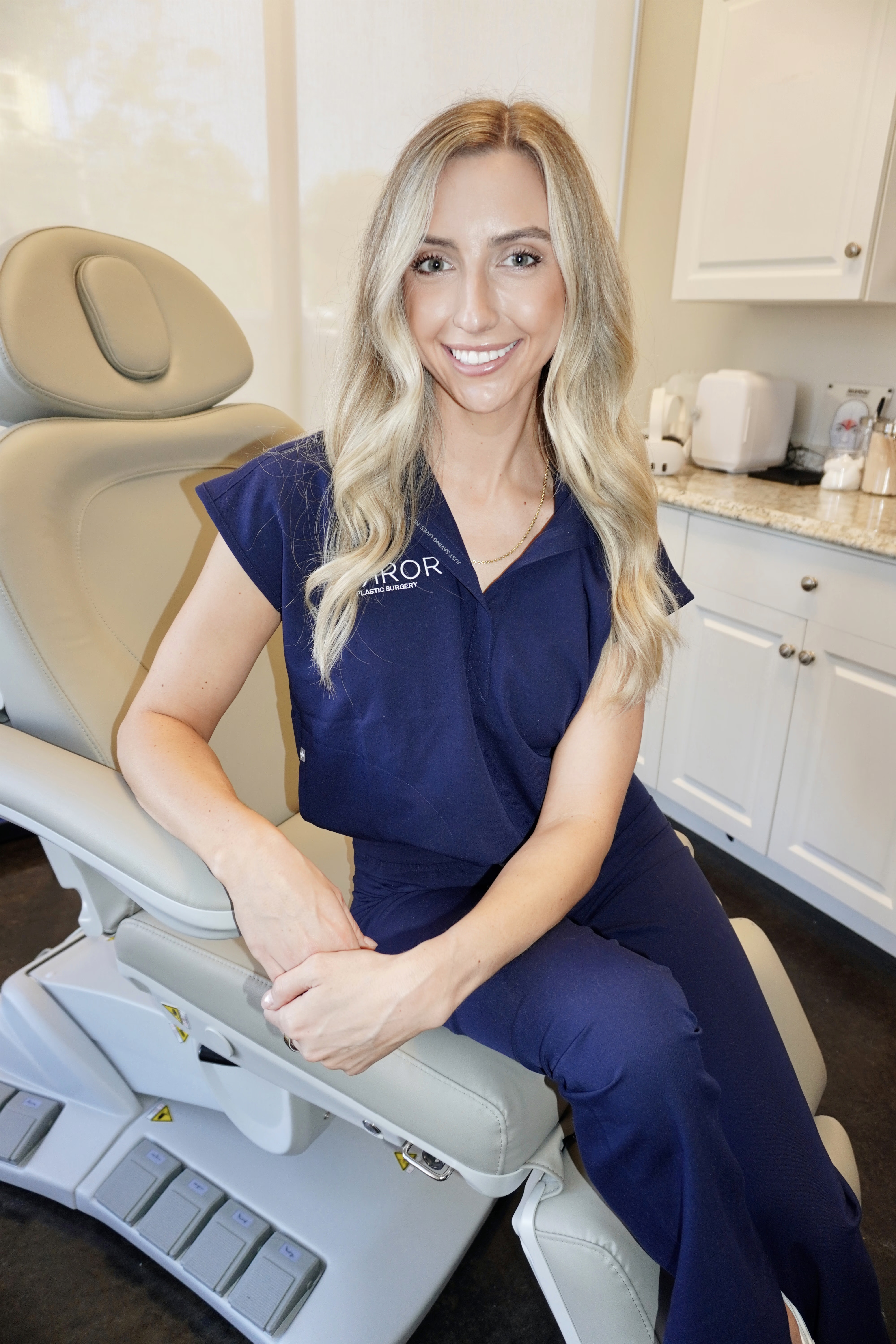
Ellie began her career at a high-end medical spa in Boston, which gives her a dual perspective that connects aesthetic goals with clinical science. She prioritizes education and explains the physiology behind every recommendation in plain language. She also tells patients when a product or service is not yet necessary for them. When surgical integration is appropriate, Ellie’s work is complemented by Dr. Akash Chandawarkar, MD, a Harvard-educated physician, Johns Hopkins-trained plastic surgeon, and fellowship-trained aesthetic surgeon at Manhattan Eye Ear & Throat Hospital.
The table below highlights how Ellie’s dual training and ICU background compare with standard nurse practitioner and physician credentials for peptide care.
| Practitioner | Credentials | Experience | Differentiator |
|---|---|---|---|
| Ellie Pranckevicius | FNP-BC; BSN & MSN, University of South Florida; BS Health Science, Boston University; Aesthetics Licensure | 4 years Neuroscience ICU (Tampa General Hospital); high-end medical spa (Boston) | Dual esthetician + NP training, 24/7 concierge text access, lab-driven custom stacks, post-surgical protocol integration |
| General NP Standard | MSN or DNP; board certification required | Varies; clinical rotation-based | Prescribing authority in full-practice states, supervision requirements vary by state |
| General MD/DO Standard | MD or DO; state licensure | Residency-based; specialty varies | Authorized to order labs in all 50 states, broadest prescribing authority |
Experience Ellie’s concierge-level NP care and ICU-informed peptide planning during a dedicated consultation.
Core Peptide Concepts and Terminology
Peptides are short chains of amino acids that act as signaling molecules. They direct specific biological processes such as tissue repair, hormone release, inflammation modulation, and collagen synthesis. A peptide stack is a combination of two or more peptides selected to produce complementary effects. For example, the Glow Stack pairs GHK-Cu, BPC-157, and TB500 to address inflammation, wound repair, and collagen production at the same time. Most combination peptide protocols lack controlled human trial data directly comparing them to single-peptide therapy, with superiority claims resting primarily on mechanistic rationale rather than clinical outcomes.
The main distinction from unregulated online products lies in sourcing quality. Research-grade peptides sold online without a prescription can exhibit variable purity levels and carry elevated toxicity risks compared with pharmaceutical-grade peptides that undergo stricter quality controls. Mirror Plastic Surgery sources exclusively from reputable providers with batch testing and certificates of analysis.
Step-by-Step Peptide Process at Mirror Plastic Surgery
A supervised peptide program at Mirror Plastic Surgery follows defined clinical stages.
- Comprehensive consultation: A 30–60 minute session with Ellie covers medical history, current medications, symptoms, and wellness goals.
- Lab review: Baseline lab work is required before the first dose; growth hormone peptides require an IGF-1 baseline, and metabolic peptides require fasting glucose, fasting insulin, and HbA1c. If labs are not available, Ellie orders them.
- Protocol design: A custom peptide stack and dosing schedule is built around the individual’s lab results, health profile, and goals rather than a generic template.
- Administration and training: Patients receive detailed reconstitution and self-injection instructions, often with video demonstrations. The full process can occur in-person in St. Petersburg or remotely across the United States.
- Ongoing monitoring: Physician-supervised peptide therapy requires follow-up assessments with objective endpoints rather than symptom-based adjustments. Ellie is available via text 24/7 for questions, side effect reporting, and refill requests.
Regulatory Shifts and Post-Surgical Integration
The regulatory environment for peptides continues to evolve. In late February 2026, HHS Secretary Robert F. Kennedy Jr. stated on The Joe Rogan Experience that the FDA may take new action to loosen restrictions on roughly 14 peptides previously placed in Category 2, though no formal reclassification has occurred. Category 1 status permits compounding by a licensed 503A or 503B pharmacy but does not equal FDA approval or allow unsupervised sales.
Post-surgical peptide integration represents a growing application that directly affects patient outcomes. Mirror Plastic Surgery can combine Ellie’s peptide protocols with Dr. Chandawarkar’s surgical expertise. Peptides such as BPC-157 and TB500 may help reduce post-operative inflammation and support tissue healing, creating a coordinated recovery plan that standard med-spas or telehealth-only platforms typically cannot provide.1
Key Considerations Before Starting Peptides
- Sourcing: Both 503A and 503B compounding pharmacies must verify the identity, potency, and sterility of every compounded preparation and provide certificates of analysis documenting results. Reliable sourcing forms the foundation for any safe, personalized protocol.
- Personalization: Genetics, diet, lifestyle, and the specific peptide protocol all influence outcomes. A protocol built on lab data and clinical review produces meaningfully different results than a generic online order.
- Timelines: Improvements from peptide therapy for inflammation can begin within one to two weeks, with effects developing over subsequent weeks and months.1 Patients should plan for gradual change rather than overnight results.1
- Maintenance: Benefits diminish when therapy is discontinued, similar to stopping any structured health regimen. Maintenance protocols are usually necessary to sustain outcomes.
- Outcome variability: Results remain highly individual. No provider can guarantee identical outcomes across patients, even with similar protocols.
Risks, Limitations, and Ongoing Challenges
Former FDA deputy commissioner Howard Sklamberg describes the current peptide marketplace as “really kind of a Wild West,” noting that purchasing peptides marketed as supplements is risky because they could be viewed as unregulated drugs. Patients face several primary risks.
- Unregulated access: Products labeled “not for human consumption” or “research use only” carry no manufacturing oversight, no purity guarantees, and no dosing guidance.
- Inconsistent results: Without baseline labs and individualized dosing, patients may experience no response due to low active content or adverse effects from incorrect dosing.
- Ongoing use requirement: Significant knowledge gaps remain regarding optimal dosing regimens, combination therapy effects, and reliable biomarkers for monitoring efficacy of therapeutic peptides in aging populations. These gaps reinforce the need for continuous clinical oversight rather than self-directed use.
- Theoretical oncological concern: As noted earlier, certain peptides carry contraindications for patients with active malignancy because of their growth- or angiogenesis-promoting mechanisms. These patients require careful specialist input before any consideration of peptide therapy.
Common Misconceptions About Peptides
Peptides are only for weight loss. GLP-1 medications dominate headlines, but the peptide category spans inflammation management (BPC-157, KPV), collagen and elastin production (GHK-Cu), energy and cellular anti-aging (NAD), anxiety and depression (Selank), sexual wellness (PT-141), fertility support (Kisspeptin), and post-surgical recovery (TB500).
Results are identical for everyone. Peptide outcomes remain highly individual.1 Factors including genetics, baseline lab values, lifestyle, and protocol design all shape response. Lab-driven personalization functions as a clinical requirement rather than an optional upgrade.
Stopping peptides has no consequences. Discontinuing therapy usually reverses the benefits achieved. Inflammation that was being modulated returns toward its prior state, and collagen support declines. Maintenance protocols form a standard component of responsible peptide care.
Questions to Ask Any Peptide Clinic
Use this checklist when evaluating any provider offering peptide therapy.
- Is the prescribing clinician licensed in my state of residence with an active, verifiable license?
- Are peptides sourced exclusively from a verified 503A or 503B compounding pharmacy with current USP <797> sterile compounding compliance?
- Will I receive a Certificate of Analysis (CoA) for every medication batch confirming purity and potency?
- Are baseline labs required before my first dose, and are follow-up labs scheduled at defined intervals?
- Is an individualized, documented treatment protocol created based on my labs and medical history rather than a template?
- Does the clinic use any “research use only” language in patient materials or prescribe without clinical review?
- What is the process for reporting side effects, and how quickly can I reach my provider?
Verify our credentials and start your evaluation with Ellie at Mirror Plastic Surgery, which meets every criterion on this list.
Frequently Asked Questions
Are peptides FDA-approved?
Some peptides are FDA-approved for specific indications, including insulin for diabetes, semaglutide and tirzepatide for metabolic disorders, and tesamorelin for HIV-associated lipodystrophy. Many wellness peptides are not individually FDA-approved but are legally compounded by licensed 503A or 503B pharmacies under a physician’s prescription. The main risk does not come from the peptide molecule alone. It comes from obtaining peptides from unregulated sources that lack quality control, accurate dosing, and sterility verification. Mirror Plastic Surgery sources exclusively from reputable compounding pharmacies with batch testing and certificates of analysis.
What is the difference between buying peptides online and getting them through a licensed clinic?
Online peptide products sold without a prescription are frequently labeled “research use only,” carry no third-party purity testing, and may contain bacterial endotoxins, heavy metals, or incorrect concentrations. A licensed clinic prescribes through a state-regulated 503A or 503B compounding pharmacy, conducts baseline and follow-up lab monitoring, screens for contraindications, and provides ongoing clinical supervision. This sourcing, dosing, and monitoring framework addresses the main risk categories associated with self-directed peptide use.
How long does it take to see results from peptide therapy?
Timeline depends on the peptide, the condition being addressed, and the individual’s physiology. For inflammation and pain, early indicators often appear within one to two weeks, with maximal effects at four to six weeks and continued tissue remodeling over three to six months.1 Weight management peptides follow their own clinical timelines based on the specific agent and protocol. Ellie sets realistic, individualized expectations during the consultation based on each patient’s labs and goals.
Can peptide therapy be used after plastic surgery?
Yes. Post-surgical peptide protocols form a distinct offering at Mirror Plastic Surgery. Peptides such as BPC-157 and TB500 target soft tissue inflammation and wound repair, which can support faster and more complete recovery following surgical procedures. Because Mirror Plastic Surgery integrates both surgical and non-surgical care under one roof, Ellie and Dr. Chandawarkar can coordinate protocols that complement the surgical plan, an integration that standalone med-spas or telehealth platforms typically cannot match.
Do I need to stay on peptides indefinitely?
Maintenance protocols are usually necessary to sustain the benefits achieved. When peptide therapy stops, the physiological processes it was supporting, such as inflammation modulation, collagen synthesis, and metabolic regulation, move back toward baseline. The duration and structure of maintenance depend on the individual’s condition, goals, and response to therapy. Ellie reviews this during the consultation and adjusts protocols over time based on lab data and patient-reported outcomes.
Finding a licensed medical wellness clinic for peptide therapy near Tampa requires checking practitioner credentials, pharmacy sourcing standards, lab-monitoring protocols, and the quality of ongoing clinical support. Mirror Plastic Surgery’s concierge NP model, led by Ellie Pranckevicius with ICU-level clinical depth, lab-driven custom stacks, 24/7 text access, and post-surgical integration, addresses each of these criteria within a plastic-surgery-credentialed practice.
Begin your personalized, supervised peptide therapy evaluation at Mirror Plastic Surgery in St. Petersburg, Florida.
Disclaimer: The information provided in this article is for educational purposes only and does not constitute medical advice. Peptide therapies vary in regulatory status; many compounded peptides have not received formal FDA approval for the indications discussed. Consult a licensed healthcare provider before initiating any peptide therapy. Mirror Plastic Surgery’s peptide services are provided under the supervision of licensed practitioners in compliance with applicable Florida and federal regulations.
1 Results may vary from person to person. Editorial content, before and after images, and patient testimonials do not constitute a guarantee of specific results.
Peptide therapy is intended for wellness and optimization purposes and is not prescribed to diagnose, treat, cure, or prevent disease unless specifically stated. Many peptides are not FDA-approved and may be used off-label. Some have limited long-term safety data, with a potential for unknown risks, complications, or desensitization with prolonged use.