A GLP-1 plateau is a normal metabolic adaptation that often appears 4–8 weeks into semaglutide or tirzepatide therapy when reduced calories lower energy expenditure and appetite suppression fades.
Preserving lean muscle with daily protein at 1.2–1.6 g/kg and consistent resistance training helps maintain metabolic rate and restart weight loss.
Recalculating calories, increasing NEAT, and keeping weekly weight loss to 1–2 pounds reduce the risk of further metabolic slowdown and muscle loss.
Reviewing dose, medication interactions, and labs with a provider can clarify whether dose escalation or a switch to next-generation peptides such as GLP-3R makes sense.
Schedule a personalized consultation at Mirror Plastic Surgery for lab-guided recommendations that help you restart progress safely.
Why GLP-1 Plateaus Happen During Treatment
When caloric intake drops sharply, the body responds by lowering resting metabolic rate. At the same time, lean mass loss can occur on GLP-1 medications if no prevention strategies are in place. Less muscle means fewer calories burned at rest, which slows fat loss further. Dose stabilization, the point where a patient reaches a maintenance dose without a planned escalation, removes another driver of early progress. These three forces combine to create the classic plateau pattern seen in patients four to twelve weeks into therapy.
Each of these forces has a specific countermeasure. The four steps below target them systematically: Step 1 focuses on preserving muscle mass, Step 2 recalibrates energy balance and daily movement, Step 3 evaluates medication response and dosing, and Step 4 introduces advanced peptide options when standard measures are already in place.
Step 1: Protect Muscle With Protein and Strength Training
Distribute protein evenly. Spreading intake across three to four meals supports muscle protein synthesis throughout the day. Practical sources include Greek yogurt, eggs, cottage cheese, chicken breast, and whey or casein protein supplements.
Step 2: Adjust Calories and Daily Movement After Weight Loss
Recalculate your maintenance calories. Every pound lost lowers total daily energy expenditure. A calorie target set at the start of therapy often becomes inaccurate by the time a plateau appears, either too high to drive loss or so low that it worsens metabolic slowdown.
Increase NEAT (non-exercise activity thermogenesis). Extra steps, standing, light housework, and walking meetings all raise daily caloric expenditure without the rebound hunger that intense exercise can trigger. Adding 2,000–3,000 steps per day is a realistic starting goal.
Track weekly trends, not daily fluctuations. Hormonal shifts, sodium intake, and hydration can move the scale by one to three pounds from day to day. A seven-day rolling average gives a clearer picture of your true trend.
Step 3: Reassess Your GLP-1 Dose and Medication Plan
Confirm you are at a therapeutic dose. Many patients plateau before reaching the full therapeutic dose of their medication. Review your current dose and titration schedule with your provider to confirm alignment with the prescribing protocol.
Assess medication response objectively. Reduced appetite, better fasting glucose, and continued fat loss, even at a slower pace, indicate that the medication still works. A complete absence of these signs calls for a clinical discussion about adjusting or changing agents.
Discuss escalation timing. Dose escalation is a standard tool for plateaus, but it raises the risk of GI side effects. A provider who has reviewed your labs and current response should guide any change in dose, rather than self-directed adjustments.
Review concurrent medications. Certain antidepressants, corticosteroids, and antipsychotics can blunt GLP-1 response or independently promote weight gain. A full medication review helps identify and address contributors to the stall.
Step 4: Explore Next-Generation Peptides With Clinical Support
Some patients reach their maximum tolerated GLP-1 dose, meet the protein and training targets, and still see minimal progress. For these individuals, next-generation compounded peptides can offer a supervised escalation path.
GLP-3R is a newer compounded peptide in the GLP family. Compared with earlier GLP-1 formulations, GLP-3R is reported to cause fewer gastrointestinal side effects and may be less likely to contribute to muscle wasting. It also supports broader metabolic goals, including insulin resistance and cardiovascular risk factors. At Mirror Plastic Surgery, GLP-3R is available only within a lab-guided concierge protocol, not as a standalone product without clinical context.
Patient scenario: A 42-year-old woman in Tampa lost 18 pounds on semaglutide over three months, then stalled for six weeks. Her protein intake met the recommended target, but her resistance training was inconsistent and her labs showed suboptimal thyroid function. After a full consultation with Ellie, including a hormone panel, metabolic markers, and body-composition review, she transitioned to a GLP-3R protocol paired with a structured resistance program and thyroid support. Within eight weeks, she resumed steady fat loss and maintained lean mass on follow-up InBody scans.1
This type of outcome depends on clinical infrastructure that can identify the underlying variables. A protocol change made in isolation rarely delivers the same result.
Key Safety Factors Before Changing Peptide Therapy
Candidacy: Not every plateau justifies a peptide change. Patients with uncontrolled thyroid disease, active hepatic or renal impairment, or a history of medullary thyroid carcinoma need additional evaluation before any GLP-class escalation.
Quality sourcing: Compounded peptides are regulated by the FDA under sections 503A and 503B of the FD&C Act and must meet conditions for exemptions and bulk substance lists, although they are not tested or approved like commercial drugs. The main risk comes from unverified sources that lack batch testing. Mirror Plastic Surgery partners only with reputable compounding pharmacies that maintain documented quality controls.
Supervised versus unsupervised use: Self-directed peptide escalation without lab review removes the safety checks that catch contraindications, drug interactions, and dosing errors before they cause harm.
When a Plateau Warrants Professional Help
Seek a formal clinical evaluation when any of the following apply: the plateau has lasted four or more weeks despite meeting the protein and training targets, scale weight is stable but body composition is worsening, GI side effects limit adherence, or you are considering adding, switching, or compounding peptides without a current lab panel on file.
These situations call for more than online advice or unsupervised protocol changes. They require a provider who can interpret labs, assess body composition, and design a personalized plan.
Book an appointment with Ellie for a comprehensive plateau evaluation at Mirror Plastic Surgery’s St. Petersburg, Florida clinic or via telemedicine anywhere in the U.S.
Staying on Track After You Break the Plateau
Breaking a plateau marks a turning point, and maintaining the new trajectory requires structure. Maintenance protocols at Mirror Plastic Surgery often include quarterly lab reviews, periodic body-composition scans, and dose adjustments as body weight and metabolic rate continue to change. Resistance training remains non-negotiable, and the muscle-loss effect noted in the Stanford study persists regardless of which peptide protocol you use, so the protective benefit of strength training continues to matter.
Patients who sustain their results tend to share three habits. They keep protein intake at or above their target, complete two to four resistance sessions per week, and schedule regular provider check-ins that catch metabolic drift before it becomes another plateau.
Pre-Appointment Checklist
Calculate your current daily protein intake and compare it to the 1.2–1.6 g/kg target
Log your resistance training frequency for the past four weeks
Record your seven-day average weight trend, not a single weigh-in
List all current medications and supplements for your provider to review
Gather any recent lab results, including thyroid, metabolic panel, and hormone levels
Note the date your weight loss stalled and any changes you made afterward
About Your Practitioner: Ellie Pranckevicius, FNP-BC
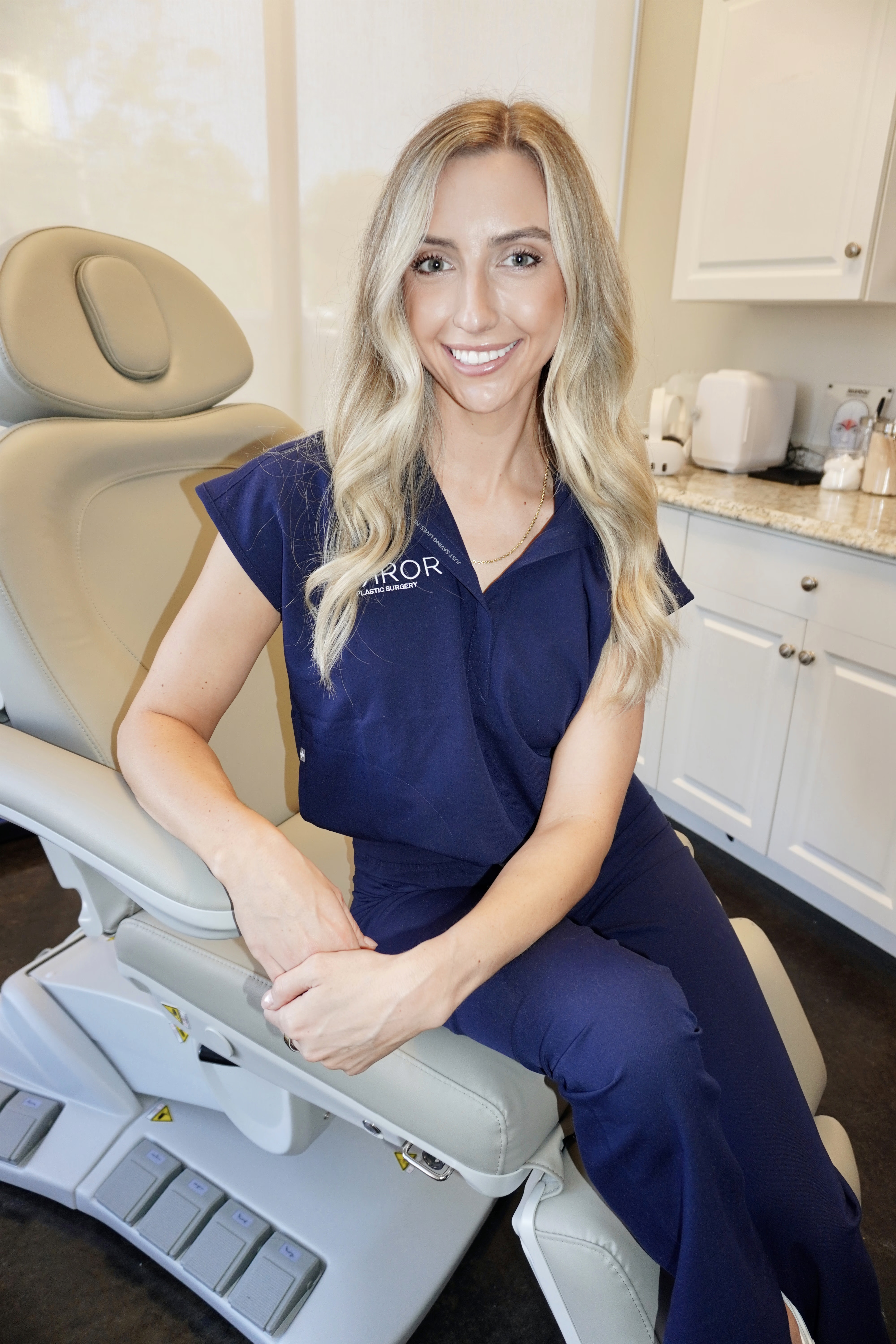
Ellie Pranckevicius is a board-certified Family Nurse Practitioner and the lead peptide therapy provider at Mirror Plastic Surgery. She holds a Bachelor’s in Health Science from Boston University, dual Bachelor’s and Master’s degrees in Nursing from the University of South Florida, and four years of critical-care experience in the Neuroscience ICU at Tampa General Hospital. This background gives her a precise understanding of metabolic physiology and the body’s adaptive responses. Ellie began her career in high-end medical aesthetics in Boston, and that combined foundation in skin physiology and advanced clinical medicine shapes every peptide protocol she designs. Her approach centers on education and transparency. She explains the physiology behind each recommendation in plain language and tells patients directly when an intervention is not yet warranted, placing long-term outcomes above short-term revenue.
Ellie Pranckevicius, FNP-BC
Frequently Asked Questions
How long does it typically take to break a GLP-1 plateau once a structured protocol is in place?
Most patients see renewed progress within four to eight weeks of applying consistent protein targets, resistance training, and a recalculated calorie deficit.1 Patients who also need a medication adjustment or transition to a next-generation peptide such as GLP-3R may take slightly longer, because the new protocol needs time to create measurable metabolic changes.1 Individual results vary based on baseline muscle mass, thyroid function, hormonal status, and adherence.
Is it safe to escalate my GLP-1 dose on my own to push past a plateau?
Self-directed dose escalation without a current lab panel and provider oversight carries real risks, including more GI side effects, faster lean-mass loss, and missed contraindications. Dose changes should follow a clinical review that includes metabolic markers, body-composition data, and a full medication list. Mirror Plastic Surgery’s concierge model is structured to support these decisions with the clinical context they require.
What makes GLP-3R different from semaglutide or tirzepatide for someone who has stalled?
GLP-3R is a newer compounded peptide that acts on related but distinct receptor pathways. It is reported to cause fewer gastrointestinal side effects than earlier GLP-1 formulations and may be less likely to contribute to muscle wasting, while also addressing insulin resistance and cardiovascular risk factors. It is not a direct replacement for FDA-approved medications but can be considered as part of a supervised escalation protocol when earlier agents have plateaued and labs support the transition.
Can peptide therapy for a GLP-1 plateau be combined with other wellness protocols?
Yes. Mirror Plastic Surgery’s concierge approach often combines GLP-class peptides with complementary protocols based on lab findings. For example, patients with fatigue alongside their plateau may benefit from NAD therapy that targets mitochondrial energy production, while those with elevated inflammatory markers may be candidates for BPC-157 or the Glow Stack. Every combination comes from lab results and a full health history, not a preset menu.
What happens to my results if I stop peptide therapy after breaking the plateau?
The metabolic adaptations that caused the original plateau remain after peptide therapy ends. Without the appetite regulation and metabolic support the peptide provides, hunger signals usually return to baseline and caloric intake often rises. Patients who stop therapy without a structured maintenance plan, including sustained protein intake and resistance training, commonly experience weight regain. Mirror Plastic Surgery builds maintenance protocols into every long-term peptide program to reduce this risk.
Conclusion: A Structured Path Through GLP-1 Plateaus
A GLP-1 plateau is a predictable physiological event, not a sign that treatment has failed. The four-step framework of protein and training optimization, calorie recalculation, dose review, and supervised peptide escalation addresses the specific mechanisms that drive the stall. Each step works best when guided by current lab data and a provider who understands the full clinical picture. Mirror Plastic Surgery’s concierge peptide program, led by Ellie Pranckevicius, is designed for this level of individualized, evidence-based care.
Book an appointment with Ellie to begin a lab-guided plateau evaluation and build a personalized plan to restart your progress.
1 Results may vary from person to person. Editorial content, before and after images, and patient testimonials do not constitute a guarantee of specific results.
Peptide therapy is intended for wellness and optimization purposes and is not prescribed to diagnose, treat, cure, or prevent disease unless specifically stated. Many peptides are not FDA-approved and may be used off-label. Some have limited long-term safety data, with a potential for unknown risks, complications, or desensitization with prolonged use.