
Written by: Ellie Pranckevicius, FNP-BC, Aesthetic Nurse Practitioner & Aesthetic Injector | Facial Restoration & Regenerative Injectable Specialist, Mirror Plastic Surgery
What You Will Learn About GLP-1 Costs in 2026
-
GLP-1 therapy costs in 2026 vary by insurance status, drug type, dose, and whether you receive medical supervision.
-
Many insured patients can use manufacturer savings cards, while uninsured or high-deductible patients pay the highest brand-name prices.
-
Retail pharmacies list clear prices for brand-name GLP-1s but do not include labs, dose adjustments, or follow-up care.
-
Medically supervised compounded GLP-1 and GLP-3R options often cost less than brand-name cash prices and include clinical support.
-
You can schedule a personalized consultation at Mirror Plastic Surgery for a clear cost breakdown based on your health profile.
Meet Your Practitioner: Ellie Pranckevicius, FNP-BC
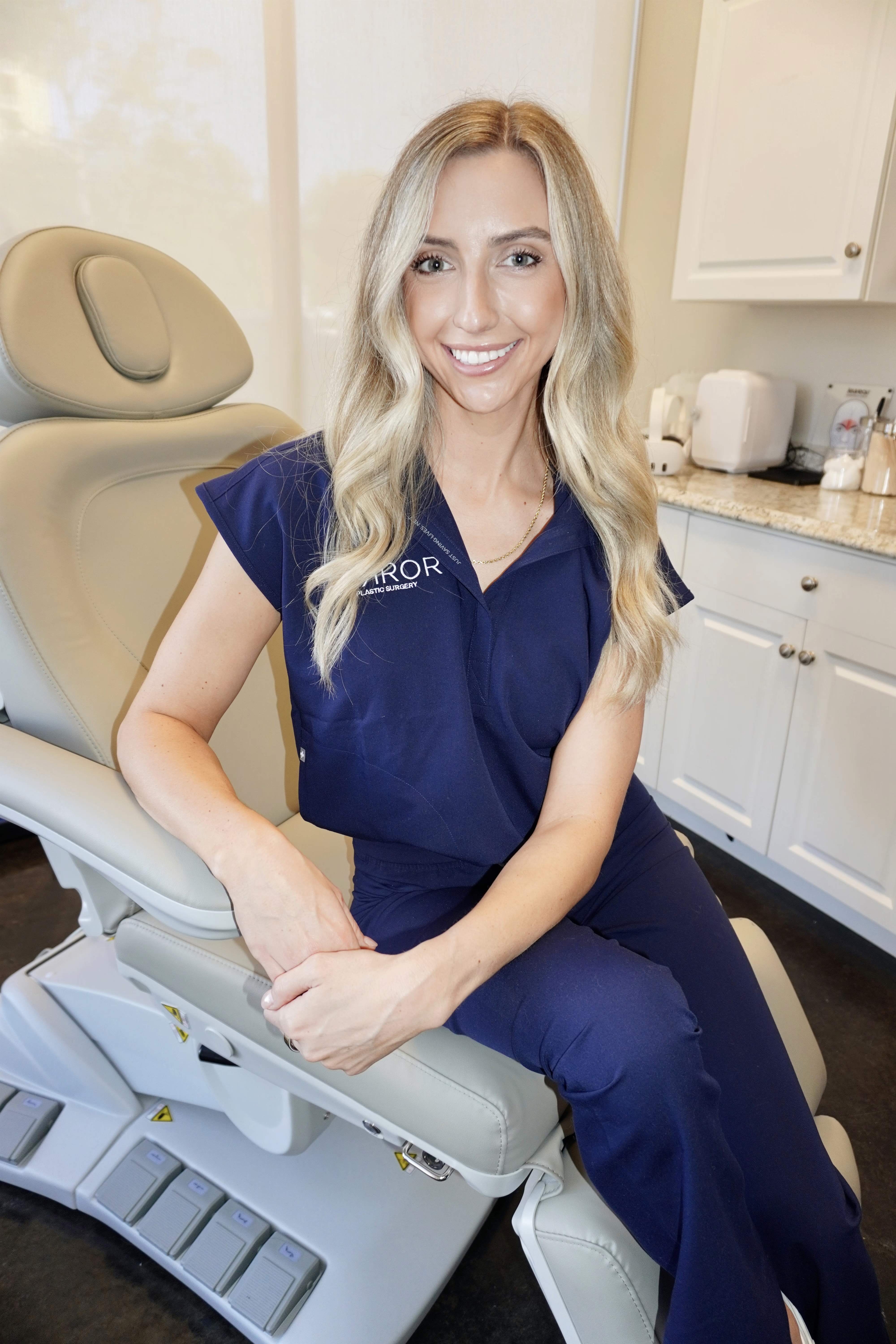
Peptide therapies at Mirror Plastic Surgery are led by Ellie Pranckevicius, a board-certified Family Nurse Practitioner. Her clinical background includes four years in the Neuroscience ICU at Tampa General Hospital, a Master’s in Nursing from the University of South Florida, and a premedical Bachelor’s in Health Science from Boston University. Before nursing, Ellie trained as an esthetician, which gives her a rare combination of skin physiology expertise and advanced clinical training. She approaches GLP-1 and GLP-3R therapy with thorough lab review, clear education about each formulation, and ongoing concierge support, not a one-size-fits-all prescription. When surgical needs arise, Ellie’s work is complemented by Dr. Akash Chandawarkar, MD, a Harvard-educated, Johns Hopkins-trained plastic surgeon and founder of Mirror Plastic Surgery.
2026 GLP-1 Therapy Cost Comparison Across Real-World Scenarios
Understanding your cost options in 2026 means looking at insurance-supported programs, retail cash prices, and supervised compounded care side by side. Because no standardized public pricing data for 2026 GLP-1 formulations was available at the time of publication, the table below describes each cost scenario qualitatively. Exact figures vary by pharmacy, dose, insurance tier, and provider. A personalized quote is provided during your consultation at Mirror Plastic Surgery.
|
Scenario |
Typical Monthly Cost Range |
Key Considerations |
Notes |
|---|---|---|---|
|
Insured with copay assistance |
Varies; manufacturer savings cards may reduce cost significantly for eligible patients |
Requires qualifying diagnosis, plan formulary coverage, and often prior authorization |
Eligibility and savings amounts change annually; confirm with insurer and manufacturer |
|
High-deductible / uninsured, brand-name |
Among the highest cash prices in the prescription market; costs vary by drug and dose |
No manufacturer card benefit for government-insured patients; discount cards may lower retail price |
Prices differ between semaglutide and tirzepatide products and between doses |
|
Cash-pay at retail pharmacy (Costco, major chains) |
Retail cash prices are comparable across major pharmacies; membership warehouses may offer modest discounts |
Requires valid prescription; no clinical oversight; dose titration not managed |
Costco and similar retailers dispense brand-name product only; compounded formulations are not available at retail |
|
Medically supervised compounded GLP-1 / GLP-3R |
Personalized quote at consultation; generally below brand-name cash price |
Includes clinical oversight, lab review, dose titration, and ongoing support |
Quality and supervision vary by provider; Mirror Plastic Surgery includes concierge follow-up |
Ozempic at $25 a Month: How Manufacturer Savings Actually Work
The widely cited $25-per-month Ozempic cost refers to Novo Nordisk’s savings card program for eligible commercially insured patients. This program excludes patients covered by Medicare, Medicaid, or other federal insurance plans. Eligibility also depends on the diagnosis used for prescribing, because coverage for weight management and coverage for type 2 diabetes follow different formulary rules, and many plans tightened prior authorization criteria in 2026.
Patients who qualify typically confirm that semaglutide appears on their plan’s formulary, obtain prior authorization from their prescriber, and then enroll through the manufacturer’s savings portal. Any copay amount above the savings card cap remains the patient’s responsibility. Patients who lose commercial insurance, change employers, or move to a government plan lose access to this savings program immediately.
This decision is best made during a clinical consultation where your full health profile and insurance details can be reviewed together.
Cheapest GLP-1 Options Without Insurance
Without insurance, out-of-pocket cost for brand-name GLP-1 medications depends on the retail pharmacy price for the specific drug and dose. Semaglutide (Ozempic, Wegovy) and tirzepatide (Mounjaro, Zepbound) have different list prices, and the injectable pen format means monthly cost scales with the prescribed dose. Discount tools such as GoodRx can lower retail prices at participating pharmacies, although savings vary by location and inventory.
Compounded semaglutide and tirzepatide entered a complex regulatory period in 2025 and 2026 after FDA shortage-list changes. The FDA’s position on compounded GLP-1 availability has shifted, and patients who buy compounded formulations from telehealth platforms or online pharmacies without clinical oversight face uncertainty about both legality and product quality. Medically supervised compounding through a licensed provider who reviews labs, monitors dosing, and works with vetted pharmacies functions as a different category from unsupervised online purchasing.
Mirror Plastic Surgery does not publish a fixed price list because every patient receives a protocol tailored to lab results, health history, and goals. Pricing is discussed clearly during consultation so you understand your exact monthly cost before starting therapy.
GLP-1 Pricing at Costco and Major Retail Pharmacies
Costco Pharmacy and other major chains such as CVS, Walgreens, and Walmart dispense brand-name GLP-1 medications at cash prices based on the manufacturer’s wholesale acquisition cost plus pharmacy markup. Costco’s membership model can produce modest savings on some high-cost medications, although the difference on GLP-1 injectables is usually smaller than on generics, where margins are wider.
Retail pharmacies provide the medication but not the medical framework around it. A patient picking up a GLP-1 pen at a retail counter receives the drug and a package insert, not a metabolic health assessment, not a review of thyroid or kidney function, and not a plan for managing side effects or adjusting the dose over time. For patients focused only on price, retail cash pricing is straightforward and similar across major chains. For patients focused on outcomes and safety, the lack of clinical oversight creates a significant gap.
This comparison between retail and supervised options is often easiest to sort out during a structured consultation where cost and clinical needs can be weighed together.
GLP-3R Cost and How It May Reduce Common Side Effects
GLP-3R represents a newer generation of peptide formulation within the GLP receptor agonist class. Standard GLP-1 agonists act mainly on the glucagon-like peptide-1 receptor to suppress appetite and improve insulin sensitivity. GLP-3R formulations are reported to engage a broader receptor profile that may address insulin resistance, weight management, and cardiovascular risk factors within a single protocol.
Tolerability often sets GLP-3R apart. Gastrointestinal side effects such as nausea, vomiting, constipation, and diarrhea are among the most common reasons patients stop standard GLP-1 therapy. GLP-3R formulations are reported to cause fewer and less intense GI symptoms for many patients, which supports better adherence and more consistent dosing.1 Lean muscle loss alongside fat loss is another concern with standard GLP-1 therapy, especially at higher doses or with rapid titration. GLP-3R formulations are reported to be less likely to cause muscle wasting, which matters for patients who are physically active or focused on body composition rather than the scale alone.1
At Mirror Plastic Surgery, GLP-3R is offered as a compounded, medically supervised protocol. Ellie reviews each patient’s metabolic labs, body composition goals, and cardiovascular risk factors before recommending a formulation and starting dose. Because GLP-3R is a compounded peptide rather than an FDA-approved brand-name drug, sourcing quality becomes the primary safety variable, a topic covered in detail in the quality checklist below. Cost for GLP-3R therapy is discussed individually at consultation, because dose and protocol length differ from patient to patient.
Quality Checklist for Compounded GLP-1 and GLP-3R Therapy
The compounded GLP-1 market expanded quickly between 2023 and 2025, and quality varied just as quickly. Patients in online forums and Reddit communities have reported experiences ranging from no effect at all, which suggests low or absent active ingredient, to adverse reactions linked to impurities or incorrect reconstitution. These problems do not come from compounding itself. They arise when patients buy from sources that skip third-party batch testing and provide no clinical guidance.
A high-quality compounded GLP-1 or GLP-3R protocol includes several specific elements. The compounding pharmacy should perform batch testing for potency, sterility, and contaminants, with certificates of analysis available on request. The prescribing provider should review medical history and labs, including thyroid function, kidney and liver markers, and diabetes-related labs, before starting therapy, because GLP-1 and GLP-3R formulations are contraindicated in patients with a personal or family history of medullary thyroid carcinoma or multiple endocrine neoplasia syndrome type 2. Ongoing lab monitoring should occur at set intervals to track metabolic response, organ function, and any new contraindications. Dose titration should be guided by a clinician, because too-rapid escalation is the most common trigger for GI side effects.
Mirror Plastic Surgery’s process covers all of these elements. Ellie conducts a 30-to-60-minute consultation, reviews or orders the necessary lab panels, works with pharmacies that provide batch testing, and remains available by direct text for questions, side effect support, and refill coordination. Patients receive clear reconstitution instructions and, when needed, video demonstrations for self-administration.
Frequently Asked Questions
Are compounded GLP-1 and GLP-3R formulations legal in 2026?
The regulatory status of compounded GLP-1 formulations shifted in 2025 and 2026 after FDA shortage-list updates. Compounding by a licensed 503A or 503B pharmacy under a valid prescription from a licensed practitioner remains a legal pathway, although the conditions that allow compounding are narrower than during the peak shortage period. GLP-3R, as a distinct peptide formulation, falls into a different regulatory category. Patients should confirm current status with their prescribing provider. At Mirror Plastic Surgery, Ellie tracks regulatory changes and advises patients on what is legally and clinically available at the time of consultation.
Why do some patients experience more GI side effects than others on GLP-1 therapy?
Gastrointestinal side effects from GLP-1 therapy are dose-dependent and highly individual. Factors that increase GI symptoms include rapid dose escalation, higher starting doses, use of other medications that slow gastric motility, and personal variation in GLP-1 receptor density in the gut. Patients who titrate slowly under clinical supervision consistently report better tolerability than those who self-titrate or start at higher doses. GLP-3R formulations are reported to reduce GI burden for many patients, which makes them a meaningful option for people who stopped standard GLP-1 therapy because of nausea or vomiting.
Will I lose muscle mass on GLP-1 or GLP-3R therapy?
Lean muscle loss can occur with standard GLP-1 therapy, particularly at higher doses and in patients who do not perform resistance training. Studies on semaglutide and tirzepatide show that part of total weight loss often comes from lean mass rather than fat alone.1 GLP-3R formulations are reported to be less likely to cause muscle wasting, although outcomes still depend on protein intake, activity level, and the specific protocol.1 Mirror Plastic Surgery’s approach includes baseline body composition assessment and, when appropriate, pairing GLP-3R with complementary peptides such as Sermorelin or Ipamorelin to support natural growth hormone production and muscle retention.
Do I need labs before starting GLP-1 or GLP-3R therapy?
Lab work before starting GLP-1 or GLP-3R therapy is standard at Mirror Plastic Surgery. Ellie reviews thyroid function, kidney and liver markers, fasting glucose, HbA1c, and a hormone panel before recommending any formulation. These labs identify contraindications, create a metabolic baseline for tracking response, and support dose personalization. Patients who arrive without recent labs can have them ordered at or before the consultation. This level of screening clearly separates supervised compounding in a clinical practice from buying peptides online without evaluation.
What happens to results if I stop GLP-1 or GLP-3R therapy?
GLP-1 and GLP-3R therapies do not permanently cure metabolic dysfunction. After therapy stops, appetite regulation and insulin sensitivity usually drift back toward baseline over weeks to months, and weight regain is common without lifestyle support.1 The degree of regain depends on the metabolic changes achieved during therapy, any shifts in diet and activity, and whether a maintenance plan exists. Ellie discusses long-term maintenance at the start of every protocol, including the option to move to a lower maintenance dose instead of stopping suddenly and the potential role of complementary peptides in supporting metabolic health over time.
Conclusion: Matching GLP-1 Costs to Your Health and Safety Needs
GLP-1 therapy monthly costs in 2026 depend on insurance status, formulation, dose, pharmacy choice, and the level of clinical oversight. Insured patients with qualifying diagnoses may access manufacturer savings programs that lower copays. Uninsured or high-deductible patients face brand-name cash prices that rank among the highest out-of-pocket medication costs. Retail pharmacies provide clear pricing but no clinical services. Medically supervised compounded GLP-1 and GLP-3R protocols offer a different cost structure plus personalized care, verified sourcing, and ongoing oversight when delivered by a high-quality practice.
Mirror Plastic Surgery’s peptide program, led by Ellie Pranckevicius, FNP-BC, follows that standard with comprehensive lab review before initiation, collaboration with batch-tested compounding pharmacies, individualized dose titration, and direct concierge access throughout treatment. Pricing is discussed transparently and individually at consultation, because no two patients share the same metabolic profile, goals, or starting point. Book an appointment with Ellie to receive a personalized assessment and a clear picture of what GLP-1 or GLP-3R therapy would look like for you.
1 Results may vary from person to person. Editorial content, before and after images, and patient testimonials do not constitute a guarantee of specific results.
Peptide therapy is intended for wellness and optimization purposes and is not prescribed to diagnose, treat, cure, or prevent disease unless specifically stated. Many peptides are not FDA-approved and may be used off-label. Some have limited long-term safety data, with a potential for unknown risks, complications, or desensitization with prolonged use.