
Written by: Ellie Pranckevicius, FNP-BC, Aesthetic Nurse Practitioner & Aesthetic Injector | Facial Restoration & Regenerative Injectable Specialist, Mirror Plastic Surgery
Key Takeaways
-
Concierge weight loss peptides are amino acid compounds prescribed and monitored by a clinician, with protocols tailored to each patient’s labs, metabolic markers, and health history.
-
Medically supervised programs at Mirror Plastic Surgery combine newer GLP-3R receptor agonist formulations, comprehensive lab panels, and adjunctive recovery compounds into structured plans that support long-term metabolic health.
-
At Mirror Plastic Surgery in St. Petersburg, Florida, Ellie Pranckevicius, FNP-BC, leads peptide therapy, bringing ICU experience and aesthetic training to a true concierge model.
-
A five-step evaluation framework, including intake, lab review, protocol design, administration guidance, and ongoing monitoring, guides safe, personalized peptide therapy at Mirror Plastic Surgery.
-
Patients who want individualized, lab-driven peptide protocols can schedule a consultation at Mirror Plastic Surgery to begin a structured evaluation.
Introduction to Concierge Peptide Therapy at Mirror Plastic Surgery
Peptide therapy for weight management has moved beyond one-size-fits-all GLP-1 prescriptions. Medically supervised programs now use newer receptor agonist formulations, comprehensive lab panels, and adjunctive recovery compounds in coordinated protocols that support long-term metabolic health. The distinction between supervised and unsupervised use is clinically significant. Non-FDA-approved injectable peptides sold through wellness spas, online sites, or the grey market carry added risks of contamination, inconsistent sourcing, and improper dosing. Supervised programs counter these risks through structured evaluation, batch-tested sourcing, and continuous monitoring.
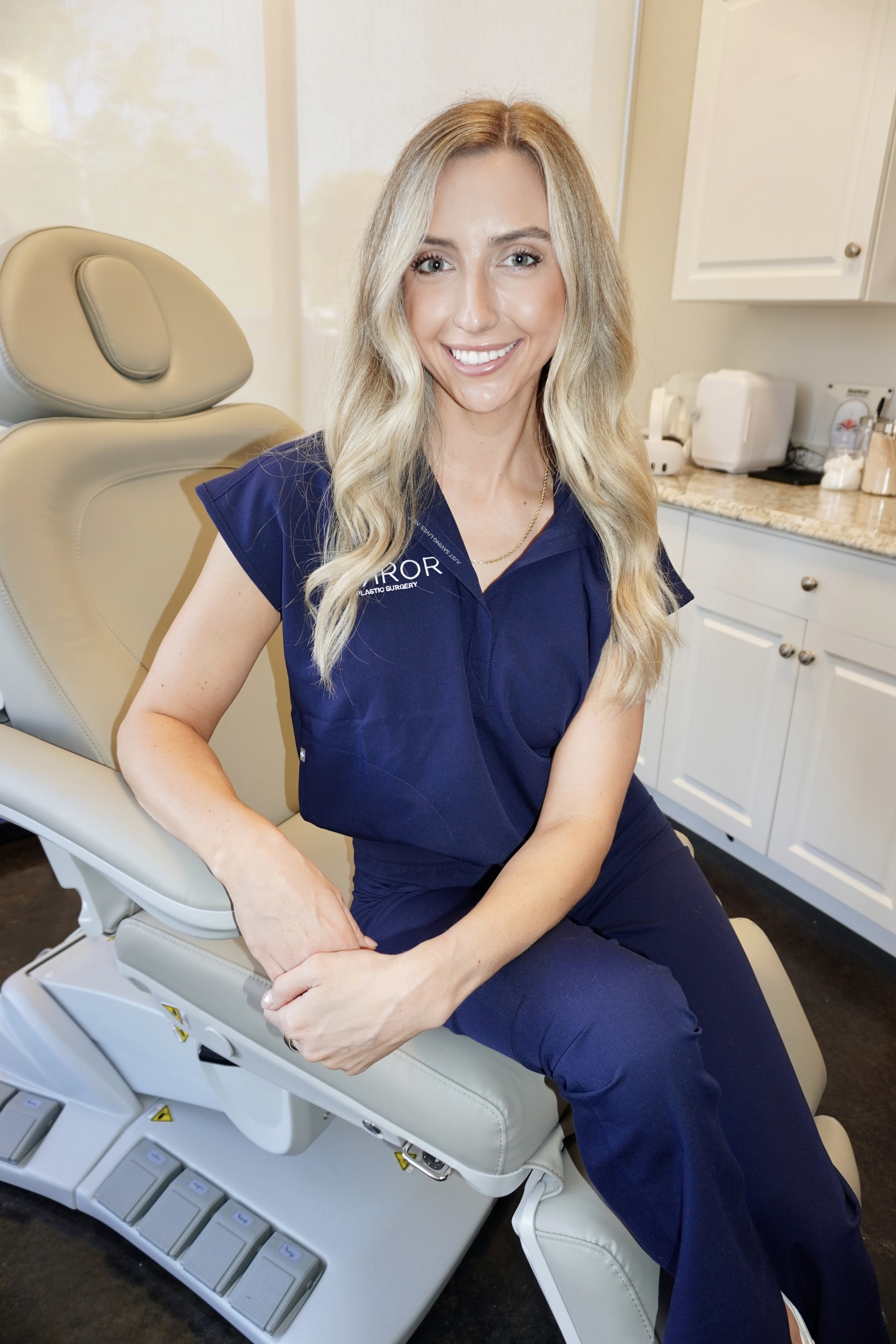
This level of clinical rigor requires a practitioner with both metabolic expertise and aesthetic training. At Mirror Plastic Surgery in St. Petersburg, Florida, peptide therapy is led by Ellie Pranckevicius, FNP-BC, a board-certified Family Nurse Practitioner whose background spans four years in the Neuroscience ICU at Tampa General Hospital, a premedical degree from Boston University, and graduate nursing training at the University of South Florida. Before pursuing her NP credentials, Ellie built her clinical foundation at a high-end medical spa in Boston, which gave her a dual command of skin physiology and advanced metabolic science. That combination of ICU-level physiological rigor and aesthetic expertise defines the concierge peptide model at Mirror.
Ellie’s Clinical Background and Concierge Approach
Ellie’s clinical pathway is uncommon in the peptide therapy space. Her four years managing complex neurological patients in a Level I trauma ICU required mastery of metabolic physiology, pharmacokinetics, and real-time clinical decision-making. These skills translate directly to safe peptide protocol design. She holds both a Bachelor’s and Master’s in Nursing from the University of South Florida and is board-certified as a Family Nurse Practitioner.
Her concierge model at Mirror Plastic Surgery reflects a shared practice philosophy that patients deserve unhurried, individualized attention. Consultations run 30 to 60 minutes and include a full medical history review, symptom assessment, and lab panel interpretation. Ellie is available to patients via direct text message 24 hours a day, seven days a week, which sets Mirror apart from high-volume telehealth platforms where provider contact is limited to scheduled video calls. When a patient’s goals extend into surgical territory, Ellie’s work is complemented by the practice’s board-certified plastic surgeon with Harvard and Johns Hopkins training and fellowship experience at the Manhattan Eye Ear and Throat Hospital.
Core Terms in Concierge Peptide Therapy
Clear language around peptide therapy helps patients compare programs and understand their options.
GLP-1 receptor agonists form the established class of weight-management peptides. Agents such as semaglutide and tirzepatide have large Phase III trial datasets behind them. In the STEP 1 trial, adults receiving semaglutide 2.4 mg lost an average of 14.9% of starting body weight over 68 weeks1, and Adults taking the highest dose of tirzepatide (15 mg) lost an average of 20.9% of starting body weight over 72 weeks1.
GLP-3R formulations represent a newer generation of incretin-pathway compounds. Mirror’s GLP-3R compounding protocol is designed to address tolerability limitations associated with legacy GLP-1 agents, including gastrointestinal side effects and muscle-wasting concerns. These formulations also support broader metabolic indications such as insulin resistance and cardiovascular risk factor reduction. In the 52-week ACHIEVE-3 Phase 3 trial, next-generation oral GLP-1 receptor agonist orforglipron produced 9.2% weight loss versus 5.3% with oral semaglutide, representing 73.6% greater relative weight loss1, which illustrates the pace of innovation in this class.
Custom peptide stacks are combinations of compounds selected to address a patient’s full clinical picture. At Mirror, the Glow Stack, which includes BPC-157, GHK-Cu, and TB-500, targets systemic inflammation, collagen and elastin production, and soft-tissue repair. These adjunctive peptides are not weight-loss agents in isolation. Ellie uses them to support lean-mass preservation, recovery, and anti-inflammatory goals alongside a primary GLP-3R protocol.
Five-Step Peptide Therapy Process at Mirror
A well-structured concierge peptide program follows a defined clinical pathway. The following five-step evaluation framework describes how lab-monitored peptide therapy works at Mirror Plastic Surgery.
-
Comprehensive Intake and Medical History Review. Ellie conducts a 30–60 minute consultation covering current medications, prior weight-loss attempts, metabolic symptoms, and aesthetic goals. This session establishes the clinical baseline and identifies red flags that would modify or contraindicate specific peptides.
-
Lab Panel Ordering and Interpretation. A thorough metabolic workup for weight-management therapy includes fasting insulin, fasting glucose, HOMA-IR, HbA1c, a full lipid panel including ApoB and Lp(a), thyroid markers (TSH, free T3, free T4), liver and kidney function markers (ALT, AST, eGFR, creatinine), and hormone panels. This comprehensive panel establishes baseline metabolic function and identifies contraindications before therapy begins. When fasting glucose and A1c results do not align with symptoms or weight-loss trends, clinicians add fasting insulin and calculate HOMA-IR to better assess insulin resistance, which can reveal metabolic dysfunction that surface-level tests might miss.
-
Protocol Design. Based on lab findings and clinical assessment, Ellie designs a custom peptide stack. For weight management, GLP-3R compounding forms the primary intervention. Adjunctive peptides such as BPC-157 or TB-500 are added when inflammation markers, recovery needs, or body-composition data support their inclusion.
-
Administration and Reconstitution Guidance. Patients receive detailed instructions for self-administration, often with video demonstrations. Peptides are sourced from reputable providers with rigorous batch testing for purity, potency, and sterility, which addresses the contamination and quality risks noted earlier for non-FDA-approved compounds.
-
Ongoing Monitoring and Follow-Up. Repeat laboratory testing after therapy initiation monitors progress, optimizes dosing, and aligns treatment with individual patient goals. Ellie remains accessible via text between appointments, allowing real-time adjustments when side effects, dosing questions, or lab changes arise.
Peptide Innovation and Regulation in Today’s Market
The peptide therapy market is evolving on two fronts: pharmacological innovation and regulatory tightening. On the innovation side, next-generation GLP-3R and multi-agonist formulations are demonstrating efficacy that exceeds legacy GLP-1 agents. In a Phase 2 trial, retatrutide, a triple GLP-1/GIP/glucagon agonist, produced up to 24% average weight loss after 48 weeks1, and Lilly has submitted orforglipron, the oral GLP-1 mentioned earlier, to regulators in over 40 countries, with potential U.S. regulatory action for obesity expected in Q2 2026.
On the regulatory front, the landscape for compounded GLP-1 products has tightened considerably. FDA enforcement discretion periods for compounding semaglutide injection products that are essentially copies of approved drugs ended April 22, 2025 for state-licensed pharmacies under 503A and May 22, 2025 for outsourcing facilities under 503B. This regulatory shift highlights the value of working with a clinician who monitors sourcing compliance continuously.
Beyond regulatory compliance, the clinical sophistication of peptide protocols has also advanced. The integration of adjunctive peptides with primary weight-loss protocols is gaining clinical attention as practitioners address a key limitation of GLP-based therapies: lean-mass loss. Weight loss from incretin-based therapies can reduce lean mass, which often represents a substantial portion of total weight lost and raises concerns about sarcopenia risk. Mirror’s full-stack approach, pairing GLP-3R protocols with anti-inflammatory compounds such as BPC-157, GHK-Cu, and TB-500, addresses this concern by supporting tissue repair and lean-mass preservation alongside fat reduction.
Key Factors When Choosing Concierge Peptide Therapy in Florida
Sourcing Quality and Product Safety
Sourcing quality is the most immediate safety variable for patients considering concierge peptide therapy in Florida. Independent testing of products marketed as compounded tirzepatide has found highly variable concentrations, unlabeled additives, and in some cases the wrong compound entirely. Mirror sources exclusively from providers with documented batch testing.
Level of Clinical Supervision
Supervision level determines whether dosing errors are caught before they cause harm. The FDA has received multiple reports of adverse events, some requiring hospitalization, linked to dosing errors with compounded injectable semaglutide. Ellie’s 24/7 direct-access model provides a safety net that generic telehealth platforms cannot match.
Timelines, Maintenance, and Outcome Variability
Realistic timelines matter for adherence. GLP-1 receptor agonists produce noticeable appetite reduction in the first one to two weeks, with measurable weight loss typically beginning in weeks four to eight and continuing over six to twelve months as dosing is titrated1. This extended timeline requires patience and clear expectations. Patients who expect faster results without lifestyle integration face a higher risk of discontinuation when early progress feels slower than anticipated.
Maintenance planning is non-negotiable for sustained outcomes. Weight changes from a single peptide injection over about three months often do not stay changed once injections stop1. Durable results require a structured plan that addresses food, sleep, stress, hormones, and metabolic context alongside peptide therapy.
Outcome variability is inherent to the therapy. Individualized dosing, regular data review, and adjustments based on body-composition metrics and metabolic labs, rather than aesthetics alone, are required for safe, long-term peptide use.
Risks, Limitations, and Clinical Challenges
Peptide therapy carries a defined risk profile that patients and clinicians must address transparently. Common adverse effects of newer injectable peptides include injection-site skin irritation, fatigue, headaches, and gastrointestinal issues. For GLP-class compounds specifically, the most common adverse events in clinical trials were gastrointestinal, including nausea, diarrhea, vomiting, dyspepsia, and decreased appetite.
Contraindications require pre-treatment screening. Thyroid, liver, kidney, and hormone panels are reviewed before any protocol is initiated at Mirror, and patients with specific pre-existing conditions or medication interactions receive tailored counseling. Dosing and frequency for newer injectable peptides remain uncertain due to limited evidence from human trials, which reinforces the need for clinician-led titration rather than self-directed dosing.
The risks of unregulated products extend beyond predictable side effects. Adverse events reported to the FDA from compounded GLP-1 products include severe hypoglycemia, dosing errors from incorrect concentration labeling, and allergic reactions to unlabeled excipients. Patients who source peptides from online retailers without medical supervision have no reliable way to verify product identity, concentration, or sterility.
Lean-mass loss during aggressive weight-loss protocols remains a clinically meaningful limitation. Sarcopenic obesity affects many older adults and individuals with type 2 diabetes, which makes body-composition monitoring an essential component of any responsible program.
Common Misconceptions About Peptide Therapy
Peptides are only for weight loss. Weight management represents one application within a broad therapeutic landscape. Mirror’s peptide offerings address systemic inflammation, post-surgical recovery, collagen and elastin production, anxiety, energy, sexual wellness, and fertility, each supported by distinct mechanisms and clinical rationales.
Everyone achieves identical results. Individual weight-loss outcomes with GLP-1 peptides vary because response depends on factors beyond the medication itself, including hormonal status1. Genetics, diet, sleep quality, stress load, and baseline metabolic health all influence outcomes. Personalized lab-driven protocols exist because population averages do not predict individual response.
Benefits are permanent after discontinuation. Peptide therapy does not function as a one-time intervention. The physiological mechanisms that produced results, including appetite regulation, metabolic signaling, and anti-inflammatory activity, require ongoing support to be maintained. Ellie builds maintenance protocols into every program from the outset, which sets realistic expectations and reduces the risk of rebound.
All compounded peptides are equivalent to FDA-approved drugs. FDA-approved semaglutide products contain semaglutide in its free base form, while many compounding pharmacies have used semaglutide sodium or semaglutide acetate salt forms that the FDA has explicitly stated are not equivalent to the approved product. The distinction between formulations has direct implications for bioavailability and safety.
Frequently Asked Questions
Are peptides FDA-approved, and is it safe to use them without a prescription?
Many peptides used in concierge wellness programs are not FDA-approved, though researchers have studied them in clinical settings for over a decade. The primary safety risk often comes from obtaining them through unregulated sources without medical oversight. At Mirror Plastic Surgery, every peptide is sourced from providers with documented batch testing for purity, potency, and sterility. Ellie conducts a comprehensive intake that includes lab panels and medical history review before any protocol begins, which helps ensure that each patient’s therapy matches their health profile and avoids contraindicated combinations.
Who is a good candidate for GLP-3R weight loss therapy?
Ideal candidates are adults who have not achieved sustained results through diet, exercise, or prior telehealth GLP-1 programs and who have metabolic markers, such as elevated fasting insulin, HOMA-IR, HbA1c, or lipid abnormalities, that suggest a pharmacologic intervention is clinically warranted. Patients with a history of thyroid cancer, pancreatitis, or certain gastrointestinal conditions may not be appropriate candidates. A thorough lab review and medical history evaluation therefore precede every protocol at Mirror. The consultation with Ellie is structured to determine candidacy honestly, including advising patients when a peptide intervention is not yet necessary.
How long does it take to see results with supervised peptide therapy?
Timelines vary by compound and individual metabolic baseline. For GLP-class weight-loss peptides, appetite reduction is typically noticeable within the first one to two weeks, with measurable weight loss beginning around weeks four to eight and continuing over six to twelve months as dosing is titrated upward. Anti-inflammatory and recovery peptides such as BPC-157 and TB-500 may produce noticeable effects within one to two weeks for acute tissue repair, while body-composition changes from adjunctive compounds generally require three to six months to reach peak effectiveness. Ellie monitors lab markers and body-composition trends throughout therapy to confirm that the protocol is producing the intended results and to adjust dosing when needed.
What happens to my results if I stop taking peptides?
Stopping peptide therapy without a structured maintenance plan usually leads to a gradual return toward baseline. For weight management, the appetite-regulating and metabolic signaling effects of GLP-class peptides diminish after cessation, and weight regain is common without concurrent lifestyle changes. For anti-inflammatory peptides, the inflammatory processes being managed are likely to return to their prior state. Mirror Plastic Surgery incorporates maintenance protocols into every program from the start. Ellie provides ongoing guidance on how to transition from active treatment to a sustainable long-term regimen that does not rely on indefinite high-dose therapy.
How does Mirror Plastic Surgery’s concierge model differ from standard telehealth peptide programs?
Standard telehealth platforms typically offer limited provider contact, generic dosing protocols, and no lab interpretation. Mirror’s concierge model provides 30–60 minute one-on-one consultations with Ellie, comprehensive lab panel review before and during therapy, and custom peptide stacks tailored to individual biomarker profiles. Patients also receive 24/7 direct text access to Ellie for questions, side-effect management, and refill requests. Peptides are sourced exclusively from batch-tested providers, and the entire program, from consultation through shipping, can be conducted in person at Mirror’s St. Petersburg location or remotely across the United States. The practice limits patient volume so that every individual receives focused, unhurried attention.
Conclusion: Deciding Whether Concierge Peptides Fit Your Goals
Concierge weight loss peptides offer a meaningful advance over generic telehealth programs when delivered within a framework of rigorous lab monitoring, batch-tested sourcing, individualized protocol design, and continuous clinician access. GLP-3R formulations provide a promising evolution beyond legacy GLP-1 agents, especially for patients who have experienced tolerability issues or insufficient results with earlier compounds. Adjunctive peptides such as BPC-157, GHK-Cu, and TB-500 add clinical value when used to support lean-mass preservation, inflammation control, and recovery as part of a coherent, evidence-informed protocol.
The decision to pursue peptide therapy is best made with a practitioner who combines ICU-level physiological expertise, aesthetic training, and a clear, patient-first communication style. At Mirror Plastic Surgery, that practitioner is Ellie Pranckevicius.
1 Results may vary from person to person. Editorial content, before and after images, and patient testimonials do not constitute a guarantee of specific results.
Peptide therapy is intended for wellness and optimization purposes and is not prescribed to diagnose, treat, cure, or prevent disease unless specifically stated. Many peptides are not FDA-approved and may be used off-label. Some have limited long-term safety data, with a potential for unknown risks, complications, or desensitization with prolonged use.