
Written by: Ellie Pranckevicius, FNP-BC, Aesthetic Nurse Practitioner & Aesthetic Injector | Facial Restoration & Regenerative Injectable Specialist, Mirror Plastic Surgery
Key Takeaways
- Collagen peptides supply key amino acids that support keratin production and follicle health. Most people see nail and hair changes after 8 to 24 weeks of daily use.1
- Clinical studies show that 2.5 to 5 g of hydrolyzed collagen per day can improve nail growth, reduce brittleness, and enhance skin elasticity within about 8 to 12 weeks.1
- Biotin and collagen peptides work through different mechanisms. Collagen peptides are often more relevant for people without confirmed biotin deficiency.
- When hormonal imbalances, iron deficiency, or persistent symptoms after 12 weeks are present, generic collagen alone is not enough and a more targeted, lab-informed plan is appropriate.
- Mirror Plastic Surgery offers medically supervised GHK-CU peptide therapy for patients who want a more tailored approach. Schedule your consultation today to explore personalized options.
How Collagen Peptides Support Hair Follicles and Nail Strength
Collagen is the most abundant structural protein in the human body, and Type I and Type III collagen dominate in the skin. When you ingest hydrolyzed collagen, your body breaks it into smaller peptide chains and individual amino acids, primarily glycine, proline, and hydroxyproline. These circulate through the bloodstream and are taken up by fibroblasts and keratinocytes.
Hair shafts are made mostly of keratin, a fibrous protein that relies on adequate proline and glycine as precursor amino acids. The dermal papilla and follicle sheath are collagen-rich structures that depend on an intact extracellular matrix for normal cycling between anagen (growth), catagen (transition), and telogen (rest) phases. Collagen peptide supplementation likely supports this matrix by supplying amino acid building blocks, which may prolong the anagen phase and improve follicle anchoring.
Nail plates are also keratin-based and rest on a collagen-rich nail bed. Collagen peptides may support nail plate integrity by reinforcing the underlying connective tissue. This support can reduce brittleness and promote a steadier nail growth rate.
Clinical Evidence for Collagen: Doses and 8–24 Week Results
Human trials on collagen peptides for hair and nail outcomes remain limited, yet the available data point in a similar direction. The table below highlights key studies with dosing and reported outcomes, with each data point cited inline.
| Study | Daily Dose | Duration | Reported Outcomes |
|---|---|---|---|
| Hexsel et al., 2017 (J Cosmet Dermatol) | hydrolyzed collagen peptides | 24 weeks | improvements in nail growth and brittleness |
| Proksch et al., 2014 (Skin Pharmacol Physiol 27:47–55) | 2.5 g or 5.0 g hydrolyzed collagen | 8 weeks | improved skin elasticity |
| Choi et al., 2019 (Nutrients) | fish collagen peptide | 12 weeks | increased skin hydration, elasticity, and reduced wrinkling |
Across these trials, changes in skin and nail parameters appeared after consistent daily supplementation for 8 to 24 weeks.1 Nail outcomes often take 12 weeks or longer to show up because the nail plate grows slowly.1 Changes in hair shaft diameter and tensile strength tend to be more subtle and may require a longer course before they become obvious in daily life.1
Collagen Peptides vs. Biotin for Thinning Hair
Biotin, or vitamin B7, is heavily marketed for hair and nail health, yet it works very differently from collagen peptides. The two are not direct substitutes.
- Biotin acts as a cofactor for carboxylase enzymes involved in fatty acid synthesis and amino acid metabolism. True biotin deficiency is rare in healthy adults, and evidence for benefit in non-deficient individuals remains limited.
- Collagen peptides directly supply these structural amino acids, which form the extracellular matrix around hair follicles and the nail bed. This action occurs at the level of raw material rather than enzyme activation.
- Biotin can interfere with certain laboratory assays, including thyroid and cardiac troponin tests, which matters for patients who need regular lab monitoring.
People with confirmed biotin deficiency should use biotin supplementation. Those with normal biotin status who still experience thinning hair or brittle nails often benefit more from collagen peptides, which address a different biological gap. Neither option works as a universal fix. The right choice depends on nutritional status, lab findings, and the underlying cause of hair or nail changes.
When Collagen Alone Is Not Enough for Hair and Nail Concerns
Over-the-counter collagen powders provide amino acid building blocks throughout the body. They do not target hair follicles directly, correct hormonal or micronutrient drivers of hair loss, or stimulate collagen production inside the follicle on their own. Several clinical scenarios signal that collagen by itself will not fully address the problem.
- Hair loss with a clear hormonal driver, such as thyroid dysfunction, androgen excess, or estrogen decline, requires direct treatment of the hormone imbalance rather than amino acid supplementation alone.
- Patients with iron deficiency or ferritin levels below 40 ng/mL, a range linked with telogen effluvium, will gain limited benefit from collagen unless iron levels are corrected at the same time.
- Individuals who use collagen consistently for 12 or more weeks without measurable improvement in hair density or nail integrity likely need a more targeted strategy, not just more time on the same supplement.
- Patients with systemic inflammation have a disrupted follicle microenvironment and need anti-inflammatory support that collagen peptides alone cannot provide.
In these situations, a structured evaluation with appropriate lab testing is the next logical step before moving to advanced therapies.
GHK-CU Peptide Therapy at Mirror Plastic Surgery
GHK-CU, or copper peptide, is a naturally occurring tripeptide called glycyl-L-histidyl-L-lysine that binds copper. Unlike hydrolyzed collagen, GHK-CU does not act as a structural substrate. It functions as a signaling molecule that increases collagen and elastin synthesis at the cellular level, activates antioxidant enzymes, and shows follicle-stimulating activity in preclinical and early clinical research.
Studies of GHK-CU report larger hair follicle size, increased hair growth, and a higher proportion of follicles in the anagen phase.1 The peptide also influences genes involved in collagen remodeling, which connects it to both hair follicle support and nail matrix health.
At Mirror Plastic Surgery, GHK-CU is part of the Glow Stack, a curated combination of GHK-CU, BPC-157, and TB500. This stack is designed to address systemic inflammation, collagen and elastin decline, and hair, skin, and nail health at the same time. Each protocol begins with a comprehensive lab panel reviewed by Ellie Pranckevicius, FNP-BC, so the therapy matches the patient’s physiology and health history.
Book an appointment with Ellie to see whether GHK-CU peptide therapy fits your hair and nail health goals.
Practitioner Spotlight: Ellie Pranckevicius, FNP-BC
Ellie Pranckevicius leads peptide therapies at Mirror Plastic Surgery. She holds a Master’s in Nursing from the University of South Florida and is a board-certified Family Nurse Practitioner. Her background includes four years in the Neuroscience ICU at Tampa General Hospital, where she developed strong expertise in physiology and metabolic health. She began her career as a licensed esthetician at a medical spa in Boston, which gives her a rare blend of aesthetic insight and clinical rigor.
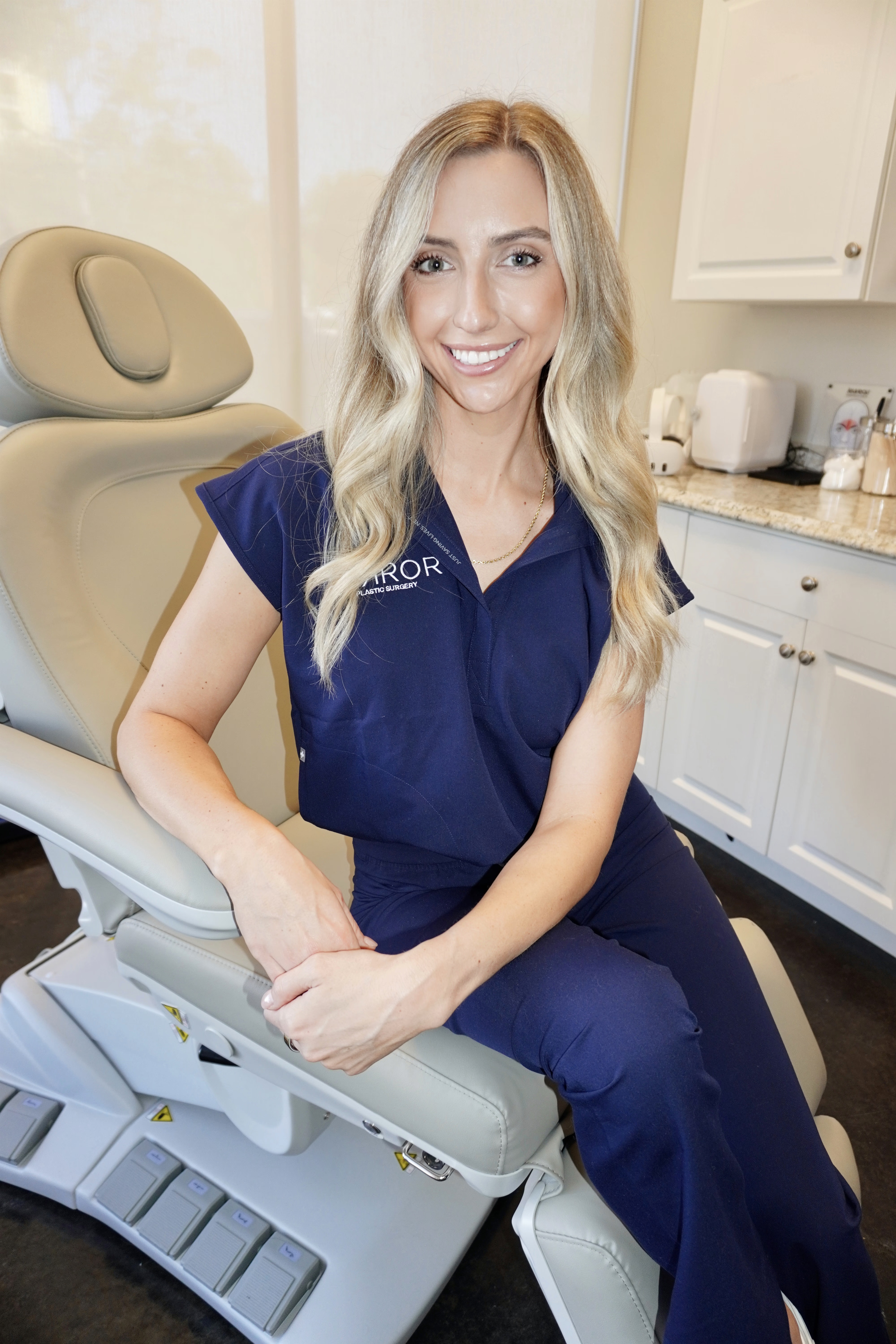
Ellie focuses on education and transparency in every treatment plan. She reviews each patient’s medical history and lab results before recommending a peptide protocol and offers ongoing concierge support, including direct text access, throughout treatment. She frequently advises patients to delay or skip a therapy when it is not yet necessary, placing long-term outcomes ahead of short-term revenue.
Key Terms for Hair, Skin, and Nail Support
- Hydrolyzed collagen / collagen peptides: Collagen that has been enzymatically broken into shorter amino acid chains to improve absorption in the gut.
- Type I collagen: The main collagen type in skin, hair follicles, tendons, and bone.
- Type III collagen: A collagen type found with Type I in skin and blood vessels that supports tissue elasticity.
- GHK-CU (copper peptide): A tripeptide-copper complex that signals cells to increase collagen and elastin production and has documented follicle-stimulating activity.
- Anagen phase: The active growth phase of the hair follicle cycle.
- Telogen effluvium: Diffuse hair shedding triggered by physiological stress, nutritional deficiency, or hormonal change.
- Keratin: The main structural protein in hair shafts and nail plates.
Safety Checklist for Collagen and GHK-CU Therapy
Several factors help determine whether collagen peptides, GHK-CU, or a combination approach fits a specific person.
- Underlying nutritional deficiencies, such as low iron, zinc, or vitamin D, should be identified and corrected before hair or nail changes are blamed on collagen insufficiency alone.
- Hormonal status, especially thyroid function and sex hormone levels, deserves evaluation in any adult with unexplained hair thinning.
- Collagen peptides are generally well tolerated, and reported side effects are rare and usually limited to digestive discomfort at higher doses.
- GHK-Cu is not FDA-approved as a drug but is regulated by the FDA as a topical cosmetic ingredient and is under review for compounding uses. Mirror Plastic Surgery sources peptides from suppliers with documented batch testing for purity and concentration, which separates these products from unverified online options.
- Patients on medications that affect copper metabolism, or those with Wilson’s disease, should share this history before starting GHK-CU therapy.
Frequently Asked Questions
How long does it take for collagen peptides to work for hair and nails?
Most clinical studies show measurable changes in nail strength and growth within 12 to 24 weeks of consistent daily supplementation.1 Hair shaft improvements, such as increased diameter and reduced shedding, often appear within 8 to 12 weeks.1 People with underlying deficiencies or hormonal imbalances may respond more slowly until those root causes are treated. Consistent daily intake and adequate overall protein in the diet both influence how quickly results appear.
What is the difference between peptide therapy and collagen peptides?
Collagen peptides are oral dietary supplements made from hydrolyzed collagen protein that supply amino acid building blocks for connective tissue. Peptide therapy at Mirror Plastic Surgery involves medically supervised use of bioactive signaling peptides, such as GHK-CU, that instruct cells to perform specific actions like increasing collagen synthesis or stimulating hair follicles. As explained earlier, collagen peptides provide raw material, while GHK-CU directs cellular machinery, so the key difference is substrate versus signal. Peptide therapy is customized based on lab results and delivered under clinical supervision.
Can I take collagen peptides and GHK-CU at the same time?
Collagen peptides and GHK-CU can be used together and often complement each other. Collagen peptides provide amino acid building blocks throughout the body, while GHK-CU works at the signaling level to stimulate collagen and elastin production in follicles and surrounding tissue. Whether a combined approach makes sense depends on health history, current lab values, and treatment goals. Ellie Pranckevicius reviews the full clinical picture before recommending any single or combination protocol.
Is GHK-CU safe, and what are the known side effects?
Published studies on GHK-CU report generally good tolerability at therapeutic doses. Because it is not FDA-approved as a drug, product quality becomes the main safety concern rather than the peptide itself. Mirror Plastic Surgery uses GHK-CU from suppliers with third-party batch testing to confirm purity and accurate dosing. Patients with conditions that affect copper metabolism should disclose this during their consultation. As with any medical intervention, Ellie performs a thorough intake evaluation, including lab panels when appropriate, before starting therapy.
Will I need to continue collagen or peptide therapy indefinitely to maintain results?
Results from collagen peptide supplementation and GHK-CU therapy depend on ongoing maintenance. Hair follicle health and nail matrix integrity change over time with nutrition, hormones, inflammation, and aging. Stopping supplementation or therapy usually leads to a gradual return toward baseline. Ellie works with each patient to design a realistic maintenance plan, which may include cycling, dose adjustments, or transitions between therapies, based on individual response and long-term goals.
Disclaimer: The information in this article is intended for educational purposes only and does not constitute medical advice. Peptide therapies discussed herein are not FDA-approved or FDA-regulated. Individual results vary. Consult a qualified healthcare provider before beginning any supplementation or peptide therapy protocol.
Conclusion: Choosing the Right Path for Hair and Nail Health
As discussed, collagen peptides work at the substrate level, providing the building blocks for keratin and connective tissue, with clinical data supporting benefits at 2.5 to 5 grams daily over 8 to 24 weeks. Biotin targets a different pathway and matters most when a true deficiency exists. When over-the-counter supplementation stalls, or when hormonal, inflammatory, or nutritional issues are present, a more targeted, lab-informed move to GHK-CU peptide therapy offers a focused and supervised option.
Mirror Plastic Surgery’s concierge model, led by Ellie Pranckevicius, FNP-BC, delivers in-depth assessment, quality-verified peptides, and ongoing support that generic retail products cannot match. Patients who have tried collagen without satisfying results, or who want to understand the root cause of hair or nail changes before spending more on supplements, benefit from a personalized consultation.
Book an appointment with Ellie at Mirror Plastic Surgery in St. Petersburg, Florida, for a comprehensive evaluation tailored to your health profile and goals.
1 Results may vary from person to person. Editorial content, before and after images, and patient testimonials do not constitute a guarantee of specific results.
Peptide therapy is intended for wellness and optimization purposes and is not prescribed to diagnose, treat, cure, or prevent disease unless specifically stated. Many peptides are not FDA-approved and may be used off-label. Some have limited long-term safety data, with a potential for unknown risks, complications, or desensitization with prolonged use.