
Written by: Ellie Pranckevicius, FNP-BC, Aesthetic Nurse Practitioner & Aesthetic Injector | Facial Restoration & Regenerative Injectable Specialist, Mirror Plastic Surgery
Key Safety Standards for Peptide Therapy
- A safe peptide clinic employs a licensed prescriber, uses FDA-registered 503A or 503B pharmacies, requires labs, and offers direct practitioner access.
- Patients should review batch-specific certificates of analysis showing at least 98% purity, independent lab testing, and lot traceability before starting any peptide.
- Clinics must explain the regulatory status of each peptide and obtain informed consent that clearly states the compound is not FDA-approved.
- Baseline metabolic panels and structured follow-up labs help detect issues such as elevated glucose or IGF-1 early in treatment.
- Schedule your consultation at Mirror Plastic Surgery for lab-driven, practitioner-supervised peptide therapy that follows every safety standard in this guide.
Eight Safety Questions for Evaluating Any Peptide Clinic
These questions reflect 2026 FDA guidance on bulk substances and compounded peptides and translate that guidance into practical steps for patients. Asking them before you commit to a clinic helps you confirm that the provider follows the same safety principles outlined in the key takeaways. Every legitimate clinic should answer each question clearly and in writing before issuing a prescription.
- Is a licensed prescriber named on my prescription? A valid peptide prescription requires a licensed physician (MD or DO) or, in states with full-practice authority, a qualified nurse practitioner or physician assistant. Clinics that list no physician on staff or use non-physician signatures where state law requires MD supervision present a regulatory red flag.
- Does the clinic source exclusively from a licensed 503A or 503B pharmacy? Lawful peptide sources for clinics are limited to licensed 503A compounding pharmacies that compound patient-specific prescriptions and licensed 503B outsourcing facilities that produce compounded drugs under heightened FDA oversight. Any supplier labeled “research use only” or “not for human consumption” is not a lawful clinical source.
- Can the clinic provide a batch-specific certificate of analysis (COA)? A legitimate COA shows at least 98% purity via HPLC, identity confirmation via mass spectrometry, heavy metals testing per USP <232>, endotoxin testing per USP <85>, moisture content, and a lot number traceable to the specific batch received. COAs issued only by the manufacturer’s in-house lab, without an independent ISO/IEC 17025-accredited laboratory, signal a red flag.
- What is the current regulatory status of each peptide offered? As of April 2026, the FDA removed 12 peptides, including BPC-157, TB-500, KPV, and GHK-Cu, from Category 2 of the interim 503A Bulks List, yet these substances remain ineligible for compounding until formally added to Category 1. Clinics must clearly explain the current regulatory status of every compound they offer.
- Does the clinic require baseline lab work before prescribing? For growth-hormone secretagogues such as sermorelin, ipamorelin, or CJC-1295, responsible baseline testing includes IGF-1, fasting insulin and glucose, HbA1c, and a comprehensive metabolic panel. The full universal baseline panel appears in the “Why Ongoing Lab Monitoring Matters” section. Skipping these labs is a major safety omission because pre-existing acromegaly or impaired glucose tolerance may go undetected.
- Is there a documented follow-up monitoring plan? Every patient receiving peptide therapy should have documented baseline and follow-up lab work as clinically appropriate, along with treatment response monitoring and adverse event reporting. This structure supports both safe care and proper regulatory documentation.
- Does the informed consent document disclose the peptide’s non-FDA-approved status? A compliant informed consent for peptide therapy lists the peptide name, source pharmacy name and license number, lot number, route of administration, dosage, a clear statement that the peptide is not FDA-approved for any indication and has not completed human clinical trials, expected benefits, known risks, alternative therapies, and the documented medical indication.
- How long is the initial consultation, and who conducts it? A proper consultation at a reputable peptide clinic lasts 20–45 minutes, includes full contraindication screening for active cancer, acromegaly history, diabetes status, and cardiovascular history, and is conducted by a licensed prescriber rather than an automated intake form or coach.
Book an appointment with Ellie for a comprehensive, lab-driven consultation that addresses each of these questions before any protocol is prescribed.
FDA Red Flags in 2026 for Compounded Peptides
The FDA’s enforcement posture toward compounded peptides intensified between 2025 and 2026. The FDA issued thirty warning letters to telehealth companies for allegedly misleading marketing of compounded GLP-1 products in early March 2026. A further 25 warning letters followed in the week of June 15, 2026, for allegedly false or misleading promotional claims about compounded GLP-1 products. By May 21, 2026, the agency had received more than 1,700 adverse events associated with compounded semaglutide and tirzepatide, a volume that helped drive this enforcement wave.
The primary violations cited include implying sameness with FDA-approved products and obscuring product sourcing. FDA has warned that compounders should not try to compound drugs in a way that circumvents FDA’s approval process.
Specific 2026 red flags to watch for include:
- Marketing language claiming a compounded peptide is “the same as” or “equivalent to” an FDA-approved drug
- Peptides sold without a prescription or labeled “for research use only” while being administered to patients
- Clinics offering peptides currently ineligible for compounding under 503A without disclosing their regulatory status
- Outcome guarantees or specific numerical promises unsupported by clinical evidence
- Pressure to purchase large multi-month packages upfront before any results are demonstrated
- No physical address, no licensing disclosure, and no verifiable prescriber identity on the provider’s website
These red flags often point to one core problem: the clinic cannot or will not prove that it uses a legitimate compounding pharmacy. Verifying pharmacy credentials becomes the most concrete step a patient can take to avoid these risks.
How to Confirm a Compounding Pharmacy’s Licensing
Verifying a compounding pharmacy’s credentials gives you a clear safety checkpoint before starting therapy. A legitimate peptide clinic employs a licensed prescriber and sources compounded peptides exclusively from an FDA-registered 503A or 503B compounding pharmacy. Patients can confirm these requirements through state medical board license lookups and the FDA drug establishment search tool.
Patients evaluating peptide clinics should confirm that each compound originates from a PCAB-accredited or state-licensed 503A or 503B compounding pharmacy. Independent verification is possible through the Pharmacy Compounding Accreditation Board directory or the FDA registered outsourcing facilities database.
The distinction between 503A and 503B pharmacies affects how products are made and monitored. Under Section 503A, traditional pharmacies prepare compounded peptides only for an identified patient with a valid prescription, follow USP <795> and <797> standards, and receive oversight from state boards of pharmacy. Under Section 503B, FDA-registered outsourcing facilities may produce office stock without patient-specific prescriptions but must comply with full cGMP requirements, undergo routine FDA inspections, and report adverse events.
503B FDA-registered outsourcing facilities follow current Good Manufacturing Practices, including endotoxin testing, sterility testing, and potency verification, which creates a higher quality standard than 503A pharmacies regulated primarily by state boards. Beyond this baseline FDA registration, PCAB accreditation adds another layer of independent verification and signals that a pharmacy has accepted third-party quality audits beyond what law requires.
Patients should ask any peptide clinic in writing for the name and regulatory status of its compounding pharmacy, a COA for each batch, the prescribing practitioner’s full name and state license number, which peptides are FDA-permitted for compounding, and the clinic’s adverse event reporting protocol.
Why Ongoing Lab Monitoring Protects Patients
Structured laboratory monitoring anchors safe peptide therapy from the first dose through follow-up. Baseline values establish a starting point, confirm that the intended mechanism is engaged, reveal early adverse effects, guide dose adjustments, and document outcomes objectively.
A universal baseline panel before any peptide protocol should include CBC with differential, CMP with AST, ALT, BUN, creatinine, and eGFR, fasting glucose, fasting insulin, HbA1c, lipid panel, and thyroid function with TSH and free T4, drawn after a 12-hour fast. For GH secretagogues, additional monitoring of IGF-1, fasting insulin, and AM cortisol is required at baseline, week 4–6, week 12–16, and four weeks after the cycle ends.
Specific red-flag thresholds that require immediate protocol cessation include fasting glucose above 126 mg/dL, HbA1c above 6.5%, AST or ALT more than three times the upper limit of normal, creatinine more than 50% above baseline, and IGF-1 more than 1.5 times the age-appropriate upper reference range.
Clinical trials of GLP-1-based peptides show why serial monitoring matters. In the SURMOUNT-1 trial, tirzepatide produced weight loss of up to 22.5% at 72 weeks in patients with obesity, along with improvements in lipid profile, liver fat, and inflammatory markers such as CRP.1 These results highlight the value of serial metabolic laboratory monitoring during GLP-1-based peptide treatment. These outcomes remain safely achievable only under structured clinical oversight.1
Even with strong monitoring, peptide therapy does not suit every patient, and some conditions require complete avoidance.
Patients Who Should Avoid Peptides
Peptide therapy is not appropriate for all patients, and careful screening must occur before any protocol begins. Certain conditions represent absolute or strong relative contraindications that a thorough consultation should identify.
- Active or history of cancer: Growth-hormone secretagogues stimulate IGF-1, which can promote cell proliferation. Patients with active malignancy or a personal history of hormone-sensitive cancers should not use GHRPs or GHRHs without oncology clearance.
- Acromegaly or elevated baseline IGF-1: Patients with pre-existing acromegaly or IGF-1 levels above the age-matched reference range face increased risk from any peptide that further elevates GH signaling.
- Uncontrolled diabetes or impaired glucose tolerance: A fasting glucose above 126 mg/dL or HbA1c above 6.5% at baseline requires immediate clinical evaluation before any GH secretagogue or GLP-1-adjacent protocol is considered.
- Prior pancreatitis or medullary thyroid cancer: Approved GLP-1 receptor agonists carry contraindications including prior pancreatitis or medullary thyroid cancer, and these requirements apply equally to compounded GLP-1-adjacent peptides under medical supervision.
- Pregnancy or active fertility treatment (unless specifically indicated): Most peptides lack sufficient human safety data in pregnancy. Use outside a documented fertility protocol such as Kisspeptin in IVF is contraindicated.
- Current medications with known interactions: Patients on immunosuppressants, anticoagulants, or insulin-sensitizing agents need a full medication reconciliation before any peptide protocol begins.
Questions That Expose Unsafe Peptide Clinics
Direct questions and clear answers help separate compliant clinics from unsafe operations. Evasive, vague, or sales-focused responses to the following questions should disqualify a provider.
- “What is the name and license number of the compounding pharmacy you use, and is it 503A or 503B registered?”
- “Can I see the COA for the specific batch I will receive, including the independent lab’s name and accreditation?”
- “Which peptides you offer are currently on the FDA’s authorized compounding list, and which are not?”
- “What baseline labs do you require before prescribing, and who reviews them?”
- “What is your protocol if my lab results show an adverse signal mid-cycle?”
- “Who is the licensed prescriber on my prescription, and how do I contact them directly?”
Any clinic that cannot answer these questions clearly, in writing, and with verifiable documentation is not prepared to prescribe safely.
Two peptides in particular, BPC-157 and compounded GLP-1 analogs, show why these verification steps matter. Both sit at the center of recent FDA and international safety concerns, yet many clinics still offer them outside regulatory compliance. Their risk profiles illustrate how the general principles above apply in real cases.
BPC-157 Safety Concerns in 2026
BPC-157 (Body Protective Compound 157) is widely discussed for systemic inflammation and for muscle, tendon, ligament, and joint repair. Its 2026 regulatory status, however, demands careful attention from any patient or clinic considering it.
FDA staff briefing materials for the July 23–24, 2026 Pharmacy Compounding Advisory Committee meeting argued that the evidence package for BPC-157 was too limited to justify inclusion on the 503A bulks list, citing scant human trial data and safety concerns. Staff reviewers highlighted impurity, toxicity, and limited human data, noting that small changes in salt forms, oxidation, or sequences can alter potency or immunogenicity in compounded products.
BPC-157 was placed on the FDA Category 2 list of bulk drug substances that may not be used in compounding. Licensed 503A pharmacies therefore cannot legally compound it, while research-grade vendors continue to sell it under “not for human use” labeling. Patients who encounter clinics offering BPC-157 should ask how the clinic sources it and whether the source is a licensed 503A or 503B pharmacy or an unregulated research vendor.
Australia’s Therapeutic Goods Administration issued a safety alert in April 2026 warning that unapproved peptide products, including those containing BPC-157, have not been evaluated for safety, quality, or effectiveness and pose a significant public health risk, with reports of severe allergic reactions resulting in hospitalization.
Risks Linked to Compounded GLP-1 Peptides
Compounded GLP-1 peptides have driven some of the FDA’s most aggressive enforcement actions in 2025 and 2026. As of April 30, 2026, the FDA proposed removing semaglutide, tirzepatide, and liraglutide from the 503B Bulks List after declaring the related drug shortages resolved, which generally prohibits large-scale compounding of these GLP-1 peptides unless a documented clinical difference exists for an individual patient.
By May 21, 2026, the FDA had received more than 1,700 adverse events associated with compounded semaglutide and tirzepatide. Reported safety problems include incorrect or excessive doses, miscommunication about products, prescriptions issued without adequate supervision or follow-up, and a nearly 1,500% increase in National Poison Data System calls related to overdoses or side effects from injectable weight loss drugs since 2019. These adverse event patterns reveal failures in dosing, communication, and oversight rather than problems with a single molecule.
Mirror Plastic Surgery’s GLP-3R compounding protocol responds directly to these concerns. GLP-3R is a newer-generation peptide similar in mechanism to GLP-1 but reported to carry fewer gastrointestinal side effects, reduced risk of muscle wasting, and broader indications including insulin resistance and cardiovascular risk factors.1 Every GLP-adjacent protocol at Mirror Plastic Surgery begins with a full metabolic lab panel and continues with structured follow-up.
The Mirror Plastic Surgery Safety Framework
Every safety standard in this guide, including baseline labs, batch-tested sourcing, direct practitioner access, and structured follow-up, depends on a clinical team that can interpret complex metabolic data and maintain ongoing communication. Ellie Pranckevicius, FNP-BC, leads peptide therapy at Mirror Plastic Surgery with a background that fits these demands.
Her four years in the Neuroscience ICU at Tampa General Hospital gave her a deep understanding of physiology, metabolic health, and the body’s capacity for recovery. That experience supports her ability to interpret lab panels, recognize adverse signals early, and adjust protocols when needed. She holds a Bachelor’s and Master’s in Nursing from the University of South Florida, a Bachelor’s in Health Science from Boston University on the premedical track, and completed a rigorous aesthetics licensure program, which gives her a dual perspective on clinical science and aesthetic goals.
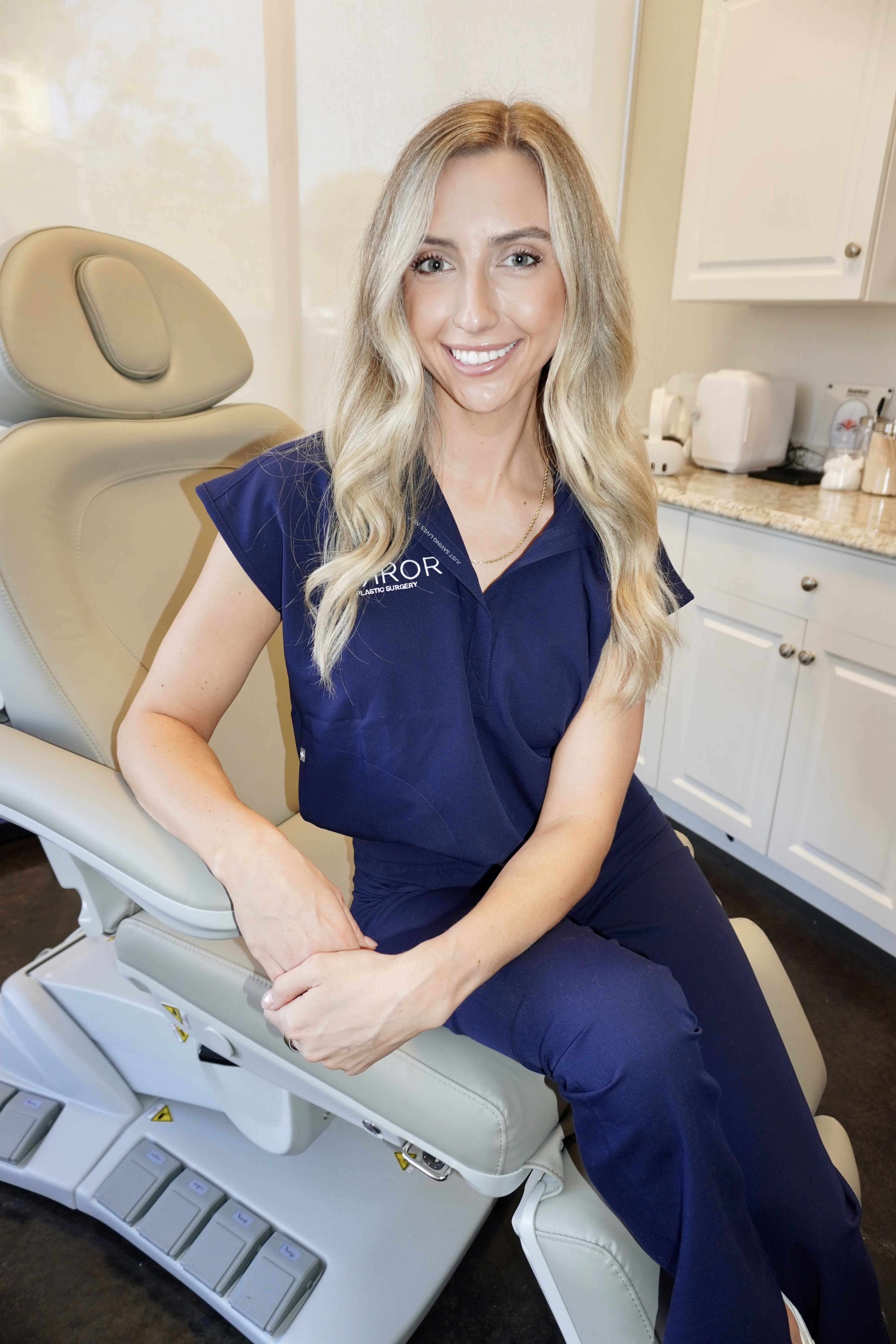
Every patient receives a 30–60 minute one-on-one consultation, a custom protocol based on lab results and medical history, and direct text access to Ellie throughout treatment. When a patient’s needs extend into the surgical realm, Ellie’s work is supported by Dr. Akash Chandawarkar, MD, a Harvard-educated physician, Johns Hopkins-trained plastic surgeon, and fellowship-trained aesthetic surgeon at Manhattan Eye Ear & Throat Hospital.
Start your peptide evaluation with a practitioner who can interpret your labs, source batch-tested compounds, and answer every safety question in this guide. Schedule your consultation with Ellie today.
Concierge Care vs. High-Volume Telehealth Models
The structure of a peptide practice affects safety as much as the compounds themselves. Concierge models and high-volume telehealth platforms handle evaluation, labs, and follow-up very differently.
Dr. Marc-Andre Cornier, endocrinologist and immediate past president of The Obesity Society, noted that peptide prescribing should involve more than filling out a form online and having a random provider sign off. He expressed concern that some online programs skip proper evaluation, baseline labs, and supervision.
Mirror Plastic Surgery’s concierge model addresses these gaps. The practice limits itself to one to two procedures per day across all services, so no patient’s care is compressed by volume pressure. Peptide consultations run 30–60 minutes with a named, board-certified practitioner. Lab panels are reviewed before any prescription is issued. Batch-tested sourcing from licensed compounding pharmacies with COAs is standard. Ellie remains reachable directly by text throughout the protocol, rather than through a ticketing system or delayed message queue.
Practical Checklist for Vetting Peptide Clinics
Use this checklist when evaluating any peptide therapy clinic. One unchecked item should prompt more questions, and several unchecked items should rule out the provider.
Verification steps to confirm before starting:
- Named licensed prescriber with a verifiable state license number
- Compounding pharmacy identified by name with 503A or 503B registration confirmable via FDA database
- Batch-specific COA available on request, issued by an independent ISO/IEC 17025-accredited laboratory and meeting the standards outlined in “How to Confirm a Compounding Pharmacy’s Licensing”
- Baseline lab panel ordered and reviewed before any prescription is issued
- Written follow-up monitoring plan with defined lab intervals
- Informed consent that discloses non-FDA-approved status, risks, and alternatives
- Cold-chain shipping with temperature indicators for lyophilized peptides
Red flags that indicate an unsafe provider:
- FDA inspections of unregulated peptide facilities have found contamination rates above 40% and purity levels as low as 60% of labeled amounts, so any clinic unable to produce a COA may be sourcing from such facilities
- Peptides sold without a prescription or labeled “research use only” for clinical administration
- No baseline labs required before prescribing
- Outcome guarantees or specific numerical promises without clinical evidence citations
- Pressure to purchase large multi-month packages upfront
- Independent laboratories have found that about one-third of unregulated peptide products fail basic quality checks for identity, purity, or quantity, so dramatically below-market pricing without sourcing explanation often signals this risk
- International shipping without clinical oversight or a verifiable U.S.-licensed prescriber
- Marketing claims using terms like “cure,” “guaranteed,” or “no side effects”
Frequently Asked Questions
Are peptides FDA-approved, and does that make them unsafe?
Most peptides used in clinical wellness protocols are not FDA-approved for specific indications, yet that fact alone does not make them unsafe when sourced and prescribed correctly. The main risk comes from unregulated suppliers rather than from the peptides themselves. At Mirror Plastic Surgery, peptides come from licensed compounding pharmacies with batch testing and certificates of analysis, and every protocol follows a comprehensive consultation and lab review. Patients receive full disclosure that peptides are not FDA-approved, along with a clear explanation of the evidence supporting each recommendation.
What side effects should I expect, and how are they monitored?
Side effects depend on the peptide, dose, route of administration, and individual physiology. GLP-1-adjacent peptides may cause gastrointestinal symptoms such as nausea or appetite changes, especially during dose titration. Growth-hormone secretagogues can affect glucose metabolism and IGF-1 levels. Immune-modulating peptides may cause injection-site reactions. At Mirror Plastic Surgery, Ellie reviews baseline labs before prescribing and sets defined follow-up intervals to detect adverse signals early. Protocols are modified or discontinued if lab results cross predefined thresholds or if meaningful side effects appear. Patients have direct text access to Ellie throughout their protocol for real-time support.
Can I self-inject peptides at home, and is that safe?
Self-injection at home is a standard delivery method for many peptide protocols and can be safe when performed correctly under medical supervision. Mirror Plastic Surgery provides detailed reconstitution and self-administration instructions, often with video demonstrations, so patients feel prepared before the first dose. The key difference between safe home administration and unsafe self-injection is the presence of a licensed prescriber who has reviewed your labs, set your dose, and remains available for questions. Purchasing peptides online and self-injecting without clinical oversight removes every safety layer that makes home use acceptable.
Will I need to stay on peptides indefinitely to maintain results?
Maintenance needs vary by peptide, condition, and individual response. For inflammatory or autoimmune conditions, stopping the peptide usually allows the underlying condition to return to its prior state, similar to stopping other ongoing therapies. For anti-aging or collagen-support protocols, results tend to fade gradually after treatment ends.1 Ellie discusses realistic maintenance expectations during the initial consultation and designs protocols around long-term goals rather than short cycles. The goal is to achieve the most durable outcome with the most appropriate ongoing commitment.
Does insurance cover peptide therapy, and how does billing work?
Insurance rarely covers peptide therapy because most peptides are not FDA-approved for specific indications and are prescribed off-label or through compounding pathways. Mirror Plastic Surgery uses a direct-pay concierge model, so patients receive clear, personalized quotes during their consultation based on their specific protocol. This structure removes insurance-driven limits on consultation length, lab ordering, or follow-up frequency, and Ellie’s recommendations rest entirely on clinical need.
Making an Informed Decision About Peptide Therapy
Peptide therapy can help patients manage chronic inflammation, autoimmune conditions, weight, energy, and aging when delivered within a framework that prioritizes regulatory compliance, verified sourcing, and ongoing clinical oversight.1 The 2026 FDA enforcement landscape raises the stakes of choosing an unqualified provider. Reports of adverse events related to unregulated peptide use have increased over the past two years, and the quality failures behind those events are avoidable with the right clinical partner.
Mirror Plastic Surgery’s concierge peptide program, led by Ellie Pranckevicius, FNP-BC, and supported by the clinical infrastructure of a Harvard- and Johns Hopkins-trained surgical practice, meets every standard outlined in this guide. Lab-driven protocols, batch-tested sourcing, direct practitioner access, and honest informed consent form the baseline of care rather than an upgrade.
Book an appointment with Ellie to begin a peptide evaluation built on clinical rigor and the personalized attention this therapy requires.
1 Results may vary from person to person. Editorial content, before and after images, and patient testimonials do not constitute a guarantee of specific results.
Peptide therapy is intended for wellness and optimization purposes and is not prescribed to diagnose, treat, cure, or prevent disease unless specifically stated. Many peptides are not FDA-approved and may be used off-label. Some have limited long-term safety data, with a potential for unknown risks, complications, or desensitization with prolonged use.