
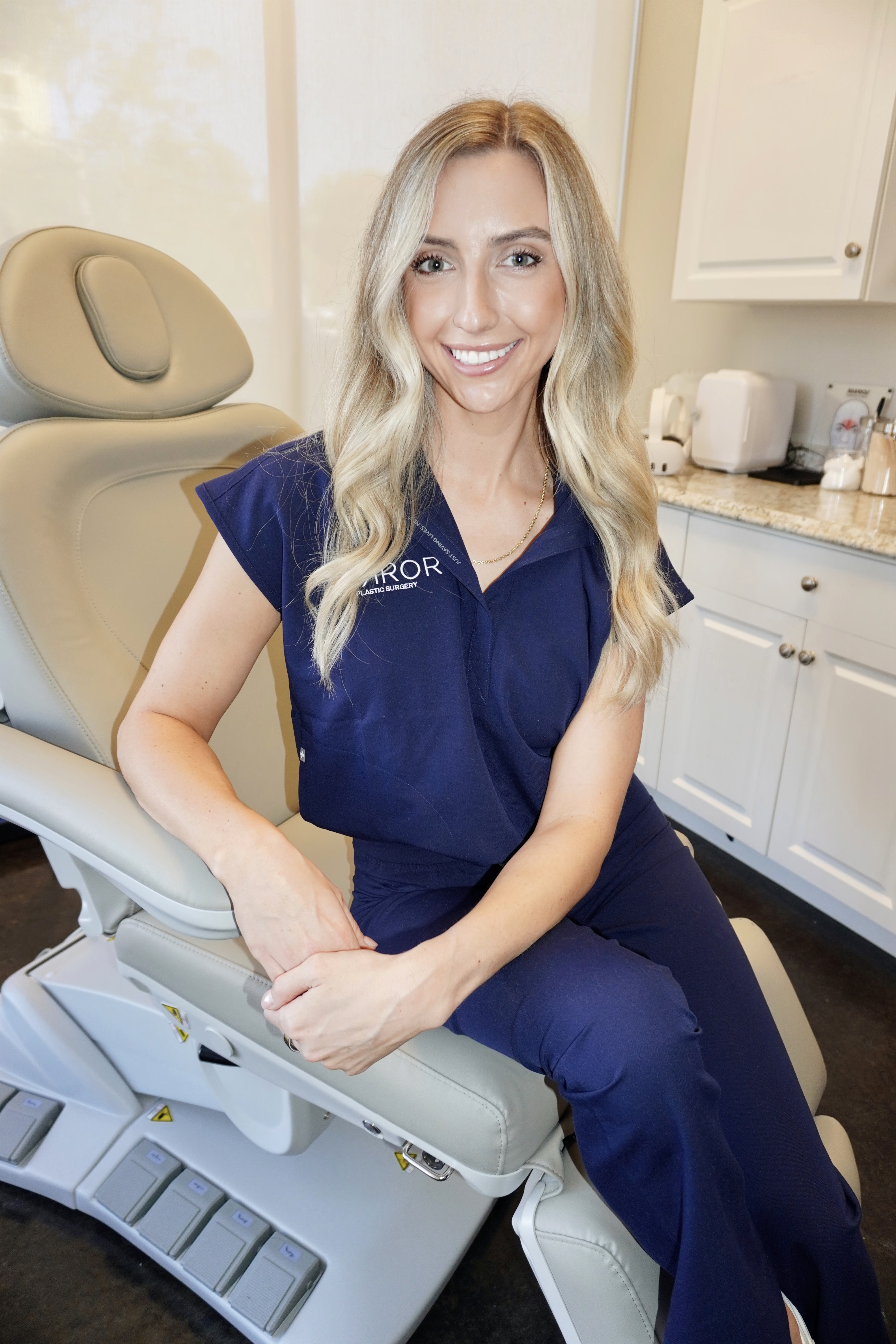
Written by: Ellie Pranckevicius, FNP-BC, Aesthetic Nurse Practitioner & Aesthetic Injector | Facial Restoration & Regenerative Injectable Specialist, Mirror Plastic Surgery | Last updated: July 6, 2026
Key Takeaways for BPC-157 Dosing
- BPC-157 is a research peptide studied only in preclinical animal models, with no completed controlled human trials or FDA approval for any indication.
- Accurate dosing requires individualized medical evaluation because no validated human dosage calculator or standardized protocol exists.
- Subcutaneous and oral routes differ significantly in bioavailability and primary indications, and all administration remains experimental.
- Long-term safety data are lacking, so lab screening, medication review, and ongoing clinical monitoring are essential before and during any protocol.
- At Mirror Plastic Surgery, Ellie Pranckevicius, FNP-BC, provides personalized BPC-157 consultations that include lab analysis and quality-controlled sourcing. Schedule your evaluation today.
Core BPC-157 Terms Explained
BPC-157: A synthetic pentadecapeptide derived from a protective protein found in human gastric juice. It consists of 15 amino acids and is studied in preclinical models for effects on tissue repair, inflammation modulation, and gut protection.
Systemic vs. localized inflammation: Systemic inflammation affects the entire body and is associated with autoimmune conditions, metabolic dysfunction, and chronic disease. Localized inflammation is confined to a specific tissue or injury site, such as a tendon or joint.
Subcutaneous vs. oral administration: Subcutaneous injection delivers BPC-157 beneath the skin, bypassing the gastrointestinal tract for higher systemic bioavailability. Oral administration routes the peptide through digestion, where it acts primarily on the GI tract lining.
Reconstitution: The process of dissolving lyophilized (freeze-dried) BPC-157 powder in bacteriostatic water to create an injectable solution at a specific concentration. Accurate reconstitution supports dose precision and sterility.
How Mirror Plastic Surgery Builds a BPC-157 Plan
A medically supervised BPC-157 protocol at Mirror Plastic Surgery starts with a comprehensive evaluation. This visit usually involves a 30–60 minute consultation with Ellie that covers full medical history, current medications, and health goals. For inflammatory or systemic indications, lab panels, including thyroid, liver, kidney, hormone, and metabolic markers, are reviewed or ordered before any protocol begins.
Once lab results are available and any contraindications are ruled out, protocol planning starts. Route of administration, frequency, and cycle length are set based on the individual clinical profile rather than population averages. After the protocol is finalized, patients receive detailed reconstitution and self-administration instructions, often with video demonstrations. To support safe execution, ongoing concierge support, including direct text access to Ellie, provides dose adjustments and safety monitoring throughout the protocol.
Current Research Evidence and Regulatory Status
All published efficacy data for BPC-157 come from preclinical animal studies. A 2025 systematic review by Vasireddi, Hahamyan, Salata, and colleagues in HSS Journal synthesized 36 studies, including 35 preclinical animal studies and one uncontrolled human chart review, and found zero completed controlled human efficacy trials for BPC-157. Limited human pharmacokinetic data for BPC-157 have been published from a single study with an extremely small sample size.
BPC-157 is not FDA-approved for any indication, and no legally approved prescription drug containing it exists for human use. As of its July 2026 evaluation for the Pharmacy Compounding Advisory Committee, the FDA proposed not to add BPC-157 (free base) or BPC-157 acetate to the 503A Bulks List.
BPC-157 currently occupies a regulatory gray zone. It was removed from the FDA Category 2 list in April 2026 but has not been moved to Category 1, leaving it neither designated a significant safety risk nor affirmatively authorized for compounding under Section 503A. The FDA has scheduled a Pharmacy Compounding Advisory Committee (PCAC) meeting for July 23–24, 2026, to evaluate BPC-157 for potential inclusion on the 503A Bulks List. The FDA has noted that compounded BPC-157 may pose immunogenicity risk for certain routes of administration and presents complexities regarding peptide-related impurities and API characterization. BPC-157 also appears on the World Anti-Doping Agency prohibited list under the non-approved substances (S0) section.
BPC-157 Dosage Calculator Limits and Weight-Based Context
No validated BPC-157 dosage calculator exists for human use. All numeric ranges in the literature derive from animal scaling and have not been confirmed in human dose-finding trials. The table below illustrates how preclinical subcutaneous reference ranges translate across body weights using allometric scaling for educational context only. A licensed provider must make all dosing decisions after individual evaluation.
| Body Weight | Low-End Estimate (1 µg/kg) | Mid-Range Estimate (5 µg/kg) | High-End Estimate (10 µg/kg) |
|---|---|---|---|
| 60 kg (132 lb) | 60 µg | 300 µg | 600 µg |
| 80 kg (176 lb) | 80 µg | 400 µg | 800 µg |
| 100 kg (220 lb) | 100 µg | 500 µg | 1,000 µg |
Reference range derived from preclinical subcutaneous BPC-157 studies using 1–10 µg/kg body weight. Human equivalents are lower on a µg/kg basis than rodent doses because of body surface area scaling. These figures are not prescriptive; a licensed provider must determine all human dosing.
BPC-157 Dosage Chart by Weight and Route
The following table presents example subcutaneous daily ranges alongside oral reference ranges drawn from preclinical and compounding literature. Oral doses are substantially higher than injectable doses to account for reduced systemic bioavailability. All values require individualization under medical supervision.
| Body Weight | Subcutaneous Daily Range | Oral Daily Range (GI Indications) | Supervision Requirement |
|---|---|---|---|
| 60 kg (132 lb) | 200–400 µg | 500–1,200 µg | Licensed provider required |
| 80 kg (176 lb) | 200–500 µg | 500–1,600 µg | Licensed provider required |
| 100 kg (220 lb) | 300–500 µg | 750–2,000 µg | Licensed provider required |
These ranges are reference figures derived from animal scaling and compounding guidelines, not FDA-approved human dosing standards. Individual factors, including health status, medications, and treatment goals, change appropriate ranges significantly.
Comparing Oral and Injectable BPC-157
Subcutaneous injection of BPC-157 bypasses the gastrointestinal tract entirely, which results in higher bioavailability and allows the compound to reach distant structures such as joints, tendons, muscle, and brain at meaningful concentrations. In rat pharmacokinetic studies, subcutaneous administration achieves faster absorption than oral administration.
Oral BPC-157 is the preferred route for gut-targeted applications such as leaky gut, IBD, and gastric repair because the peptide acts locally where it is most concentrated. BPC-157 is confirmed stable in human gastric juice for more than 24 hours, a property that enables meaningful oral activity in preclinical models.
| Route | Typical Daily Range | Primary Indication | Key Consideration |
|---|---|---|---|
| Subcutaneous injection | 200–500 µg | Musculoskeletal, systemic healing | Higher systemic bioavailability, preferred for non-GI indications |
| Oral (capsule/solution) | 500–2,000 µg | GI conditions (IBD, leaky gut, ulcers) | Local GI action, 3–10× higher dose often needed for comparable systemic effects |
All route and dose decisions require individualization by a licensed provider. BPC-157 is not FDA-approved for any route of administration in humans.
BPC-157 Dosing for Tendon and Musculoskeletal Healing
A 2026 scoping review by Siddiqi, Yousuf, and Jacob in the Journal of Orthopaedic Experience & Innovation identified BPC-157 as the most frequently represented peptide agent across musculoskeletal and orthopaedic experimental models, with preclinical data suggesting biologic activity involving angiogenesis signaling, inflammatory modulation, fibroblast migration, and collagen remodeling. Consistent with the broader evidence gap noted earlier, the same review found no high-quality human trials in orthopaedic surgical populations and concluded that the current evidence base does not support conclusions regarding BPC-157 efficacy in postoperative recovery.
For musculoskeletal indications, subcutaneous or intramuscular BPC-157 injection near the injury site shows stronger tissue-specific effects than systemic administration in preclinical models. Professional oversight is required to determine whether localized or systemic administration is appropriate for a given individual and to rule out contraindications before any musculoskeletal protocol starts.
BPC-157 Protocol Length and Cycling at Mirror Plastic Surgery
Injectable BPC-157 protocols typically use a cycle length of 4–12 weeks followed by an assessment period, with full evaluation for chronic conditions recommended after completing an 8–12 week cycle. A common cycling structure involves three months of use followed by one month off, based on patient and clinician reports.
These general frameworks still require adjustment for each patient. Cycle duration is individualized by the prescribing provider based on the patient injury, health status, and goals, with adjustments made according to patient response. Because BPC-157 lacks FDA approval and large-scale human trials, no expert consensus exists on optimal cycle lengths, timing, or personalization factors such as weight-based adjustments or individual health status. All protocols at Mirror Plastic Surgery are set after lab analysis and ongoing monitoring with Ellie.
Safety Screening and Monitoring for BPC-157
Long-term safety data for BPC-157 is lacking regarding effects on cancer risk, organ health, hormonal balance, and immune function. No reliable data exists on BPC-157 interactions with blood thinners, blood pressure medications, immunosuppressants, or cancer therapies. Given these knowledge gaps, comprehensive baseline screening and ongoing monitoring become essential.
At Mirror Plastic Surgery, safety monitoring includes baseline lab panels, such as liver, kidney, thyroid, metabolic, and hormone markers, review of all current medications for potential interactions, and scheduled follow-up assessments throughout the protocol. Ellie is available via direct text for any emerging symptoms between appointments. Individuals with a history of cancer, pregnancy, breastfeeding, autoimmune disease, multiple prescription medications, or chronic liver or kidney disease should exercise extreme caution with BPC-157 until more research exists. Sourcing is equally critical, and Mirror Plastic Surgery uses reputable providers with batch testing, in direct contrast to unverified online products.
Risks, Limitations, and Misconceptions About BPC-157
No clinically validated dosing regimen or standardized safety monitoring protocol exists for BPC-157 in humans, and all administration routes remain experimental and unapproved. BPC-157 promotion of angiogenesis raises theoretical concerns that enhanced blood supply may support tumor growth in susceptible individuals, although this risk has not been evaluated in clinical studies.
BPC-157 products sold online carry risks of inaccurate dosing, contaminants, and lack of sterility, which increases infection risk with injectable forms. A common misconception is that a universal dose exists that applies to all adults. No such dose has been established in human trials, which is why individualized medical evaluation is essential. Equally problematic is the belief that online products match the quality of medically supervised, batch-tested compounded preparations, and they do not. BPC-157 formulations obtained from unregulated sources carry concerns regarding variable concentration, uncertain sterility, and lack of verified pharmacokinetics or dosing data.
Book an appointment with Ellie for a medically supervised evaluation that includes lab review, sourcing transparency, and a protocol built around your individual health profile.
Frequently Asked Questions About BPC-157 at Mirror Plastic Surgery
Is BPC-157 safe to use under medical supervision?
BPC-157 is not FDA-approved for human use, and long-term human safety data are limited. Under medical supervision, safety improves through pre-protocol lab screening, medication interaction review, quality-controlled sourcing with batch testing, and ongoing monitoring. Individuals with a history of cancer, active autoimmune disease, pregnancy, or complex medication regimens require particularly careful evaluation before any BPC-157 protocol is considered. At Mirror Plastic Surgery, every patient completes a thorough clinical assessment with Ellie before a protocol starts.
Am I a candidate for BPC-157 therapy?
Candidacy depends on individual health history, current medications, lab results, and treatment goals. Adults managing chronic inflammation, musculoskeletal injuries, or gut-health conditions may be appropriate candidates after a comprehensive evaluation. Those with certain contraindications, including active malignancy, specific autoimmune conditions, or incompatible medications, may not be suitable. A full consultation with Ellie, including lab panel review, is the only reliable way to determine candidacy.
How long does it take to see results from BPC-157?
Timelines vary by individual and indication. Short-term effects such as reduced inflammation, pain relief, and improved mobility may appear within one to six weeks for acute soft tissue injuries.1 Longer-term effects, including improved gastrointestinal health and broader systemic changes, may develop after eight to twelve weeks or more of consistent use.1 Animal models show accelerated healing timelines that do not directly translate to humans, so realistic expectations require discussion with a licensed provider familiar with your clinical profile.1
What happens if I stop taking BPC-157?
When BPC-157 use stops, the effects it was supporting, such as inflammation modulation or tissue repair signaling, will likely diminish over time.1 For chronic conditions, a maintenance protocol is often necessary to sustain benefits.1 The appropriate approach to cycling, pausing, or discontinuing BPC-157 depends on the original indication and the individual response, and the supervising provider should guide these decisions.
Why is medical supervision important for BPC-157 dosing specifically?
As noted in the risks section, no standardized human dosing protocol exists for BPC-157. All numeric ranges in circulation derive from preclinical animal studies and require allometric scaling adjustments that vary by body weight, route of administration, and indication. Without lab-based evaluation, there is no way to identify contraindications, assess organ function, or detect interactions with existing medications. Medical supervision also ensures access to quality-controlled, batch-tested peptides rather than unverified online products, which carry risks of inaccurate concentration, contamination, and lack of sterility.
Conclusion: Partnering With Ellie for Individualized BPC-157 Care
BPC-157 represents one of the more extensively studied peptides in preclinical research, with a growing body of animal data on tissue repair, inflammation, and gut protection. At the same time, the absence of completed human clinical trials, the current regulatory gray zone, and the complexity of weight-based and route-specific dosing make individualized medical oversight essential. A one-size-fits-all dose does not exist, and the risks of unsupervised use, from unverified sourcing to undetected contraindications, are real and documented.
Mirror Plastic Surgery offers a concierge-level alternative through a comprehensive consultation with Ellie Pranckevicius, FNP-BC, that includes lab analysis, personalized protocol design, quality-assured sourcing, and ongoing support throughout therapy. Every protocol is built around your physiology, your goals, and your safety.
Book an appointment with Ellie to begin a medically supervised BPC-157 evaluation at Mirror Plastic Surgery in St. Petersburg, Florida.
1 Results may vary from person to person. Editorial content, before and after images, and patient testimonials do not constitute a guarantee of specific results.
Peptide therapy is intended for wellness and optimization purposes and is not prescribed to diagnose, treat, cure, or prevent disease unless specifically stated. Many peptides are not FDA-approved and may be used off-label. Some have limited long-term safety data, with a potential for unknown risks, complications, or desensitization with prolonged use.