
Written by: Ellie Pranckevicius, FNP-BC, Aesthetic Nurse Practitioner & Aesthetic Injector | Facial Restoration & Regenerative Injectable Specialist, Mirror Plastic Surgery | Last updated: July 5, 2026
Key Takeaways for BPC-157 Use
- BPC-157 is an experimental synthetic peptide studied in preclinical models for tissue repair, angiogenesis, and inflammation control across multiple body systems.
- Researchers have examined subcutaneous, intramuscular, and oral administration, and each route shows different bioavailability and targeted applications.
- No completed controlled human efficacy trials exist, and the FDA has stated it lacks sufficient safety data for any human use of BPC-157.
- Medically supervised protocols use pre-treatment lab screening, batch-tested sourcing, individualized dosing, and ongoing clinical monitoring to reduce risk.
- Patients seeking a personalized BPC-157 evaluation can schedule a consultation at Mirror Plastic Surgery for lab-guided protocols and concierge support.
Choosing the Right BPC-157 Route of Administration
Injectable BPC-157 provides the highest systemic bioavailability and is the route most represented in musculoskeletal and systemic healing research. Oral delivery is the preferred route in research for gut-targeted applications such as leaky gut, IBD, and gastric repair because the peptide acts locally where it is most concentrated.
BPC-157 resists enzymatic breakdown in gastric acid, which makes oral delivery a meaningful research variable rather than a theoretical one. However, stability of BPC-157 in human gastrointestinal transit has not been confirmed in formal pharmacokinetic studies, which limits extrapolation of animal oral administration findings to clinical practice.
While oral delivery remains under-studied in humans, the broader body of preclinical evidence for BPC-157 across all routes continues to expand. A 2025 systematic review published in HSS Journal covering 36 studies from 1993 to 2024 found that BPC-157 promotes healing by boosting growth factors and reducing inflammation, with improved outcomes across muscle, tendon, ligament, and bone injury models in animals.1 No Phase II clinical trial of any BPC-157 formulation, including the oral PL-10/PL 14736 candidate, has been completed for inflammatory bowel disease.
In supervised care, the treating clinician selects the route based on indication, patient history, and lab findings, rather than a universal chart.
Injection Sites for BPC-157 in Clinical Protocols
For tendon, ligament, or joint injury, subcutaneous BPC-157 is injected within 2–5 cm of the affected area. This localized approach concentrates the peptide near the target tissue during the period of highest local concentration after injection.
For systemic goals such as gut healing or general recovery, the abdominal fat pad is the standard subcutaneous injection site. Some providers split the daily dose into two smaller injections, morning and evening, to sustain signaling throughout the day.
Intramuscular injection has been examined in preclinical models for localized musculoskeletal applications. In supervised clinical settings, the prescribing clinician chooses between subcutaneous and intramuscular delivery based on the depth of the target tissue and patient-specific anatomy.
Injection-related complications, including infection, abscess, incorrect dosing, and tissue damage, are recognized safety concerns with unsupervised self-injection. Proper site selection and sterile technique require clinical training.
BPC-157 Injection Frequency and Cycle Length
Once-daily subcutaneous injection is the standard protocol for BPC-157 in supervised clinical care. Frequency and cycle length vary by indication:
- Acute injuries: individualized daily dosing for 2–4 weeks.1
- Chronic conditions: individualized daily dosing for 4–6 weeks.1
- Gut healing or neurological protocols: cycles commonly run 8–12 weeks.1
- After an intensive cycle, some patients transition to a maintenance schedule of 2–3 doses per week.
Most BPC-157 treatment cycles run 4–6 weeks followed by a 2–4 week break to prevent receptor downregulation. This cycling structure also takes advantage of the fact that BPC-157 healing effects can continue for 2–3 weeks after stopping treatment, because the cellular repair processes it triggers remain active.1
Animal studies typically use 10 mcg/kg body weight, which allometrically scales to roughly 200–800 mcg daily for humans. Cell and molecular biologist Paul Knoepfler at the University of California, Davis, notes, “You can’t just make up what dose to take” and that there is often “no apparent rhyme or reason to the wellness peptide doses people are taking.”
What Medical Supervision Looks Like at Mirror Plastic Surgery
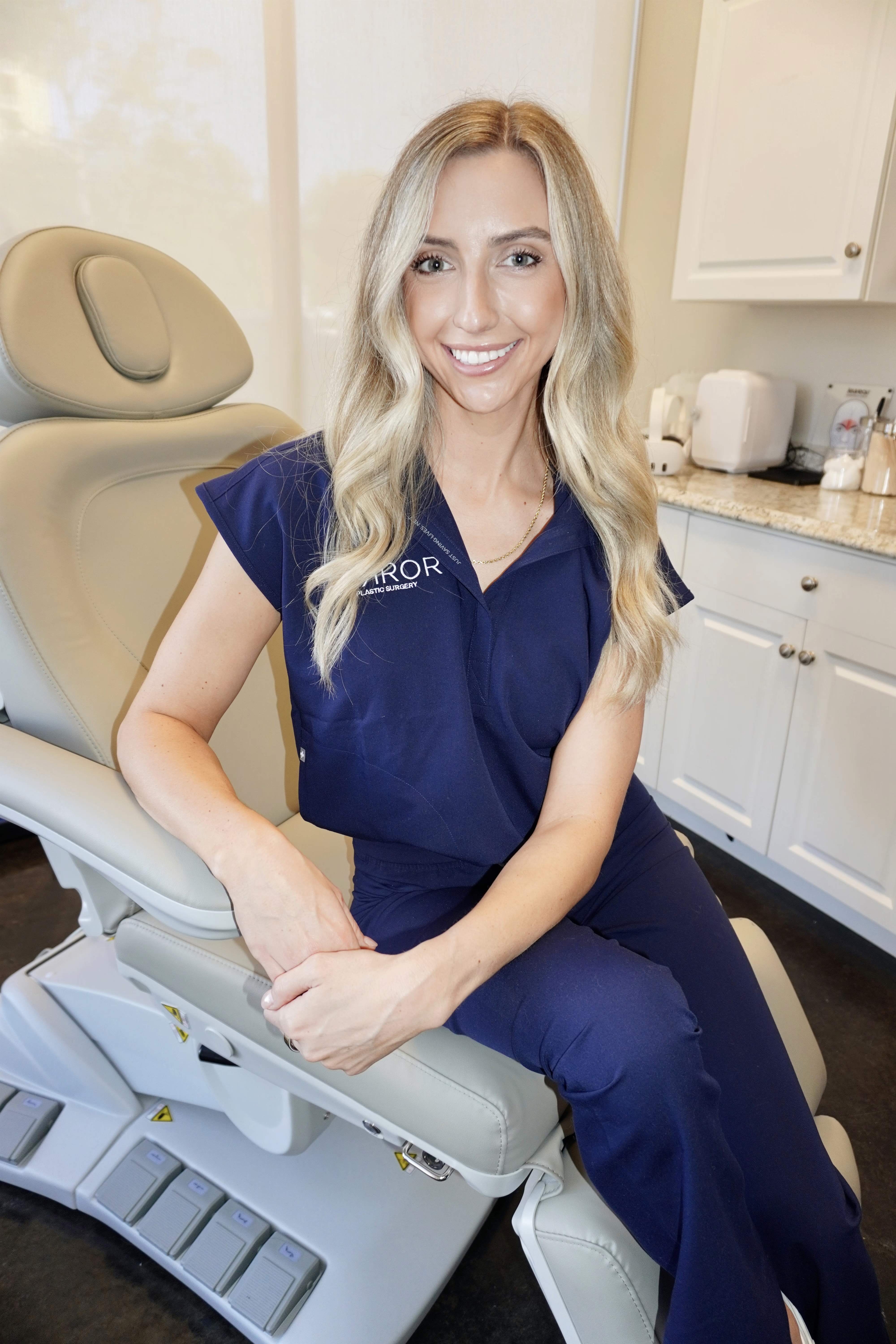
Pre-treatment evaluation for BPC-157 should include comprehensive metabolic and hepatic panels, autoimmune and inflammatory markers where relevant, and a thorough medication review. At Mirror Plastic Surgery, this process is led by a board-certified Family Nurse Practitioner with a Master’s in Nursing from the University of South Florida and four years of critical-care experience in the Neuroscience ICU at Tampa General Hospital.
The supervised protocol includes:
- Pre-treatment labs: Thyroid, liver, kidney, diabetes markers, hormone panels, and inflammatory markers reviewed or ordered at intake.
- Batch-tested sourcing: Peptides sourced from reputable compounding providers with Certificates of Analysis, in clear contrast to unregulated gray-market vendors.
- Individualized protocol: Dose, route, frequency, and cycle length set based on indication, body weight, injury severity, and health profile.
- Ongoing monitoring: Direct 24/7 access via text for questions, side-effect reporting, and protocol adjustments.
- Reconstitution guidance: Detailed instructions and video demonstrations for patients who self-administer at home.
This structured oversight responds directly to broader industry warnings about unregulated peptide use. Former FDA deputy commissioner Howard Sklamberg warns that purchasing peptides from unregulated online sellers risks toxic contaminants and advises consulting a physician, noting the space is “really kind of a Wild West.” Mirror Plastic Surgery’s concierge model directly addresses this gap.
Sterile Technique and BPC-157 Reconstitution
BPC-157 is supplied as a lyophilized powder that is reconstituted with bacteriostatic water, then refrigerated and used within 28 days. The following information provides general educational context only and does not serve as instructions for self-administration.
- Reconstitution requires a sterile environment, alcohol swabs, a sterile syringe, and bacteriostatic water.
- Injection sites must be cleaned with an alcohol swab and allowed to dry before needle insertion.
- Needles and syringes are single-use, because reuse introduces contamination risk.
- When prescribed, BPC-157 is dispensed exclusively by licensed 503A compounding pharmacies with provider-specific instructions rather than obtained from unregulated research-chemical vendors.
Product purity and sterility risks from unregulated sources are recognized key safety concerns. Patients at Mirror Plastic Surgery receive step-by-step reconstitution guidance directly from Ellie, including video demonstrations, as part of the concierge care model.
Risk Comparison: Self-Administration vs. Medically Supervised Use
The following table shows how six critical safety factors differ between unregulated self-administration and Mirror Plastic Surgery’s supervised protocol. It highlights the specific protections that medical oversight adds at each step.
| Risk Factor | Unsupervised / Gray-Market | Mirror Plastic Surgery Supervised Protocol |
|---|---|---|
| Product purity | Unknown purity, inconsistent concentration, contamination risk | Batch-tested sourcing with Certificates of Analysis |
| Dosing accuracy | No standardized guidance, dose often arbitrary | Weight-based, indication-specific dosing set at APRN intake |
| Pre-treatment screening | None | Comprehensive lab panels including metabolic, hepatic, and inflammatory markers |
| Ongoing monitoring | None | 24/7 direct access to Ellie, protocol adjustments based on response |
| Sterile technique guidance | None | Detailed instructions and video demonstrations provided |
| Regulatory compliance | State medical boards investigating med spas for unapproved peptide use | Physician-supervised, pharmacy-compounded under applicable regulations |
Balanced Risks and Common Misconceptions
Short-term animal studies suggest BPC-157 is well tolerated with mild adverse events, and limited human observations show a similar short-term profile with mild, transient reactions such as injection-site irritation or GI discomfort. However, several important caveats apply.
- No comprehensive, long-term human safety studies have been published.
- Theoretical concerns exist regarding tumor progression due to BPC-157’s angiogenesis effects, and this risk has not been evaluated in clinical studies.
- Doses above 1,000 mcg daily may cause nausea or headaches in sensitive individuals.
- Extreme caution is advised for individuals with a history of cancer, those who are pregnant or breastfeeding, patients with autoimmune disease, those taking multiple prescription medications, or individuals with chronic liver or kidney disease.
- BPC-157 is prohibited at all times under Section S0 of the WADA Prohibited List and is banned by major leagues including the NFL and UFC.
Common misconception: Political statements about peptide reclassification equal FDA approval. Political announcements do not constitute formal FDA rulemaking or approval for BPC-157 compounding. All compounded BPC-157 must be labeled: “Compounded by an FDA-registered pharmacy. Not an FDA-approved drug product.”
Decision-Making Considerations for Prospective Patients
Individual response to BPC-157 varies significantly. A 2021 pilot study of 12 patients receiving intra-articular BPC-157 for knee pain found that only 7 experienced significant relief lasting 6–12 months after a single injection, which illustrates individual response variability.1
Sleep quality, stress regulation, and physical load management have measurable impacts on inflammatory status and tissue repair rates, which may explain variability in individual responses to BPC-157 even under supervised protocols. Genetics, diet, lifestyle, injury severity, and the specific peptide protocol used all influence outcomes.
Patients considering BPC-157 should factor in realistic timelines. Acute injuries often respond within 4–6 weeks, while chronic conditions or gut healing protocols commonly require 8–12 weeks.1 Maintenance dosing at reduced frequency may be appropriate after an initial cycle to sustain benefits.
Frequently Asked Questions
Is BPC-157 legal to use in the United States?
BPC-157 is not FDA-approved for any human indication. Its compounding status has shifted over time, and it was placed in Category 2 in 2023, which restricted compounding. A Pharmacy Compounding Advisory Committee meeting is scheduled for July 23–24, 2026 to review its potential inclusion on the 503A Bulks List. That committee’s recommendations are advisory only. Any compounded BPC-157 must be labeled as not an FDA-approved drug product. Athletes subject to WADA oversight, NFL or UFC rules, or U.S. military regulations are prohibited from using it. Individuals should consult a licensed clinician to understand the current regulatory landscape before starting any BPC-157 protocol.
Can BPC-157 be taken orally instead of injected?
Oral BPC-157 has been studied in animal models for gastrointestinal applications such as leaky gut and IBD, where the peptide acts locally in the GI tract. BPC-157 resists breakdown in gastric acid, which makes oral delivery a meaningful research variable. However, oral bioavailability relative to injectable delivery is lower than parenteral, and human pharmacokinetic data do not yet exist. For musculoskeletal or systemic goals, injectable routes remain the most represented in preclinical research. A clinician should select the route based on the patient’s specific indication and health profile.
What should I expect during a supervised BPC-157 consultation at Mirror Plastic Surgery?
A consultation with Ellie Pranckevicius at Mirror Plastic Surgery typically runs 30–60 minutes. Ellie reviews your complete medical history, current medications, and health goals. For inflammatory conditions, weight management, or complex presentations, lab panels, including metabolic, hepatic, thyroid, hormone, and inflammatory markers, are reviewed or ordered.
Based on this evaluation, a custom protocol is developed that specifies route, dose, frequency, and cycle length. Peptides are sourced from batch-tested compounding pharmacies, and patients receive detailed reconstitution and administration guidance, including video demonstrations. Ongoing support is available directly through Ellie via text or telemedicine.
How long does it take to see results from BPC-157?
Timeline varies by indication and individual physiology. Acute musculoskeletal injuries may show response within 2–4 weeks of daily dosing. Chronic inflammatory conditions or gut healing protocols typically require 8–12 weeks.1
Cellular repair processes triggered by BPC-157 can remain active for 2–3 weeks after a cycle ends, so benefits may continue to develop after dosing stops.1 Factors including sleep quality, stress levels, physical load, diet, and genetics all influence how quickly and completely an individual responds. A personalized protocol with ongoing monitoring allows for adjustments based on actual response rather than a fixed schedule.
Is it safe to combine BPC-157 with other peptides?
BPC-157 is frequently studied alongside TB-500 (Thymosin Beta-4) in preclinical models for soft tissue repair, and Mirror Plastic Surgery offers this combination as part of the Glow Stack alongside GHK-CU. Combining peptides introduces additional complexity, because each compound has its own dosing frequency, cycle structure, and potential interaction profile.
For example, TB-500 uses a higher-frequency loading phase followed by maintenance dosing, which must be coordinated with a BPC-157 cycle. No combination protocol should begin without a comprehensive clinical evaluation, lab screening, and ongoing supervision by a qualified practitioner who can monitor for cumulative effects and adjust the stack as needed.
Conclusion
BPC-157 administration spans multiple routes, including subcutaneous, intramuscular, and oral, and each route carries distinct research applications and evidence limitations. The preclinical data are extensive, yet the absence of completed human trials, noted earlier, still shapes how cautiously clinicians must approach this peptide. The regulatory environment remains in active flux, and given the FDA’s stated safety concerns, clinicians must treat BPC-157 as an experimental option.
The supervision gap between what preclinical research suggests and what unregulated self-administration delivers represents the greatest risk. Batch-tested sourcing, pre-treatment labs, individualized dosing, and ongoing clinical monitoring are not optional enhancements. They form the minimum standard for responsible use of an experimental compound.
Mirror Plastic Surgery’s concierge model, led by Ellie Pranckevicius, FNP-BC, is built around exactly this standard for patients in St. Petersburg, Tampa, and remotely across the United States.
1 Results may vary from person to person. Editorial content, before and after images, and patient testimonials do not constitute a guarantee of specific results.
Peptide therapy is intended for wellness and optimization purposes and is not prescribed to diagnose, treat, cure, or prevent disease unless specifically stated. Many peptides are not FDA-approved and may be used off-label. Some have limited long-term safety data, with a potential for unknown risks, complications, or desensitization with prolonged use.