

Last updated: February 1, 2026
Key Takeaways
- Microfocused ultrasound targets the SMAS layer at 1.5-4.5 mm depths for non-invasive lifting of jowls, neck, and face without surface damage.
- Ultrasound outperforms RF for moderate laxity because it reaches deeper layers, with results that often last 1-2 years versus RF’s 6-12 months.
- Expert providers with strong anatomical knowledge and real-time imaging significantly reduce risks like fat atrophy and nerve damage.
- Combination treatments and advanced imaging are key 2026 trends, improving safety and allowing more customized ultrasound tightening plans.
- Mirror Plastic Surgery offers concierge-level ultrasound skin tightening with a focus on safety and natural results; book a consultation today.
Why Mirror Plastic Surgery’s Concierge Approach Matters
Mirror Plastic Surgery follows a concierge medicine model that prioritizes time, safety, and individualized care. The team limits the schedule to one or two procedures per day and often spends up to an hour on each consultation. This structure supports a clear priority order: safety first, function second, and aesthetics third.
High-volume “mill” practices may perform five to ten procedures daily, which can reduce the attention given to complex energy-based skin tightening. Mirror Plastic Surgery takes the opposite approach. Each treatment plan is tailored to the patient’s anatomy, medical history, and goals.
The practice uses an evidence-based philosophy and remains supplier-neutral. Recommendations focus on the right amount of the most appropriate product or technology, not on meeting sales quotas. This approach supports consistent, natural-looking outcomes for ultrasound skin tightening and other services.
Patient feedback reflects this standard of care. One patient shared, “Stephanie is phenomenal. I’ve been getting injections for 11 years, having worked in med spas and plastic surgery offices, and Steph is by far the most knowledgeable injector I’ve ever met. She also fixed a cheek issue that other injectors had only made worse, something that had been bothering me for months yet she corrected it in seconds.” Book a consultation with Stephanie to experience this level of expertise in person.
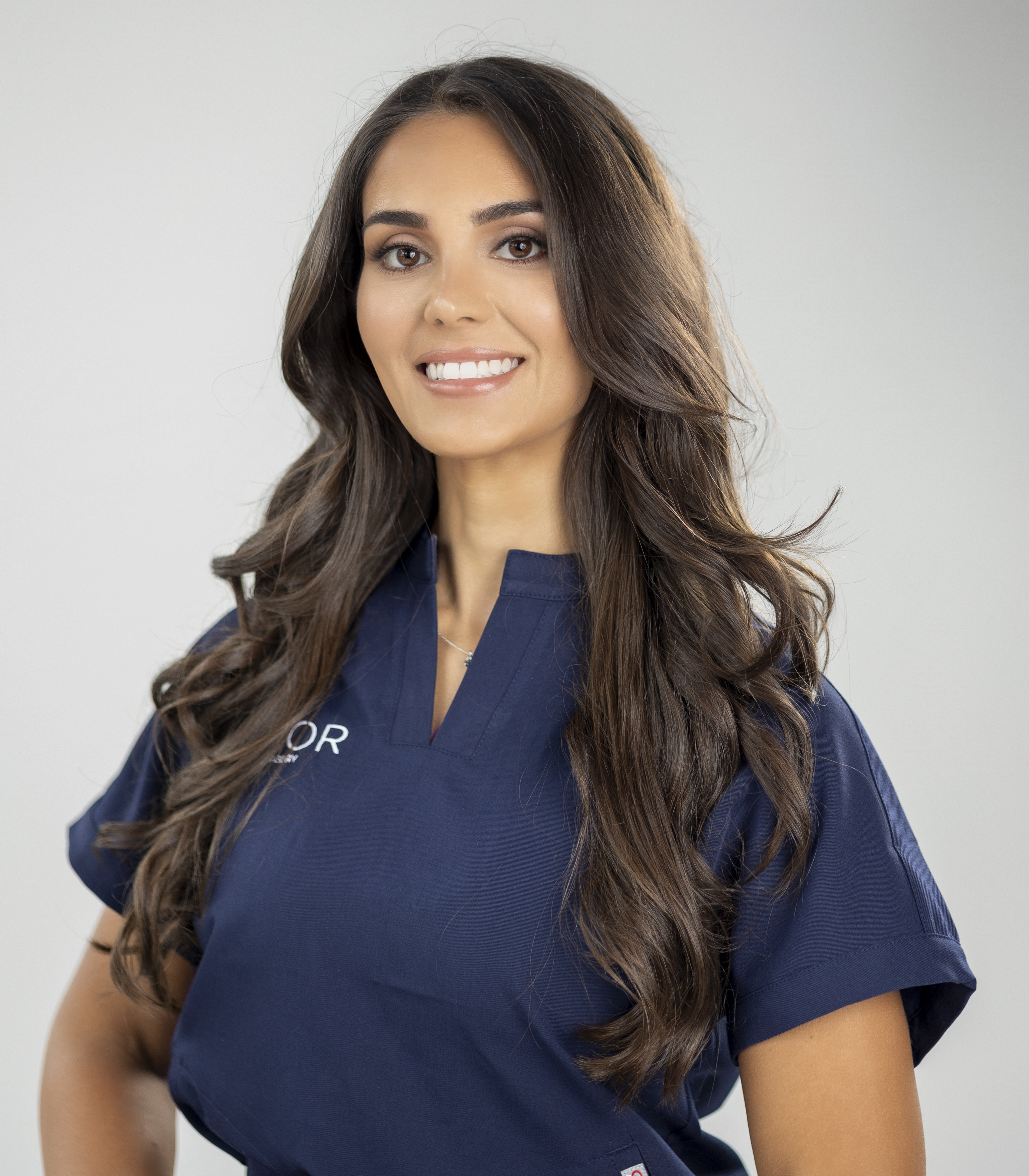
Meet Your Injector: Stephanie DeSimone’s Precision and Anatomy Focus
Stephanie DeSimone combines mathematical precision with deep anatomical training in every treatment. Her degree in Mathematics supports a meticulous, measured approach to planning ultrasound energy delivery. Years of experience as a surgical assistant give her a strong understanding of both surface and subdermal anatomy.
Her background in bodybuilding further sharpens her awareness of muscle structure and proportion. This perspective helps her design energy-based skin tightening plans that respect natural contours. Patients benefit from results that look refreshed rather than “done.”
Stephanie’s expertise in neuromodulators and dermal fillers complements her work with ultrasound skin tightening. She often creates holistic facial rejuvenation plans that address volume, muscle activity, and skin laxity together. Her “less is more” philosophy guides every decision, which helps avoid complications such as fat atrophy and overcorrection.
Accurate depth targeting is essential for safe ultrasound skin tightening. Stephanie’s knowledge of facial fat compartments, muscle layers, and nerve pathways supports precise energy placement. This precision maximizes lifting and tightening of jowls and neck while minimizing risk.
How Microfocused Ultrasound Tightens Skin at Different Depths
Ultrasound skin tightening uses microfocused ultrasound energy to create controlled thermal injury at specific depths below the skin. The treatment heats tissue at targeted depths, triggering collagen remodeling without affecting the skin surface. The technology is FDA-cleared for non-invasive lifting of the eyebrow, neck, and chin.
During treatment, focused ultrasound beams bypass the outer skin and form tiny thermal coagulation points at preset depths. This controlled heat stimulates neocollagenesis, or new collagen formation. Over the next several months, this process gradually tightens and lifts the treated areas.
Most sessions last 30-90 minutes and do not require downtime. Patients can usually return to normal activities the same day while collagen remodeling continues beneath the surface.
|
Layer |
Depth |
Effect |
|
Epidermis |
1.5 mm |
Superficial tightening |
|
Dermis |
3 mm |
Collagen stimulation |
|
SMAS |
4.5 mm |
Deep lifting |
Recent device improvements include Full HD displays with higher resolution for real-time imaging of skin layers. These upgrades allow more precise energy placement and better customization for each patient’s anatomy.
Comparing Ultrasound, RF, and Surgery for Jowls and Neck
Clear differences exist between ultrasound, radiofrequency, and surgical options for jowls and neck laxity. Ultrasound penetrates deeper than RF, reaching the SMAS layer more than 4 mm deep for structured lift, while RF targets superficial to mid-dermal layers for gradual tightening.
|
Aspect |
Ultrasound |
RF |
Surgery |
|
Depth |
SMAS (1.5-4.5 mm) |
Superficial/mid-dermal |
Full SMAS |
|
Downtime |
None |
Minimal |
Weeks |
|
Duration |
1-2 years |
6-12 months |
Permanent |
|
Best For |
Jowls/moderate laxity |
Texture/mild laxity |
Severe sagging |
Ultrasound often provides results that last up to 18 months for face and neck lifting. RF usually produces quicker but subtler changes that fade sooner. For moderate to more advanced jowl and neck laxity, ultrasound’s ability to reach the SMAS layer offers a more structural lift than surface-level treatments.
Mirror Plastic Surgery’s anatomical expertise supports careful patient selection and precise technique. This attention helps prevent complications such as hollowed or sunken cheeks that can occur when energy affects fat layers instead of collagen-rich tissue. Book a consultation to review which option best matches your anatomy, lifestyle, and goals.
Safety, Risks, and How Mirror Plastic Surgery Protects Patients
Ultrasound skin tightening has a strong safety profile when performed correctly by trained providers. Typical side effects include mild bruising, swelling, redness, tenderness, or temporary tingling and numbness. These usually resolve within a few days.
Rare but more serious complications can include significant facial fat loss or nerve injury. These events usually occur when energy is delivered at the wrong depth or too close to superficial motor nerves. Technique and anatomical knowledge play a central role in prevention.
Risk reduction starts with choosing a provider who understands facial anatomy and uses real-time ultrasound imaging to guide energy placement. With proper technique, serious complications occur in less than 1-2% of cases. This statistic highlights how much provider skill influences outcomes.
Patients should seek immediate medical attention for severe pain not relieved by over-the-counter medication, blistering, muscle weakness, or rapidly worsening swelling. Mirror Plastic Surgery’s consultation process includes a detailed medical review and contraindication screening to support safety at every step.
2026 Ultrasound Tightening Trends and Technology
Combination treatments that pair ultrasound with biostimulators show promising synergistic effects for collagen production and natural-looking results. Many practices now design staged plans that build structure with ultrasound, then enhance texture and volume with injectables.
Safety and precision remain central themes. Advanced imaging tools allow providers to visualize tissue layers more clearly and adjust settings to each patient’s anatomy. This shift supports more predictable outcomes and fewer complications.
Sofwave ultrasound treatments became popular in 2025 as downtime-free options, especially among patients in their 20s and early 30s who focus on prevention. This trend reflects a move toward earlier, maintenance-based care rather than waiting for advanced laxity.
Clearing Up Common Myths About Ultrasound Tightening
Several myths about ultrasound skin tightening can create unrealistic expectations. Results do not last forever without maintenance. Most patients enjoy improvement for 1-2 years, then schedule touch-up sessions as aging continues.
Another misconception suggests that one standard protocol works for everyone. In reality, successful outcomes depend on careful patient selection, anatomical mapping, and customized energy settings. Skin thickness, fat distribution, and degree of laxity all influence the plan.
The belief that ultrasound carries no risk in untrained hands is especially unsafe. Proper training in facial anatomy and ultrasound technology is essential for safe, effective treatment. Book a consultation with Stephanie to work with a provider who prioritizes precision and safety.
Frequently Asked Questions
Does ultrasound skin tightening really work?
Ultrasound skin tightening has strong clinical support for non-invasive lifting and tightening. Studies show measurable improvements in skin laxity, and many patients report high satisfaction. Focused ultrasound energy reaches deeper layers, stimulates collagen production, and remodels existing collagen over several months.
Results tend to be most visible in areas with mild to moderate laxity, such as the neck, jawline, and brow. Patients often notice gradual lifting and firmer contours rather than an instant, dramatic change.
What are the side effects of ultrasound skin tightening?
Most side effects are mild and temporary. Common reactions include redness, swelling, tenderness, and short-term numbness that usually resolve within a few days. Some patients also experience mild bruising or tingling.
Rare but serious complications include fat atrophy and nerve damage. These issues usually arise when inexperienced providers use incorrect depths or energy levels. Choosing a qualified injector with strong anatomical knowledge greatly reduces these risks.
How long does Ultherapy last?
Ultherapy results typically last 1-2 years. Improvement often peaks between 3 and 6 months after treatment as collagen remodeling progresses. Longevity depends on age, baseline skin quality, lifestyle, and the degree of initial laxity.
Some patients choose yearly touch-ups to maintain their lift, while others can wait longer between sessions. The collagen-building process continues for several months after each treatment, which supports gradual, natural-looking change.
Is ultrasound or RF better for jowls?
Ultrasound usually works better for jowls because it reaches the SMAS layer, which provides deeper structural support. This depth allows more noticeable lifting for moderate laxity along the jawline.
RF treatments focus on more superficial layers and often suit mild laxity or texture concerns. For pronounced jowl sagging, ultrasound’s deeper thermal effect addresses the underlying structural cause rather than just surface tightening.
What are the risks of Ultherapy fat loss?
Fat loss from Ultherapy remains rare when experienced providers use proper visualization and technique. The main risk appears when energy is delivered into fat compartments instead of collagen-rich layers.
Skilled practitioners rely on real-time imaging and detailed anatomical knowledge to avoid these areas. Selecting a provider who understands facial fat pads and safe treatment depths significantly lowers the chance of unwanted volume loss.
What is the best non-invasive treatment for jowls?
Microfocused ultrasound is widely regarded as the leading non-invasive option for jowls. It targets the SMAS layer, where much of the face’s structural support originates. This focus treats the root cause of jowl formation, which is weakening of the foundational support system.
When paired with careful patient selection and expert technique, ultrasound can deliver meaningful lifting and contouring of the jawline. Patients gain visible improvement without surgery or extended downtime.
Choosing Ultrasound Tightening at Mirror Plastic Surgery
Ultrasound skin tightening offers an advanced, non-invasive solution for jowls, neck laxity, and facial sagging when performed by experienced providers. Its ability to target the SMAS layer at precise depths creates lifting effects that often last 1-2 years, especially in cases of moderate laxity.
Provider expertise remains the key factor in both safety and outcome quality. Mirror Plastic Surgery’s concierge model, detailed anatomical understanding, and precise technique support safe, effective treatments. Comprehensive consultations and evidence-based planning help patients achieve natural, long-lasting results.
For patients seeking sophisticated, non-surgical facial rejuvenation, ultrasound skin tightening can be an excellent choice. Book a consultation to receive a thorough assessment and a personalized plan that respects your safety, function, and aesthetic goals.
Book a Consultation
Patients ready to explore ultrasound skin tightening can connect with Mirror Plastic Surgery for concierge-level care. The team welcomes new patients who value expertise, safety, and individualized attention.
Phone: 727-361-6515
Email: hello@mirrorplasticsurgery.com
Address: 780 4th Ave S, St. Petersburg, FL 33701
Instagram: @mirrorplasticsurgery
Book a consultation today to begin your path toward natural, effective skin tightening results.
Disclaimer: Results may vary from person to person. Editorial content, before and after images, and patient testimonials do not constitute a guarantee of specific results.
