
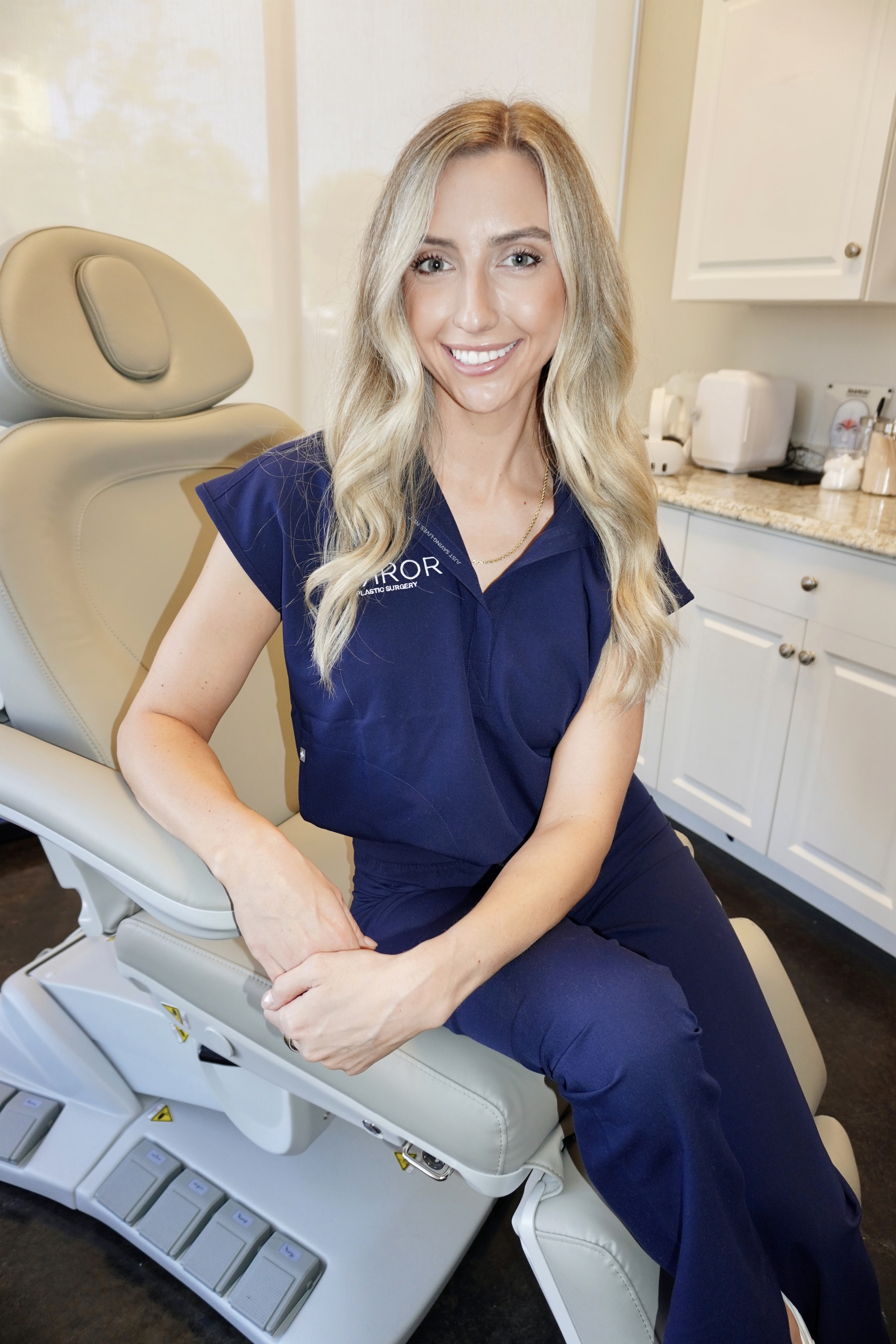
Written by: Ellie Pranckevicius, FNP-BC, Aesthetic Nurse Practitioner & Aesthetic Injector | Facial Restoration & Regenerative Injectable Specialist, Mirror Plastic Surgery | Last updated: August 17, 2026
Key Takeaways for Cellulaze, Cellfina, and Avéli
- Cellulaze, Cellfina, and Avéli are FDA-approved single-session cellulite treatments that target fibrous septa, but they differ in mechanism, recovery, and longevity.
- Cellulaze uses a 1440 nm laser to release septa, melt fat, and stimulate collagen, so it also improves skin thickness and elasticity.
- Cellfina offers the longest documented results at 3+ years through vacuum-assisted mechanical subcision, while Avéli provides real-time septal verification with a 1-year proven outcome.
- Recovery for all three procedures involves a few days of downtime and several weeks of compression, with Cellulaze requiring the longest garment protocol.
- Get a personalized cellulite treatment plan with Ellie at Mirror Plastic Surgery to determine which option best matches your anatomy and goals.
How Cellulaze Targets Cellulite
Cellulaze (Cynosure) is an FDA-approved, minimally invasive 1440 nm Nd:YAG laser with a side-firing fiber that treats cellulite through three coordinated actions. First, it performs laser-assisted subcision by thermally disrupting the subcutaneous fibrous septa that tether the dermis downward and create dimpling. Second, it melts herniated fat that has pushed upward into the dermis. Third, it heats the dermis to stimulate collagen remodeling and increase skin thickness.
The procedure uses local anesthesia and small incisions in each treatment area, so it functions as an outpatient option with minimal systemic risk. This surgical access allows Cellulaze to combine septal release with thermal tissue remodeling. As a result, Cellulaze is the only laser-based option among these three that addresses fat herniation and skin laxity at the same time as fibrous band disruption.
Clinical data show that skin thickness increased by 25% and skin elasticity improved by 29% at one year after Cellulaze, with a single treatment producing sustained improvement in a multicenter study.1
How Long Cellulaze Results Typically Last
Cellulaze results often last a year or longer, with improvement continuing to develop for 3 to 12 months after the single session as new collagen forms. Clinical studies have shown sustainable improvement in cellulite appearance after one treatment, with high rates of physician and patient satisfaction.1
The American Academy of Dermatology notes that Cellulaze may reduce cellulite with results that can last a year or longer, though outcomes are not guaranteed for everyone.1 Longevity depends on lifestyle, skin elasticity, and baseline cellulite severity. When compared with mechanical subcision alternatives, Cellulaze offers shorter documented durability than the multi-year results seen with Cellfina, which matters for patients who place top priority on long-term value.
Discuss your longevity expectations with Ellie to see whether Cellulaze’s collagen-stimulating mechanism fits your anatomy and long-term goals.
Cellulaze vs. Cellfina vs. Avéli: Key Differences
All three treatments are FDA-approved, single-session procedures performed under local anesthesia that target the fibrous septa responsible for cellulite dimpling. Their mechanisms differ in ways that affect which patients benefit most from each option.
Cellfina is an FDA-approved vacuum-assisted subcision system that uses a microblade to mechanically sever fibrous septa. In its multicenter trial, one treatment produced a ≥1-point Cellulite Severity Scale (CSS) improvement in most moderate-to-severe cellulite patients at 1 year, with high satisfaction and durable results beyond 3 years.1 The released septa do not grow back, which explains the treatment’s documented longevity.
Avéli (Revelle Aesthetics) is an FDA-cleared manual targeted subcision device that allows real-time verification of septal release during the procedure, which improves accuracy compared with approaches that rely on feel alone. In an open-label multicenter study, a single Avéli treatment improved cellulite in most patients with moderate-to-severe buttock and thigh cellulite at 6 months.1 Avéli has published 12-month follow-up data from its pivotal study confirming safety and efficacy, with clinical data supporting treatment benefits through one year of observation.1
| Treatment | Mechanism | Sessions Required | Proven Longevity |
|---|---|---|---|
| Cellulaze | 1440 nm Nd:YAG laser-assisted subcision, melts fat, stimulates collagen | 1 | 1 year or more |
| Cellfina | Vacuum-assisted mechanical subcision with microblade | 1 | 3+ years |
| Avéli | Manual targeted subcision with real-time septal release verification | 1 | 1 year |
This comparison highlights a key clinical distinction. Cellulaze addresses fat herniation and skin laxity in addition to septal release, so it suits patients whose cellulite involves a skin thickness or elasticity component. Cellfina and Avéli are purely mechanical and are indicated specifically for dimple-type cellulite depressions visible at rest. Subcision techniques are recommended for cellulite depressions present at rest, because they sever fibrous septal bands to redistribute biomechanical forces and produce more durable results than energy-based or topical treatments.
Recovery Timeline After Cellulaze, Cellfina, and Avéli
Recovery expectations differ slightly across the three procedures. The following timeline describes a typical Cellulaze recovery, followed by notes on Avéli and Cellfina.
- Day 1–2: Most patients return to normal daily routines within a few days. Mild redness, bruising, and tenderness are expected. Incision sites should stay clean and dry for the first 24 hours.
- Days 2–7: Gentle cleansing of incision sites is permitted from day 2. Baths and swimming should wait until sites close, based on your provider’s instructions. A compression garment is worn full-time.
- Weeks 1–2: Strenuous exercise should pause for at least a few weeks. Mild swelling usually improves during this period with consistent compression garment use.
- Days 10–14: Light gym activity such as gentle cardio and stretching can usually begin around days 10 to 14.
- Week 3 onward: Most patients resume full exercise from week 3. Compression garment use typically shifts to wear during activity only, such as sitting and walking, for about 4 additional weeks after the initial 2-week full-time period.
- Months 2–3: Results continue to improve for 2 to 3 months as collagen remodels. Meaningful improvement is often visible over 3 to 6 months.1
For Avéli, recovery tends to move faster. Most patients return to normal activities within 24 to 48 hours after Avéli, with bruising lasting 2 to 4 weeks. Compressive clothing is typically worn for 1 to 2 weeks, and strenuous activity is avoided for the first 7 days. For Cellfina, most patients return to light daily activities within a few days and resume more active lifestyles within a few weeks, with bruising and tenderness usually resolving over that same period.
Real Results: When Cellulaze Makes Sense
Patients with cellulite that involves both dimpling and skin laxity, especially those who notice a loss of firmness along with textural changes, often benefit from Cellulaze’s combined approach. Its mix of septal release, fat reduction, and collagen stimulation addresses more of the underlying anatomy than mechanical subcision alone. The 24-month follow-up data mentioned earlier support the durability of these skin quality improvements over time.1
Patients whose main concern is discrete, deep dimples visible at rest, with no meaningful skin laxity, often match better with Cellfina or Avéli. In those cases, the mechanical precision of subcision and the longer documented durability can align more closely with the goal. Released fibrous bands do not reattach in the same configuration, which is why subcision results can last over five years in some cases.1
The value of any cellulite treatment depends on anatomy, severity grade, and the specific changes a patient wants to see. That decision requires a provider who takes time to assess those variables and avoids a one-device-fits-all approach.
Get a personalized anatomy assessment at Mirror Plastic Surgery to determine which approach fits your cellulite type and goals.
Best Cellulite Treatment in 2026: A Practical Framework
No single cellulite treatment works best for every patient; the right approach depends on anatomy, severity, and skin quality. In 2026, the evidence base supports a structured framework for moderate-to-severe cellulite.
For severe cellulite with pronounced dimpling, minimally invasive subcision or collagenase injections are primary options, and severe cases often benefit from combination therapy that pairs mechanical disruption with tissue tightening via radiofrequency or laser. The thermal component discussed earlier becomes particularly relevant for patients with concurrent skin laxity, where purely mechanical devices cannot address the tissue quality deficit.
Mirror Plastic Surgery’s approach follows the practice’s core philosophy: safety first, function second, aesthetics third. Dr. Akash Chandawarkar, a Harvard-educated physician and Johns Hopkins-trained plastic surgeon with fellowship training at Manhattan Eye Ear & Throat Hospital, and Ellie Pranckevicius conduct up-to-one-hour top-to-bottom assessments that evaluate the full anatomical picture before making any recommendation. Mirror Plastic Surgery performs Avéli in-office and does not operate as a high-volume practice, so the team’s focus stays on the individual patient before, during, and after the procedure.
Decision-Making Checklist for Cellulite Treatment
- Identify your cellulite type. Note whether your dimples appear only when standing or also when lying down. Dimples visible at rest are the main indication for subcision-based approaches, including Cellulaze, Cellfina, and Avéli.
- Assess skin laxity. If skin firmness and thickness are concerns along with dimpling, Cellulaze’s collagen-stimulating mechanism may address more of your anatomy than mechanical subcision alone.
- Evaluate your longevity priority. If maximum documented durability matters most, Cellfina’s 3+ year clinical data currently lead the field. Avéli offers 1-year proven longevity with 12-month published data. Cellulaze provides long-lasting results with the added benefit of thermal tissue remodeling and skin quality improvement.
- Consider your recovery tolerance. All three procedures involve a few days before returning to light activity and several weeks of compression garment use. Cellulaze typically requires a longer compression protocol, so patients who prefer a shorter garment timeline may lean toward Avéli or Cellfina.
- Verify provider qualifications. Board-certified plastic surgeons or dermatologists typically deliver better results and fewer complications compared with less experienced providers. Confirm that your provider has specific training in the device being used and will conduct a thorough pre-procedure assessment.
- Expect a personalized plan, not a standard protocol. A provider who recommends the same treatment to every patient without a detailed anatomical assessment is not acting in your best interest. Ask for time, transparency, and evidence-based reasoning.
Frequently Asked Questions
What are the risks of Cellulaze compared with Avéli?
Both Cellulaze and Avéli are minimally invasive procedures performed under local anesthesia with well-documented safety profiles. Cellulaze involves small laser fiber insertions and carries risks typical of laser-assisted procedures, including bruising, swelling, tenderness, and the possibility of thermal injury if a trained provider does not perform the treatment. Patients should watch for worsening swelling after day 3, signs of infection, severe unrelieved pain, or numbness lasting beyond one week.
Avéli’s risks are primarily mechanical. Bruising occurs in nearly all patients, mild-to-moderate soreness and edema occur in about half, and small areas of skin firmness can persist for a couple of months. Both procedures show low rates of serious adverse events in clinical trials. Provider expertise and a thorough pre-procedure assessment remain the most important factors for reducing risk with either procedure.
How many treatments are needed for lasting cellulite reduction?
Cellulaze, Cellfina, and Avéli are each typically performed as a single-session procedure. This feature distinguishes them from non-invasive options like radiofrequency or acoustic wave therapy, which usually require 3 to 6 sessions for optimal results and provide shorter-duration outcomes of about 6 to 12 months.
The single-session nature of structural subcision approaches, whether laser-assisted or mechanical, reflects the fact that physically releasing fibrous septa creates a durable structural change rather than a temporary surface effect. Maintenance needs vary by individual, and a thorough consultation clarifies realistic expectations for your anatomy and severity grade.
Which provider qualifications matter most for cellulite procedures?
For any minimally invasive cellulite procedure, the most important qualifications include board certification in plastic surgery or dermatology, specific training and demonstrated experience with the device being used, and a deep working knowledge of subcutaneous anatomy. Cellulaze requires laser safety training and familiarity with thermal tissue effects. Avéli and Cellfina require precise mechanical technique to ensure complete septal release without injuring surrounding structures.
Beyond credentials, the quality of the consultation itself offers a reliable indicator. A provider who spends adequate time assessing your anatomy, explains the reasoning behind their recommendation, and discusses realistic outcomes is more likely to deliver safe, effective results than one who moves quickly to a treatment recommendation without that foundation.
What pre- and post-treatment support should I expect?
A well-structured cellulite treatment program starts with a comprehensive consultation that covers your medical history, cellulite severity grade, skin quality, and personal goals. Pre-treatment instructions usually include avoiding blood-thinning medications and supplements for a specified period before the procedure.
Post-treatment support should include clear written aftercare instructions that explain compression garment protocols, activity restrictions, incision site care, and which side effects are normal versus which require clinical attention. Follow-up appointments to assess healing and results are standard. At Mirror Plastic Surgery, the concierge model gives patients direct access to their provider via call, text, or email throughout recovery, not just during scheduled office visits. This continuity matters especially for procedures like Cellulaze, where collagen remodeling continues for months after the session.
Conclusion: Matching Cellulaze, Cellfina, or Avéli to Your Goals
Cellulaze, Cellfina, and Avéli each address the structural cause of cellulite through different mechanisms and longevity profiles. Cellulaze offers laser-assisted subcision combined with fat melting and collagen stimulation, which makes it a strong option for patients with concurrent skin laxity. Cellfina provides the longest documented durability at 3+ years through vacuum-assisted mechanical subcision. Avéli delivers real-time septal release verification with a fast recovery profile and 1-year proven longevity with 12-month published data. The right choice depends on your anatomy, severity, recovery tolerance, and long-term expectations.
Mirror Plastic Surgery serves patients in St. Petersburg and Tampa who want thoughtful consultations instead of rushed, one-size-fits-all recommendations. Dr. Akash Chandawarkar and Ellie Pranckevicius bring deep anatomical expertise and the time commitment that this decision requires. Mirror Plastic Surgery offers Avéli as an in-office procedure and approaches every cellulite evaluation with the same evidence-based, safety-first framework used across all treatments at the practice.
Schedule your top-to-bottom assessment to find out which cellulite treatment is the right structural match for your anatomy and goals.
Disclaimer: Results may vary from person to person. Editorial content, before and after images, and patient testimonials do not constitute a guarantee of specific results.
1 Results may vary from person to person. Editorial content, before and after images, and patient testimonials do not constitute a guarantee of specific results.