
Written by: Ellie Pranckevicius, FNP-BC, Aesthetic Nurse Practitioner & Aesthetic Injector | Facial Restoration & Regenerative Injectable Specialist, Mirror Plastic Surgery
What This Tampa Bay Pricing Guide Will Help You See
- Advertised unit or syringe prices in Tampa Bay rarely match the true 12‑month cost once credentials, authenticity, and corrections are included.
- Providers advertising neuromodulators below $10 per unit or fillers below $400 per syringe must cut corners on dosing, dilution, or safety.
- Structured injector training, critical-care experience, and on-site hyaluronidase correlate with fewer complications and fewer corrective visits.1
- Energy-based tightening, resurfacing, and non-surgical BBL results depend on anatomy-driven planning more than on short-term promotional pricing.1
- Patients who want transparent, anatomy-driven care can schedule a personalized pricing consultation at Mirror Plastic Surgery and receive a treatment plan with full cost transparency.
How This Tampa Bay Med Spa Pricing Analysis Was Built
Pricing data in this report comes from 2026 clinic pricing pages, industry benchmarks, and consumer research platforms covering Tampa Bay and the broader Florida market. Credential analysis references peer-reviewed literature on injector training and adverse-event rates. All figures represent ranges observed across provider types. Individual quotes vary based on anatomy, treatment goals, and product selection. No competing local practices are named.
Neuromodulators: Unit Pricing vs Real-Year Cost
| Provider Type | Per-Unit Range (Tampa Bay 2026) | Typical Units (Upper Face) | Estimated Session Cost |
|---|---|---|---|
| High-Volume Med Spa | $10–$12/unit | 35–85 units | $200–$600 |
| Premium Medical Practice | $12–$20/unit | 35–85 units | $400–$700+ |
Botox wholesale (ASP) cost is $6.506 per unit under HCPCS J0585, so Tampa providers advertising below $10 per unit must dilute product, under-dose, or trim safety infrastructure. Dysport requires a 2.5–3:1 conversion ratio relative to Botox and delivers comparable results only when dosed correctly by an injector who understands that conversion. Injector credentials influence how long results last because conservative or incorrect dosing shortens the treatment cycle and raises annual spend even when the sticker price looks low.
Dermal Fillers: Syringe Price, Safety, and Corrections
| Provider Type | Per-Syringe Range (Tampa Bay 2026) | Typical Syringes (Full Face) | Dissolution Cost if Needed |
|---|---|---|---|
| High-Volume Med Spa | $561–$900/syringe | 1–4 syringes | $150–$600/area |
| Premium Medical Practice | $900–$1,400/syringe | 1–4 syringes | Hyaluronidase on-site; corrective sessions minimized |
Pricing below $400 per syringe in Florida often signals injector inexperience or non-genuine product. Thicker, longer-lasting products such as Juvederm Voluma and RHA 4 sit near $800–$1,200 per syringe, while basic formulations cost less. Comprehensive facial balancing can require 4–8 syringes over several sessions, especially when cheeks, chin, lips, and jawline are addressed together.
Vascular occlusion, which occurs when filler enters a blood vessel, is a medical emergency that needs immediate high-dose hyaluronidase. Any injector performing filler procedures must keep hyaluronidase on hand and know how to use it. Lack of on-site hyaluronidase signals limited familiarity with real-world anatomical risk.
Request a comprehensive facial anatomy assessment to receive a personalized filler plan that matches your proportions and volume needs.
Non-Surgical BBL: Biostimulatory Fillers for Gluteal Contouring
| Provider Type | Estimated Treatment Range | Primary Products Used | Key Consideration |
|---|---|---|---|
| High-Volume Med Spa | Variable; often per-vial pricing | Varies by clinic | Product selection and anatomical precision vary widely |
| Premium Medical Practice | Individualized; multi-session planning | Radiesse, AlloClae, biostimulatory fillers | Symmetry, volume, and cellulite addressed holistically |
Non-surgical BBL outcomes depend on product choice and injection technique more than on headline price. Biostimulatory fillers such as Radiesse and AlloClae provide structural lift and collagen stimulation, which supports smoother, more lifted contours.1 The gluteal region requires precise anatomical mapping to treat hip dips, stretch marks, and asymmetry in a coordinated way.
A staged, multi-session plan usually outperforms a single high-volume visit because tissue has time to respond and settle. Biostimulatory filler series require a higher upfront investment yet often last 1–2 years or longer, with maintenance limited to a brief yearly visit rather than repeating full series.1 The on-site hyaluronidase standard described for facial fillers applies with equal urgency to gluteal procedures, where vascular safety margins are narrow.
Kybella: Submental Fat Reduction and Session Planning
| Provider Type | Per-Vial Range | Typical Vials per Session | Sessions Required |
|---|---|---|---|
| High-Volume Med Spa | Lower end of market | 2–4 vials | 2–6 sessions |
| Premium Medical Practice | Higher end; individualized dosing | Anatomy-driven | Fewer sessions when dosed correctly |
Kybella (deoxycholic acid) permanently destroys submental fat cells, and the number of vials and sessions depends on fat volume and distribution. These variables require careful anatomical assessment rather than guesswork. Under-dosing to keep per-session cost low stretches the series and raises total spend.
Swelling and downtime can be significant. An injector with ICU-level clinical judgment can better anticipate post-treatment physiology, set realistic expectations, and recognize atypical responses early.
Energy-Based Skin Tightening: Sessions vs Settings
| Modality | Typical Session Range (Florida 2026) | Sessions Needed | Result Duration |
|---|---|---|---|
| Radiofrequency / Ultrasound (High-Volume) | Lower promotional pricing | 3–6 sessions | 12–18 months |
| Radiofrequency / Ultrasound (Premium Practice) | Higher; device and credential dependent | Anatomy-driven | Optimized with maintenance plan |
Energy-based tightening results hinge on device calibration, energy settings, and the injector’s understanding of tissue depth. Promotional pricing at high-volume clinics often reflects lower energy settings that feel safer for an undertrained operator yet fail to trigger meaningful collagen remodeling. A premium practice selects parameters based on skin laxity, Fitzpatrick type, and goals, which can reduce the number of sessions needed for visible change.
Resurfacing Treatments: Short-Term vs Long-Term Value
| Treatment | Session Range (Tampa Bay 2026) | Annualized Cost | Result Duration |
|---|---|---|---|
| Microneedling / Skin Pen | $200–$700/session | $600–$2,100 (3 sessions/year) | 3–6 months per session |
| Fractional CO2 Laser | $500–$1,500/session | $800–$1,500/year amortized | 5–10 years |
CO2 laser resurfacing results typically last 5 to 10 years because of deep collagen remodeling, so the per-year cost often looks modest compared with treatments that need monthly or quarterly maintenance.1 Microneedling offers a lower entry price but requires consistent repetition to maintain results.
At a premium practice, resurfacing choices follow skin quality, pigmentation history, and recovery tolerance. Device availability or margin potential does not drive the recommendation.
Hair Restoration: PRP Alone vs Regenerative Protocols
| Provider Type | Treatment Options | Estimated Annual Investment | Key Differentiator |
|---|---|---|---|
| High-Volume Med Spa | PRP injections | Variable; often per-session pricing | Standardized protocols |
| Premium Medical Practice | PRP + Acorn Biolabs Secretome (injected or topical) | Individualized multi-session plan | Regenerative medicine integration; physician oversight |
Hair restoration with PRP appears similar across clinics, yet outcomes vary with platelet concentration, injection depth, and scalp assessment. Premium practices that add advanced biologics such as Acorn Biolabs Secretome apply regenerative medicine principles that extend beyond standardized PRP kits. Physician oversight helps identify hormonal, nutritional, or structural causes of hair loss before treatment begins.
Cellulite Reduction: Devices vs Avéli
| Provider Type | Treatment Options | Estimated Investment | Result Durability |
|---|---|---|---|
| High-Volume Med Spa | Topical devices, RF, massage-based | Lower per-session; multiple sessions required | Temporary; requires ongoing maintenance |
| Premium Medical Practice | Avéli (in-office minor procedure) | Higher upfront; single-session efficacy | Long-lasting; targets fibrous septae directly |
Avéli is a minimally invasive, single-session procedure that releases the fibrous septae responsible for cellulite dimpling.1 Topical devices and RF treatments cannot reach this structural cause. High-volume clinics that rely on device-based cellulite treatments at lower per-session prices usually require repeated visits for partial improvement, and results fade without maintenance.
The total-cost-of-ownership comparison favors a single precision procedure when treatment targets the true anatomical source of cellulite.
Credential Comparison: Training Pathways and Safety
Across registries capturing training background, longer and more structured injector training is associated with lower rates of significant adverse events, faster recognition of vascular events, and better documented outcomes. The credential pathway often matters more than the job title on a business card.
A premium injector pathway in Tampa Bay may include a formal esthetics licensure program with 600+ hours of hands-on training, a Bachelor’s and Master’s in Nursing from an accredited university, years of critical care nursing in a high-acuity Neuroscience ICU, and supervised aesthetic practice under a Harvard-educated, Johns Hopkins-trained plastic surgeon. This combination produces an injector who understands skin physiology in depth, can recognize vascular compromise in real time, and works within a clear escalation pathway to surgical-level care.
Weekend certification routes, which are common in the high-volume segment, compress anatomical training into hours instead of years. Within that training advantage, two specific competencies emerge as inflection points for complication reduction: recognizing a vascular event in real time and acting immediately by stopping injection and flooding with hyaluronidase even before diagnosis is certain. Abbreviated programs rarely build this level of confidence and pattern recognition.
Experience credential-driven care firsthand, and schedule a consultation to see how advanced training supports safer, more natural outcomes.
Total Cost of Ownership: 12-Month Injectable Maintenance
The credential and dosing differences described above translate into measurable cost differences over a full year. Consider a full-face regimen with neuromodulators three times per year and two biostimulatory filler sessions annually, which reflects a common moderate-maintenance plan for Tampa Bay patients in their 40s.
High-volume scenario: Three neuromodulator sessions at $10 per unit, followed by a corrective fourth visit that mirrors the under-dosing pattern described earlier, add approximately $300–$500 in unplanned spend. When that same pattern extends to filler sessions, where lower per-syringe pricing often pairs with less precise placement, the need for dissolution and re-injection adds another $150–$600 per area in corrective cost. These unplanned corrections explain why many cosmetic patients underestimate their annual spend by 40–60 percent, since they remember large invoices but overlook routine touch-ups and fixes.
Premium practice scenario: Three correctly dosed neuromodulator sessions remove the need for a fourth visit. Two biostimulatory filler sessions planned around individual anatomy create durable results without dissolution. Premium maintenance for moderate-to-high-maintenance patients still involves regular neuromodulator and filler visits, yet the plan carries no corrective spend when anatomical planning is sound from the start.
The premium pathway usually shows a higher per-session invoice. It often produces a lower total-year invoice once correction costs, extra sessions from under-dosing, and the ripple effects of migration or asymmetry enter the calculation.
Red-Flags Checklist for Tampa Bay Med Spa Shoppers
Before booking any injectable or non-surgical treatment in Tampa Bay, walk through a structured safety and transparency check.
- Verify qualifications, products used, aftercare protocols, and complaints procedures, rather than relying on social media photographs alone.
- Confirm that hyaluronidase is stored on-site and that the injector is trained to use it for vascular emergencies.
- Notice whether the consultation feels rushed or quota-driven, because a thorough anatomical assessment requires meaningful time.
- Watch for opaque pricing structures where total session cost remains unclear until treatment has already started.
- Ask whether the practice is supplier-neutral or financially incentivized to recommend specific products regardless of your anatomy.
- Use online research time to confirm board certifications and training pathways, not just to scan star ratings and marketing claims.
- Stay cautious when you encounter aggressive upselling, since a trustworthy provider will sometimes advise that a treatment is not yet necessary for your anatomy.
Membership Plans vs À-la-Carte Care in Tampa Bay
Many high-volume Tampa Bay med spas promote membership models that bundle monthly credits toward treatments at discounted rates. These structures can lower per-session cost yet also encourage over-treatment when patients feel pressure to use credits before they expire. A premium practice that operates on an à-la-carte model with anatomy-driven recommendations may create a lower total annual spend because treatments occur only when clinically indicated.
Practices that invest in education, transparency, and long-term relationships tend to need fewer corrective sessions over time. Many luxury spa visitors willingly pay more for documented clinical credentials and a bespoke approach, reflecting a growing recognition that the lowest advertised price rarely equals the lowest total cost.
Limitations of This Tampa Bay Pricing Snapshot
All pricing ranges in this report reflect observed market data, not formal quotes. Anatomy, skin quality, metabolic rate, treatment history, and aesthetic goals create wide variation in the number of units or syringes needed and in how long results last. A patient with strong facial musculature will need more neuromodulator units than average. A patient with advanced volume loss will need more filler than a first-time client.
Accurate cost planning requires an individualized consultation with a qualified provider who evaluates your specific anatomy before recommending a plan.
Frequently Asked Questions
Why does the same number of Botox units cost more at a premium practice?
Per-unit pricing reflects credential depth, safety infrastructure, and product authenticity. As noted in the neuromodulators analysis, wholesale Botox costs exceed $6.50 per unit, so providers charging below $10 per unit cannot cover product, overhead, and injector compensation without cutting corners somewhere, often through dilution, under-dosing, or reduced safety support. A premium practice charges more per unit because the injector has years of structured anatomical training, product sourcing and storage follow strict standards, and hyaluronidase and emergency protocols remain in place on-site. The higher per-unit cost often produces a lower annual cost because correctly dosed treatments last longer and need fewer corrections.
How can I verify an injector’s credentials before booking in Tampa Bay?
Begin by confirming that the injector holds an active nursing or medical license through the Florida Department of Health’s online verification portal. Look for formal esthetics training hours in addition to nursing credentials, since this dual background signals understanding of both surface and subdermal skin physiology. Confirm that the practice operates under physician oversight and that a board-certified physician is available for escalation if complications arise.
Ask directly whether hyaluronidase is kept on-site and whether the injector has training in recognizing and managing vascular occlusion. Transparent, confident answers to these questions indicate the safety culture that peer-reviewed literature links to lower adverse-event rates.
What is the realistic 12-month cost of maintaining Botox and filler results in Tampa Bay?
Many patients underestimate annual injectable spend because they focus on single-session invoices instead of adding all appointments, touch-ups, and corrections across the year. A moderate-maintenance regimen with three neuromodulator sessions and two filler sessions annually can range from roughly $3,000 at the lower end of the market to $10,000 or more at premium practices, before corrective costs.
When under-dosing triggers an extra neuromodulator session, or when filler migration requires dissolution and re-injection, the lower per-unit price at a high-volume clinic often produces a higher total annual cost than a premium practice’s correctly planned regimen. The most accurate estimate comes from a comprehensive consultation where your provider maps a full-year plan instead of quoting a single visit in isolation.
Is a non-surgical BBL safe, and which products make sense?
Non-surgical BBL using injectable fillers can be safe and effective when an injector with detailed gluteal anatomy knowledge performs the procedure and selects appropriate products.1 Biostimulatory fillers such as Radiesse and AlloClae are the evidence-supported options for this indication, providing structural lift, collagen stimulation, and durable volume.1 A holistic plan can address hip dips, cellulite texture, stretch marks, and symmetry across several sessions.
Product selection and injection depth function as critical safety variables. Only injectors with advanced body-contouring training and access to physician-level oversight should perform this procedure.
How does Mirror Plastic Surgery’s approach differ from a typical Tampa Bay med spa?
Mirror Plastic Surgery follows a concierge model in which each patient receives up to a one-hour, top-to-bottom assessment before any treatment is recommended. The practice remains supplier-neutral, so product choices follow anatomy and goals rather than commission or inventory pressure. Ellie Pranckevicius, the Aesthetic Nurse Practitioner, combines formal esthetics licensure with advanced nursing and four years in a Neuroscience ICU, which supports both surface-level expertise and strong clinical judgment.
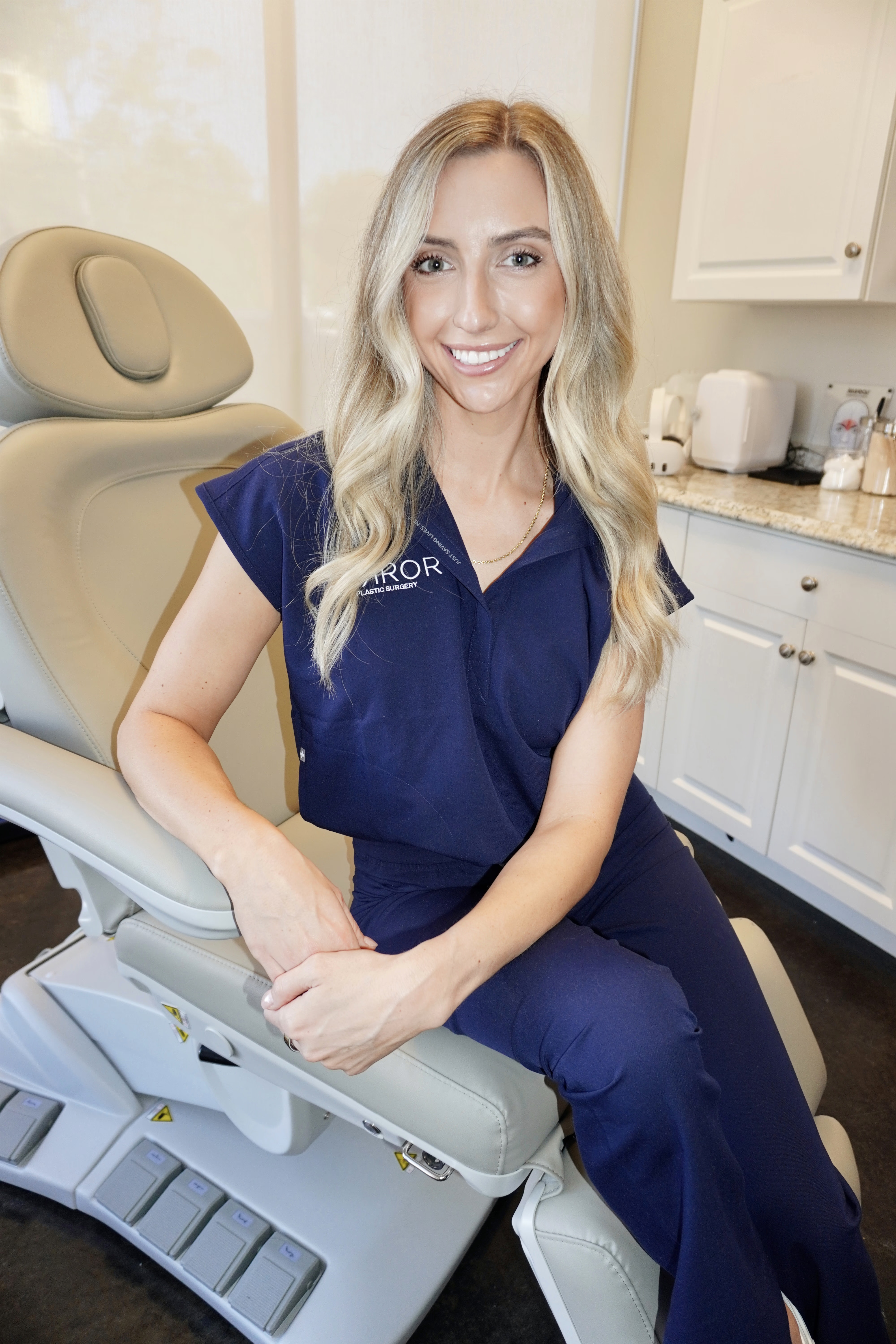
All non-surgical treatments occur within a practice founded by a Harvard-educated, Johns Hopkins-trained plastic surgeon, which provides a defined escalation pathway to surgical-level care that high-volume med spas lack. The team limits daily patient volume so each person receives the focused attention that safe, natural outcomes require.
Start with a comprehensive assessment at Mirror Plastic Surgery to receive a personalized, anatomy-driven treatment plan with complete pricing transparency before any treatment begins.
Disclaimer
Disclaimer: Results may vary from person to person. Editorial content, before and after images, and patient testimonials do not constitute a guarantee of specific results.
1 Results may vary from person to person. Editorial content, before and after images, and patient testimonials do not constitute a guarantee of specific results.