
Written by: Ellie Pranckevicius, FNP-BC, Aesthetic Nurse Practitioner & Aesthetic Injector | Facial Restoration & Regenerative Injectable Specialist, Mirror Plastic Surgery
Key Takeaways for Sculptra Hip Dip Treatment
- Sculptra is a biostimulatory injectable that gradually builds collagen to soften hip dips instead of adding instant volume.
- Most treatment plans involve multiple sessions spaced 4–8 weeks apart, with 4–30 total vials depending on hip dip severity.
- Visible changes usually appear over 3–6 months after the final session, with peak improvements often seen at 18–24 months.1
- Injector technique, dilution protocols, and the 5-5-5 massage regimen are essential to keep the 3–5% nodule risk as low as possible.
- At Mirror Plastic Surgery, patients receive personalized, evidence-based Sculptra plans from experienced providers, and you can book a consultation to see whether this approach fits your goals.
How Sculptra Builds Collagen in Hip Dips
PLLA microparticles suspended in sterile water are placed in the deep subcutaneous plane of the lateral hip. This placement triggers a controlled inflammatory response that activates local fibroblasts and starts collagen production. Fibroblasts first create Type III collagen, which then remodels into stronger Type I collagen over many months. That remodeling process produces the gradual firmness and contour improvement you see over time. The water carrier dissipates within one to three days, so early swelling fades quickly while the PLLA particles remain and work slowly.
Sculptra is FDA-approved only for facial use, including nasolabial folds, facial wrinkles, and HIV-related facial fat loss. Hip dip treatment is therefore considered an off-label use in the United States, which affects how the treatment is studied and regulated. In December 2025, Galderma received EU MDR certification that formally expanded Sculptra’s approved indications to the gluteal region, posterior thighs, décolletage, and upper arms, supporting the body treatment protocols experienced practitioners have used for years. US hip dip applications remain off-label, and a 2025 international consensus on PLLA for body aesthetic treatments published in PMC outlines specific dilution protocols, injection planes, and vial counts for each body area, noting that body treatments require higher volumes and more sessions than facial work.
Schedule a consultation to discuss whether Sculptra’s collagen-building approach matches your anatomy and timeline expectations.
Typical Sculptra Vial Ranges for Hip Dips
Vial requirements vary based on hip dip depth and width, your individual anatomy, and the injector’s protocol. Deeper dips usually need more vials per session and often more sessions overall, which affects both your timeline and budget planning. The table below consolidates ranges reported across clinical sources, and your actual plan is finalized after a detailed anatomical assessment.
| Correction Level | Vials Per Session (Both Sides) | Number of Sessions | Estimated Total Vials |
|---|---|---|---|
| Shallow / Mild | 4–6 | 2–3 | 4–10 |
| Moderate | 8–10 | 3–4 | 6–20 |
| Deep / Significant | 8–10 | 2–4 | 20–30 |
Sessions are spaced 4–8 weeks apart so collagen has time to develop and your provider can accurately assess progress before the next round. A US multicenter observational study of nonfacial PLLA use found that most subjects underwent 2 or 3 treatment sessions, with varying vials per session, although body-specific hip dip protocols often call for higher per-session volumes than that study suggests. Current consensus guidelines favor lower volume per session with more frequent spacing to reduce nodule risk, which supports a conservative, stepwise treatment plan.
Get a personalized vial and session plan tailored to your specific hip dip anatomy.
Sculptra Hip Dip Results: What the Timeline Looks Like
Sculptra does not create immediate visible volume because it stimulates your own collagen rather than acting as a traditional filler. The water carrier causes short-term swelling that settles within one to three days, which is expected and not a complication.
The collagen production timeline typically follows these phases:
- Weeks 1–3: Collagen production usually begins around 2–3 weeks after injection.
- Weeks 4–6: Subtle changes, such as smoother texture and slight contour improvement, often appear 4–6 weeks after the first session.
- Months 2–4: Noticeable volume tends to appear between 6–12 weeks, with visible changes building across sessions.
- Months 3–6: Full results are usually visible 3–4 months after the final session, and collagen continues to mature and remodel through months 6–12.
- Peak and beyond: Many patients describe peak visible results at 18–24 months, while biological collagen remodeling can continue beyond 24 months even after PLLA particles are fully metabolized.
No published studies currently report Sculptra hip dip results beyond the 9-month follow-up of the SPLASH trial. Annual touch-up treatments are commonly recommended to maintain the collagen framework once results begin to fade.
Is Sculptra a Good Value for Hip Dip Correction?
Sculptra requires a gradual, multi-session commitment, so it suits patients who prefer subtle, natural-looking change over time rather than instant transformation. People who value long-lasting improvement without surgery and who complete the full treatment series often report high satisfaction. In clinical data on gluteal Sculptra treatment, 96% of patients reported high satisfaction after treatment.1
Common concerns when deciding whether Sculptra feels worthwhile include:
- Subtlety of results: Sculptra adds volume slowly and is not designed for dramatic change in a single visit. Multiple sessions build the collagen framework.
- Number of sessions: The multi-session commitment described earlier requires planning, budgeting, and realistic expectations about the treatment arc.
- Lumps or nodules: Nodule formation occurs in 3–5% of Sculptra patients and is strongly technique-dependent. Proper dilution, correct injection depth, and consistent post-treatment massage are the main preventive measures.
- Irreversibility: Sculptra cannot be dissolved after placement, so conservative dosing and careful provider selection matter.
- Maintenance: Results are long-lasting but not permanent, and most patients benefit from annual touch-ups after the initial series.
Sculptra vs Surgical BBL for Hip Dips
Sculptra and surgical fat grafting (BBL) improve hip dips in different ways, and the better option depends on your anatomy, lifestyle, and risk tolerance. Sculptra is a non-surgical, in-office procedure with no anesthesia and no downtime, so you can return to normal activities the same day. Results appear gradually as new collagen forms, and this option works well for patients who lack donor fat or want to avoid surgery. The volume achievable is moderate and anatomy-dependent, which makes Sculptra ideal for targeted hip dip correction rather than large-scale augmentation.
Surgical fat grafting can deliver much greater volume in a single session and can provide durable results once the transferred fat stabilizes. However, 20–50% of transferred fat may be reabsorbed within the first 3–6 months after BBL. Recovery involves soreness, bruising, compression garments, and limits on direct pressure for at least six weeks. The surgical risk profile, including anesthesia complications, fat necrosis, and infection, is significantly higher than that of an injectable protocol.
Nonsurgical gluteal filler procedures usually take under one hour, do not require general anesthesia, and allow immediate return to daily activities. In contrast, full recovery after BBL fat transfer typically takes 6–8 weeks to 2–3 months. At Mirror Plastic Surgery, Ellie’s non-surgical BBL approach uses biostimulatory fillers, including Sculptra and Radiesse, tailored to each patient’s anatomy, and Dr. Akash Chandawarkar can provide a surgical pathway when a patient’s goals call for it.
Explore both non-surgical and surgical options with Ellie and determine which approach best fits your goals.
Risks and Side Effects of Sculptra for Hip Dips
Sculptra has a strong safety record when trained practitioners follow current protocols. In a US multicenter observational study of nonfacial PLLA use, treatment-related adverse events were mild or moderate.
Common, temporary side effects include:
- Bruising that usually resolves within one to two weeks
- Swelling at injection sites that settles within days to one week
- Tenderness or soreness for a few days
- Mild, temporary redness or itching
The most clinically significant Sculptra-specific risk is nodule formation, which occurs in 3–5% of patients. Modern protocols have reduced this risk through higher reconstitution volumes (7–9 mL or more per vial), longer hydration times, deep placement, and post-injection massage. For body areas, high-dilution protocols of up to 20 mL per vial are recommended as a primary strategy to minimize nodules and papules. Because Sculptra cannot be dissolved after placement, prevention through meticulous technique is critical.
The 5-5-5 massage rule, which means massaging the treated area for 5 minutes, 5 times a day, for 5 consecutive days, is a required aftercare step. This massage protocol works alongside high-dilution technique. Proper dilution lowers particle concentration at each injection site, and massage helps distribute those particles evenly through the tissue. Beyond technique and aftercare, additional risk considerations include:
- Rare infection, which is usually treatable with antibiotics when caught early
- Asymmetry from uneven product distribution, which precise technique helps prevent
- Delayed nodules appearing weeks to months after injection, which are often managed with intralesional corticosteroids or, in resistant cases, surgical excision
- Contraindications such as pregnancy, active infection at the treatment site, known PLLA allergy, and documented keloid tendency
Choosing a Sculptra Injector for Hip Dips
Sculptra outcomes are highly technique-dependent, so injector selection is the most important decision in the process. The provider’s skill, judgment, and understanding of anatomy directly influence both safety and results.
Patients should expect a provider with deep knowledge of surface and subdermal anatomy in the lateral hip, experience with body-specific dilution and cannula protocols, and a clear, honest discussion of realistic outcomes, risks, and timelines before any product is placed.
At Mirror Plastic Surgery, non-surgical body contouring is led by Ellie Pranckevicius, FNP-BC, an Aesthetic Nurse Practitioner with esthetics licensure and 600 hours of hands-on training, a Master’s in Nursing from the University of South Florida, and four years in the Neuroscience ICU at Tampa General Hospital. That clinical background supports her understanding of physiology and anatomy and informs her injection precision and safety decisions. Her non-surgical BBL approach combines biostimulatory fillers, including Sculptra and Radiesse, with regenerative medicine principles tailored to each patient’s anatomy and goals.
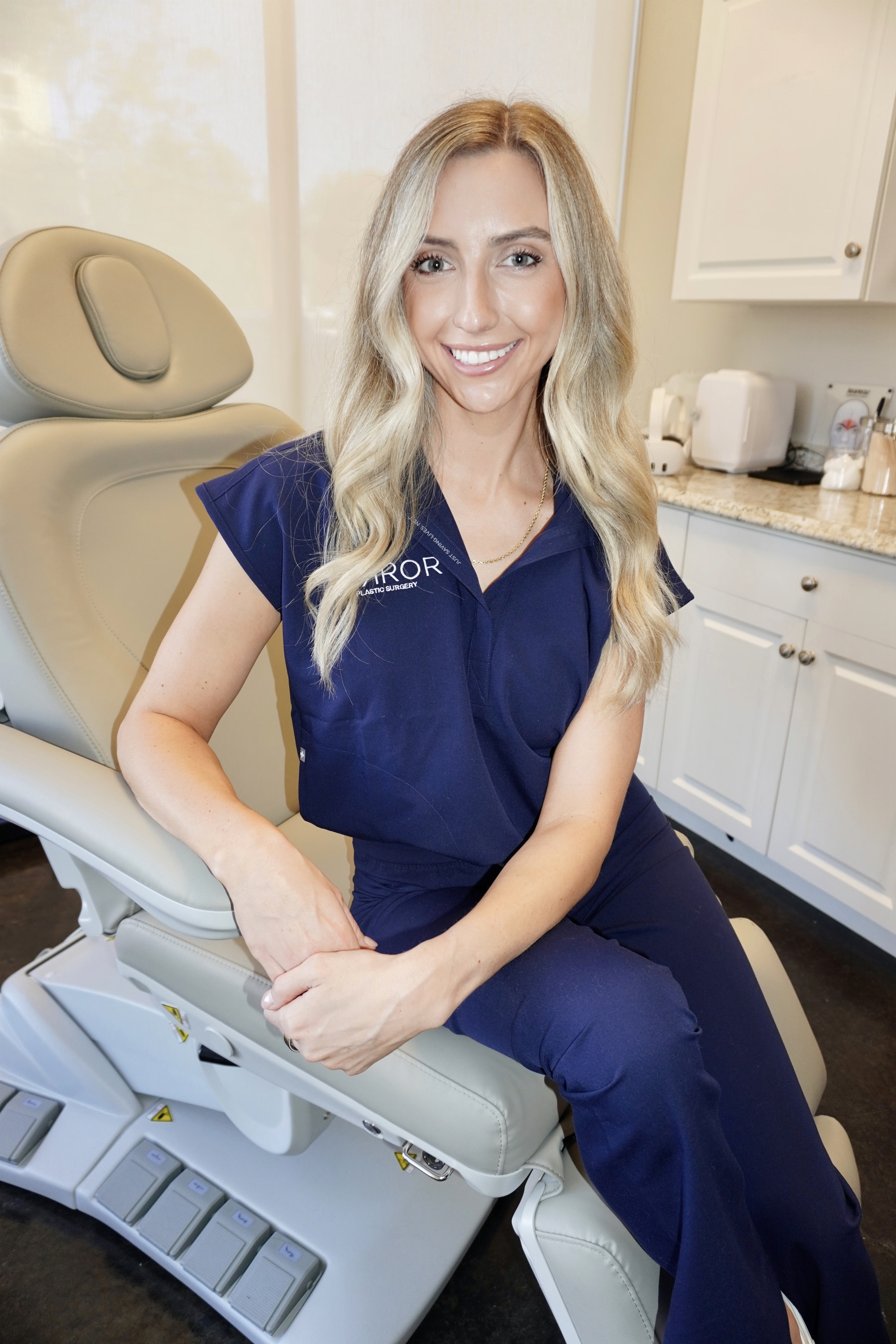
Mirror Plastic Surgery’s concierge model allows consultations of up to an hour, with a top-to-bottom anatomical assessment that considers both the emotional drivers behind your goals and the structural factors that shape what is achievable. The practice remains supplier-neutral and recommends the most appropriate product for each patient rather than defaulting to a single brand. When a patient’s goals exceed what non-surgical treatment can safely deliver, Ellie collaborates with Dr. Akash Chandawarkar, MD, who is Harvard-educated, Johns Hopkins-trained, and fellowship-trained in aesthetic surgery at Manhattan Eye Ear & Throat Hospital.
Schedule your anatomical assessment with Ellie to receive an honest, evidence-based treatment plan.
What to Expect During Your Sculptra Consultation
A consultation at Mirror Plastic Surgery follows a structured, patient-centered process so every recommendation reflects your anatomy and long-term goals:
- Comprehensive intake and goal discussion: Ellie begins with an in-depth conversation about your aesthetic concerns, motivations, and expectations, including a clear explanation of what Sculptra can and cannot achieve for your hip dips.
- Top-to-bottom anatomical evaluation: A detailed physical assessment of the lateral hip, pelvic structure, and surrounding tissue quality defines the depth, width, and character of your hip dips and highlights anatomical factors that influence planning.
- Evidence-based vial and session planning: Based on your anatomy and goals, Ellie creates a personalized protocol with estimated vial ranges, session count, and spacing grounded in current clinical evidence and conservative dosing.
- Transparent risk and benefit discussion: Relevant risks, including nodule formation, PLLA irreversibility, aftercare requirements, and realistic timelines, are reviewed clearly and without pressure.
- Aftercare and maintenance education: You receive detailed guidance on the 5-5-5 massage protocol, activity considerations, and the expected collagen development timeline so you can plan your schedule.
- Surgical pathway discussion if needed: If your goals align better with a surgical approach, Ellie explains that directly and coordinates a conversation with Dr. Akash instead of proceeding with a non-surgical plan that would not meet your expectations.
Beyond the consultation itself, Mirror Plastic Surgery’s concierge model gives you direct access to your care team by call, text, or email throughout your treatment series, not only at scheduled visits.
Request a Sculptra hip dip consultation with Ellie at Mirror Plastic Surgery in St. Petersburg, FL, and start with an assessment that prioritizes your safety, anatomy, and long-term goals.
Frequently Asked Questions
How long does it take to see results from Sculptra for hip dips?
Sculptra does not create immediate visible volume because it stimulates your body’s collagen instead of acting as an instant filler. The water carrier that suspends the PLLA particles dissipates within one to three days. Subtle improvements in texture and contour usually begin to appear four to six weeks after the first session.1 Noticeable volume often builds over six to twelve weeks, and full results, with the collagen framework matured, are generally visible three to six months after the final session.1 Collagen remodeling can continue beyond that point, and many patients describe peak visible results at eighteen to twenty-four months.1 Because results are gradual and cumulative across sessions, you should plan for a treatment arc of several months rather than a single-visit change.
Is Sculptra safe for hip dips, and what makes nodules more or less likely?
Sculptra has a well-documented safety profile based on more than two decades of clinical use, and serious adverse events are uncommon when trained providers follow current protocols. As discussed in the risks section, nodule formation is the primary concern and is strongly technique-dependent. Prevention relies on generous dilution, correct deep subcutaneous placement, use of a blunt cannula for body applications, and consistent adherence to the 5-5-5 massage protocol after each session.
How does Sculptra compare to a surgical BBL for hip dip correction?
The detailed comparison in the “Sculptra vs Surgical BBL for Hip Dips” section above covers mechanism, recovery, volume potential, and risk profile. In brief, Sculptra is non-surgical, involves no downtime, and delivers gradual, targeted volume, while BBL can provide larger volume in one session but requires weeks of recovery and carries surgical risks. Your consultation will help determine which approach best fits your anatomy, goals, and lifestyle.
How many sessions of Sculptra are needed for hip dips, and how far apart should they be spaced?
Most patients need two to four sessions for meaningful hip dip correction, with three to four sessions commonly recommended for moderate to significant dips. Sessions are spaced four to six weeks apart, and sometimes up to eight weeks, so collagen can develop and your response can be evaluated before more product is placed. A conservative, staged approach is preferred over high volumes in a single session to reduce nodule risk and support natural-looking results. The exact number of sessions and vials per session depends on hip dip depth and width, your collagen response, and your aesthetic goals, all of which are reviewed during your initial consultation.
What should I look for when choosing a provider for Sculptra hip dip treatment in the Tampa Bay area?
Look for a provider with deep anatomical knowledge of the lateral hip and gluteal region, experience with body-specific Sculptra protocols, and a commitment to transparent communication about realistic outcomes and risks. Avoid providers who recommend very high volumes in a single session without a conservative plan or who fail to discuss the 5-5-5 massage requirement and the non-dissolvable nature of PLLA. A thorough consultation that evaluates your anatomy, clarifies your goals, and explains the full treatment arc, including risks, should be the baseline standard. At Mirror Plastic Surgery in St. Petersburg, Ellie Pranckevicius conducts up to an hour-long top-to-bottom assessment before planning any treatment, and the practice’s supplier-neutral philosophy keeps recommendations focused on what is right for your anatomy rather than product quotas.
Disclaimer: Results may vary from person to person. Editorial content, before and after images, and patient testimonials do not constitute a guarantee of specific results.
1 Results may vary from person to person. Editorial content, before and after images, and patient testimonials do not constitute a guarantee of specific results.