
Written by: Ellie Pranckevicius, FNP-BC, Aesthetic Nurse Practitioner & Aesthetic Injector | Facial Restoration & Regenerative Injectable Specialist, Mirror Plastic Surgery | Last updated: August 8, 2026
What You Can Expect From RF Cellulite Treatment
- Radiofrequency cellulite treatment delivers modest, temporary improvements in skin texture and cellulite severity.1 It does not remove cellulite or correct the fibrous septae that cause dimpling.1
- Most published protocols call for 2–12 sessions spaced weeks apart, with results that last months and then require ongoing maintenance.1
- Mechanical subcision (Avéli) offers more durable outcomes, with data supporting improvement for up to five years by directly releasing fibrous septae.1
- Provider expertise and individualized anatomical assessment matter more than the device. Treatment choice should reflect cellulite grade, skin quality, and goals.
- A personalized consultation at Mirror Plastic Surgery helps determine whether radiofrequency, mechanical subcision, or a combined plan fits your anatomy and priorities.
How Radiofrequency Changes Cellulite, and Where It Falls Short
Radiofrequency treatment reduces cellulite severity but does not erase cellulite.1 Recent systematic reviews have analyzed multiple RF cellulite studies and found reductions in cellulite severity scores after dermatofunctional RF therapy. These studies also report decreases in subcutaneous fat-pad thickness, improvements in skin elasticity, and reductions in abdominal circumference.1
Patient satisfaction varies because anatomy, cellulite grade, and skin quality strongly influence results.1 The AAD notes that RF results are short-lived and that several treatments are needed to see even minor change.1 RF improves dermal laxity and superficial fat but does not release the fibrous septae that create the tethered-dimple pattern seen in moderate-to-severe cellulite.1 That structural limitation guides patient selection at Mirror Plastic Surgery.
Radiofrequency Session Counts and Treatment Planning
Most patients need a series of RF sessions, not a single visit. Session requirements vary by device platform, treatment area, and individual response. Published protocols span a broad range:
- Van der Lugt et al. evaluated transdermal radiofrequency for body slimming and cellulite.
- Del Pino et al. evaluated unipolar RF for cellulite and subcutaneous tissue.
- BTL clinical data for EMTONE show significant Cellulite Severity Scale improvement after four sessions over two weeks, with 20 minutes per area.1
- RF microneedling protocols often include several sessions spaced weeks apart, with collagen remodeling over several months.
Across platforms, most patients receive 2–12 sessions, each lasting 12–90 minutes depending on device and area.1 Temperature targets usually fall between 40°C and 45°C at the dermal level. Spacing depends on skin thickness, baseline cellulite grade, BMI, and treatment tolerance. No single protocol fits everyone. Mirror Plastic Surgery creates individualized plans after a detailed anatomical assessment instead of selling fixed packages.
Get your personalized RF session plan based on your anatomy, cellulite grade, and goals.
How Long Radiofrequency Cellulite Results Typically Last
Most RF cellulite studies follow patients only for short periods after treatment. That limited follow-up prevents firm conclusions about long-term durability. The AAD describes RF results as temporary, and maintenance sessions every 6–12 months after an initial series are commonly recommended to preserve smoother, firmer skin.1
Mechanical subcision shows a different pattern. Data support improvement extending to five years after tissue-stabilized guided subcision.1 and that durability gap plays a central role in treatment planning at Mirror Plastic Surgery.
Environmental factors also influence how long results last. Florida’s climate introduces an additional consideration. High ambient humidity and heat in the Tampa Bay area accelerate transepidermal water loss and can affect skin barrier integrity over time. Patients in this environment benefit from structured maintenance planning and sun-avoidance protocols. Ellie Pranckevicius includes this guidance in every post-treatment plan.
Side Effects and Safety Profile of RF Cellulite Treatment
Radiofrequency cellulite treatment has a well-characterized, generally mild side-effect profile. Common transient effects include:
- Redness (erythema), usually resolving within 2–24 hours
- Mild swelling, resolving within 1–2 days
- Bruising, which fades with time
- Heat-related sensitivity, temporary hyperpigmentation, and mild oedema
- Tingling during treatment and residual soreness afterward
Rare but documented risks include surface irregularities, crusting that lasts 3–7 days, and localized fat atrophy. Localized fat atrophy is very rare but can be long-term. Complication risk depends heavily on operator technique.
Contraindications include:
- Pacemakers or metal implants near the treatment area
- Pregnancy or breastfeeding
- Active skin conditions such as melanoma, rosacea, psoriasis, eczema, or dermatosis
- Keloid scarring
- Mature skin with significant sagging or loss of elasticity, particularly beyond age 65
Mirror Plastic Surgery follows a safety-first protocol that starts with complete contraindication screening during the initial consultation. RF is offered only when it aligns with your medical history and skin status.
Comparing RF, CoolSculpting, and Avéli for Cellulite
Radiofrequency, cryolipolysis, and mechanical subcision target different aspects of cellulite. They are not interchangeable. Cryolipolysis (CoolSculpting) primarily reduces fat volume. The AAD reports that it cannot get rid of cellulite because it does not release fibrous septae. Reducing fat without correcting skin tethering can, in some cases, make cellulite appear more noticeable, which makes careful patient selection essential.
Mechanical subcision (Avéli) directly releases the fibrous septae that cause dimpling. A 2023 multicenter pivotal study of targeted verifiable subcision reported improvement on the Global Aesthetic Improvement Scale and cellulite severity reduction at 12 months for many patients. Longer-term data support the five-year durability mentioned earlier, with documented improvement in the Kaminer et al. study.
A study that combined targeted verifiable subcision with helium plasma RF showed improvement in a majority of treated thighs at later follow-up. Patient global aesthetic improvement scores increased over time, which supports multimodal therapy for patients with both structural tethering and dermal laxity. The table below summarizes how these three modalities differ in effectiveness, session requirements, and result durability, which guides treatment selection at Mirror Plastic Surgery.
| Treatment | Effectiveness for Cellulite | Sessions Required | Typical Duration of Results |
|---|---|---|---|
| Radiofrequency (surface/energy-based) | Modest severity-score reductions; variable patient satisfaction | Multiple sessions depending on platform | Short-lived; periodic maintenance recommended |
| Mechanical Subcision (Avéli/Cellfina) | Significant GAIS improvement; targets structural septae directly | Single session in most protocols | Up to 5 years documented (Kaminer et al.) |
| Cryolipolysis (CoolSculpting) | Effective for localized fat; cannot address cellulite dimpling directly | 1–3 sessions per area | Fat reduction is longer-lasting; no cellulite durability data |
Choosing a Provider for RF Cellulite Treatment
Provider selection shapes both safety and satisfaction. A clinical review on patient selection for minimally invasive body contouring shows that RF treatment satisfaction correlates strongly with appropriate candidacy selection. The following criteria distinguish evidence-based providers, moving from assessment through planning:
- Comprehensive anatomical assessment that evaluates cellulite grade, skin laxity, fat distribution, and fibrous septae involvement before recommending any modality. This assessment identifies which structural issues need attention.
- Transparent discussion of realistic outcomes based on that assessment, including the modest and temporary nature of RF results, without guarantees.
- Access to both energy-based and mechanical options so recommendations follow anatomy and goals rather than device inventory.
- Documented contraindication screening and safety protocols that confirm the selected treatment fits the patient’s medical history.
- Individualized maintenance planning that reflects anatomy, lifestyle, and environment instead of one-size-fits-all packages.
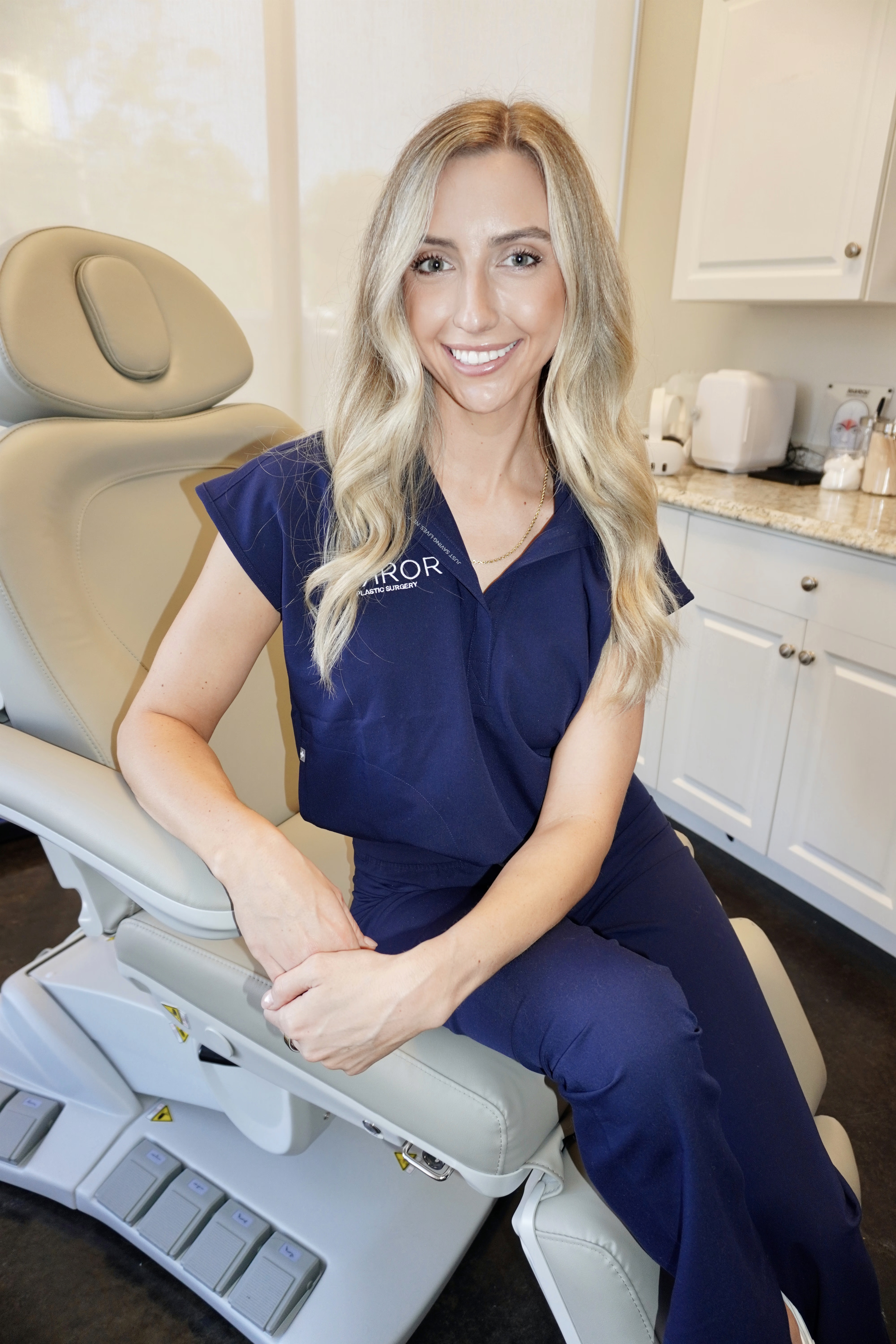
At Mirror Plastic Surgery, Ellie Pranckevicius, FNP-BC, leads non-surgical body contouring consultations. Her dual background in esthetics and advanced nursing, including four years in the Neuroscience ICU at Tampa General Hospital, supports a precise understanding of skin physiology and subdermal anatomy. Consultations can last up to an hour and follow a top-to-bottom assessment framework. Both RF and Avéli are available, so recommendations reflect your anatomy and goals rather than a preset protocol.
Schedule your anatomy-driven cellulite assessment to determine which treatment is appropriate for you.
Non-Surgical Buttock Contouring at Mirror Plastic Surgery
Many patients who ask about cellulite treatment also want changes in gluteal shape, volume, or contour. Mirror Plastic Surgery offers Radiesse and alloClae as biostimulatory options for non-surgical buttock contouring. Radiesse stimulates the body’s own collagen production and has an established safety profile in body applications, which suits patients seeking gradual volume enhancement.
For more targeted contouring needs, such as buttocks, hip dips, and breasts, alloClae provides an additional option. Both injectables are selected based on individual anatomy and goals rather than used by default. Ellie’s assessment clarifies whether volume, structural support, cellulite treatment, or a combination should come first.
Frequently Asked Questions
What percentage reduction in cellulite severity does RF usually provide?
Recent systematic reviews report reductions in cellulite severity scores across several RF studies.1 These changes are clinically meaningful on validated scales, yet they represent improvement rather than elimination.1 Study follow-up periods and sample sizes vary, which limits strong conclusions about long-term outcomes. Patients should expect gradual, modest improvement that requires ongoing maintenance.1
How does RF compare to mechanical subcision for long-term results?
Mechanical subcision addresses the structural limitation of RF noted earlier. It directly releases the fibrous septae that tether skin downward, while RF focuses on dermal laxity and superficial fat. This difference creates a clear durability gap. Subcision data show improvement lasting up to five years in some patients after a single session.1 RF results are documented only through short-term follow-up, with regular maintenance intervals needed to sustain change.
For patients with discrete, tethered dimples, mechanical subcision is usually the more durable option.1 For patients with diffuse skin laxity and mild texture change rather than pronounced dimpling, RF may be a better first-line approach.1 Many patients achieve the most complete change with a multimodal plan that combines both approaches.1
Are there Florida-specific considerations for RF cellulite treatments?
Tampa Bay’s high humidity and year-round heat affect both scheduling and result longevity. Post-RF protocols recommend avoiding sun exposure and high temperatures after sessions. In Florida’s climate, many patients do better scheduling treatment series during cooler months, typically October through March, to reduce heat-related side-effect risk and support sun-avoidance.
Chronic UV exposure common in Florida also accelerates dermal collagen breakdown. That process can shorten the duration of RF-induced collagen remodeling benefits. Ellie incorporates these environmental factors into maintenance planning during the initial consultation.
What happens during a cellulite consultation at Mirror Plastic Surgery?
Consultations at Mirror Plastic Surgery function as comprehensive, top-to-bottom assessments that usually last up to an hour. Ellie starts by clarifying your goals, emotional drivers, and treatment history. She then performs a detailed physical assessment of the affected areas, evaluating cellulite grade, skin laxity, fat distribution, and fibrous septae involvement.
Based on this assessment, she presents a personalized treatment plan that may include RF, Avéli, biostimulatory injectables, or a combination. She explains the rationale, realistic outcomes, session requirements, and maintenance needs in clear language. A personalized quote follows the plan so you leave with a concrete roadmap, not a sales script.
Conclusion: Next Steps for Evidence-Based Cellulite Treatment
Radiofrequency cellulite treatment offers a research-supported option for patients with mild-to-moderate cellulite and diffuse skin laxity who hold realistic expectations. Recent literature confirms measurable improvements in cellulite appearance and skin quality, while also showing that results are modest, temporary, and anatomy-dependent.1 For patients with structural, dimple-predominant cellulite, mechanical subcision with Avéli provides substantially more durable outcomes. Many patients achieve the most complete change with a multimodal plan that combines both approaches.1
The most influential factor in any cellulite treatment plan is not the device. The quality of the assessment that precedes treatment has the greatest impact. At Mirror Plastic Surgery, that assessment anchors every recommendation Ellie makes. Safety comes first, function second, and aesthetics third. That sequence supports plans built around your anatomy, your goals, and the best available evidence in 2026.
Start with an evidence-based assessment at Mirror Plastic Surgery in St. Petersburg, Florida, to determine the cellulite treatment approach that fits your anatomy and goals.
Disclaimer: Results may vary from person to person. Editorial content, before and after images, and patient testimonials do not constitute a guarantee of specific results.
1 Results may vary from person to person. Editorial content, before and after images, and patient testimonials do not constitute a guarantee of specific results.