
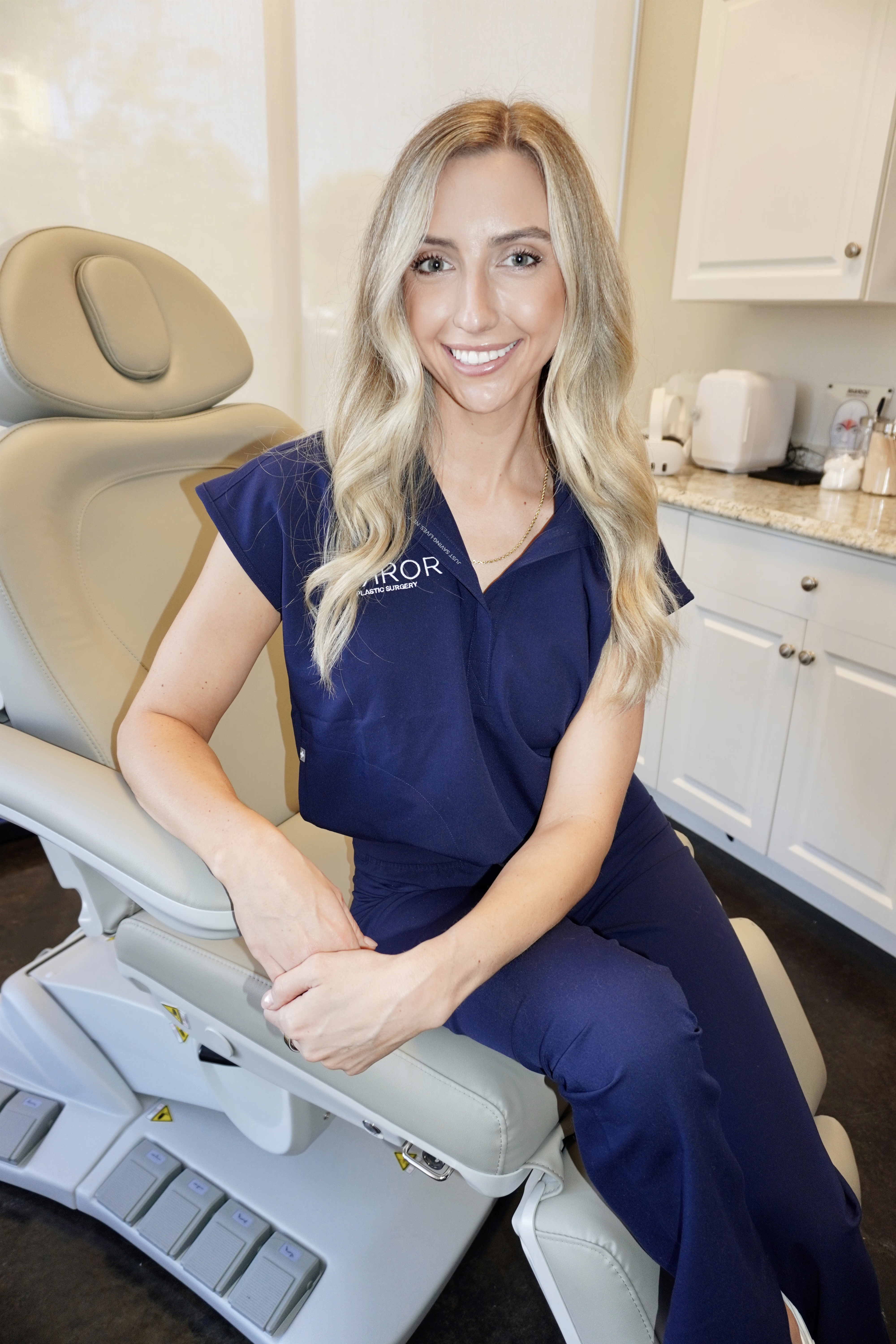
Written by: Ellie Pranckevicius, FNP-BC, Aesthetic Nurse Practitioner & Aesthetic Injector | Facial Restoration & Regenerative Injectable Specialist, Mirror Plastic Surgery
Key Takeaways
-
Cellulite comes from fibrous septa that tether the skin. Minimally invasive procedures like Avéli, Cellfina, and Cellulaze release these bands for longer-lasting results than creams or non-invasive devices.
-
Avéli, Cellfina, and Cellulaze each offer single-treatment options with clinically proven improvement, but longevity, downtime, and ideal cellulite patterns differ.
-
Proper patient selection is critical. Discrete dimples respond best to subcision, while diffuse waviness or skin laxity may need alternative or combination approaches.
-
Thorough, anatomy-first consultations that map septa, skin quality, and body composition are essential to choose the right procedure and set realistic expectations.
-
Schedule your personalized cellulite assessment at Mirror Plastic Surgery to discover which minimally invasive option best matches your anatomy and goals.
Why One-Time Cellulite Treatments Can Actually Last
Many women feel frustrated when creams, massage, and non-invasive radiofrequency devices give only short-lived improvement. These options cannot reach the fibrous septa that create dimples. Subcision-based procedures, Avéli and Cellfina, physically sever those bands, which is why results from subcision are long-lasting.1
That said, new dimples may form with sudden weight changes or an extremely sedentary lifestyle, and those areas can usually be retreated locally. Cellulaze uses laser energy under the skin to achieve a similar release and also stimulates collagen, although its longevity profile differs.
Matching Dimples or Wavy Cellulite to the Right Treatment
Cellulite does not look the same on every body. Discrete, punched-in dimples on the buttocks and posterior thighs usually come from identifiable tethering bands and respond well to subcision. Diffuse waviness or an orange-peel texture across a larger area often reflects shallow septa, reduced dermal thickness, and mild skin laxity. That pattern is often better addressed with laser-assisted approaches or combination protocols.
Patient selection must also distinguish true cellulite from look-alikes such as loose skin, localized fat pockets, or lipedema. Those conditions may require body contouring, skin tightening, or medical referral instead of cellulite-focused treatment.
How Mirror Plastic Surgery Builds a Cellulite Treatment Plan
Choosing between Avéli, Cellfina, and Cellulaze works best as a medical decision, not a popularity contest. The process starts with a structured, top-to-bottom anatomical assessment that maps the location, depth, and character of each patient’s septa. The provider also evaluates skin thickness and laxity and considers overall body composition.
A detailed in-person consultation with body composition analysis determines whether cellulite treatment, body sculpting, or a combination approach fits the patient’s anatomy and whether the main issue is dimpling, fat bulges, or skin laxity.
At Mirror Plastic Surgery, every cellulite consultation runs up to a full hour. The session explores the patient’s emotional motivations, long-term goals, and relevant medical history, then moves into a physical assessment. This approach contrasts with volume-driven practices where a provider spends a few minutes reviewing photos and recommends the same device for nearly everyone.
Mirror limits itself to one to two procedures per day so the entire clinical team can stay focused on each individual before, during, and after treatment. This individualized approach begins with your first consultation.
Start your personalized assessment with Ellie at Mirror Plastic Surgery.
Cellulite Treatment Landscape and 2026 Advances
The minimally invasive aesthetics market continues to expand. The non-invasive aesthetic treatment market, which includes cellulite treatment procedures, was valued at USD 35.99 billion in 2025 and is projected to reach USD 64.07 billion by 2033 at a compound annual growth rate of 7.45%. Within that growth, cellulite treatment now appears as a distinct procedural subcategory, reflecting rising patient demand for evidence-based, durable solutions.
Current clinical consensus from sources such as the American Academy of Dermatology and Mayo Clinic highlights subcision-based procedures as the most reliably durable single-treatment options for dimple-type cellulite. Safety protocols now emphasize pre-procedure screening for coagulation disorders, vascular anomalies, and active infection.
Standardized post-procedure compression and activity restriction timelines also play a key role. Mirror Plastic Surgery’s model aligns with these standards. Procedures occur only after a thorough candidacy review, and the practice’s low daily volume helps ensure post-procedure monitoring never feels rushed.
Avéli vs Cellfina vs Cellulaze: Evidence-Based Comparison
The table below compares the three leading minimally invasive cellulite procedures across four clinically relevant dimensions. Every figure comes from published clinical and provider sources cited inline.
|
Procedure |
Mechanism |
Longevity |
Downtime |
Treatments Required |
|---|---|---|---|---|
|
Avéli |
Real-time guided subcision: a handheld device severs fibrous septa under the skin with visual confirmation of complete release |
Clinically meaningful improvement demonstrated at 3, 6, and 12 months after a single treatment1 |
Most patients return to normal activities within 1–2 days, with bruising and swelling resolving within days to 2 weeks |
Single treatment |
|
Cellfina |
Vacuum-assisted subcision: a needle-sized blade releases septa at a precise, standardized depth while suction stabilizes tissue |
FDA-cleared with demonstrated improvement at 3 years in pivotal trials, considered the longest-studied subcision device for dimple cellulite1 |
Comparable to Avéli, with mild swelling, bruising, and tenderness for days to 2 weeks and light activity resumable immediately |
Single treatment, with a possible second session for severe cases from month 3 onward |
|
Cellulaze |
Laser-assisted subcision: a side-firing 1440 nm laser fiber disrupts septa, liquefies superficial fat, and stimulates subdermal collagen remodeling at the same time |
Clinical data support improvement at 1–2 years.1 Collagen remodeling continues for several months after the procedure, so final results appear later than with subcision-only approaches. |
Slightly longer than subcision-only procedures, typically 2–5 days of restricted activity, with a compression garment worn for 1–3 weeks |
Single treatment session, with touch-up possible for residual areas |
Note: Direct head-to-head longevity trials comparing all three devices in a single study population are not yet available in the peer-reviewed literature as of mid-2026. Longevity figures above reflect each device’s own pivotal or published clinical data.
Who Typically Makes a Good Candidate
Avéli is intended for adult women bothered by cellulite dimples on the buttocks or thighs who are in generally good health. Ideal candidates want a single minimally invasive treatment and understand that the procedure does not address skin laxity, excess fat, or stretch marks. Cellfina shares a nearly identical candidacy profile. Cellulaze may suit patients who have both dimpling and mild diffuse waviness, since its thermal component can address skin texture beyond discrete tethered bands.
Suitable candidates are at or near a stable body weight for at least three months, are aged 18 or older, and have no active skin infection or inflammation in the treatment area. When significant generalized skin laxity appears alongside cellulite, especially after major weight loss, a formal lift procedure may be recommended instead of subcision alone.
Risks, Limitations, and Tradeoffs to Weigh
Subcision-based procedures carry rare risks such as scarring, nerve irritation, and infection. Choosing a qualified practitioner and following aftercare instructions closely can help reduce these risks. Cellulaze adds the thermal risks associated with laser energy delivered beneath the skin, including a small possibility of contour irregularity if energy distribution is uneven.
No current procedure eliminates all surface irregularity in every patient. Consultation must focus on realistic expectations. These treatments can produce significant, durable improvement in dimpling and skin texture, but they do not guarantee complete smoothing.1 Patients with very mild cellulite without deep dimples are usually not ideal candidates for subcision. The strongest candidates have localized, band-driven dimples.
Common Misconceptions About Cellulite Procedures
Misconception: Any cellulite treatment will work for any type of cellulite. Subcision devices target discrete tethered dimples. They do not treat diffuse waviness caused by dermal thinning, and they do not reduce fat volume or tighten loose skin.
Misconception: Results are permanent regardless of lifestyle. Misconception: Results never change once the bands are released. While the treated bands remain released, lifestyle factors can create new tethering in different locations. As noted earlier, these new areas usually respond well to localized retreatment.
Misconception: More sessions always produce better outcomes. For subcision-based procedures, a single well-executed session addresses the identified bands. Performing additional sessions before tissue has fully remodeled does not speed results and may increase complication risk.
Why QWO Injectable Treatment Was Discontinued
QWO (collagenase clostridium histolyticum-aaes) was the first FDA-approved injectable for cellulite dimples and generated significant interest between 2020 and 2022. Endo International announced in December 2022 that it would cease production and sale of Qwo due to market concerns about bruising and prolonged skin discoloration. The discoloration related to hemosiderin deposition from subcutaneous bleeding triggered by the enzymatic action of the collagenase.
As of mid-2026, QWO is not available in the United States, and no equivalent injectable collagenase product has received FDA clearance for cellulite as a replacement. Patients who were previously candidates for QWO are now best evaluated for Avéli or Cellfina, depending on their anatomy.
Discover which procedure matches your unique anatomy — schedule your consultation with Ellie today.
Recovering From Cellulite Treatment in Tampa’s Climate
Tampa Bay’s climate adds a few practical recovery considerations that patients in cooler regions may not encounter. Heat and humidity can increase swelling in the first 48–72 hours after a procedure, so compression garments and cool compresses become especially helpful. Patients should rest for 24 hours after treatment, stay well hydrated, and use cold compresses to ease minor swelling.
Sun exposure to treated areas should be avoided during the bruising phase, typically one to two weeks. This matters for Tampa residents who spend time outdoors year-round. Patients should plan procedures around travel, beach activity, and events that involve form-fitting clothing, since bruising on the posterior thighs and buttocks can show in swimwear. Visible reduction in cellulite may appear immediately, with results becoming more noticeable after about a month and continuing to improve over the next 3 to 6 months, which is worth factoring into seasonal planning.1
FAQ
Choosing Avéli or Cellfina for Buttock Cellulite
Both Avéli and Cellfina use subcision to release fibrous septa and are FDA-cleared for dimple-type cellulite on the buttocks and thighs. Avéli’s key differentiator is real-time visual confirmation that each band has been fully released before the device moves to the next site, which reduces the likelihood of incomplete treatment. Cellfina uses vacuum-assisted stabilization to standardize the depth of each release. The better choice depends on the number, distribution, and depth of your specific dimples, which requires a hands-on anatomical evaluation.
How Long Minimally Invasive Cellulite Results Last
Cellfina has the longest published follow-up data, with demonstrated improvement at three years in its pivotal FDA trial. Avéli’s clinical data show maintained clinically meaningful improvement through 12 months in published studies, with longer-term follow-up ongoing. Cellulaze results are supported by one- to two-year data, and collagen remodeling continues for several months after the procedure. All three procedures can be retreated if new dimples form over time due to lifestyle or weight changes.
Treating Cellulite on the Abdomen or Arms
Avéli is FDA-cleared specifically for the buttocks and thighs. Cellfina is similarly indicated for those areas. Cellulaze has been used off-label on other body regions by some practitioners, but evidence for efficacy outside the posterior thighs and buttocks remains more limited. If your primary concern is cellulite on the abdomen or arms, a thorough consultation can clarify whether a subcision-based approach, a skin-tightening modality, or a combination protocol best fits your anatomy.
Addressing Loose Skin or Stretch Marks
Avéli and Cellfina are designed exclusively to release tethered fibrous bands that cause discrete dimples. They do not tighten loose skin or reduce the appearance of stretch marks. Cellulaze’s thermal component provides some dermal stimulation that may modestly improve skin texture, but it does not function as a true skin-tightening procedure. Patients with significant skin laxity may benefit from combining a cellulite procedure with a separate skin-tightening treatment or, in more advanced cases, a surgical approach.
Preparing for a Minimally Invasive Cellulite Procedure
Standard preparation usually includes avoiding blood-thinning medications and supplements such as aspirin, ibuprofen, fish oil, and vitamin E for about one to two weeks before treatment. Patients also stop alcohol consumption 24–48 hours beforehand and arrive well hydrated.
Planning ahead for transportation home and a comfortable recovery space helps the day go smoothly. Loose-fitting clothing that does not compress the treated area works best for the day of the procedure and the early recovery period. Your provider will give you a personalized pre-procedure checklist based on the specific device and areas being treated.
Decision Checklist: Questions to Ask Any Provider
-
Which type of cellulite do I have, discrete dimples, diffuse waviness, or both, and which procedure best matches that pattern?
-
Am I a candidate for a single-treatment approach, or does my anatomy suggest I may need more than one session?
-
Do I have any contraindications, such as coagulation disorders, active skin conditions, or vascular anomalies, that affect my candidacy?
-
How many of this specific procedure do you perform, and what does your post-procedure follow-up protocol include?
-
What realistic improvement can I expect, and how will my results look at one month compared with six months?
-
If I have skin laxity in addition to dimpling, should I address that separately, and in what order?
-
What specific post-procedure restrictions do you recommend given Tampa’s climate and my lifestyle?
Conclusion: Choosing the Right Cellulite Treatment for Your Anatomy
Avéli, Cellfina, and Cellulaze each offer a legitimate, evidence-based path to lasting cellulite improvement, but they are not interchangeable.1 The right choice depends on the precise character of your cellulite, your skin’s thickness and laxity, your body composition, and your preferred recovery timeline. No comparison table, however thorough, can replace a hands-on anatomical assessment by a provider who understands the structural anatomy beneath the skin’s surface.
At Mirror Plastic Surgery in St. Petersburg, every cellulite consultation follows that principle. Ellie Pranckevicius brings a dual background in esthetics and advanced nursing, including four years in a neuroscience ICU, to every assessment. She combines deep physiological knowledge with honest, unhurried communication that high-volume practices rarely offer.
When surgical input is helpful, Harvard-educated, Johns Hopkins-trained plastic surgeon Dr. Akash Chandawarkar is available to complement the treatment plan. The practice’s concierge model, with hour-long consultations and a maximum of two procedures daily, ensures your visit is a clinical evaluation rather than a sales appointment.
Disclaimer: Results may vary from person to person. Editorial content, before and after images, and patient testimonials do not constitute a guarantee of specific results.
1 Results may vary from person to person. Editorial content, before and after images, and patient testimonials do not constitute a guarantee of specific results.