
Written by: Ellie Pranckevicius, FNP-BC, Aesthetic Nurse Practitioner & Aesthetic Injector | Facial Restoration & Regenerative Injectable Specialist, Mirror Plastic Surgery
Key Takeaways on Laser Hair Removal Pain
- Laser hair removal usually feels mildly to moderately uncomfortable, and sensation varies by body area based on skin thickness, nerve density, and hair coarseness.1
- The Brazilian and VIO zones are typically the most painful, while legs and arms tend to be the easiest areas to treat.
- Pain often decreases between the third and fifth sessions as hair density and thickness drop with each treatment.1
- Topical numbing cream, built-in cooling systems, and thoughtful timing around your cycle are proven ways to significantly reduce discomfort.
- At Mirror Plastic Surgery, a personalized consultation with Ellie Pranckevicius and Dr. Akash Chandawarkar tailors your treatment plan to your anatomy and pain tolerance, so you can schedule your personalized assessment with confidence.
How Painful Is Laser Hair Removal on a 1–10 Scale?
Most people describe laser hair removal as mild to moderate discomfort that they can manage.1 Pain varies by body area because skin thickness, nerve density, and hair coarseness differ from zone to zone. The table below summarizes patient-reported experiences from multiple clinical sources.
| Body Area | Average Pain (1–10) | Primary Anatomical Driver | Notes |
|---|---|---|---|
| Lower legs / arms | Mild | Thick skin, low nerve density | Consistently the easiest areas to treat |
| Back / chest (men) | Mild to moderate | Large surface area, moderate hair density | Longer sessions, discomfort feels diffuse rather than sharp |
| Face / upper lip | Moderate to significant | High nerve density, proximity to mucous membranes | Quick pulses, numbing cream often recommended for first sessions |
| Underarms | Moderate | Thin skin, concentrated nerve endings | Described as hot snaps, improves quickly with sessions |
| Bikini line | Moderate to significant | Thin skin, coarse terminal hair, high melanin load | Coarse hair generates more heat per pulse |
| Full Brazilian / VIO | Significant | Very thin genital skin, dense nerve endings, thick dark hair | Highest-rated area, topical or inhaled analgesia often warranted |
Why Brazilian, VIO, and Upper Lip Treatments Hurt the Most
The Brazilian and VIO zones consistently rank as the most painful areas. Genital skin is thin, packed with dense nerve endings, and covered by thick, dark hair that absorbs laser energy intensely. The upper lip follows closely. Numerous nerve endings and proximity to mucous membranes make it one of the body’s most sensitive spots, so each pulse can feel like a quick, sharp snap.
The underarms sit in the middle range. Thin skin and concentrated nerve endings create a series of hot snaps, but the small treatment area keeps sessions short. The inner thighs are slightly more sensitive than the rest of the legs because the skin there is thinner and more delicate.
Legs and arms usually feel the most manageable. Thicker skin and fewer concentrated nerve endings keep discomfort in the mild range, and finer hair absorbs less energy with each pulse.
One patient at a comparable practice explained it clearly: “The bikini line was a solid 6 for me the first time, like a rubber band on sunburned skin. My legs? I barely noticed.” That gap reflects anatomy, not willpower.
How Pain Changes From Session to Session
The first session is usually the most intense. Maximum hair density requires the highest energy settings, which causes more intense discomfort than follow-up treatments. As you move through your series, the physics start to work in your favor.
Research published by the National Institutes of Health confirms that hair density decreases progressively with each laser session, which directly corresponds to reduced discomfort over the course of treatment.1 Less hair means less melanin, less heat generated per pulse, and a noticeably lighter sensation, a pattern many patients notice by their third or fourth session.
Morgan Selland, LME, LSO, MA, Clinic Manager and Laser Safety Officer at Allen Medical Aesthetics, sees this pattern daily: “By the third or fourth treatment, many patients skip the numbing entirely because the hair is thinner and the sensation is so much lighter.”
Period Timing and Laser Hair Removal Pain
Laser hair removal can feel slightly more uncomfortable during your period, and this difference comes from normal hormonal shifts. During the menstrual phase (days 1–5), prostaglandin levels rise and sensitize nociceptors in the skin, lowering their activation threshold so that laser-induced thermal stimulation produces a stronger pain signal than in other phases of the cycle. At the same time, estrogen reaches its lowest point, temporarily reducing epidermal barrier function and heightening sensitivity of nerve endings to laser heat.
These two mechanisms form the physiological basis for the modest pain-score differences that clinical studies have documented across cycle phases. The difference is statistically real but numerically small. Importantly, menstruation is not listed among recognized contraindications for laser hair removal; it is solely a comfort consideration.
In the follicular phase (days 7–14), rising estrogen levels improve skin hydration and maximize pain threshold, making this window the most comfortable period for laser hair removal sessions. Patients who are particularly pain-sensitive often do best when they schedule sessions during this mid-cycle window.
Laser Hair Removal Pain Compared to Waxing
Mayo Clinic sources note that laser hair removal is generally considered less painful than waxing or electrolysis. The quality of the sensation matters as much as the intensity. Laser discomfort comes as brief thermal pulses that last a fraction of a second, while waxing creates a sustained pulling sensation across the full strip.
Many people find laser hair removal more tolerable than waxing because the discomfort is brief and happens in quick pulses rather than a prolonged pulling sensation. After treatment, mild warmth, redness, and tenderness often improve within a few hours and usually settle within one to two days. This pattern resembles waxing’s post-removal redness but avoids repeated follicular trauma.
Laser hair removal also offers a cumulative comfort advantage. Most patients who have experienced both report that laser hair removal is less painful than waxing because laser pain decreases over successive sessions while waxing pain remains consistent. Waxing does not provide that downward pain trajectory, so each appointment starts from the same baseline.
Because laser treatments can become more comfortable over time, many patients want to know how to make each session as easy as possible.
What Actually Helps: Numbing, Cooling, and Smart Timing
Effective pain management for laser hair removal combines topical anesthesia, integrated device cooling, and practical scheduling choices. Each layer targets a different part of the pain pathway.
Topical numbing cream
The FDA-approved 7%/7% lidocaine and tetracaine cream (Pliaglis) is safe and effective when used with laser hair removal, and dermatologists favor FDA-approved formulations over compounded products for consistent safety. A numbing gel applied 30–60 minutes before treatment is recommended by the AAD for small or sensitive areas.
Built-in cooling systems
Modern laser systems use cold air blowers, chilled sapphire tips, and cryogen spray that cool the skin immediately before, during, or after each pulse, which dramatically reduces the heat sensation compared to older systems. Pairing epidermal cooling with conservative test-fluence settings produced average pain scores as low as 2.0 and 2.3 in a clinical series while achieving 75.07% hair reduction at six months.1
Practical pre-session strategies
- Shave the treatment area before your appointment to remove surface hair that would absorb energy and cause a singed sensation without improving follicle targeting.
- Avoid caffeine for 2–4 hours before treatment, since it can heighten skin sensitivity.
- For patients who are particularly pain-sensitive, schedule sessions during the follicular phase discussed earlier to take advantage of that more comfortable hormonal window.
- Communicate in real time during treatment. Exhale on each pulse, report sharp sensations early, and request slower pacing in sensitive zones so your provider can adjust settings immediately.
Questions to Ask During Your Consultation
A focused consultation uncovers the anatomical and safety factors that will shape your personal pain experience. Arrive with clear questions so your provider can tailor a plan to you.
- Which laser platform will you use for my skin type and hair color, and does it include integrated cooling?
- How will you adjust fluence settings for my higher-sensitivity zones compared with lower-sensitivity areas?
- Do you recommend topical numbing for my first session, and which FDA-approved formulation do you use?
- How does my Fitzpatrick skin type affect both pain management and safety protocols?
- What is your protocol if I experience a stronger-than-expected reaction during a session?
- How should I schedule sessions relative to my menstrual cycle if I am particularly pain-sensitive?
- What post-treatment care do you recommend to minimize inflammation and sensitivity before my next session?
Mirror Plastic Surgery’s Personalized Pain-Management Approach
At Mirror Plastic Surgery, the consultation forms the foundation of your entire treatment plan. Ellie Pranckevicius, FNP-BC, combines esthetician training, four years of advanced nursing experience in the Neuroscience ICU at Tampa General Hospital, and a deep understanding of skin physiology. She uses this background to map pain risk across your anatomy before any session begins. Dr. Akash Chandawarkar’s Harvard and Johns Hopkins training sets the clinical standard that guides every protocol in the practice.
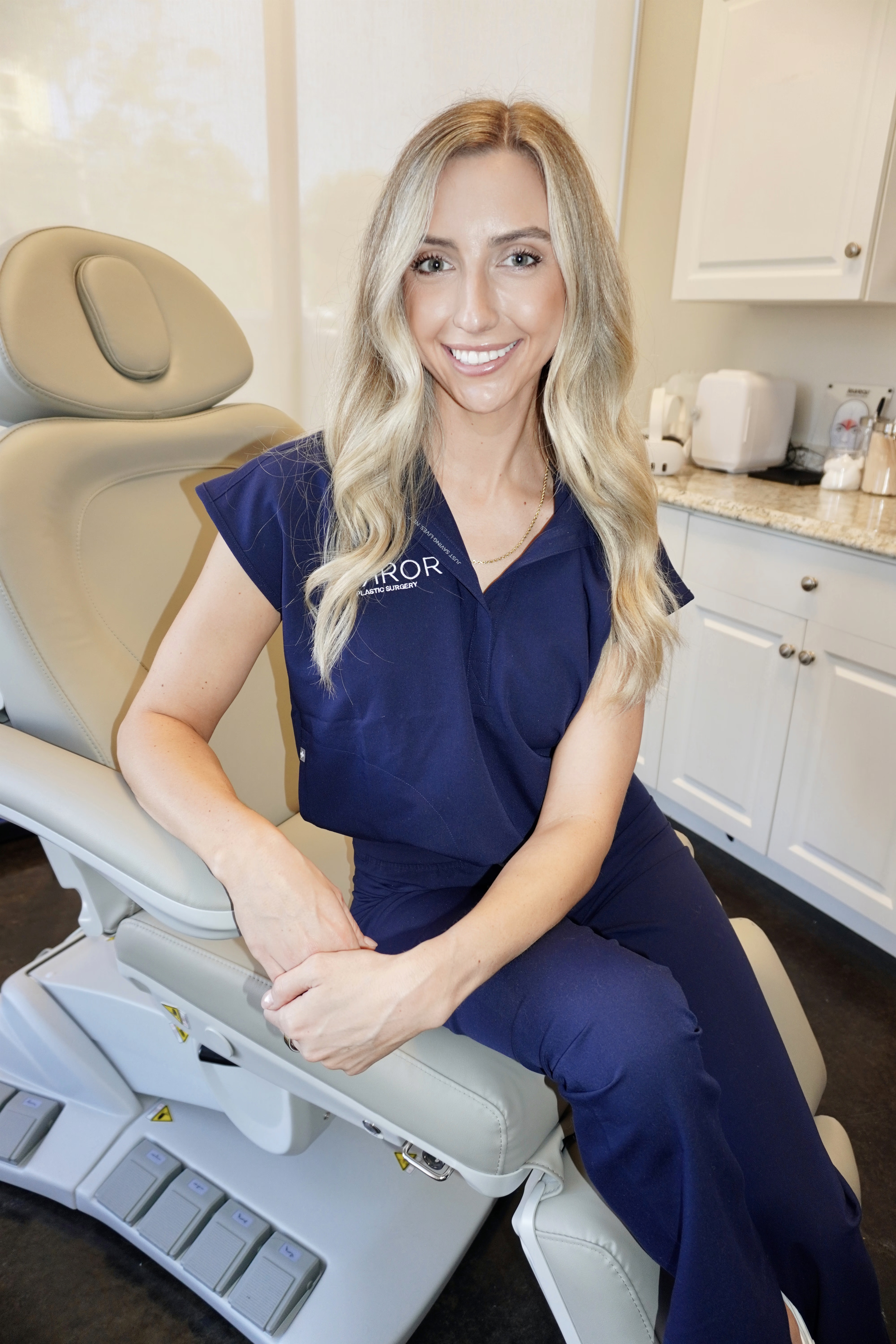
During your hour-long, top-to-bottom assessment, the Mirror Plastic Surgery team evaluates:
- Skin thickness and Fitzpatrick type by body zone, identifying areas where nerve density and melanin content will drive higher sensation
- Hair coarseness and density mapping, so fluence settings are calibrated per area rather than applied uniformly
- Hormonal and cycle considerations for female patients, with scheduling recommendations built into the treatment plan
- Medical history, including photosensitizing medications, keloid history, recent sun exposure, and other recognized contraindications
- Topical anesthesia protocol selection using FDA-approved formulations, timed correctly for your specific sensitive zones
- Cooling system setup and real-time adjustment protocol so you know exactly how to communicate during each session
- Session-by-session expectation setting, including the evidence-based trajectory of decreasing discomfort as hair thins
This approach contrasts sharply with high-volume clinics that apply a single protocol to every patient regardless of anatomy. Mirror Plastic Surgery limits itself to one to two procedures per day so this level of attention remains possible for every person who walks through the door.
Book a consultation with Ellie to receive a personalized pain-management plan built around your anatomy, skin type, and treatment goals, rather than a one-size-fits-all estimate.
Frequently Asked Questions
Is laser hair removal painful enough to stop most people from completing their sessions?
Most patients complete their full series without stopping.1 People usually describe the sensation as brief warm pinpricks or a rubber band snapping against the skin. Sensitive zones can feel uncomfortable, but not to the level that most patients consider intolerable. Pain also decreases meaningfully after the third to fifth session as hair thins and less energy is required per pulse.1 The areas most likely to cause hesitation are the full Brazilian, upper lip, and underarms, and these zones benefit the most from topical numbing cream and integrated cooling systems. A thorough pre-treatment consultation that sets realistic expectations and establishes a numbing protocol further reduces the chance of stopping mid-course.
How many sessions does it take before laser hair removal becomes noticeably less painful?
Many patients notice a clear reduction in discomfort between the third and fifth sessions.1 This change reflects real physical shifts, not just getting used to the feeling. Reduced hair density and smaller follicles mean less melanin to absorb laser energy, less heat generated per pulse, and a lighter sensation overall. By the fourth session, many patients who initially needed topical numbing find they no longer require it in moderate-sensitivity areas like the underarms and bikini line. High-sensitivity zones such as the full Brazilian may still benefit from numbing cream for a longer stretch of sessions.
Does skin tone affect how painful laser hair removal is?
Skin tone affects both pain and safety planning. Darker Fitzpatrick skin types (IV–VI) contain more epidermal melanin, which can absorb laser energy at the surface as well as in the follicle. This pattern can increase discomfort and raise the risk of post-inflammatory hyperpigmentation if the wrong wavelength or fluence is used. For these patients, longer wavelengths such as the 1064-nm Nd:YAG are preferred because they penetrate deeper with less epidermal absorption, and strict cooling protocols become essential. Tanned skin, regardless of baseline Fitzpatrick type, temporarily increases surface melanin and should be avoided before sessions. At Mirror Plastic Surgery, skin type assessment forms a core part of the top-to-bottom consultation so the correct platform and settings are chosen before treatment begins.
Can I take over-the-counter pain relievers before my laser hair removal session?
Your provider should answer this during your consultation, because the guidance depends on your medical history and specific medications. Some over-the-counter anti-inflammatories can affect platelet function or interact with other conditions. What the evidence does support is that pre-treatment topical anesthesia, as detailed earlier, is the most effective and clinically validated pain reduction strategy for laser hair removal. Ellie reviews your full medication list during the Mirror Plastic Surgery consultation and gives you specific pre-session preparation instructions tailored to your situation.
Is laser hair removal at a concierge practice like Mirror Plastic Surgery meaningfully different from a high-volume clinic for pain management?
Laser hair removal at a concierge practice can feel very different from a high-volume clinic. High-volume clinics often rely on standardized protocols across all patients, so fluence settings, numbing decisions, and cooling parameters may not reflect your specific nerve density map, skin thickness, or hormonal timing. At Mirror Plastic Surgery, the hour-long top-to-bottom assessment produces an individualized treatment plan that accounts for which of your body zones carry higher anatomical pain risk, what your Fitzpatrick type requires for safe energy delivery, and how your cycle timing should influence scheduling. Ellie’s background in neuroscience nursing gives her a clinical understanding of pain physiology that shapes how she manages each patient’s comfort in real time during sessions. She adjusts pacing, settings, and communication based on your feedback rather than following a fixed script.
Book a consultation with Ellie at Mirror Plastic Surgery in St. Petersburg, Florida, and receive a pain management plan built on your anatomy, not on averages.
Disclaimer: Results may vary from person to person. Editorial content, before and after images, and patient testimonials do not constitute a guarantee of specific results.
1 Results may vary from person to person. Editorial content, before and after images, and patient testimonials do not constitute a guarantee of specific results.