
Written by: Ellie Pranckevicius, FNP-BC, Aesthetic Nurse Practitioner & Aesthetic Injector | Facial Restoration & Regenerative Injectable Specialist, Mirror Plastic Surgery
Key Takeaways
- Wait 6–12 months before any revision so transferred fat stabilizes, scar tissue matures, and swelling fully resolves.
- Get a comprehensive anatomical assessment to pinpoint your exact BBL complication and map out the safest correction plan.
- Non-surgical injectable correction with biostimulatory fillers and AlloClae offers a lower-risk, low-downtime option for mild-to-moderate asymmetry, hip dips, and surface irregularities.
- Surgical revision is reserved for severe structural problems such as extensive fat necrosis or major volume deficits that injectables cannot correct.
- Explore safe, evidence-based BBL correction tailored to your anatomy by scheduling a personalized assessment at Mirror Plastic Surgery.
5 Practical Steps to Fix a Botched BBL
- Wait for full tissue stabilization. Most surgeons recommend 6–12 months before any revision so transferred fat can stabilize, scar tissue can mature, and swelling can resolve. This waiting period reveals your true long-term result.
- Schedule a comprehensive anatomical assessment. A qualified provider should complete a structured, top-to-bottom evaluation of your gluteal region, donor sites, skin quality, and overall anatomy. This level of detail matters because post-BBL issues often involve several overlapping factors that a rushed five-minute consult will miss, which increases the risk of treating the wrong problem at the wrong time.
- Identify the specific complication. Asymmetry, fat necrosis, volume loss, hip dips, cellulite, and stretch marks each follow different correction pathways. A precise diagnosis supports a targeted, safer treatment plan.
- Explore non-surgical correction first. For mild-to-moderate irregularities, biostimulatory fillers such as Radiesse or Sculptra, along with AlloClae, can improve contour, stimulate collagen, and restore symmetry without surgery, general anesthesia, or extended downtime.
- Reserve surgical revision for structural or severe cases. When complications are significant, such as extensive fat necrosis, major volume asymmetry, or limited non-surgical candidacy, a board-certified plastic surgeon should evaluate the case for revision liposuction and fat re-grafting.
Can a Botched BBL Be Fixed?
Most post-BBL complications can be improved, although the degree of correction depends on the specific problem, your anatomy, and timing. Fat necrosis and asymmetry are frequent reasons patients seek revision.
Non-surgical correction suits patients with mild-to-moderate asymmetry, minor volume deficits, hip dip irregularities, surface cellulite, or stretch mark texture concerns. Non-surgical options are particularly well-suited for individuals who prefer to avoid general anesthesia, scarring, and extended recovery, or who have insufficient donor fat for re-grafting.
Surgical revision remains the right path for significant structural asymmetry, large areas of fat necrosis, or complications that exceed what injectables can address. Revision candidacy also depends on whether the patient has adequate donor fat in areas such as the abdomen, flanks, or thighs, is in good general health, and has realistic expectations given scar tissue limitations. Understanding whether you qualify for surgical or non-surgical correction starts with identifying which complication you have, because each one follows its own correction pathway.
Targeted Fixes for Common Uneven BBL Problems
Asymmetry: Mild-to-moderate asymmetry between the two sides of the buttocks is one of the most common post-BBL complaints. Non-surgical correction with biostimulatory fillers, injected precisely into the volume-deficient side, can restore balance without another operation. Surgical revision with targeted re-grafting is reserved for more pronounced structural differences.
Lumps and hard areas: Palpable lumps often reflect uneven fat distribution or early fibrosis. Hard lumps or persistent unevenness that remain beyond 3 to 6 months are less likely to resolve on their own and should be evaluated in person. Depending on severity, treatment may include massage protocols, biostimulatory fillers to smooth the surface, or surgical excision.
Fat necrosis: Fat necrosis, or death of transferred fat cells, creates firm, sometimes tender nodules. Mild cases may be observed or managed conservatively. More extensive necrosis usually requires surgical debridement or revision, so a careful assessment comes first.
“Diaper booty”: This flat, wide, or drooping lower-buttock appearance can often be improved without surgery. Biostimulatory fillers and AlloClae can be placed strategically to restore projection and lift, which refines the overall silhouette.
Stretch marks: Post-BBL stretch marks develop from rapid volume changes in the skin. No treatment removes them completely, but biostimulatory fillers combined with collagen-stimulating protocols can improve texture and reduce how visible they appear over time.
Cellulite: Cellulite that persists or worsens after a BBL can respond to a combination of biostimulatory filler placement and energy-based skin tightening. This approach focuses on smoother surface contour and better skin quality.
How Long to Wait Before Revision
Most surgeons recommend waiting at least six months after an initial BBL before pursuing revision or reduction surgery so swelling can subside and results can stabilize, although exact timelines vary. Some surgeons prefer a full 12 months because fat-retention patterns continue to evolve during the early months. Operating too early can disturb healing grafts and increase complication risk, even when you feel fully recovered at three months.
Most patients retain 60% to 80% of transferred fat volume long term, so some volume loss from the immediate post-operative look is expected and normal.1 Patients who seek correction before six months may mistake temporary swelling for a permanent outcome and pursue unnecessary or premature treatment.
The 6–12 month window also applies to non-surgical injectable correction. Treating active inflammation or unstable tissue with fillers adds avoidable variables. Waiting for tissue maturity supports more predictable, longer-lasting injectable results. Once that stabilization window has passed, patients typically choose between non-surgical correction and surgical revision, and many find the non-surgical route offers meaningful improvement with less downtime.
Non-Surgical BBL Correction at Mirror Plastic Surgery
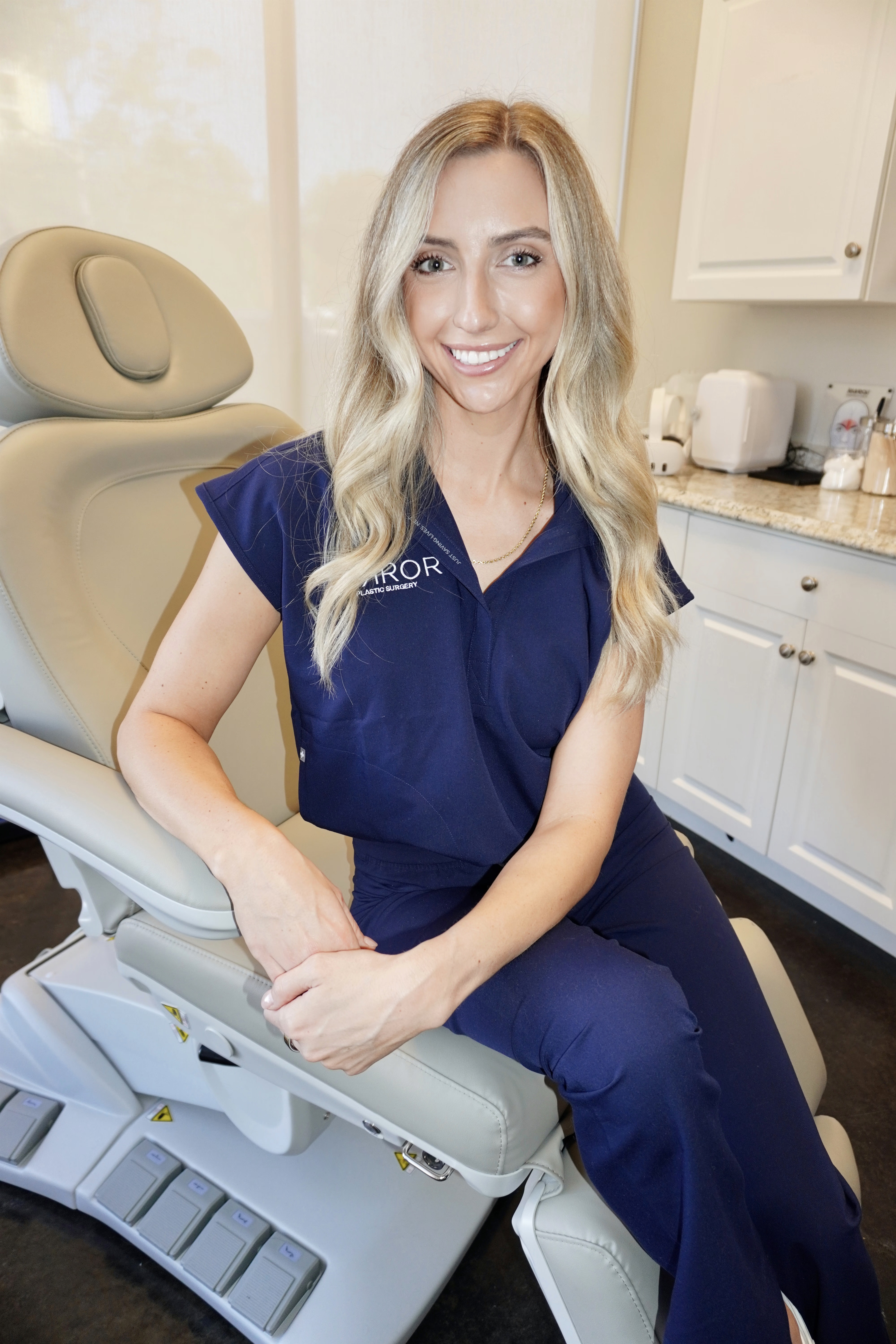
Mirror Plastic Surgery’s non-surgical BBL correction program is led by Ellie Pranckevicius, FNP-BC, an Aesthetic Nurse Practitioner with dual training in esthetics and advanced nursing, and prior Neuroscience ICU experience at Tampa General Hospital. Her injectable approach uses biostimulatory fillers, specifically Radiesse and Sculptra, along with AlloClae to address post-BBL irregularities through collagen stimulation, volume restoration, and structural support.
Sculptra (poly-L-lactic acid) is injected into areas of volume deficit to stimulate your own collagen production, with results appearing gradually over several months and lasting on average about two years, with some lasting up to five years.1 A typical Sculptra course involves 2–3 sessions spaced 4–6 weeks apart, followed by maintenance every 1–2 years. Radiesse provides immediate structural support along with collagen stimulation. AlloClae, an in-office minor procedure available at Mirror Plastic Surgery, offers an additional regenerative option for the buttocks and hip dips.
Hyaluronic acid fillers are not considered safe practice for buttock augmentation or correction. Mirror Plastic Surgery does not use HA fillers in the gluteal region. These biostimulatory agents and AlloClae represent the evidence-based standard for this anatomy.
Non-surgical liquid BBL procedures using Radiesse and Sculptra allow same-day return to most routine activities and avoid general anesthesia.1
Decision Framework: Non-Surgical vs. Revision Surgery
| Factor | Non-Surgical (Biostimulatory Fillers / AlloClae) | Surgical Revision (Re-grafting / Liposuction) |
|---|---|---|
| Severity of Complication | Mild to moderate: asymmetry, hip dips, minor volume loss, surface cellulite, stretch marks | Moderate to severe: fat necrosis, major structural asymmetry, large volume deficits |
| Downtime | Same-day return to most activities | Extended recovery, sitting restrictions, general anesthesia required |
| Candidacy | Lean patients or those with insufficient donor fat | Adequate donor fat required, non-smoker, good general health, realistic expectations |
| Longevity | About two years with Sculptra, with some lasting up to five years, with maintenance every 1–2 years recommended1 | 5–10 years with stable weight, 60–80% fat retention long term1 |
How to Choose a BBL Revision Specialist
The quality of your BBL correction, surgical or non-surgical, depends directly on the quality of the assessment that comes first. A provider who spends five minutes on a single concern before recommending treatment is not prepared to manage the anatomical complexity of post-BBL correction.
Mirror Plastic Surgery’s consultations can last up to an hour and follow a top-to-bottom anatomical assessment that reviews the gluteal region, surrounding donor sites, skin quality, and long-term goals. This extended time allows Ellie Pranckevicius to decide which treatment is appropriate and whether you are ready for any treatment yet. When a case requires surgical input, she has direct access to Dr. Akash Chandawarkar, a Harvard-educated, Johns Hopkins-trained plastic surgeon with fellowship training at Manhattan Eye Ear & Throat Hospital.
This collaborative structure means you are not pushed toward a single modality when your anatomy calls for a different approach. Choosing a practice with both board-certified surgical expertise and advanced non-surgical capabilities helps reduce risk and supports better outcomes.
Honest communication is non-negotiable, and it shows in specific ways. A trustworthy specialist will tell you when you are not yet a candidate for correction, when waiting longer will produce a better result, and when a less expensive option is the right choice. That level of candor is easier in a supplier-neutral practice like Mirror Plastic Surgery, where recommendations follow your anatomy and the evidence, not product quotas.
Frequently Asked Questions
Can non-surgical injectable correction fully fix a botched BBL?
For mild-to-moderate complications such as asymmetry, hip dip irregularities, minor volume loss, surface cellulite, and stretch mark texture, injectable correction can create meaningful, visible improvement. These treatments do not replace surgical revision in cases with significant fat necrosis, major structural asymmetry, or large volume deficits. A thorough assessment remains the only reliable way to decide which pathway fits your anatomy.
How long does non-surgical BBL correction last?
As mentioned earlier, Sculptra results typically last two to five years. This longevity comes from collagen stimulation rather than filler volume, which means your body builds its own tissue. Annual or periodic maintenance sessions help preserve the outcome instead of simply replacing lost product. Radiesse offers both immediate support and progressive collagen stimulation, but non-surgical correction still requires retreatment over time, which should be discussed clearly during consultation.
Is it safe to get injectable fillers in the buttocks?
Safety in gluteal injectable correction depends on the product and the provider’s anatomical expertise. These biostimulatory agents and AlloClae are the evidence-based options for this region. Hyaluronic acid fillers are not considered safe practice for buttock augmentation or correction and are not used at Mirror Plastic Surgery for this purpose. Ellie Pranckevicius’s dual background in esthetics and advanced nursing, combined with ICU clinical experience, supports a precise, safety-first injection approach.
What if I still have lumps or asymmetry after six months?
Lumps, hard areas, or persistent asymmetry that continue beyond six months are unlikely to resolve on their own and should be evaluated. Depending on the nature and severity of the irregularity, treatment may involve injectable correction, AlloClae, or surgical consultation with Dr. Akash Chandawarkar. The first step is a comprehensive assessment, not a quick recommendation, so the team can identify the true cause and safest correction pathway.
What is AlloClae and how is it used for BBL correction?
AlloClae is an in-office minor procedure available at Mirror Plastic Surgery for the buttocks and hip dips as part of a non-surgical correction plan. It is performed by both Ellie Pranckevicius and Dr. Akash Chandawarkar. AlloClae applies regenerative medicine principles to support tissue quality and contour improvement and is often paired with biostimulatory fillers in a personalized, multi-modality plan tailored to your anatomy and goals.
Conclusion: A Safer Path Forward After a Botched BBL
A botched BBL does not always require immediate revision surgery. Many patients achieve better symmetry and contour through non-surgical correction using biostimulatory agents and AlloClae, guided by a rigorous, evidence-based assessment. Patience, precise diagnosis, and a provider focused on your safety and long-term outcome form the foundation of successful correction.
Mirror Plastic Surgery serves patients throughout St. Petersburg and the Tampa Bay area with a concierge model that limits daily procedures so each patient receives focused clinical attention. If you are dealing with post-BBL complications and want an honest, thorough review of your options, the next step is a detailed consultation.
Disclaimer: Results may vary from person to person. Editorial content, before and after images, and patient testimonials do not constitute a guarantee of specific results.
1 Results may vary from person to person. Editorial content, before and after images, and patient testimonials do not constitute a guarantee of specific results.