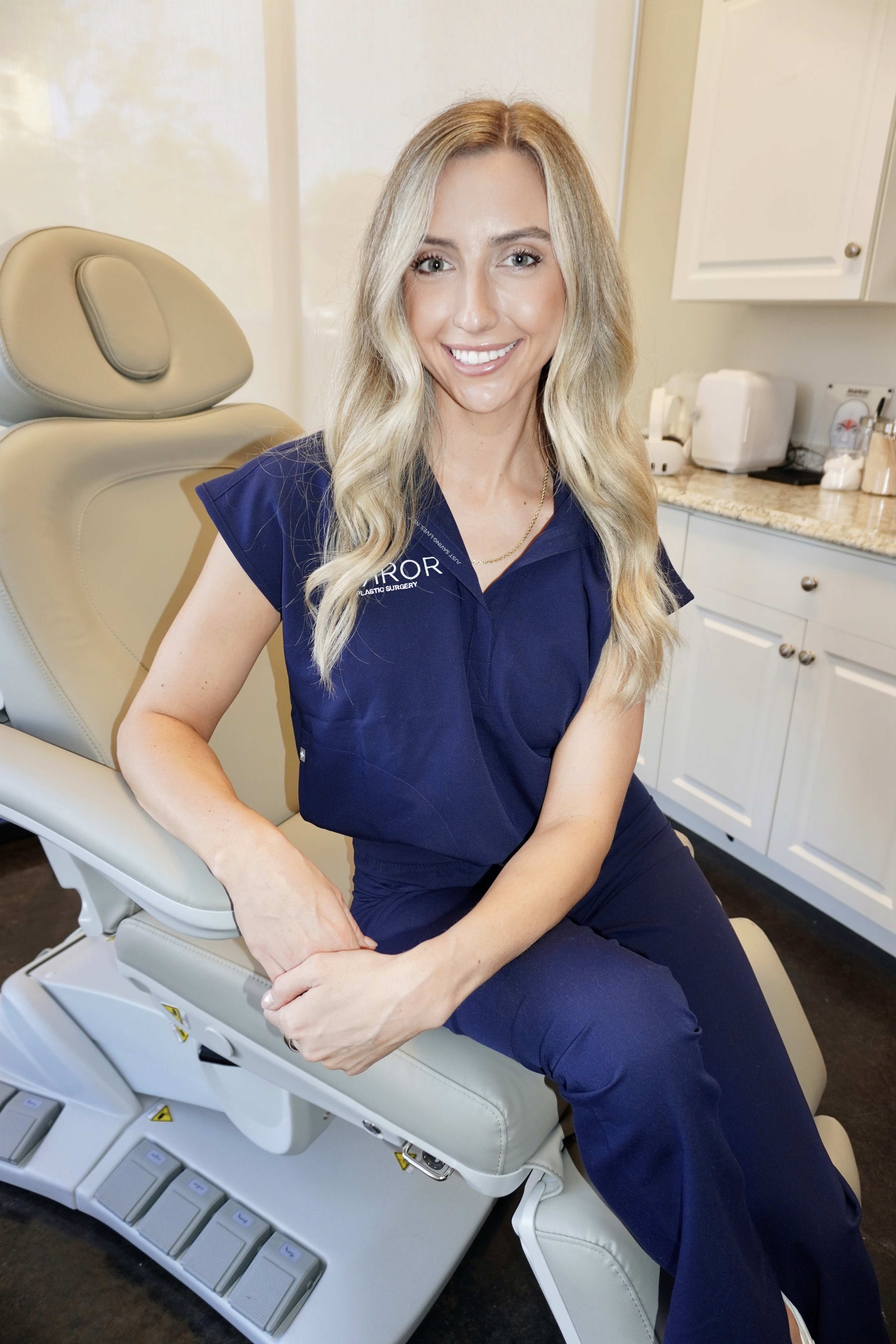
Written by: Ellie Pranckevicius, FNP-BC, Aesthetic Nurse Practitioner & Aesthetic Injector | Facial Restoration & Regenerative Injectable Specialist, Mirror Plastic Surgery
Key Takeaways
- Botox results usually last 3 to 4 months, with some patients seeing effects from 8 weeks up to 6 months.1
- Most patients follow a clear pattern: subtle changes around days 3 to 5, peak effect at days 10 to 14, then gradual fading.1
- Different areas fade at different speeds, with crow’s feet wearing off fastest and masseter treatments lasting the longest.1
- Retreating around weeks 10 to 12, before full muscle recovery, helps build smoother and longer-lasting results over time.1
- Schedule a personalized consultation at Mirror Plastic Surgery to map out a Botox plan that fits your anatomy and goals.
Phase 1: Onset of Botox Results (Days 3–5)
Clinical data on botulinum toxin onset indicates that improvements typically begin to appear within 2 to 5 days. Early changes feel subtle. Lines look slightly softer when you raise your brows, smile, or frown, and the face often appears more relaxed at rest. Consistent photos with similar lighting and a neutral expression make it easier to notice these first shifts.
First-treatment variability is common. Ellie Pranckevicius, FNP-BC, Mirror Plastic Surgery’s Aesthetic Nurse Practitioner, notes that many first-time patients see a slower or less even onset as dosing is calibrated to their unique muscle pattern. The first Botox treatment often wears off faster than subsequent ones because the provider is establishing a baseline for the patient’s anatomy. This pattern is normal and not a sign that treatment failed.
Phase 2: Peak Botox Effect (Days 10–14)
Full effect is typically reached between days 10 and 14 post-injection.1 At this point, treated muscles are maximally relaxed and surface lines look their smoothest. This window is ideal for checking symmetry, deciding whether a touch-up is needed, and capturing photos for comparison before your next visit.
Each area behaves a little differently at peak:
- Forehead: The frontalis muscle usually shows broad, even relaxation. Your provider evaluates brow position carefully, since too much relaxation can feel heavy.
- Crow’s feet: The orbicularis oculi often responds quickly. Lateral lines soften both when you smile and when your face is at rest.
- Masseter: Masseter results depend on gradual reduction in muscle bulk rather than immediate relaxation, with onset taking 4 to 6 weeks. Jaw-slimming results are therefore judged later than upper-face areas.
- Neck (platysmal bands): Bands usually soften steadily over the two-week period, so a full check at day 14 works well.
Book a consultation with Ellie for a tailored assessment of your treatment areas and a realistic timeline based on your anatomy.
Phase 3: Gradual Botox Wear-Off (Months 3–4)
Once full effect is reached at day 14, results plateau and remain stable for roughly 8 to 12 weeks before slowly fading.1 Wear-off happens gradually, not overnight. The body restores neuromuscular activity through axonal sprouting and new SNAP-25 protein synthesis. Higher doses delay both processes by blocking more junctions at the same time. Patients usually notice a slight return of movement first, followed by the slow reappearance of dynamic lines.
Treating before the muscle fully recovers, at roughly 80% of peak activity around weeks 10 to 12, means each new session starts from a partially inhibited baseline. Over time, this approach supports smoother skin and more durable results. Patients who wait until all movement returns lose that compounding effect.
How Long Botox Lasts by Treatment Area
The 3-to-4-month average offers a helpful starting point.1 Duration still varies by area because muscle size, activity level, and long-term atrophy all influence how long results hold.
- Forehead (frontalis): Typically 3 to 4 months due to constant movement from brow elevation.
- Glabellar lines (“11s”): Typically 3 to 4 months because the corrugator and procerus muscles respond well to adequate dosing.
- Crow’s feet (orbicularis oculi): Typically 2.5 to 3 months, often the shortest-lasting common area, since this thin muscle fires frequently with blinking, smiling, and squinting.
- Masseter (jaw slimming/bruxism): Typically 4 to 6 months, reflecting the larger muscle size and slower turnover.
- Neck (platysmal bands): Typically 3 to 4 months, similar to other thin-muscle applications.
Factors That Shorten or Extend Botox Results
These area-based ranges describe averages. Individual results can fall anywhere from about 8 weeks to 6 months, depending on several personal variables.1
- Metabolism: Patients with faster metabolisms often process Botox more quickly, so results may fade sooner than average.
- Muscle strength and size: Stronger facial muscles usually need higher doses and can shorten duration compared with weaker muscles.
- Dosage: Doubling units does not double duration; a 2× dose may extend duration by only 20 to 30%. Consistent underdosing, however, almost always shortens results.
- Exercise intensity: High levels of physical activity can shorten Botox duration, especially with frequent high-intensity workouts.
- Heat exposure: Excessive sun and heat may speed up Botox metabolism through increased inflammation.
- Stress: Chronic stress can shorten duration because elevated cortisol increases muscle tension and inflammation.
- Consistent treatment history: Ellie observes that patients who return regularly, before full muscle recovery, often see their results last longer over time. A 2006 study in Archives of Facial Plastic Surgery followed twins and found that the twin treated 2 to 3 times per year for 13 years had no visible forehead or glabellar lines at rest more than 4 months after her last treatment, while the minimally treated twin showed visible etched lines.
4-Hour Rule and Botox Aftercare
The first 4 hours after injection are a critical period during which the toxin binds to nerve terminals. Limiting movement, heat, and pressure during this time lowers the risk of unwanted spread and supports more predictable results.
The following guidelines apply after any neuromodulator treatment:
- Stay upright for at least 4 hours and avoid lying flat or bending your head below chest level.
- Do not rub, massage, or press on injection sites for 24 hours.
- Avoid strenuous exercise, saunas, hot yoga, and steam rooms for 24 hours.
- Skip alcohol for 24 hours to reduce bruising risk.
- Avoid tight headwear over treated areas for 24 hours.
- Wait at least 2 weeks before scheduling facials or electrical stimulation treatments.
- Normal facial expressions are encouraged right after treatment, and some evidence suggests gentle movement may support absorption.
What to Expect If You Stop Botox
Many long-term patients worry that stopping Botox might speed up aging or worsen their appearance. Current evidence does not support that concern. When patients discontinue treatment, muscles gradually return to their pre-treatment strength and movement patterns, and the skin does not age faster than it would have without any treatment. Lines and wrinkles return to roughly where they would have been without Botox.
Patients who have treated consistently for years often notice some disuse atrophy in the muscles. As a result, movement and lines may return more slowly after stopping than they did after the first session. Repeated treatments can slow the deepening of lines, and that benefit can linger for a period even after you pause treatment.
What to Cover During Your Botox Consultation
A thorough consultation with Ellie at Mirror Plastic Surgery focuses on the specific factors that shape your personal timeline. Key topics usually include:
- Your treatment history and whether this visit is your first or a repeat session.
- Planned treatment areas and their typical duration ranges.
- Your exercise routine and lifestyle factors that may affect metabolism.
- Your preferred outcome, from subtle softening to more pronounced smoothing, and how that affects dosing.
- Neuromodulator options (Botox, Dysport, Xeomin, Daxxify, Jeuveau) and how their duration profiles differ.
- The ideal retreatment interval based on your anatomy, goals, and prior response.
Safety and Common Botox Myths
Several myths about Botox safety and aging still circulate, so clear information helps patients feel more confident.
Delayed onset is normal. As discussed in the timeline above, onset occurs within the first week, and final assessment usually happens around days 10 to 14. Patients should avoid judging symmetry or strength before that window.
Botox does not accelerate aging after stopping. As noted earlier, muscles return to baseline activity and the skin follows its natural aging path, not a faster one.
Botox remains effective in older patients. Botox continues to soften dynamic lines at any age. The plan and dosing are tailored to anatomy, skin quality, and goals rather than age alone.
Antibody resistance is rare at cosmetic doses. Frequent administration of botulinum toxin can increase the risk of neutralizing antibody formation, but this risk stays low when treatments are properly spaced.
Practical Botox Planning Tips
The points below summarize how to plan a realistic Botox maintenance routine:
- Expect onset between days 3 and 5, with peak effect around days 10 to 14.
- Use the duration ranges discussed above as your guide, and adjust based on how quickly movement returns in your own face.
- Schedule retreatment at roughly weeks 10 to 12, before full muscle recovery, to support smoother and longer-lasting results.
- Remember that first treatments often wear off faster, and duration usually improves after the second and third sessions as dosing is refined.
- Focus on what you can control. High-intensity exercise, heat exposure, and chronic stress are the most modifiable factors that shorten results.
- If you stop Botox, lines return gradually to their natural trajectory rather than aging faster.
- Work with an experienced injector for a personalized plan that matches your anatomy, lifestyle, and goals.
Frequently Asked Questions
What is the 4-hour rule for Botox?
The 4-hour rule refers to the recommendation that patients stay upright and avoid lying flat, bending the head below chest level, rubbing treated areas, or applying heat for at least 4 hours after injection. During this period, the neurotoxin diffuses and binds to nerve terminals at the injection site. Pressure, gravity, or heat during this window carries a theoretical risk of product migration to nearby muscles, such as from the forehead to the levator palpebrae, which could cause temporary eyelid drooping. After the 4-hour window, most normal activities can resume, while strenuous exercise and heat exposure should still be avoided for the full 24 hours.
Will Botox work on a 70-year-old woman?
Yes. Botox works by temporarily blocking acetylcholine release at the neuromuscular junction, and that mechanism functions at any age. In older patients, dynamic lines caused by movement usually respond well. Static lines from volume loss or skin laxity may need complementary treatments such as dermal fillers or skin tightening. Older patients may also see longer gaps between treatments because of slower nerve regeneration and reduced muscle bulk. The plan is always customized to anatomy, skin quality, and goals rather than age alone.
How soon should I schedule my next appointment?
Most patients benefit from booking their next appointment about 10 to 12 weeks after treatment, when movement is starting to return but the muscle has not fully recovered. Retreating at this stage keeps the muscle partially inhibited and can support longer-lasting results over time. Waiting until all movement returns allows the muscle to regain full strength, which can shorten duration in the next cycle. Your injector will help you fine-tune the interval based on how your muscles respond and how quickly you metabolize the product.
Does Botox make you look older after it wears off?
No. When Botox wears off, treated muscles gradually regain normal activity, and dynamic lines return to roughly where they would have been without treatment. Current evidence does not show that stopping Botox makes skin age faster. Many patients who have treated consistently for years notice that their muscles have weakened from disuse atrophy, so lines often return more slowly and less deeply than before treatment began. The fear of accelerated aging after stopping remains a myth rather than a finding supported by clinical data.
Conclusion and Next Steps With Mirror Plastic Surgery
Botox results follow a predictable three-phase lifecycle with onset between days 3 and 5, peak effect around days 10 to 14, and gradual wear-off through months 3 and 4. Your exact duration within that framework depends on anatomy, metabolism, treatment history, lifestyle, and the precision of your injector’s technique and dosing. Area-specific ranges span from about 2.5 months for crow’s feet to up to 6 months for the masseter with consistent treatment. Patients who understand this pattern and keep well-timed appointments usually enjoy smoother and more stable results over time.
At Mirror Plastic Surgery, Ellie Pranckevicius performs a detailed, top-to-bottom assessment before recommending any plan. She evaluates your muscle anatomy, movement patterns, treatment history, and long-term goals to select the right neuromodulator, dose, and interval for your needs. This evidence-based, concierge approach sets Mirror Plastic Surgery apart from high-volume practices in the St. Petersburg and Tampa Bay area.
Book a consultation with Ellie to receive a personalized Botox timeline and treatment plan tailored to your anatomy and goals.
Disclaimer: Results may vary from person to person. Editorial content, before and after images, and patient testimonials do not constitute a guarantee of specific results.
1 Results may vary from person to person. Editorial content, before and after images, and patient testimonials do not constitute a guarantee of specific results.