
Written by: Dr. Akash Chandawarkar, Board Certified Plastic Surgeon, Mirror Plastic Surgery | Last updated: September 9, 2026
Key Takeaways
- BBL complications range from rare but serious risks like fat embolism to more common aesthetic issues such as asymmetry and contour irregularities.
- Fat embolism is the most serious complication, and risk drops dramatically when a qualified surgeon follows modern subcutaneous-only safety protocols.
- Aesthetic complications like asymmetry, fat necrosis, and volume loss are more common but often correctable with proper follow-up care.
- Long-term BBL results depend on surgical technique, weight stability, and skin quality, with most fat that survives at six months remaining long term.1
To explore your options safely and confidently, schedule a consultation online with Mirror Plastic Surgery.
What A BBL Is And Why So Many People Choose It
A Brazilian Butt Lift is a surgical procedure that combines liposuction with fat processing and reinjection. Liposuction typically targets the abdomen, flanks, or thighs. The surgeon then injects the purified fat into the buttocks to enhance shape and projection.
This approach appeals to many patients because it slims donor areas while adding volume to the buttocks using their own tissue. The result is a more contoured silhouette without implants.
That appeal comes with real risks. Patients who understand possible complications before surgery make safer choices and set more realistic expectations. The most impactful decision is choosing a qualified surgeon, and that decision starts with clear, honest education.
To discuss your goals and get a personalized assessment, schedule a private consultation with Dr. Akash Chandawarkar at Mirror Plastic Surgery in St. Petersburg, FL.
The Most Serious Complication: Fat Embolism
Fat embolism occurs when injected fat accidentally enters a blood vessel and travels to the lungs or heart, blocking blood flow in a potentially fatal event. The American Society of Plastic Surgeons issued an urgent safety warning in 2018 citing BBL mortality estimates as high as 1 in 3,000 procedures. Later ASPS data placed the estimate near 1 in 15,000 by 2022, reflecting widespread adoption of subcutaneous-only injection techniques and stricter safety controls.
The anatomy explains why injection depth matters so much. The gluteus maximus muscle contains the superior and inferior gluteal veins, which sit roughly 4.5 to 5 cm from the sacral midline and 6 cm deep from the skin surface, and these veins are 7 to 13 times larger in diameter than the smaller venules in the subcutaneous space. When fat is injected into or below the muscle, the probability of entering one of these large vessels increases dramatically. In 100% of fatal pulmonary fat embolism cases from Florida 2019 data, fat was found in the gluteal muscle on post-mortem examination.
Modern safety protocols address this risk directly. The American Board of Cosmetic Surgery states that fat must be injected only into the subcutaneous layer and recommends blunt-tip cannulas and ultrasound guidance to confirm the injection plane in real time. At Mirror Plastic Surgery, Dr. Akash Chandawarkar follows this safety-first philosophy as a foundational principle.
Common Aesthetic Complications And How They Are Managed
Aesthetic complications are far more common than serious medical risks and are usually manageable. Most patients who feel dissatisfied after a BBL are dealing with one or more of the issues below, which a qualified surgeon can often address with follow-up care.
- Asymmetry: Uneven fat absorption or distribution can leave one side looking different from the other. Asymmetry is among the most common reasons patients seek BBL revision, and surgeons often correct it with secondary fat grafting once tissues have fully settled.
- Fat Necrosis: When transferred fat cells do not receive adequate blood supply, they can die and form hard lumps or oil cysts beneath the skin. Small areas often resolve on their own, while larger pockets may need to be drained. Fat necrosis occurred in 1.9% of cases in a contemporary 7,000-patient subcutaneous-only BBL series.
- Contour Irregularities: Lumps, bumps, or rippling can appear at both the liposuction donor sites and the injection area. These issues often relate to technique and may improve over several months as swelling resolves.
- Skin Laxity: Loose skin can result when surgeons remove significant volume from donor areas or when skin elasticity is poor. This occurs more often in older patients or those with major weight changes.
- Volume Loss: Volume loss after healing is a frequent reason for BBL revision because some transferred fat does not survive, leaving the buttocks smaller than expected. Fat graft survival rates vary widely, with studies reporting anywhere from 50% to 75% long-term retention depending on technique, fat processing, and patient adherence to recovery instructions.1
A 2026 systematic review published in JPRAS Open found that while aesthetic complications occur after fat-based augmentation procedures, most are minor and manageable with appropriate follow-up care.
How BBL Results Age Over 10 Years
BBL results are designed to be long-lasting. Research shows that once results stabilize around six months after surgery, the surviving fat behaves like any other fat in the body and does not dissolve on its own.1
The aging process still affects the surrounding tissues. At 10 years post-BBL, age-related loss of collagen and elastin in the skin, combined with gravity, can cause a slight downward shift or mild sagging, which reflects normal skin aging.1 Significant weight changes can also shrink or enlarge fat cells and noticeably alter results. Staying within roughly 10 to 15 pounds of post-surgery weight gives a strong chance of maintaining results long term.1
Late-onset complications are possible but uncommon. Fat necrosis can sometimes appear months after surgery, and contour irregularities may become more visible as skin elasticity changes. Long-term outcomes depend on surgical technique, weight stability, skin quality, and age at the time of surgery. Patients who choose a surgeon focused on safety and natural proportions, rather than extreme volume, tend to see more stable results a decade later.
Warning Signs After BBL And When To Seek Help
Certain symptoms after a BBL signal a possible emergency and require immediate medical evaluation. Patients should seek urgent care rather than waiting for a routine follow-up if they notice any of the symptoms below.
- Sudden shortness of breath or chest pain (potential fat embolism)
- Fever above 101°F or signs of spreading infection
- Severe, uncontrolled pain
- Significant swelling in one leg more than the other (possible blood clot or DVT)
- Skin discoloration, especially dark or black patches
- Wounds that will not heal or produce foul-smelling discharge
Non-emergency concerns such as asymmetry, lumps, or contour issues usually require patience. Swelling must fully resolve, typically over 3 to 6 months, before a surgeon can accurately assess the result. Most surgeons recommend waiting at least six months before planning revision surgery so they can evaluate a stable outcome.
Patients who feel unsure about their healing or want a second opinion can arrange a consultation with Dr. Akash at Mirror Plastic Surgery for a detailed review of their situation.
How To Choose A Surgeon And Reduce Your Risk
Surgeon selection is the most powerful factor in BBL safety. To minimize risks, verify that your surgeon is board-certified by the American Board of Plastic Surgery, has documented experience with BBL procedures, holds hospital privileges, and follows the subcutaneous-only protocol for fat injection. The American Board of Cosmetic Surgery emphasizes that fat should only be injected into the subcutaneous layer and that blunt cannulas and ultrasound guidance are key safety tools. Unqualified surgeons in high-volume, heavily discounted centers have contributed to a disproportionate number of fatalities and complications compared with other cosmetic procedures.
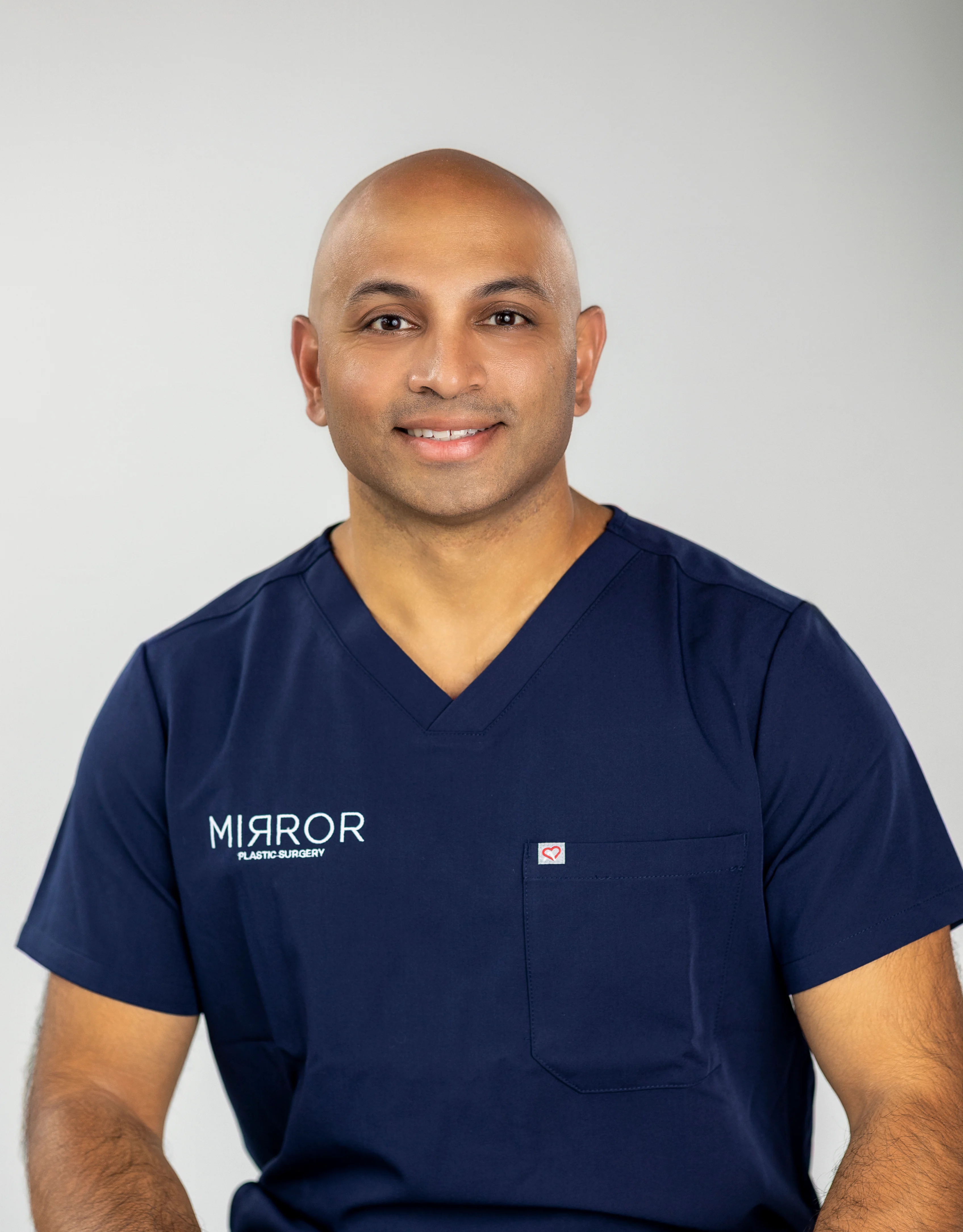
Dr. Akash Chandawarkar is a Harvard-educated, Johns Hopkins-trained, board-certified plastic surgeon with fellowship training in aesthetic surgery at Manhattan Eye Ear & Throat Hospital and medical innovation training at Stanford University. His practice philosophy, safety first, function second, aesthetics third, is the operational framework that guides every procedure. Mirror Plastic Surgery limits the schedule to one to two surgeries per day so each patient receives focused attention from the entire clinical team before, during, and after surgery.
Non-Surgical BBL With Fillers As A Lower-Risk Option
Some patients prefer to enhance their shape without surgery. For these individuals, a non-surgical BBL using biostimulatory fillers can offer a meaningful improvement with a lower risk profile. Unlike surgical BBL, a non-surgical approach eliminates the risk of fat embolism and avoids general anesthesia, with minimal downtime.
Calcium hydroxylapatite (Radiesse) is used off-label in the buttocks, typically diluted for skin tightening and texture improvement rather than dramatic size increase, and results can last at least seven months. No injectable filler currently holds specific FDA approval for buttock augmentation, so experienced physicians use these products off-label with careful technique.
The risk profiles for surgical and non-surgical approaches differ in meaningful ways. Surgical BBL carries risks of fat embolism, infection, seroma, anemia, and anesthesia complications. Non-surgical approaches using biostimulatory fillers avoid these surgical risks, although results are more subtle and require maintenance sessions rather than a single permanent procedure.
Dr. Akash serves as an advisory board member for Merz Aesthetics (Radiesse) and Tiger Aesthetics (AlloClae), bringing specialized expertise to non-surgical gluteal enhancement. His surgeon-level understanding of subdermal anatomy supports precise, safe placement and distinguishes his approach from that of non-physician injectors. His non-surgical BBL method uses a combination of biostimulatory fillers to achieve multiple goals: refining shape, smoothing cellulite, reducing the appearance of stretch marks, and improving symmetry, all tailored to each patient’s individual goals.
Patients interested in a non-surgical BBL can schedule a consultation online with Mirror Plastic Surgery to review candidacy and expected results.
Frequently Asked Questions
What Are The Most Common BBL Complications?
The most common complications are aesthetic: asymmetry, fat necrosis with hard lumps beneath the skin, contour irregularities at both donor and injection sites, volume loss from fat reabsorption, and skin laxity. The most serious complication, although rare with a qualified surgeon, is pulmonary fat embolism, which occurs when injected fat enters the bloodstream. Seroma and infection are also documented non-fatal complications, with infection rates reported between 0.43% and 13% depending on surgical protocols.
How Common Is Fat Embolism In BBL?
Historical data from a 2016 Aesthetic Surgery Education and Research Foundation survey estimated the BBL death rate at between 1 in 2,351 and 1 in 6,241 cases using older intramuscular techniques. By 2022, after widespread adoption of subcutaneous-only injection and ultrasound guidance, the American Society of Plastic Surgeons referenced the 1 in 15,000 estimate mentioned earlier. A 2026 peer-reviewed study of 112 patients using an awake, subcutaneous-only protocol reported zero pulmonary fat emboli. The risk never reaches zero, yet it drops significantly when a qualified surgeon follows modern safety standards.
Can BBL Complications Be Corrected?
Many aesthetic complications can be improved. Surgeons often address asymmetry and contour irregularities with revision fat grafting once tissues have fully settled, usually at least six months after surgery. Small areas of fat necrosis may resolve without intervention, while larger pockets sometimes require drainage. Contour issues at liposuction donor sites can soften as swelling decreases over several months. Revision becomes more challenging when dense scar tissue, poor skin elasticity, or limited donor fat is present, so careful surgeon selection at the outset remains the most effective strategy.
What Is The Recovery Time After A BBL?
Most patients return to light activity within a few weeks, while full recovery usually takes two to three months. Final results often appear up to six months after surgery.1 The most important restriction is avoiding sitting or lying directly on the buttocks for at least the first two weeks, typically by using a BBL pillow that transfers pressure to the thighs. Patients usually wear compression garments consistently for the first six weeks. Final results become clear between 6 and 12 months, once swelling resolves and the surviving fat stabilizes.1
Is A Non-Surgical BBL Safe?
When an experienced, board-certified physician performs the procedure using biostimulatory fillers such as Radiesse or AlloClae, a non-surgical BBL avoids the most serious risks of surgical BBL, including fat embolism, general anesthesia complications, seroma, and a higher infection risk. Results are more subtle and require maintenance, yet the overall risk profile remains substantially lower. The safest outcomes come from choosing a physician with a surgeon’s understanding of anatomy and a commitment to evidence-based, conservative technique rather than a high-volume injector focused on speed.
Prioritize Safety And Plan Your Next Step
Serious BBL complications like fat embolism occur rarely when a board-certified surgeon follows modern subcutaneous-only injection protocols. Common aesthetic complications such as asymmetry, fat necrosis, and contour irregularities are often manageable, but they highlight how much surgical technique and surgeon selection matter. Long-term outcomes also depend on aging, weight stability, and skin quality at the time of surgery.
Mirror Plastic Surgery embodies a safety-first philosophy through concierge-level care, honest communication, and surgical expertise that extends from the operating room to the injection suite. Patients who want enhancement without surgical risk can consider non-surgical BBL with biostimulatory fillers as a lower-risk alternative.
Ready To Prioritize Your Safety And Results?
Contact Mirror Plastic Surgery to schedule your personalized consultation with Dr. Akash. Call or text 727-361-6515, or book your consultation online now. Mirror Plastic Surgery is located at 780 4th Ave S, St. Petersburg, FL 33701.
Disclaimer: Results may vary from person to person. Editorial content, before and after images, and patient testimonials do not constitute a guarantee of specific results.
1 Results may vary from person to person. Editorial content, before and after images, and patient testimonials do not constitute a guarantee of specific results.