
Written by: Ellie Pranckevicius, FNP-BC, Aesthetic Nurse Practitioner & Aesthetic Injector | Facial Restoration & Regenerative Injectable Specialist, Mirror Plastic Surgery | Last updated: July 12, 2026
Key Takeaways
- A Brazilian butt lift (BBL) uses liposuctioned fat to add volume to the buttocks, while non-surgical options use biostimulatory fillers like Radiesse to stimulate collagen without surgery.
- About 60–80% of transferred fat typically survives long term, and stable weight plays a major role in how long results last.1
- Surgical BBL recovery usually includes 2–8 weeks of sitting restrictions and 3–6 months for final results, while non-surgical fillers offer minimal downtime and same-day return to desk work.1
- Patients over 40 can still be good BBL candidates if they have good skin elasticity and overall health, while non-surgical fillers offer a lower-risk alternative for those worried about recovery or skin laxity.
- Schedule a consultation with Ellie at Mirror Plastic Surgery for a personalized assessment of which buttock enhancement approach fits your anatomy and goals.
How Long Do Brazilian Butt Lifts Last?
Fat retention after a surgical BBL is partial, not total. Approximately 60–80% of transferred fat survives permanently, and the rest is reabsorbed during the first three months as the body metabolizes fat cells that do not establish a blood supply.1 When an experienced surgeon uses modern techniques such as VASER liposuction, about 70% of transferred fat is typically retained long term.1
Weight fluctuation is the single greatest threat to lasting results. Significant weight loss after BBL reduces buttock volume because transferred fat cells shrink along with the patient’s natural body fat. Stable weight after surgery therefore becomes one of the most important factors in preserving the outcome.
Final shape and volume usually become fully apparent between 6 and 12 months after surgery.1 Transferred fat cells need time to establish blood supply and integrate into surrounding tissue, and that first year sets the foundation for how the buttocks will age over the long term.
What Happens 10 Years After a BBL?
Fat cells that survive the initial three-month reabsorption period behave like any other fat in the body. They age, shift, and respond to hormonal changes and weight fluctuations over time. Patients who maintain stable weight usually preserve their contour for many years.
Significant weight gain can create disproportionate volume increase in the grafted area, while major weight loss can deflate results. Natural gravitational changes and skin laxity that come with aging also influence long-term appearance, especially for patients who had surgery in their late thirties or forties. Many patients now choose periodic non-surgical maintenance with biostimulatory fillers to sustain or refine their results without another operation.
How Painful Is a BBL on a Scale of 1 to 10?
Pain varies by individual, but a surgical BBL creates two main sources of discomfort: the liposuction donor sites and the gluteal injection sites. Most patients rate BBL pain between 5 and 7 during the first 72 hours,1 and prescribed oral pain medication usually manages this period.
The more disruptive part of recovery is the sitting restriction. Brazilian BBL typically requires 2–8 weeks of restrictions on direct sitting (often using a pillow) and 6–8 weeks before most daily activities resume, with full activity and final results taking 3–6 months. During this time, patients use a BBL pillow that shifts weight to the thighs instead of the buttocks, which affects driving, desk work, and daily routines for several weeks.
Non-surgical biostimulatory filler procedures usually involve mild injection-site discomfort and minimal downtime. Many patients return to desk work the same day.
Real Patient Experiences With BBL Recovery
Forum accounts from surgical BBL patients consistently highlight several themes that go beyond clinical statistics.
- Sitting restrictions: The 6–8 week no-sitting protocol often feels like the most underestimated part of recovery. Patients describe challenges with work-from-home setups, commuting, and social activities.
- Odor during healing: Some patients notice a distinct smell from liposuction incision sites during the first two weeks, linked to drainage of tumescent fluid and normal wound healing.
- Jiggle and feel: Many patients emphasize that successfully integrated fat moves and jiggles naturally, unlike implants. This natural feel is a major reason they prefer BBL over gluteal implants.
- Weight fluctuation sensitivity: Patients who gain weight after surgery often see disproportionate volume increase in the buttocks. Those who lose weight, including patients on GLP-1 medications such as Ozempic or Wegovy, frequently report noticeable deflation. People experiencing rapid subcutaneous fat loss from GLP-1 medications are increasingly seeking non-surgical BBL consultations.
Is 40 Too Old for a BBL? Age and Candidacy Considerations
Age alone rarely disqualifies someone from a surgical BBL. More relevant factors include skin elasticity, overall health, anesthesia tolerance, and realistic recovery capacity. Patients in their forties who have good skin tone, stable weight, and no major cardiovascular or metabolic issues are often considered candidates by board-certified surgeons.
Skin laxity increases with age, and fat grafting alone does not correct loose skin. A detailed anatomical assessment helps determine whether fat transfer can create the desired contour or whether skin quality will limit the result. For patients over 40 who want enhancement without the recovery demands of surgery, non-surgical biostimulatory fillers offer a lower-risk option that also stimulates collagen and supports skin quality.
At Mirror Plastic Surgery, every consultation with Ellie includes a top-to-bottom review of anatomy, skin quality, and long-term goals before any recommendation is made.
Comparing Surgical BBL and Non-Surgical Biostimulatory Fillers
The table below compares surgical BBL with non-surgical biostimulatory filler approaches (Radiesse and alloClae) across four key dimensions. Every figure is cited inline.
| Dimension | Surgical BBL | Non-Surgical (Radiesse / alloClae) |
|---|---|---|
| Safety / Mortality Risk | Approximately 1 in 15,000 overall (BAAPS estimate), with no 2025/2026 ISAPS data or exact 1-in-14,952 figure available for the subcutaneous-only protocol. Major complication rates have decreased with updated protocols. | No fat-embolism mortality risk, with risks mainly limited to bruising, swelling, and rare infection or nodule formation |
| Recovery | Extended sitting restrictions and activity limitations, with a detailed recovery timeline described in the section above. | Minimal downtime, with many patients returning to desk work the same day |
| Longevity | Permanent retention of grafted fat for the surviving portion, as outlined in the longevity discussion above, provided weight remains stable | Radiesse non-surgical BBL results usually last 18–24 months, and periodic maintenance sessions help sustain results.1 |
| Candidacy | Requires sufficient donor fat for harvest, tolerance of general anesthesia, stable weight, and adequate skin elasticity | Suitable for lean patients who lack enough donor fat for BBL, requires no anesthesia, and works well for subtle enhancement, hip-dip correction, or skin quality improvement |
Decision Framework for Choosing Your Buttock Enhancement
Mirror Plastic Surgery uses a clear framework for every patient: safety first, function second, aesthetics third. Applied to buttock augmentation, this framework guides decisions in a stepwise way.
- Safety assessment: Evaluate anesthesia risk, cardiovascular health, BMI, skin integrity (as discussed in the age candidacy section above), and donor fat availability. If surgical risk is elevated, non-surgical options become the safer starting point.
- Functional assessment: Consider recovery demands relative to the patient’s professional and personal obligations. A 6–8 week sitting restriction is a real functional constraint that requires planning.
- Aesthetic assessment: Clarify whether the goal is dramatic volume transformation, which favors surgical BBL when candidacy is confirmed. Natural enhancement, hip-dip correction, cellulite smoothing, or skin quality improvement often point toward biostimulatory fillers. Once safety, function, and aesthetic goals align with a specific path, the final step is planning for long-term sustainability.
- Maintenance planning: Non-surgical results need periodic maintenance sessions to sustain volume and collagen stimulation. Surgical results depend on strict weight stability to preserve transferred fat. Both paths require ongoing commitment, either through scheduled touch-ups or consistent lifestyle habits.
Provider Selection Checklist and Red Flags
For surgical BBL, the following criteria are non-negotiable.
- Board certification by the American Board of Plastic Surgery (ABPS)
- Strict adherence to subcutaneous-only fat injection protocol, never into or below the gluteal muscle
- Real-time ultrasound guidance during fat injection
- Accredited surgical facility
- Transparent discussion of complication rates and revision policies
Several red flags should prompt caution.
- No mention of ultrasound guidance or subcutaneous-only protocol
- High daily surgical volume with limited individualized consultation time
- Pressure to commit to a procedure during the first appointment
- Inability to clearly explain fat-embolism risk and how their technique reduces it
- No structured follow-up protocol
For non-surgical BBL, strong provider candidates hold advanced nursing or medical credentials, demonstrate detailed knowledge of gluteal anatomy, use FDA-cleared biostimulatory agents, and follow a practice philosophy that favors honest assessment over volume-driven upselling.
Frequently Asked Questions
Are BBLs out of style in 2026?
BBLs have evolved rather than disappeared. The dominant direction in 2026 is the “natural BBL,” which focuses on balanced, proportionate enhancement instead of exaggerated volume. Search interest in BBL procedures has declined modestly, while safety-related queries have risen sharply, reflecting a more informed patient base.
Non-surgical biostimulatory filler approaches have grown in parallel, especially among patients who want subtle improvement, hip-dip correction, or skin quality enhancement without surgery. The procedure itself remains one of the most performed body-contouring surgeries worldwide, but the aesthetic goal now leans toward natural-looking results.
Does a BBL still jiggle?
Successfully integrated fat from a surgical BBL behaves like the body’s natural fat tissue. It moves, compresses, and jiggles in a natural way. Patients often describe this as one of the most satisfying parts of the outcome compared to gluteal implants, which tend to feel firmer and less natural.
Non-surgical biostimulatory fillers also create a natural texture because they stimulate the body’s own collagen rather than adding a solid implant.
How many sessions does a non-surgical BBL require?
The number of sessions depends on starting anatomy, desired degree of enhancement, and the specific biostimulatory agent. Radiesse and alloClae are usually administered over multiple sessions spaced weeks apart so collagen stimulation can build between treatments.
Results develop gradually over weeks to months instead of appearing all at once. Ellie performs a detailed top-to-bottom assessment at the initial consultation to design the right protocol for each patient’s goals and anatomy. Mirror Plastic Surgery does not use a one-size-fits-all dosing approach.
Can I get a non-surgical BBL if I’ve already had a surgical BBL?
Many patients safely combine these approaches. Non-surgical biostimulatory fillers now serve as a common maintenance strategy for people who have had a prior surgical BBL and want to preserve or refine their results without another operation.
Fillers can also help address volume loss in patients who have experienced fat depletion from major weight loss or GLP-1 medications. An individualized assessment remains essential to determine the safest and most effective plan for the existing anatomy and prior surgical changes.
What makes Mirror Plastic Surgery’s non-surgical BBL approach different?
Ellie Pranckevicius, FNP-BC, leads non-surgical BBL services at Mirror Plastic Surgery. She brings a dual background in esthetics and advanced nursing, including four years in the Neuroscience ICU at Tampa General Hospital.
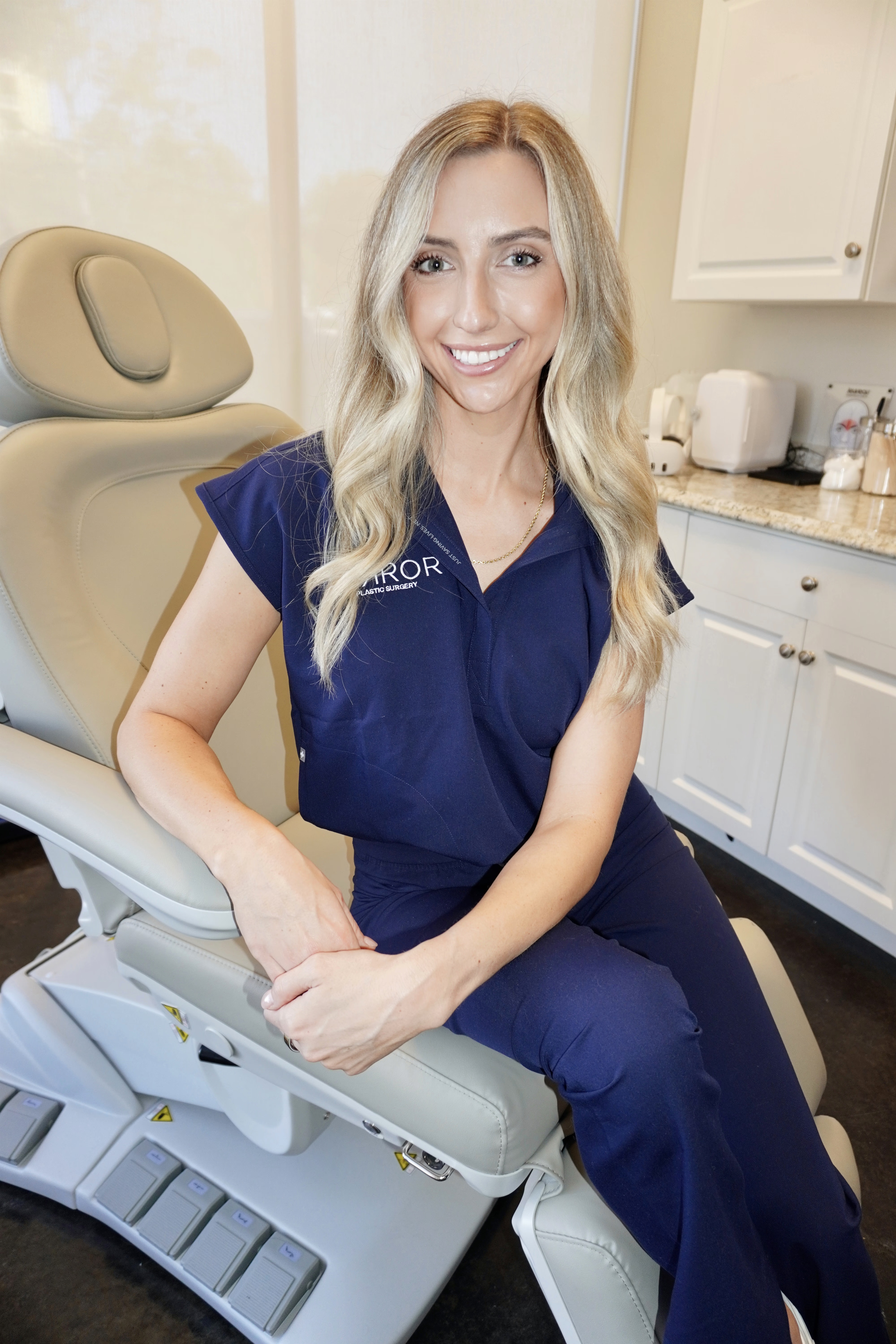
Her approach blends regenerative medicine principles with a deep understanding of gluteal anatomy to tailor treatment to each patient’s goals, whether that means significant volume, subtle enhancement, hip-dip correction, cellulite smoothing, or stretch mark reduction. The practice follows a concierge model, with consultations lasting up to an hour and treatment plans that are never driven by product quotas or upselling. If a procedure is not appropriate at a given time, Ellie states that clearly.
Conclusion and Next Steps
A surgical Brazilian butt lift can create permanent, natural-feeling contour change for carefully selected candidates, and 2026 subcutaneous-only protocols with ultrasound guidance have meaningfully reduced historical risk. The procedure still involves a 6–8 week functional recovery, requires sufficient donor fat, and carries risks that must be weighed for each person.
Non-surgical biostimulatory fillers with Radiesse and alloClae offer a lower-risk, lower-downtime path to natural gluteal enhancement, hip-dip correction, and skin quality improvement. Results appear gradually and require periodic maintenance.
Neither path fits everyone. The right choice depends on your anatomy, health status, recovery capacity, aesthetic goals, and risk tolerance, which can only be evaluated through a thorough, individualized consultation.
Disclaimer: Results may vary from person to person. Editorial content, before and after images, and patient testimonials do not constitute a guarantee of specific results.
1 Results may vary from person to person. Editorial content, before and after images, and patient testimonials do not constitute a guarantee of specific results.