
Written by: Dr. Akash Chandawarkar, Board Certified Plastic Surgeon, Mirror Plastic Surgery | Last updated: September 9, 2026
Key Takeaways
- BBL revision can address asymmetry, volume loss, and contour irregularities that appear after the initial procedure has fully healed.1
- Candidates must wait the recommended healing period after surgery, maintain stable weight, and have realistic expectations before pursuing revision.
- Revision surgery is more complex and costly than a primary BBL because of scar tissue and the need for precise correction.
- Choosing a board-certified surgeon experienced in BBL revisions who follows strict safety protocols, such as subcutaneous-only injection and ultrasound guidance, helps minimize risks.
- Patients ready to explore personalized BBL revision options can schedule a BBL revision consultation with Mirror Plastic Surgery to discuss their goals with Dr. Akash Chandawarkar.
Why BBL Revision Is Needed: Common Concerns And Correctable Issues
Most dissatisfaction after a BBL comes from subtle aesthetic issues that appear once the body has fully healed, not from a single dramatic complication. Approximately 15-30% of BBL patients seek a touch-up or revision, often due to shape dissatisfaction, uneven fat retention, or less lift than expected, though reported rates vary by source.
Common signs that a BBL revision may be appropriate include:
- Visible asymmetry between the left and right buttocks
- Overfilled appearance or excessive projection that looks unnatural
- Significant volume loss after fat reabsorption, as up to 40% of transferred fat can dissipate within six months
- Contour irregularities such as dents, waviness, or lumps from liposuction or fat grafting
- Fat necrosis presenting as hard, palpable nodules
- Poor blending between the buttocks and hips or lower back
- Results that do not match your original aesthetic goals
However, not every imperfection requires surgery. Swelling can persist for months, and final BBL results typically become visible around six months after surgery and may take up to twelve months to fully develop as swelling resolves and fat settles.1 A consultation with a board-certified surgeon helps determine whether your concern will likely improve on its own or requires intervention.
Am I A Candidate For BBL Revision?
BBL revision candidacy depends on timing, health, tissue quality, and your goals, with timing as the most critical factor.
Waiting Period: A revision BBL is usually appropriate 6 to 12 months after primary surgery, once results have stabilized.1 Operating before this window means working on a result that is still changing, which can worsen contour problems instead of correcting them.
Health And Weight Stability: Candidates should be in good overall health, non-smokers, and at a stable weight. Weight fluctuations are the most common reason BBL results change over time, and fluctuations exceeding roughly 10–15 pounds can visibly alter results after the initial stabilization period. Unstable weight makes revision outcomes less predictable.
Donor Fat Availability: Revision often requires harvesting additional fat from donor sites. If the initial surgery depleted these areas, alternatives such as AlloClae, an injectable derived from donated human tissue, may be discussed.
Realistic Expectations: No responsible surgeon can promise a perfect correction, especially in previously operated tissue with scar formation or fat loss. Revision aims to improve your result and bring it closer to your goals.
In-Person Evaluation: Surgeons review medical history, previous surgical records, current anatomy, skin elasticity, scar tissue, and donor-fat availability when determining BBL revision candidacy. A thorough consultation remains essential.
How Much Does BBL Revision Cost?
BBL revision cost varies widely and depends on several interconnected factors. Because every patient has unique anatomy, prior surgical history, and correction goals, surgeons provide a personalized quote only after a comprehensive in-person consultation.
Key factors that influence BBL revision surgery pricing include:
- Complexity of the correction required and total operating room time
- Surgeon expertise and geographic location
- Facility fees and anesthesia costs
- Whether additional procedures are performed simultaneously
- Pre-operative imaging, such as ultrasound, to map the treatment area
- Availability of donor fat, as depleted donor sites require more extensive planning
Revision surgery often costs more than the original procedure because it is more technically demanding, typically takes longer, and requires work around scar tissue and previously manipulated fat planes. Insurance typically does not cover BBL revision when it is performed purely for cosmetic or aesthetic reasons, since insurers classify it as an elective cosmetic procedure. Coverage may apply when revision corrects documented medical complications such as severe infection, tissue necrosis, or functional impairment. Many practices offer financing options to make the investment more manageable.
How To Choose A BBL Revision Surgeon
Surgeon selection is the single most consequential decision in the BBL revision process. Revision surgery demands a higher level of skill than a primary BBL because the surgeon must correct another surgeon’s work in tissue that has already been operated on.
When evaluating a BBL revision surgeon, look for the following:
- Board Certification: Verify certification by the American Board of Plastic Surgery (ABPS), which reflects rigorous training and adherence to strict safety standards.
- Revision-Specific Experience: Ask how many BBL revisions, not just primary BBLs, the surgeon performs annually, and request revision-specific before-and-after photos.
- Safety-First Approach: Confirm the surgeon follows current ASPS, ASAPS, and ISAPS safety guidelines, including subcutaneous-only fat injection and, ideally, ultrasound-guided placement.
- Transparent Communication: The surgeon should clearly explain what can and cannot be improved, acknowledge limitations, and avoid pressuring you into surgery.
- Accredited Facility: Ensure the procedure will be performed in an accredited surgical facility with appropriate emergency protocols.
Once you have a shortlist of surgeons, prepare focused questions for your consultation.
Questions to ask during your consultation include:
- What specifically went wrong with my initial BBL, and what can you realistically improve?
- How many BBL revision procedures do you perform each year?
- Do you use ultrasound guidance during fat injection?
- What is your revision policy if I am not satisfied with the outcome?
- Can I see revision-specific before-and-after photos?
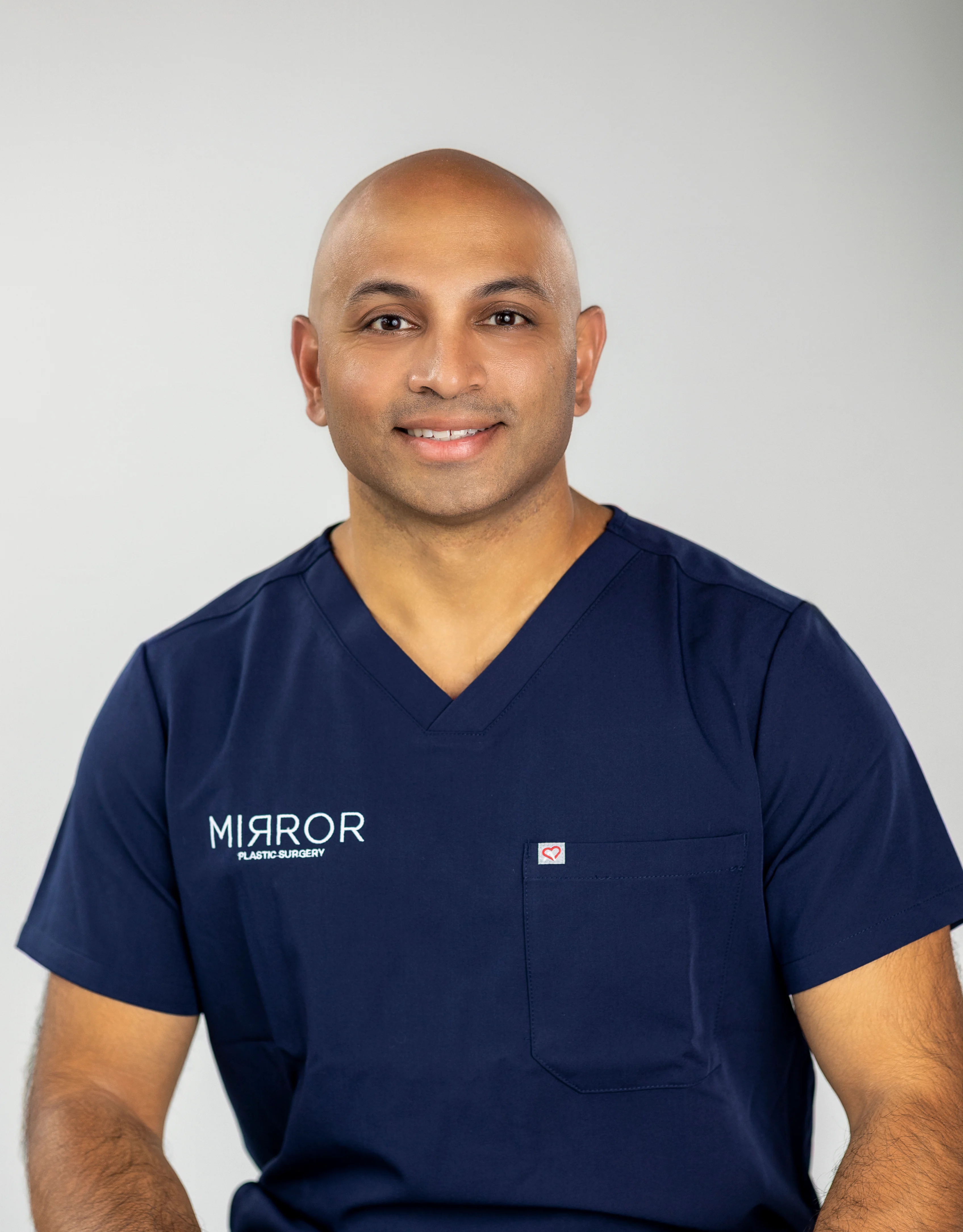
Dr. Akash Chandawarkar exemplifies these criteria. A Harvard-educated physician and Johns Hopkins-trained plastic surgeon, Dr. Akash completed a specialized fellowship in aesthetic surgery at the Manhattan Eye Ear & Throat Hospital (MEETH)/Lenox Hill Hospital. His practice philosophy prioritizes safety above all, followed by function and aesthetics, so every revision is meticulously planned with your well-being as the central focus. Mirror Plastic Surgery limits itself to one to two surgeries per day, which allows the team to focus fully on you before, during, and after your procedure.
Talk to Ellie about your BBL revision goals and speak directly with Dr. Akash during your consultation.
What To Expect During BBL Revision Recovery
BBL revision recovery often feels similar to, and sometimes more involved than, the initial procedure because of scar tissue and repeat liposuction. Recovery unfolds in several phases that build on each other.
- Sitting Restrictions: Patients should avoid sitting or lying directly on their buttocks for at least 2–3 weeks after BBL revision surgery, and some surgeons recommend avoiding direct pressure for up to 8 weeks to protect transferred fat cells. A specialized BBL pillow that supports the thighs helps offload pressure during this period.
- Compression Garments: Compression garments on liposuctioned areas are typically worn for 6–8 weeks, 24 hours daily for the first 4 weeks, then daytime-only for weeks 4–8. These garments reduce swelling and support contour healing, though your surgeon may adjust the schedule.
- Downtime: Most patients can return to light or desk work and manage basic daily activities after 1–2 weeks. Strenuous activities should be avoided for about four weeks, and some patients need help with daily tasks early on. Light walking is encouraged to improve circulation and reduce the risk of blood clots.
- Activity Restrictions: Strenuous exercise, heavy lifting, and high-impact activities should be paused for 6–8 weeks. Glute-focused strength training usually resumes gradually around weeks 8–12.
- Healing Timeline: Initial swelling improves over 2–3 weeks, while final results appear gradually over 3–6 months as transferred fat establishes blood supply and settles.
- Scar Tissue: Because revision works around existing scar tissue, you may notice more pronounced swelling or soreness than after your first surgery. Closely following your surgeon’s post-operative instructions supports smoother healing.
Risks And Complications Of BBL Revision
BBL revision surgery carries risks similar to, and in some cases greater than, the initial procedure. Understanding these risks helps you weigh benefits against potential complications.
- Fat Embolism: The most serious risk historically associated with BBL is pulmonary fat embolism, which occurs when fat enters the bloodstream and travels to the lungs. This risk is dramatically reduced when fat is injected exclusively into the subcutaneous layer above the muscle. A systematic review of ultrasound-guided technique found zero reported deaths and zero fat embolisms across the pooled data. Florida law prohibits intramuscular injection during BBL, and Mirror Plastic Surgery follows these high safety standards.
- Infection: The reported risk of septic shock, a severe infection-related complication, in gluteal fat grafting is approximately 0.02%, according to the BAAPS safety review, although overall surgical infection rates are higher. Infection occurs more often at fat harvest sites than at graft placement sites.
- Fat Necrosis: Hard lumps or nodules can form when transferred fat does not receive adequate blood supply. This risk increases in revision surgery because of scar tissue and altered vascularity.
- Seroma: Fluid collections may develop and sometimes require drainage.
- Contour Irregularities: New or persistent asymmetry, waviness, or dents remain possible outcomes.
- Anesthesia Risks: General anesthesia carries its own risks, as with any surgery.
- Scarring: Incisions are small, yet scarring is inevitable and may be more pronounced in revision cases.
Choosing a surgeon who prioritizes safety, such as Dr. Akash, who follows strict subcutaneous-only injection protocols and utilizes ultrasound guidance, helps reduce these risks.
Alternatives To BBL Revision: Non-Surgical Options
Some patients prefer to explore non-surgical options first, especially when concerns are mild or they are not ready for another operation.
Injectable Biostimulatory Fillers: Products such as Radiesse (calcium hydroxylapatite) and AlloClae can address minor asymmetries, hip dips, or subtle volume loss by stimulating the body’s own collagen production and gradually improving contour over several months. Dr. Akash serves as an advisory board member for Merz Aesthetics, the manufacturer of Radiesse, and has extensive experience with biostimulatory fillers for gluteal enhancement. Learn more about non-surgical BBL options and schedule a consultation to see whether they fit your goals.
Limitations: Non-surgical options do not function as true revisions. They cannot correct significant overfilling, remove excess fat, or fully address contour irregularities caused by liposuction. For substantial volume reduction or major shape correction, surgery remains the effective approach.
Candidacy: Patients with minor concerns, good skin elasticity, and adequate subcutaneous tissue may qualify for non-surgical enhancement. Those with significant asymmetry, overfilled results, or complications such as fat necrosis should discuss surgical revision with a qualified surgeon.
Expert Insights: A Conversation With Dr. Akash Chandawarkar
Dr. Akash emphasizes the unique demands of revision surgery and the central role of safety in every decision. He explains, “Revision surgery demands a higher level of precision than a primary procedure. You’re working in tissue that has already been operated on, so scar tissue, altered blood supply, and previous fat transfer planes all require careful assessment. My approach is always safety first, function second, aesthetics third. If a revision isn’t in a patient’s best interest, I’ll tell them so.”
He also highlights the value of time and attention during the consultation process. “Too many patients come to me after being rushed through a high-volume practice, feeling like they were just another case on the schedule. At Mirror Plastic Surgery, we spend up to an hour in consultation, truly understanding your goals and concerns. We limit ourselves to one or two surgeries per day so that our entire team’s focus is on you before, during, and after your procedure.”
Finally, he underscores the importance of honest communication. “The most important thing I can offer a revision patient is honesty. I’ll tell you what I can realistically improve, what I cannot change, and what the recovery will look like. Evidence-based communication builds trust, and trust is the foundation of a successful surgical outcome.”
Frequently Asked Questions About BBL Revision
How Long After A BBL Can I Have Revision Surgery?
Most surgeons recommend waiting the full recommended healing period after your initial BBL before considering revision. This window allows swelling to resolve, fat survival to stabilize, and scar tissue to soften. Pursuing revision earlier means operating on a result that is still changing, which can compound existing problems. In some cases, particularly when swelling, scar maturation, or weight changes are still evolving, surgeons may suggest waiting even longer before deciding on revision.
Will Revision Surgery Leave More Scars?
Revision surgery requires small incisions for liposuction and fat grafting, similar in size to those made during the initial BBL. Some scarring will occur, but surgeons place incisions in natural creases whenever possible, which helps keep them discreet. In many revision cases, existing incision sites from the original procedure are reused, which can limit the creation of new scars.
Can I Have A BBL Revision If I Have Gained Or Lost Weight?
Weight stability is critical for revision candidacy. Significant weight changes can alter grafted fat and shift body proportions in ways that make revision outcomes unpredictable. Surgeons typically recommend achieving and maintaining a stable weight for several months before proceeding with revision. Patients who have experienced major weight changes since their original BBL should discuss timing and the earlier weight stability guidelines during their consultation.
What Is The Success Rate Of BBL Revision?
In a 2025 systematic review of ultrasound-guided BBL, one included study reported that more than 90% of patients were satisfied with their gluteal contour when surgeons used subcutaneous-only injection and ultrasound guidance.1 Revision outcomes depend heavily on surgeon expertise, the specific concern being addressed, the quality of the tissue, and the patient’s adherence to post-operative instructions.1 Because revision in previously operated tissue is more complex than a primary procedure, surgeon selection and realistic expectations strongly influence success.
How Do I Know If I Need A Revision Or Just A Touch-Up?
A touch-up usually involves minor fat grafting to correct small asymmetries or modest volume loss. A revision is more comprehensive and may include liposuction to reduce excess volume, correction of contour irregularities, or treatment of complications such as fat necrosis or seroma. The distinction depends on the nature and extent of your concerns. A consultation with a board-certified plastic surgeon remains the most reliable way to determine which approach fits your situation.
Making An Informed Decision About BBL Revision
BBL revision is a significant decision that calls for careful research, realistic expectations, and a qualified surgeon who prioritizes your safety. Whether you are dealing with asymmetry, overfilling, volume loss, or contour irregularities, the right surgeon and timing can help you move closer to the balanced, natural-looking results you envisioned.
Key points to remember include:
- Follow the recommended waiting period after your initial BBL before considering revision
- Choose a board-certified plastic surgeon with specific BBL revision experience
- Prioritize safety, including subcutaneous-only injection and ultrasound guidance
- Maintain realistic expectations, since revision improves results but cannot guarantee perfection
- Approach recovery with patience and follow post-operative instructions closely
Schedule Your BBL Revision Consultation At Mirror Plastic Surgery
Patients considering BBL revision can meet with Dr. Akash Chandawarkar at Mirror Plastic Surgery in St. Petersburg, Florida. His Harvard education, Johns Hopkins training, and fellowship in aesthetic surgery, combined with honest, evidence-based communication and a concierge-level patient experience, make him a trusted choice for revision care throughout the Tampa Bay area. At Mirror Plastic Surgery, you receive unhurried attention and thoughtful guidance at every step.
Contact Mirror Plastic Surgery directly:
- Phone: 727-361-6515
- Email: hello@mirrorplasticsurgery.com
- Location: 780 4th Ave S, St. Petersburg, FL 33701
Book your personalized consultation with Ellie today and take the first step toward results you can feel confident in.
Disclaimer: Results may vary from person to person. Editorial content, before and after images, and patient testimonials do not constitute a guarantee of specific results.
1 Results may vary from person to person. Editorial content, before and after images, and patient testimonials do not constitute a guarantee of specific results.