
Written by: Ellie Pranckevicius, FNP-BC, Aesthetic Nurse Practitioner & Aesthetic Injector | Facial Restoration & Regenerative Injectable Specialist, Mirror Plastic Surgery
Key Takeaways
- Botox TMJ relief uses botulinum toxin injections into the masseter and temporalis muscles to reduce jaw pain, clenching, and headaches by limiting muscle contraction and pain mediators.
- The treatment is off-label for TMD, works through peripheral chemodenervation, and serves as a second-line option after conservative therapies fail.
- Relief typically begins in 3–7 days, peaks at 4–6 weeks, and lasts about 3 months, with dosing tailored to muscle size and strength.1
- Precise injection technique and minimal effective dosing are essential to reduce risks such as chewing weakness, facial asymmetry, and potential bone density changes.
- Patients seeking personalized assessment and evidence-based TMJ care can book a consultation with Ellie at Mirror Plastic Surgery.
How Botox Eases TMJ Symptoms and Where It Falls Short
Botox for TMJ works by weakening the jaw muscles that drive clenching and grinding. When injected into the masseter or temporalis, BoNT-A produces a dose-dependent reduction in muscle contractile capacity, which lowers bite force and reduces electromyographic activity. Bruxism is centrally mediated, and BoNT-A acts exclusively at the peripheral neuromuscular junction without crossing the blood-brain barrier, so it reduces muscular force without changing the neurological drive behind clenching or grinding.
This peripheral-only mechanism helps explain why Botox is less effective when the primary problem is structural, such as disc displacement, degenerative joint disease, or inflammatory arthritis. A 2022 systematic review of 24 studies examined the use of Botox for temporomandibular disorders and confirmed that outcomes are better for muscle-driven pain than for joint or disc pathology. Botox functions best as a force-reduction tool with a clear, finite mechanism inside a broader multimodal treatment plan.
Timeline: When TMJ Botox Starts Working and How Long It Lasts
Most patients follow a similar relief timeline after TMJ Botox. Onset of BoNT-A effect occurs in 3–7 days, peak clinical effect at 4–6 weeks, and duration of relief is approximately 3 months, with re-treatment intervals of at least 12 weeks.1
Multiple recent studies support this pattern while highlighting dosing and selection nuances. A 2023 McGill University meta-analysis of 15 RCTs with 504 participants found botulinum toxin type A significantly more effective than placebo for muscular TMD pain reduction, and higher bilateral doses of 60–100 units correlated with greater pain reduction at 6 months.1 A 2025 retrospective study of 98 adults with refractory myogenous TMD found that a standardized incobotulinumtoxinA protocol reduced myalgia severity from 2.69 ± 0.64 to 0.43 ± 0.85 at 12 months (p < 0.001), with 79.6% of patients meeting predefined favorable outcome criteria1. A 2024 meta-analysis by Saini et al. evaluated BoNT-A for TMD pain and reported mixed evidence, with outcomes varying by patient profile and dosing protocol, so careful selection remains essential.
Target Injection Areas for TMJ Botox
Botox for myogenous TMD typically targets the masseter, temporalis, and, when clinically indicated, the lateral pterygoid. The masseter and temporalis are injected in the mid-belly, and the lateral pterygoid can be approached intra-orally or percutaneously when needed.
Accurate anatomical placement protects both function and appearance. Smile asymmetry can occur if Botox affects nearby expression muscles, and a safe zone bounded by the tragus, corner of the mouth, and mandibular angle helps guide precise injection technique. A systematic review of lateral pterygoid injections for TMD found that most trials reported symptom improvements, including reductions in pain and clicking, although evidence quality was variable and larger randomized controlled trials are still needed.
Typical Botox Unit Ranges for TMJ Treatment
Dosing for TMJ Botox is customized based on muscle size, strength, sex, and treatment goals. Typical dosing for masseter Botox in TMD treatment is 25–50 units per masseter, with 10–25 units per temporalis, and total doses of 24–60 units are also commonly recommended.
The minimum effective dose principle guides safe treatment. Repeated high-dose BoNT-A injections may cause mandibular cortical bone density reduction, which supports using the lowest dose that achieves symptom relief in TMD treatment. The manufacturer of onabotulinumtoxinA recommends no more than 360 cumulative units within a 3-month interval based on FDA trial data. Dosing is best determined through in-person palpation of the muscle during clenching rather than a fixed formula, and patients who receive repeated sessions often need fewer units over time as the muscle adapts.
Because accurate dosing depends on real-time assessment of muscle bulk, strength, and response history, it cannot be set from photos or generic charts. Schedule your dosing assessment with Ellie to determine the right unit count for your muscle size and TMJ goals.
Post-Treatment Care: What to Avoid After TMJ Botox
Thoughtful aftercare supports consistent results and reduces short-term side effects. The following restrictions commonly apply after TMJ Botox injections:
- Do not lie down or recline for 4 hours post-injection to reduce the risk of product migration.
- Avoid massaging, rubbing, or applying pressure to injection sites for 24 hours.
- Avoid intense exercise for 24 hours to lower bruising risk and minimize product movement.
- Avoid alcohol for 24 hours because it can increase bruising.
- Many providers recommend avoiding dental work for 2 weeks after treatment.
- A soft diet may feel more comfortable for the first 24 hours if chewing causes discomfort.
- Continue using a night guard if applicable, because Botox reduces but does not eliminate muscle force.
Risks and Trade-Offs of TMJ Botox
TMJ Botox offers meaningful relief for many patients, yet every benefit carries a potential trade-off. The table below pairs each therapeutic effect with its corresponding risk and typical timing so you can see the full picture.
Insurance and Payment Options for TMJ Botox
The FDA has not approved Botox for the treatment of TMJ disorders, and its use for this purpose is considered off-label, so most insurance companies do not cover it because most plans reimburse only treatments approved by the FDA for a given condition. Coverage denials are common for patients who submit claims without prior authorization and detailed documentation of medical necessity.
Some patients can access partial coverage when specific criteria are met:
- Insurance coverage may be available with documented medical necessity, including a formal TMJ diagnosis, records of failed conservative treatments, and supporting documentation from the provider.
- Many plans require prior authorization, so patients should contact their insurer to confirm the exact steps and documentation needed.
- Therapeutic Botox for TMD is typically an eligible expense under health savings accounts (HSA) and flexible spending accounts (FSA), which can reduce out-of-pocket costs when supported by a Letter of Medical Necessity and itemized receipts.
- TMJ benefits may fall under either a medical policy or a dental policy depending on the specific insurance plan.
Patients should contact their insurance provider before treatment to clarify coverage terms, prior authorization requirements, and applicable diagnosis codes.
How Mirror Plastic Surgery Approaches TMJ Botox
Provider selection strongly influences both safety and results with TMJ Botox. The injection sites for TMD, including the masseter, temporalis, and lateral pterygoid, lie close to the parotid gland, facial nerve branches, and the zygomaticus and risorius muscles. Errors in placement or dosing can cause temporary chewing weakness, an asymmetric smile, or paradoxical bulging. Paradoxical masseteric bulging can occur due to uneven toxin distribution with superficial paralysis and persistent deep muscle activity and is more common with single-point injections or very large masseters.
At Mirror Plastic Surgery in St. Petersburg, Florida, non-surgical injections are led by Ellie Pranckevicius, FNP-BC, an Aesthetic Nurse Practitioner with four years of Neuroscience ICU experience at Tampa General Hospital, 600 hours of hands-on aesthetics licensure training, and advanced nursing degrees from the University of South Florida. Her combined background in esthetics and clinical nursing supports a detailed understanding of both surface and subdermal anatomy that guides injection precision and safety.
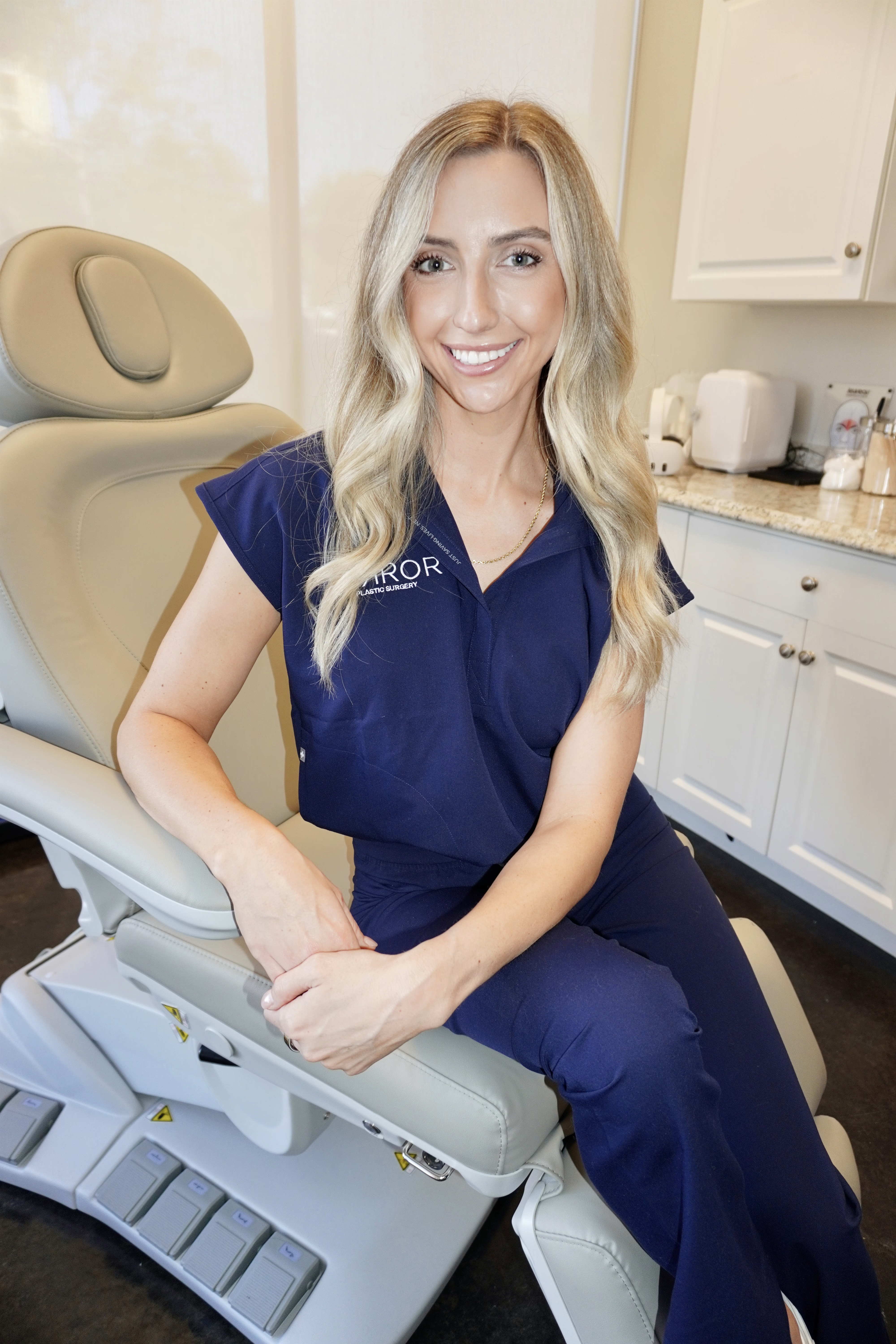
Every patient receives an extended top-to-bottom assessment that often lasts up to an hour. This visit evaluates muscle size and strength through palpation, identifies anatomical risk factors, and results in an individualized dosing and placement plan. This approach contrasts with high-volume practices where consultation time is brief and dosing often follows a standard template. Mirror Plastic Surgery follows a clear hierarchy of priorities: safety first, function second, and aesthetics third, which aligns closely with TMJ Botox goals such as preserving bite strength and jaw mobility while reducing pain.
Building a Complete TMJ Treatment Plan Around Botox
Current guidelines prioritize conservative management, including education, self-management, exercise therapy, behavioral modification, and occlusal appliances, as the foundation of TMD care. Botox enters the picture only after these measures have been tried and have not provided adequate relief following appropriate clinical assessment.
The rationale for multimodal integration is mechanistic and behavioral. Physiotherapy addresses factors Botox cannot, including improving jaw movement quality, restoring muscular endurance, improving cervical spine function, reducing protective muscle guarding, and teaching long-term self-management, and combining physiotherapy with Botox yields better outcomes than either alone.
Psychological factors such as stress, anxiety, and depression modulate masticatory muscle activity and may influence BTX outcomes, and the COVID-19 pandemic has been associated with a notable increase in TMD and bruxism cases largely attributed to heightened stress and anxiety levels, which underscores the need for multimodal approaches that incorporate stress management alongside targeted therapies. A comprehensive plan for myogenous TMD often combines the following elements:
- Occlusal splint or night guard to reduce nocturnal clenching forces
- Physical therapy targeting jaw mobility, cervical spine mechanics, and muscle coordination
- Stress management and behavioral modification to address parafunctional habits
- Botox TMJ injections as an adjunct for refractory muscle-driven pain, dosed at the minimum effective level and repeated no sooner than every 12 weeks
Conclusion and Important Disclaimer
Botox TMJ relief is a clinically supported, off-label option for myogenous temporomandibular pain that works through the peripheral mechanism described earlier, reducing muscle force without changing central neurological drivers. Evidence from 2023–2025 studies shows meaningful short-term pain reduction in appropriately selected patients, with onset in 3–7 days, peak effect at 4–6 weeks, and relief lasting about 3 months. Botox does not correct underlying causes, does not consistently outperform conservative therapies over the long term, and carries documented risks such as chewing weakness, masseter atrophy, compensatory hypertrophy, and, with repeated high-dose use, potential effects on mandibular bone density. Insurance coverage remains inconsistent and is often denied because of the treatment’s off-label status, although HSA and FSA eligibility may apply with proper documentation.
Safe, effective use depends on individualized dosing based on in-person anatomical assessment, precise multi-point injection technique within established safe zones, and integration into a broader plan that includes physical therapy, occlusal appliances, and stress management. Provider selection, including the depth of anatomical training and the thoroughness of pre-treatment evaluation, plays a central role in both safety and outcome quality.
Disclaimer: Results may vary from person to person. Editorial content, before and after images, and patient testimonials do not constitute a guarantee of specific results.
1 Results may vary from person to person. Editorial content, before and after images, and patient testimonials do not constitute a guarantee of specific results.