

Written by: Ellie Pranckevicius, FNP-BC, Aesthetic Nurse Practitioner & Aesthetic Injector | Facial Restoration & Regenerative Injectable Specialist, Mirror Plastic Surgery
Key Takeaways
- Platysmal bands form from repeated contraction of the platysma muscle. Botox temporarily relaxes this muscle to soften bands but does not tighten loose skin.
- Targeting the motor-rich upper half of the platysma allows effective results with fewer injection points and a lower total dose.
- FDA-approved dosing ranges from 26 to 36 units based on band severity. Results usually appear by day 14 and last about three to four months.1
- Injection techniques that focus on the upper platysma help reduce bruising, neck weakness, and swallowing difficulty while preserving safety and results.
- At Mirror Plastic Surgery, detailed anatomical assessment and personalized planning support safe, natural-looking neck rejuvenation results, and you can book a consultation with Ellie to explore your options.
Why Platysmal Bands Form and How Botox Helps
The platysma muscle functions as a depressor that can produce moderate to severe vertical bands through repetitive contraction. Platysmal bands reflect structural changes in the muscle and become more visible with age, sun exposure, and genetics, rather than simply repeating facial expressions.
Recent anatomical research using Sihler’s staining shows that motor innervation of the platysma is concentrated in the upper half of the muscle. The cervical branch and marginal mandibular branch of the facial nerve primarily supply this region. This finding guides modern injection techniques and explains why treatment focused on the upper platysma often produces the most reliable results.
In contrast, the lower third of the platysma receives mainly sensory innervation from the transverse cervical, great auricular, and supraclavicular nerves, which contribute very little to muscle contraction. This anatomical insight supports precise protocols that concentrate Botox in the motor-rich upper regions, where it can effectively interrupt nerve signals that drive band formation.
Botox Unit Ranges and Injection Pattern for Neck Bands
FDA-approved dosing protocols for platysmal bands range from 26 to 36 units based on band severity and anatomy. The protocol adjusts to the number of bands: 26 units for one band per side, 31 units when one side has one band and the other has two, and 36 units for two bands on each side.
This anatomy-guided approach, which focuses on the motor-rich upper platysma, achieves effective aesthetic outcomes with fewer injection points and a lower total toxin dose compared with full-muscle injection1. Concentrating treatment in this area can reduce bruising, improve comfort, and lower potential immunogenicity while preserving or enhancing results.
The recommended injection pattern targets each vertical platysma band with five injection sites spaced 1 to 2 centimeters apart. Beyond these primary band injections, additional placements along the jawline can address platysma activity that contributes to jowling and loss of jawline definition. Regardless of injection location, precise placement in the subdermal or subplatysmal plane helps avoid intradermal deposition, which increases bruising risk.
Neck Botox Timeline and How Long Results Last
Clinical trials with 834 patients showed that Botox produces clinically meaningful improvement in moderate to severe platysma bands by day 14 after treatment1. Most patients follow a predictable response pattern.
Days 1-3: Early muscle relaxation begins, while bands remain visible
Days 4-7: Bands gradually soften when the muscle contracts
Days 8-14: Peak improvement appears, with a clear reduction in band prominence
Weeks 3-12: Results remain visible, with slow return of muscle activity
Months 3-4: Results usually last three to four months, and maintenance treatments extend the effect1
Individual factors such as muscle strength, metabolism, and injection technique influence both onset and duration. Patients with stronger platysma muscles may need higher doses or more frequent sessions to maintain their preferred level of improvement.
Neck-Specific Botox Risks and Safety Strategies
Neck Botox involves unique anatomical considerations that call for specialized training and experience. Injection below the platysma can affect deeper cervical muscles and increase the risk of dysphagia, and poor placement can compromise neck stability.
| Risk | Frequency | Mitigation Strategy | Duration if Occurs |
|---|---|---|---|
| Mild bruising | Common | Avoid blood thinners, use ice | 3-7 days |
| Neck weakness | Rare with proper technique | Limit injections to upper platysma | 2-4 weeks |
| Swallowing difficulty | Very rare | Avoid deep injection, use conservative dosing | 2-6 weeks |
| Asymmetry | Uncommon | Use precise anatomical mapping | Correctable at 2 weeks |
Sparing the lower platysma helps preserve neck stability and often benefits older patients or those with pre-existing cervical weakness. Ultrasound guidance can further support accurate placement and reduce intradermal injection that may increase complications.
When Neck Botox Needs Combination Treatments
Botox works well for dynamic platysmal bands caused by muscle contraction, yet it does not correct significant skin laxity, horizontal neck lines, or major volume loss. Patients with moderate or severe skin redundancy may benefit from pairing Botox with skin-tightening treatments or considering surgical options.
Combination plans that include intradermal injections can soften neck lines with results that may last up to six months. Radiofrequency and ultrasound-based treatments can add skin tightening and improve overall neck contour.
Botox treats the muscular component of neck aging, while other treatments focus on skin quality, texture, and laxity. A thorough assessment helps identify which combination of therapies will create the most natural and satisfying outcome for each person.
Choosing a Neck Botox Provider with Cervical Expertise
Successful platysmal band treatment depends on deep knowledge of cervical anatomy and careful injection technique. The neck contains major blood vessels, nerves, and muscles that support swallowing and head movement, so provider selection directly affects both safety and results.
Ellie Pranckevicius offers a strong foundation for neck Botox through her combined background in esthetics and advanced nursing. Her four years in the Neuroscience ICU at Tampa General Hospital built extensive experience with cervical anatomy and neurological assessment. Her 600 hours of hands-on aesthetics training refined her injection precision and technique.
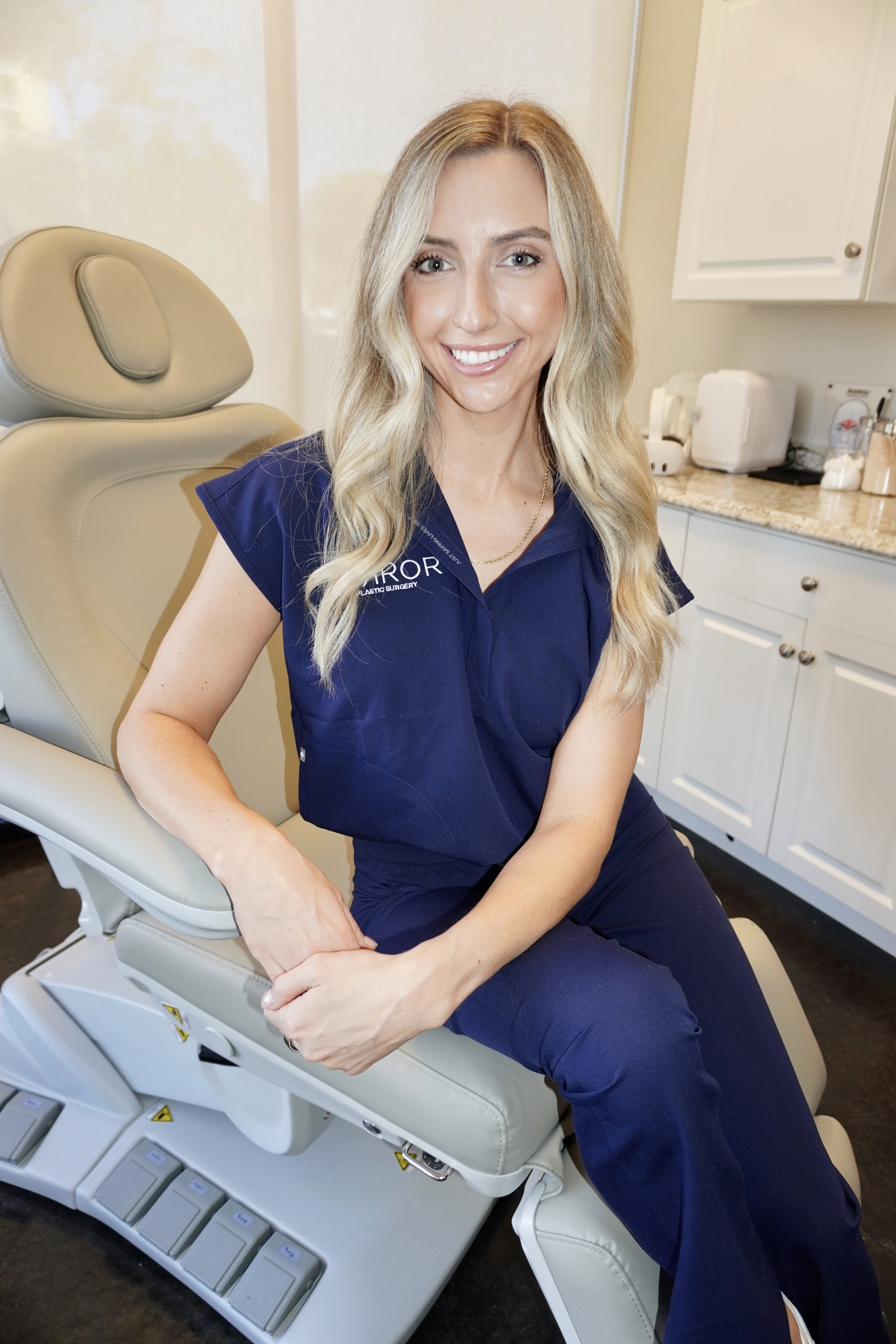
At Mirror Plastic Surgery, neck treatment begins with a comprehensive top-to-bottom assessment that views the face and neck as a connected unit. This holistic evaluation considers how platysmal band treatment will influence overall facial balance and identifies any contraindications or anatomical variations that may shape the treatment plan.
Book a consultation with Ellie to experience how anatomical expertise and personalized assessment support natural, safe results for neck rejuvenation.
Frequently Asked Questions
Does Botox in neck bands work?
Botox is FDA-approved and clinically proven to improve the appearance of moderate to severe platysmal bands. Clinical trials showed meaningful improvement in 31 to 32 percent of patients by day 14 after treatment.1 Botox relaxes the muscle that creates the bands rather than tightening loose skin, so it works best for dynamic bands that appear with muscle contraction.
How long does Botox in neck bands last?
Results typically last three to four months, which aligns with Botox treatments in other areas.1 The exact duration varies with factors such as muscle strength, metabolism, and injection technique. Maintenance treatments sustain the improvement, and some patients notice that results last longer after several treatment cycles.
Is platysmal band Botox worth it?
The value of treatment depends on your anatomy and goals. Botox usually benefits patients with prominent dynamic bands from muscle activity more than those with marked skin laxity. The procedure offers a non-surgical option with minimal downtime, yet it requires ongoing maintenance. A detailed consultation helps confirm whether expected results match your aesthetic goals and long-term budget.
What are the side effects of platysmal band Botox?
The most common side effect is mild bruising, which usually resolves within 3 to 7 days. More serious but rare complications include temporary neck weakness or swallowing difficulty if deeper muscles receive toxin. These risks decrease when the provider targets only the upper platysma and avoids deeper cervical structures.
How many units of Botox are needed for neck bands?
As outlined in the dosing section above, FDA protocols range from 26 to 36 units based on band count and severity. Your provider determines the exact amount during an anatomical assessment, since muscle thickness, band depth, and overall neck structure also influence the ideal dose.
Neck Rejuvenation with Expert Botox Care in Tampa Bay
Platysmal band treatment benefits from a provider who understands both surface anatomy and deeper cervical structures. At Mirror Plastic Surgery, every neck treatment starts with a detailed anatomical assessment and a clear conversation about realistic expectations.
Ellie Pranckevicius combines neuroscience ICU experience with advanced aesthetics training so your neck treatment prioritizes safety while aiming for natural, harmonious results. The practice follows evidence-based protocols and anatomy-guided injection techniques that reflect current advances in platysmal band treatment.
Book a consultation with Ellie to see how expert anatomical knowledge and personalized care can support your neck rejuvenation goals safely and effectively.
Disclaimer: Results may vary from person to person. Editorial content, before and after images, and patient testimonials do not constitute a guarantee of specific results.
1 Results may vary from person to person. Editorial content, before and after images, and patient testimonials do not constitute a guarantee of specific results.



