
Written by: Ellie Pranckevicius, FNP-BC, Aesthetic Nurse Practitioner & Aesthetic Injector | Facial Restoration & Regenerative Injectable Specialist, Mirror Plastic Surgery
Key Takeaways for Natural-Looking Lip Filler
- A proper lip filler consultation functions as a structured clinical assessment that includes medical history, dynamic lip analysis, facial proportion evaluation, and realistic outcome planning.
- Conservative dosing, typically starting at 0.5 mL, combined with supplier-neutral product selection, supports subtle, natural-looking results instead of an overfilled look.1
- Flexible fillers such as Restylane Kysse, Juvederm Volbella, and RHA Kiss integrate smoothly with lip tissue and help preserve natural movement.1
- Thorough consultations at Mirror Plastic Surgery can last up to an hour, allowing for individualized treatment plans that prioritize safety, anatomy, and long-term results.
- Experience Mirror Plastic Surgery’s anatomy-first approach to natural lip filler with a consultation in St. Petersburg at Mirror Plastic Surgery.
What Happens During a High-Quality Lip Filler Consultation
A proper lip filler consultation operates as a structured clinical assessment, not a sales appointment. It covers medical history, dynamic and resting lip analysis, facial proportion evaluation, product selection rationale, technique discussion, and a candid review of risks and realistic outcomes. Each of these elements supports a single goal: natural lip filler that prioritizes hydration over volume, creating plumper, healthier-looking lips with soft borders and natural movement instead of maximum size or sharp outlines.1
Conservative dosing, typically starting at 0.5 mL, is the industry standard for first-time patients and allows subtle hydration and border definition while assessing response.1 Patients seeking more visible yet still natural enhancement may eventually reach 1.0 mL, which can balance proportions and correct volume loss when applied thoughtfully. Product rheology, meaning how a filler flows, integrates, and moves within tissue, strongly influences whether results look and feel natural. Fillers such as Restylane Kysse, Juvederm Volbella, and RHA Kiss are often chosen for their flexibility and ability to integrate smoothly.
Step 1: Initial Assessment and Candidacy Review
The first stage of any responsible lip filler consultation involves a comprehensive medical history review. A pre-treatment medical review should screen for herpes simplex history, active infection or inflammation, bleeding disorders or anticoagulant use, prior filler type and timing, allergies, pregnancy or breastfeeding, and autoimmune or other conditions that alter risk. Patients on blood thinners such as Warfarin, Eliquis, or Plavix carry significantly elevated bruising and hematoma risk. Patients with a history of HSV-1 should inform their injector before lip filler, as injections can trigger cold sore outbreaks, and providers should prescribe prophylactic valacyclovir.
A thorough consultation also includes dynamic lip analysis, which means observing how the lips move during speech and smiling rather than relying only on static photos. A lip filler consultation must include dynamic analysis of how the lips move during speech and smiling because movement affects both aesthetics and function. Facial proportion evaluation and dental assessment form part of this stage, since bite changes or dental recession can reduce lip support and may change the treatment plan. Conducting this level of detailed analysis requires more time than a quick visual review.
At Mirror Plastic Surgery, this initial assessment can extend up to a full hour, which represents a deliberate departure from the rushed evaluations common at high-volume practices. A typical first-time lip filler consultation lasts 15–30 minutes and includes medical history review, risk assessment, facial anatomy evaluation, and treatment planning. The longer format gives Ellie time to understand how the lips relate to the full face rather than treating them in isolation.
Step 2: Personalized Treatment Planning
Treatment planning begins once candidacy is confirmed and focuses first on volume decisions rooted in individual anatomy. The standard starting dose for first-time lip filler patients is 0.5 mL to 1 mL, which adds subtle natural enhancement while allowing assessment of patient response before further volume is added. A staged plan, such as 0.5 mL at the first appointment followed by reassessment at two weeks, offers a safer path than starting with 1 mL immediately, which increases the risk of overcorrection.
Maintaining a balanced upper-to-lower lip ratio supports natural results. Good injection technique preserves natural lip anatomy by avoiding overfilling the upper lip and preserving philtral columns. Some practitioners reference a 1:1.6 ratio as ideal, while research published in JAMA Facial Plastic Surgery found that the most attractive lips in their study showed a 1:2 upper-to-lower lip ratio. The best target varies with facial proportions and ethnic background, so personalized assessment matters more than any single universal formula.
Technique selection follows from anatomy and goals. The microdroplet technique achieves natural-looking results by injecting tiny amounts of filler into specific spots, allowing precise control, gradual volume increase, and refinement of lip borders without adding mass. Lip tenting uses vertical injections to lift a flat upper lip and create structural support. The Russian lip technique employs vertical injections to lift the center of the lips, producing a distinct heart-shaped Cupid’s bow and a flatter, taller profile instead of outward projection. Ellie selects techniques based on each patient’s anatomy and goals, not on trends.
Step 3: Product Selection and Injection Technique
Product selection at Mirror Plastic Surgery remains supplier-neutral, meaning the filler chosen is the one best suited to the patient’s anatomy rather than the one tied to a sales quota or brand partnership. This approach matters because different fillers behave differently in lip tissue and can create very different outcomes.
Flexible fillers are the standard for natural lip results:
- Restylane Kysse offers flexibility, lasts up to 12 months, and suits first-timers seeking subtle natural volume.1
- Juvederm Volbella XC is indicated for lip augmentation and correction of perioral rhytids and lasts up to 1 year.1
- RHA 2 and RHA 3 are engineered to adapt and move with facial expressions, last up to 15 months in dynamic wrinkles and folds (or up to a year in other areas), and deliver natural movement during facial animation.1
Higher-G’ fillers, which have greater stiffness and projection, are generally not appropriate for the lip body, where flexibility and smooth integration are essential for natural movement. Low-viscosity, highly flexible fillers help preserve dynamic, natural lip expression.
Tool choice also affects results. Needle technique provides millimetre-level control for precise placement along the vermilion border, Cupid’s bow peaks, and philtral columns, while cannula technique is preferred for volumizing the body of the lip because the blunt tip pushes blood vessels aside, dramatically reducing bruising and virtually eliminating the risk of intravascular injection. Combining both tools allows the injector to match the instrument to each lip zone and goal.
Step 4: Risks, Limitations, and Red Flags
Lip filler longevity varies between patients. Hyaluronic acid lip filler commonly lasts about 6 to 12 months, with longevity influenced by formulation, dose, placement, baseline anatomy, metabolism, movement, and how the result is defined1. Because the lips move constantly during talking, eating, and facial expression, filler in this area usually breaks down faster than in less mobile regions.
Asymmetry and minor lumpiness are normal in the first 7–14 days as swelling resolves, with final results visible at approximately two weeks.1 Along with bruising and small palpable lumps, these temporary effects typically fade as the filler integrates. Patients should understand that these short-term changes differ from product migration, which relates to overfilling or poor technique rather than conservative, anatomy-based treatment.
The most serious risk is vascular occlusion. The lips are supplied chiefly by the superior and inferior labial arteries, branches of the facial artery, which run through the body of the lip in a course that varies considerably between individuals and cannot be seen from the surface, making any injection carry a baseline risk of entering or compressing a vessel. Red flags requiring immediate contact with a provider include severe or escalating pain, blanching, dusky or mottled discoloration, a spreading or net-like pattern, coolness of the tissue, a spreading rash or fever, or any vision change.
Several warning signs suggest a rushed or inadequately trained practice:
- Consultations under 15 minutes with no anatomy assessment
- No discussion of hyaluronidase reversal as a safety option
- Providers who fail to review medical history or prior filler history
- Group or party injection settings
- No disclosure of the specific product name or planned volume
- Pressure to purchase more volume than the patient requested
What to Ask During Your Lip Filler Consultation
A well-prepared patient often achieves better outcomes. These eight questions help you confirm whether a provider meets the standard for individualized, safety-focused care:
- What are your credentials, and how many lip filler treatments have you performed? Look for a licensed medical professional, such as a nurse practitioner, PA, or physician, with advanced filler-specific training and documented clinical experience.
- How long is the consultation, and does it include a full facial proportion assessment? Ask how much time is reserved and confirm that the lips will be evaluated in the context of the full face, not in isolation.
- What starting volume do you recommend for my anatomy, and why? A conservative answer, often around 0.5 mL for first-timers, signals a provider who prioritizes natural results over upselling.
- Which specific product do you recommend, and why is it suited to my lips? The response should reference the product’s G’ value, flexibility, and integration properties relative to your lip tissue type.
- Are you supplier-neutral, or do you have a preferred brand relationship? Supplier-neutral practices select products based on patient anatomy, not brand incentives.
- What techniques will you use, and how do you decide between needle and cannula? The explanation should reflect zone-specific decision-making rather than a one-size-fits-all approach.
- What are the realistic risks, and do you carry hyaluronidase on-site? Any provider performing lip filler should have hyaluronidase immediately available for emergency reversal.
- What does a long-term maintenance plan look like for natural results? The answer should emphasize reassessment at each visit instead of automatic top-ups and should address the risk of cumulative overfilling over time.
Schedule your hour-long assessment at Mirror Plastic Surgery and bring this checklist; Ellie will address every question in detail.
Why a Thoughtful Consultation Protects Natural Results
Lip injections often gain a reputation for looking overdone because the most noticeable results are usually the most exaggerated, while subtle, well-executed treatments blend in and simply look natural. The consultation is the stage where natural results are either protected or compromised. A provider who rushes the assessment, defaults to a full syringe without evaluating anatomy, or selects products based on inventory rather than patient need becomes the main source of overdone outcomes, not the treatment itself.
Ellie Pranckevicius brings a rare combination of esthetician training, advanced nursing credentials, and four years of Neuroscience ICU experience to every lip filler consultation at Mirror Plastic Surgery. Her approach evaluates the lips as part of the full face, prioritizes conservative starting volumes, and selects products based on each patient’s tissue type and goals rather than brand relationships. Mirror Plastic Surgery’s concierge medicine model means your consultation is not rushed, your questions receive complete answers, and your treatment plan is built around your anatomy and long-term well-being.
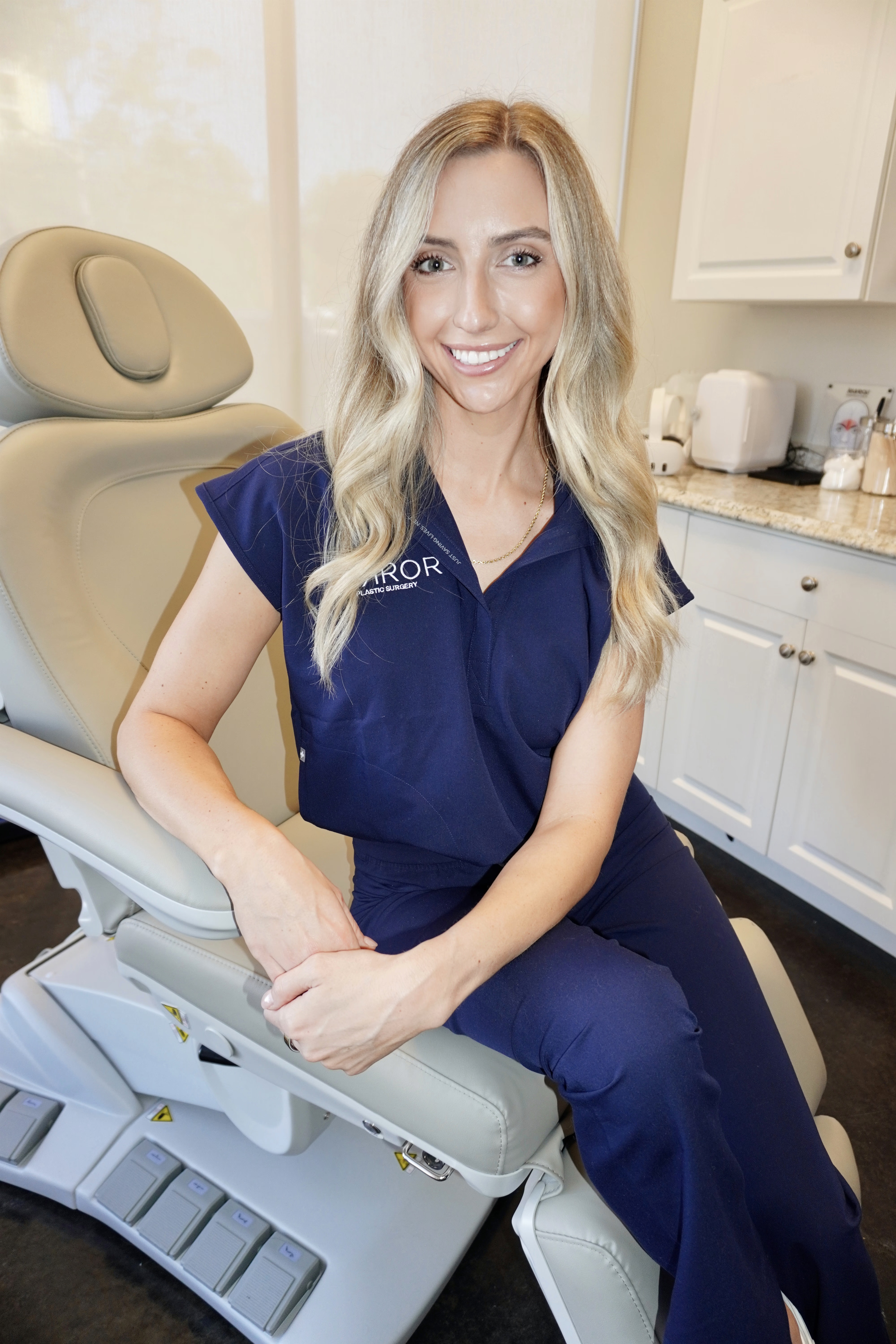
Visit Mirror Plastic Surgery at 780 4th Ave S, St. Petersburg, FL 33701, to experience the anatomy-first standard for natural-looking lip filler in the Tampa Bay area.
Disclaimer: Results may vary from person to person. Editorial content, before and after images, and patient testimonials do not constitute a guarantee of specific results.
Frequently Asked Questions
Am I a good candidate for natural-looking lip filler?
Most healthy adults seeking subtle lip enhancement, improved definition, or restoration of age-related volume loss qualify as candidates for lip filler. Candidacy is confirmed during a comprehensive consultation that reviews your medical history, current medications, prior filler treatments, and lip anatomy. Certain conditions, including active oral infections, a history of oral herpes without antiviral prophylaxis, use of blood-thinning medications, pregnancy, or autoimmune disorders, require additional discussion and may modify the treatment plan. The consultation at Mirror Plastic Surgery is designed to surface these factors and address them honestly before any treatment is recommended.
How much filler is needed for natural-looking results?
For most first-time patients, 0.5 mL provides an appropriate conservative starting volume.1 This amount creates subtle contour definition, improved hydration, and a slight volume increase without an obviously filled appearance. Patients with more existing lip volume or specific correction goals may be candidates for 1.0 mL. The right volume is always determined by individual anatomy, including baseline lip size, tissue type, upper-to-lower lip ratio, and stated goals, rather than a fixed formula. At Mirror Plastic Surgery, Ellie evaluates these factors during the consultation and recommends a starting volume with a clear rationale, avoiding automatic use of maximum product.
What is the recovery timeline after lip filler?
Swelling and bruising commonly occur after lip filler and typically resolve within one to two weeks.1 Minor asymmetry and small palpable lumps during this period are normal as the filler settles. True final results, including accurate shape, symmetry, and hydration levels, are usually visible at approximately two weeks post-treatment.1 During this period, patients should avoid alcohol, high-intensity exercise, prolonged sun exposure, saunas, and steam rooms to support healing and filler longevity.
How long do natural-looking lip filler results last, and when should I schedule maintenance?
Lip filler typically lasts 6 to 12 months, with longevity influenced by the specific product used, individual metabolism, lifestyle factors such as exercise intensity and sun exposure, and the constant movement of the lips during talking and eating.1 Maintenance should begin with a fresh assessment at each visit rather than automatic addition of a full syringe at fixed intervals. Repeatedly layering filler without reassessment can lead to cumulative overfilling over time, even when each individual appointment seems conservative. At Mirror Plastic Surgery, Ellie evaluates how much product remains and whether additional treatment is genuinely appropriate before recommending any top-up.
What makes Mirror Plastic Surgery different from other lip filler providers in St. Petersburg?
Mirror Plastic Surgery operates on a concierge medicine model that dedicates up to a full hour to each consultation, which contrasts with the rushed appointments common at many high-volume practices. Ellie Pranckevicius holds dual credentials as a licensed esthetician and board-certified Family Nurse Practitioner, with four years of Neuroscience ICU experience that informs her clinical judgment and safety awareness. The practice is supplier-neutral, meaning product selection is based entirely on patient anatomy and goals rather than brand relationships or sales incentives. Every treatment plan prioritizes safety first, function second, and aesthetics third, and Ellie is known for advising patients when a procedure is not yet necessary, building long-term trust rather than short-term revenue.
1 Results may vary from person to person. Editorial content, before and after images, and patient testimonials do not constitute a guarantee of specific results.