
Written by: Ellie Pranckevicius, FNP-BC, Aesthetic Nurse Practitioner & Aesthetic Injector | Facial Restoration & Regenerative Injectable Specialist, Mirror Plastic Surgery | Last updated: August 17, 2026
Key Takeaways for Cellulite Treatment Choices
- Avéli is an FDA-cleared, single-session subcision procedure that releases fibrous septae causing cellulite dimples on the buttocks and thighs. Clinical data shows high patient satisfaction at 12 months.1
- Radiofrequency devices improve skin texture and laxity by stimulating collagen. They do not cut tethering bands, so they suit diffuse, mild-to-moderate cellulite more than fixed dimples.
- Most Avéli patients return to daily activities within 24–48 hours. Bruising can last 2–4 weeks. Radiofrequency has no downtime but requires a series of sessions and periodic maintenance.
- Patients with moderate-to-severe, clearly defined dimples usually benefit most from Avéli. Patients with mainly skin laxity or mild texture changes often respond better to radiofrequency or a combined plan.
- Mirror Plastic Surgery uses a detailed anatomical assessment to match each patient with the right cellulite treatment. Schedule your personalized evaluation today.
1. Matching Cellulite Treatment to the Cause of Your Dimples
The most successful cellulite treatment depends on what is driving your dimples. The three primary structural contributors to cellulite are fibrous septae that create fixed dimples, dermal laxity that produces crepey or loose texture, and localized fat that adds bulk and shadows. One mechanism usually dominates. That dominant factor should guide treatment selection, not device marketing.
The CONFFIRM study documented improvement on the Global Aesthetic Improvement Scale and high patient satisfaction one year after Avéli. A 2026 prospective trial by Barry E. DiBernardo, MD, FACS, evaluated Avéli TVS combined with helium plasma radiofrequency in 22 patients. Up to 81.8% of patients showed measurable improvement in cellulite appearance by Day 180, with histological evidence of increased collagen and elastin and ongoing tissue remodeling.1
Some patients have cellulite that stems more from skin laxity than from tethering bands. Radiofrequency devices are appropriate when skin appears soft, thin, or crepey because they stimulate collagen remodeling and new collagen formation. A series of radiofrequency sessions can meaningfully improve texture, although these devices do not release tethering bands.
Mirror Plastic Surgery uses a structured, top-to-bottom anatomical evaluation before recommending any cellulite procedure. Ellie Pranckevicius, FNP-BC, or Dr. Akash Chandawarkar, MD, identifies whether fibrous bands, skin laxity, fat distribution, or a combination is most responsible for your dimples. That mechanism-first approach keeps the focus on durable results instead of device-first packages.
2. Medical Procedures That Address Cellulite Structure
Effective cellulite treatment starts with determining whether you have discrete structural dimples from septal bands or diffuse textural cellulite. Subcision and acoustic release target bands. Radiofrequency targets skin texture. Two main procedure categories address these mechanisms.
Targeted subcision (Avéli): Avéli is a minimally invasive, FDA-cleared procedure that releases fibrous septae to treat cellulite dimples on the buttocks and thighs. The device uses an integrated light source to guide depth and location so the provider can identify and mechanically release septal bands in real time during a single session. Once a band is cut, that specific dimple often shows long-lasting improvement, although new cellulite can appear over time as aging changes continue.
Radiofrequency (Emtone, Venus Legacy): Emtone is an FDA-cleared, non-invasive radiofrequency device that combines thermal energy with targeted pressure to reduce cellulite and tighten skin by stimulating collagen production. Radiofrequency platforms heat the dermis, thicken the skin, and temporarily improve the appearance of cellulite but do not cut septae. Results usually last several months and require maintenance sessions to sustain.
Mirror Plastic Surgery remains supplier-neutral. Ellie and Dr. Akash recommend the procedure that fits your anatomy and goals, not the device tied to a sales quota. That philosophy protects your investment in results that feel meaningful and appropriate for your body.
Book a consultation with Ellie to find out which procedure matches your dimple type.
3. Comparing Recovery Time and Downtime
Recovery expectations often determine which cellulite treatment fits your lifestyle. The table below compares each option across dimple severity, downtime, and how long results typically last.
| Treatment | Ideal Dimple Severity | Downtime | Expected Longevity |
|---|---|---|---|
| Avéli (TVS subcision) | Moderate to severe discrete, fixed dimples caused by fibrous band tethering | Most patients return to normal daily activities within 24–48 hours. Bruising can last 2–4 weeks, and swelling often improves with massage starting one week after the procedure. | Clinical studies show sustained improvement at 12 months1 |
| Radiofrequency (e.g., Emtone) | Diffuse mild-to-moderate cellulite texture with a skin laxity component | Zero downtime with immediate return to light daily activities | Results usually last several months, and maintenance sessions are often recommended |
| Avéli + Radiofrequency (combined) | Discrete dimples with a meaningful skin laxity component | Many patients resume normal activities within a few days. Full settling continues over several weeks. | In a 2026 Apyx Medical study of combined Avéli and Renuvion treatment, up to 81.8% of patients showed cellulite improvement at 180 days.1 |
Key post-Avéli recovery guidance includes:
- Wear loose-fitting clothing for 14 days
- Use compressive leggings or shorts for 1–2 weeks to help control swelling
- Resume light physical activity after about 2 weeks and delay strenuous lower-body exercise during early healing
- Expect final results within 1–3 months once residual swelling resolves
Radiofrequency aftercare is simpler and focuses on short-term precautions:
- Avoid intense exercise, saunas, and heat exposure for 24–48 hours
- Drink 2–3 liters of water daily for the first 48 hours to support lymphatic drainage
- Look for visible improvements starting around weeks 2–3, with peak results between weeks 8 and 12
4. Choosing Avéli or Radiofrequency Based on Severity
The Cellulite Severity Scale (CSS) scores number of depressions, depth, skin surface changes, skin laxity, and the Nürnberger–Müller component. Scores map to mild (1–5), moderate (6–10), and severe (11–15) cellulite. These grades should guide treatment decisions instead of a device-first approach.
- Mild cellulite (CSS 1–5): Diffuse texture that appears mainly when the skin is pinched. Radiofrequency and tightening devices work well for soft, thin, or crepey skin and usually form the first line of treatment.
- Moderate cellulite (CSS 6–10): Discrete dimples visible at rest with some laxity. Avéli suits patients with persistent, discrete dimples that did not improve with topical products or surface-level devices. A combined plan can address both bands and laxity.
- Severe cellulite (CSS 11–15): Deep, fixed dimples present at rest. Subcision techniques, including the FDA-approved Avéli device for targeted septal release, are reserved for severe cellulite with depressions visible at rest.
Red flags for cellulite providers include offering only non-invasive treatments for moderate or severe cellulite without discussing structural options, or pushing expensive plans without grading cellulite first. Mirror Plastic Surgery’s assessment process addresses both concerns by starting with anatomy and severity.
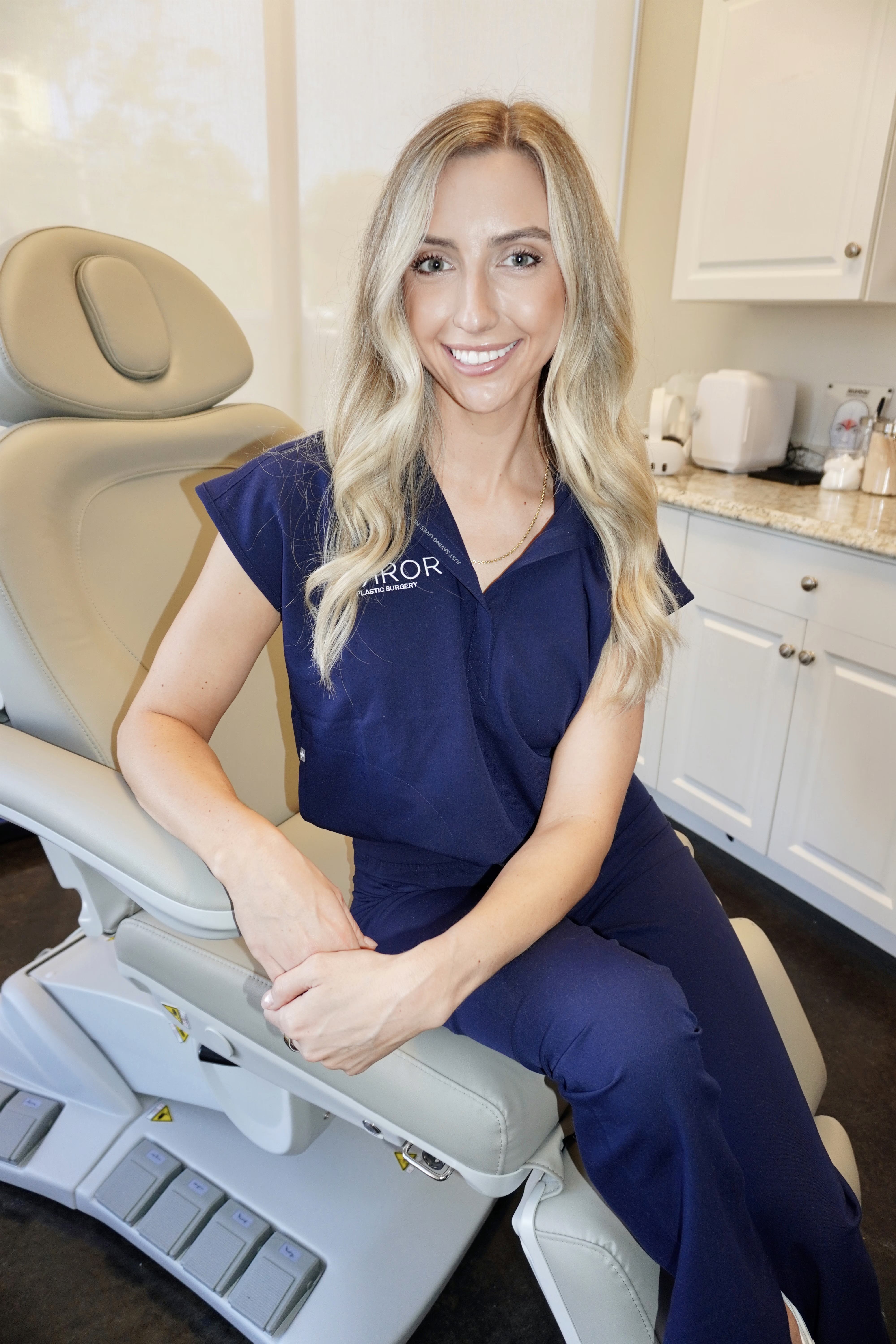
Ellie Pranckevicius, FNP-BC, brings a dual background in esthetics and advanced nursing, including four years in the Neuroscience ICU at Tampa General Hospital. This clinical foundation is complemented by Dr. Akash Chandawarkar’s surgical expertise as a Harvard-educated, Johns Hopkins-trained plastic surgeon with fellowship training at Manhattan Eye Ear & Throat Hospital and medical innovation training at Stanford. Together, they follow a supplier-neutral philosophy that prioritizes the right modality for each patient’s anatomy over device sales.
5. How Mirror Plastic Surgery Delivers Cellulite Care in 2026
Current 2026 trends favor combination protocols that pair structural band release with radiofrequency tightening and use emerging AI-based cellulite mapping for precise planning. Mirror Plastic Surgery follows this evidence-based direction while avoiding a high-volume clinic model that limits individualized care.
The practice intentionally limits the schedule to one or two procedures per day. This structure keeps the team’s full attention on a single patient before, during, and after treatment. For Avéli, where the 2026 DiBernardo protocol mapped dimples in advance and limited mechanical release to four targeted dimples per thigh, that level of precision requires time and focus that busy medspas rarely provide.
The concierge model also supports long-term relationships. Ellie compares aesthetics to dentistry, where professional treatments matter but lasting outcomes depend on education and consistent maintenance. No treatment permanently cures cellulite. Energy-based options improve appearance for a limited period, while procedures that cut fibrous bands offer longer durability. Mirror Plastic Surgery includes clear guidance on maintenance expectations in every cellulite consultation.
Candidacy for Avéli at Mirror Plastic Surgery is confirmed through direct examination. Ideal candidates are in good health, near their goal weight, have good skin elasticity, and feel bothered by cellulite dimples on the buttocks and thighs. Patients who would benefit more from radiofrequency or a combined plan receive that recommendation, even when it means a less intensive or less expensive option.
Frequently Asked Questions
How long do Avéli results last, and will I need repeat treatments?
Avéli cuts the fibrous septae that create each treated dimple, which can lead to long-lasting improvement in those specific areas. The CONFFIRM pivotal study reported high patient satisfaction at 12 months after a single session.1 New cellulite can appear over time as aging and tissue changes continue, but properly treated dimples are generally considered durably addressed.1 Radiofrequency treatments work differently and require periodic maintenance because they improve skin texture through collagen stimulation rather than structural band release.
Am I a candidate for Avéli if I have both dimples and loose skin?
Some patients with both fixed dimples and loose skin qualify for Avéli as part of a combined plan. Avéli treats discrete tethering dimples caused by fibrous septae and does not correct skin laxity or remove fat. When a patient has both structural dimples and a meaningful laxity component, pairing Avéli subcision with radiofrequency tightening can address both mechanisms in a coordinated way. The 2026 DiBernardo study showed that combining Avéli TVS with helium plasma radiofrequency improved cellulite appearance with histological evidence of increased collagen and elastin and progressive tissue remodeling through 180 days. At Mirror Plastic Surgery, Ellie and Dr. Akash evaluate both dimples and laxity during consultation and recommend only components that your anatomy justifies.
How many sessions of radiofrequency will I need, and how does that compare to Avéli?
Radiofrequency cellulite protocols usually involve four to eight initial sessions spaced about one week apart, followed by maintenance sessions to preserve results. Peak improvement often appears 8–12 weeks after the final session. Avéli is a single-session procedure. For a busy Tampa Bay professional, radiofrequency means a multi-week time commitment and ongoing maintenance, while Avéli involves one procedure with a 24–48 hour return to normal activities and documented results at 12 months. The better choice depends on whether your main concern is diffuse texture, which favors radiofrequency, or discrete structural dimples, which favors Avéli.
What should I expect during the Mirror Plastic Surgery cellulite consultation?
The initial cellulite consultation at Mirror Plastic Surgery can last up to 60 minutes. Ellie or Dr. Akash performs a structured assessment that includes visual grading of dimple severity in standing and relaxed positions, use of a validated cellulite severity scale, and hands-on examination to determine whether dimples arise from fibrous bands, skin laxity, fat distribution, or a combination. The visit also reviews your health history, candidacy, realistic outcomes, and recovery logistics. You leave with a clear, personalized treatment plan and an honest answer if a procedure does not fit your anatomy or goals. There is no upselling and no one-size-fits-all package.
Can Avéli be combined with other body contouring procedures?
Avéli can be combined with other procedures when that combination makes anatomical sense. Published data includes real-world cases pairing Avéli with high-definition liposuction and Brazilian Butt Lift surgery with strong outcomes. The 2026 DiBernardo study confirmed the safety and effectiveness of combining Avéli with helium plasma radiofrequency in a single session. At Mirror Plastic Surgery, combination planning remains anatomy-driven. If Ellie’s non-surgical treatments, such as biostimulatory filler for gluteal contour, would enhance an Avéli result, that option is discussed during consultation. Dr. Akash’s surgical expertise supports plans that extend into surgical body contouring.
Conclusion
Cellulite reflects structural changes beneath the skin. A 2026 analysis of 62 cellulite trials found that 36 focused on devices, highlighting strong research interest in procedural and anatomy-driven approaches such as subcision and acoustic pulses. The evidence supports matching each modality to the underlying mechanism, which requires a careful assessment rather than a pre-set package.
Mirror Plastic Surgery offers Tampa Bay professionals a different model from high-volume medspas. Patients receive a detailed anatomical evaluation, supplier-neutral treatment selection, and guidance from a clinical team with training that spans Harvard, Johns Hopkins, Stanford, and the Neuroscience ICU. Whether your plan involves single-session Avéli, a series of radiofrequency treatments, or a thoughtful combination, the recommendation comes from your anatomy and goals, not from a menu.
Disclaimer: Results may vary from person to person. Editorial content, before and after images, and patient testimonials do not constitute a guarantee of specific results.
1 Results may vary from person to person. Editorial content, before and after images, and patient testimonials do not constitute a guarantee of specific results.