
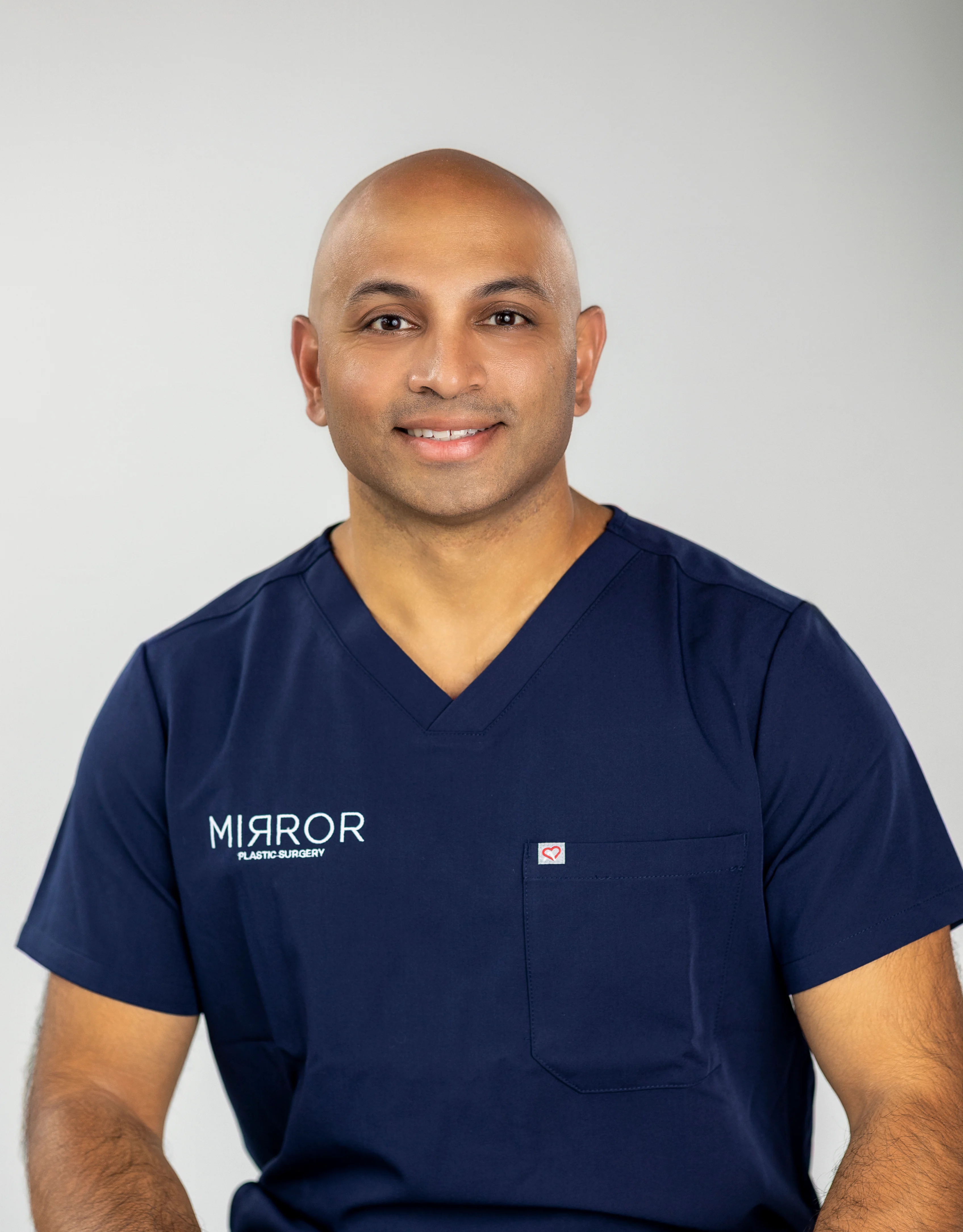
Written by: Dr. Akash Chandawarkar, Board Certified Plastic Surgeon, Mirror Plastic Surgery
Key Takeaways
- The best lip filler in Tampa FL depends on the injector’s credentials, not the clinic’s décor or price.
- Board certification in plastic surgery, deep facial anatomy training, and on-site complication protocols set the baseline for safety.
- Whole-face assessment and honest communication help prevent overfilled or unnatural results that can age the face.
- Physician injectors with surgical training usually offer stronger risk management than med-spa technicians or weekend-certified providers.
- Schedule your personalized lip-filler consultation with Dr. Akash Chandawarkar at Mirror Plastic Surgery to receive expert, anatomy-driven care.
How To Choose The Best Lip Filler Injector In Tampa
The best lip filler injector in Tampa meets three non-negotiables. First, board certification in a specialty with rigorous facial anatomy training. Second, demonstrated expertise in the subdermal structures of the lip and perioral region. Third, a consultation process that evaluates the whole face, not just the lips in isolation. Every other criterion you might consider flows from these three.
Use the following criteria to evaluate any injector you are considering:
- Board certification and injector credentials. Confirm the injector holds active board certification from a recognized body such as the American Board of Plastic Surgery, and verify the certifying board is recognized by the American Board of Medical Specialties.
- Depth of facial and subdermal anatomy training. A deep understanding of the vascular anatomy around the lips is what separates a safe injection from a dangerous one, so ask specifically about anatomy training, not just injection technique.
- Complication management and medical oversight. Vascular occlusion occurs when filler enters or compresses a blood vessel and can cause ischemia, skin necrosis, scarring, visual loss, or stroke. Your injector must stock hyaluronidase on site and have a documented emergency protocol.
- Consultation depth and whole-face assessment. A qualified injector evaluates lip-to-face ratio, philtrum height, vermillion border definition, and natural lip shape before picking up a syringe. An injector who asks only “how much fuller do you want them?” is skipping the analysis that separates a natural result from an obviously done one.
- Product selection and supplier neutrality. The right product for your anatomy may differ from the product a clinic has a financial incentive to sell. A supplier-neutral practice selects from the full range of FDA-approved options based on your tissue, goals, and anatomy.
- Honest communication about what you do and do not need. The most trustworthy injectors sometimes advise that an expensive service is not yet necessary. That level of transparency signals clinical judgment rather than sales focus.
What Makes A Lip Filler Injector Qualified
Board certification functions as a documented record of training, examination, and peer review in a defined specialty. For lip filler specifically, the key question is what that certification required the injector to learn about facial anatomy, vascular structures, and complication management.
All physicians (MD/DO), regardless of specialty, can perform filler injections within their scope of practice in every U.S. state. Nurse practitioners’ authority varies by state. Physician assistants require physician supervision or collaboration. Registered nurses face the most variation by jurisdiction. A filler training certificate, by itself, certifies education, not a license to practice. The legal authority to inject and the clinical depth to do so safely remain two different things.
Complication readiness separates a physician injector from a technician with a weekend certificate. Vascular occlusion is the most serious filler complication, with potential for tissue necrosis, scarring, or blindness if retinal arteries are affected, and no injection site is completely risk-free. Managing that complication requires immediate recognition, hyaluronidase on hand, and the clinical judgment to escalate. Those skills are built through years of surgical and anatomical training, not a two-day course.
At Mirror Plastic Surgery, every neuromodulator and dermal filler is placed by Dr. Akash Chandawarkar himself. His credentials appear in the “About The Injector” section below, and they reflect extensive surgical training, aesthetic fellowship experience, and active advisory roles in the aesthetics industry.
That background means Dr. Akash brings a surgeon’s command of facial and subdermal anatomy to every injectable treatment. That expertise makes lip filler both safer and more precise.
Why Lip Filler Sometimes Ages You And How To Avoid That Outcome
Lip filler does not age a face on its own. Poorly planned, poorly executed, or repeatedly overcorrected lip filler can create an aged or artificial look. Understanding the anatomical mechanisms behind an unnatural result helps you avoid that outcome.
Duck lips typically result from three factors: too much upper-lip volume compared with the lower lip, loss of the vermillion border from superficial or heavy filler placement, and excessive forward projection from overfilling the body of the lip. Each factor reflects technique and judgment, not an unavoidable consequence of filler.
“Natural” has a specific anatomical meaning. A natural lip result preserves lip proportions such as a 1:1.5 upper-to-lower ratio, maintains border definition, and subtly enhances the Cupid’s bow and philtrum columns rather than simply adding volume. The Cupid’s bow, the double-peaked upper border, defines natural lips. Its loss often makes overfilled lips look fake. Upper lip length increases with age, and filler that adds too much length to the upper lip accelerates an aging appearance.
A skilled injector restores and balances instead of simply adding volume. At Mirror Plastic Surgery, Dr. Akash focuses first on revitalizing inherent facial characteristics. Volume augmentation enters the plan only after foundational restoration. A whole-face assessment prevents isolated-injection asymmetry that causes an overdone look, because the lips relate closely to the philtrum, perioral region, midface, and jawline.
Plastic Surgeon Or Med Spa For Lip Filler
The meaningful comparison focuses on the person holding the syringe, not the building where they practice. Training, anatomy knowledge, and complication readiness determine safety and quality.
A board-certified plastic surgeon who personally performs injections brings surgical-level anatomical knowledge to a non-surgical procedure. That includes understanding where to place filler and what lies beneath, such as the superior and inferior labial arteries, submucosal planes, and vascular connections that create risk. Non-physician injectable practitioners often lack the training to recognize early warning signs, manage bleeding, or respond appropriately when something goes wrong, and may not carry malpractice insurance or have protocols for follow-up care.
A med spa injector may be highly skilled or may hold only a weekend certification. The credential structure of the person injecting you is what matters, and that information is verifiable. Ask for it directly.
Mirror Plastic Surgery’s concierge model offers extended, in-depth care. Consultations extend up to an hour, only one to two procedures are performed per day, and Dr. Akash personally performs every injectable treatment. The practice remains supplier-neutral, so product selection is driven by your anatomy and goals, not by a limited portfolio or commission structure. That model contrasts with high-volume practices where speed and throughput take precedence over individualized assessment. If that level of individualized care matters to you, consider meeting with Dr. Akash to experience it firsthand.
What Factors Affect The Cost Of Lip Filler In Tampa
Cost matters, and it connects directly to injector selection as well as budget. Every patient at Mirror Plastic Surgery receives a personalized quote during consultation based on unique anatomy, goals, and the specific treatment plan Dr. Akash recommends. A single published price list cannot apply universally because no two faces are the same.
Cost in any practice reflects product type, number of syringes, injector credentials, consultation depth, and the overhead of maintaining a medically rigorous environment. Master injectors and board-certified plastic surgeons charge at the higher end of the market, while anything advertised at the very low end of the price spectrum deserves scrutiny, because genuine product and an experienced injector both cost the clinic money.
Budget-conscious patients often ask about a “half syringe.” For first-time patients, 0.5 mL is appropriate for an initial lip filler treatment, adding subtle enhancement and allowing assessment of response before committing to more volume. Whether half a syringe suits your anatomy is a clinical determination, not a preset package. A physician assessment determines the right amount, and a conservative first session often represents the most anatomically sound approach. How long those results last depends on several factors beyond the initial treatment.
How Long Lip Filler Typically Lasts
Longevity depends on four interacting factors: product choice, individual metabolism, injection technique, and maintenance philosophy. No honest injector guarantees a specific duration because variation between patients is real and significant.
Hyaluronic acid fillers, including products such as Juvederm, RHA, Versa, and Restylane, suit lips because they are reversible with hyaluronidase. FDA-approved lip HA fillers have typical longevity of approximately 6–12 months for products like Restylane-L and Restylane Silk.1 Juvederm Ultra XC, Juvederm Volbella XC, and Restylane Kysse are labeled at approximately 12 months.1 RHA 3, which received its lip indication in 2023, is labeled at approximately 15 months for facial folds.1 Individual variation remains significant. Some patients metabolize filler in four to six months, while others retain results considerably longer.1
Biostimulatory fillers such as Radiesse work by inducing de novo synthesis of collagen, elastin, and other extracellular matrix components via a cell-biomaterial interaction, in addition to providing immediate volumization from their carrier gel. These products are not appropriate for lip body augmentation, but they play a role in the broader facial restoration framework that Dr. Akash applies.
Dr. Akash’s approach to longevity mirrors his dentistry analogy. Professional treatment delivers results, and lasting outcomes require understanding and consistent maintenance. A single session does not create a permanent solution. It begins a maintenance relationship with a provider who knows your anatomy.
The Best Age To Consider Lip Filler
No universally correct age exists for lip filler. Candidacy depends on anatomy, skin quality, and goals rather than a specific number. The “is 55 too old” question and the “best age” question share the same answer. The right time arrives when your anatomy and goals align with what filler can realistically achieve.
Younger patients typically present with adequate lip volume and skin elasticity. Their goals often focus on balance, border definition, and proportion rather than volume restoration. A single 0.5 mL treatment from a skilled injector focused on border definition and subtle body volume does not produce duck lips.1 Overcorrection over multiple sessions creates that look. For younger patients, restraint and proportion guide treatment.
Older patients may present with volume loss, thinning of the vermillion border, increased upper lip length, and changes in skin quality that affect how filler integrates. For these patients, foundational restoration, addressing the structural changes that have occurred, often takes precedence over volume augmentation. As noted earlier, Mirror Plastic Surgery prioritizes revitalizing inherent facial characteristics first and considers volume only after foundational restoration is complete. That sequence prevents isolated-injection asymmetry that makes filler look out of place on an aging face. Whatever your age, the questions you ask during a consultation reveal whether a provider follows that kind of thoughtful approach.
What To Ask In A Lip Filler Consultation
Bring this checklist to any provider you are evaluating. The quality of their answers will tell you more than any before-and-after gallery.
- Are you board certified, and in what specialty?
- Who personally performs the injection, you or someone else in the practice?
- How do you assess my whole face, not just my lips?
- Which products do you use, and why did you select them for my anatomy?
- What is your plan if a complication occurs, and do you stock hyaluronidase on site?
- How do you define a natural result for my specific anatomy?
A thorough consultation at Mirror Plastic Surgery extends up to 60 minutes. It begins with an open-ended exploration of the emotional drivers behind the request, such as why now, what outcome matters, and what “natural” means to you. The visit then moves into a structured, top-to-bottom diagnostic assessment of the face. Dr. Akash evaluates lip-to-face ratio, philtrum height, vermillion border integrity, skin quality, and the relationship between the lips and the surrounding facial regions before any treatment discussion begins. That process separates a personalized treatment plan from a preset package.
About The Injector: Dr. Akash Chandawarkar
Dr. Akash Chandawarkar, MD, is the founder of Mirror Plastic Surgery and personally performs all injectable treatments at the practice. His credentials:
- Harvard-educated physician
- Johns Hopkins-trained plastic surgeon
- Fellowship-trained in aesthetic surgery at Manhattan Eye, Ear & Throat Hospital (MEETH) / Lenox Hill Hospital
- Medical innovation training at Stanford University
- Board certified by the American Board of Plastic Surgery
- Advisory board member, Merz Aesthetics (biostimulatory fillers including Radiesse)
- Advisory board member, Tiger Aesthetics (AlloClae adipose fillers and Avéli for cellulite)
Dr. Akash personally performs every neuromodulator and dermal filler treatment at Mirror Plastic Surgery, without delegation to a technician or mid-level provider.
Mirror Plastic Surgery
780 4th Ave S, St. Petersburg, FL 33701
Phone: 727-361-6515
Email: hello@mirrorplasticsurgery.com
Serving Tampa Bay, including South Tampa, Hyde Park, and Westshore.
Frequently Asked Questions
Is Lip Filler Safe?
Lip filler administered by a qualified, board-certified physician injector with proper anatomical training and emergency protocols on hand is a well-established aesthetic procedure. Serious complications are rare. The safety profile improves significantly when the injector has deep knowledge of perioral vascular anatomy, stocks hyaluronidase on site, and follows a documented complication management protocol. Risk never reaches zero, yet it drops substantially when the person holding the syringe has surgical-level training and genuine complication readiness.
What Are The Risks And Side Effects?
Common, expected side effects include swelling, bruising, and tenderness at the injection site, typically resolving within a few days to two weeks. Swelling peaks in the first 24 to 72 hours and the final result is not fully visible until approximately two weeks post-treatment.1 Rare but serious complications include vascular occlusion, when filler enters or compresses a blood vessel, which requires immediate hyaluronidase administration and emergency management. Delayed inflammatory reactions, nodules, and granulomas can occur weeks to months after injection. Choosing an injector with hyaluronidase on site and a clear emergency protocol is the most important risk-reduction step a patient can take.
Will Lip Filler Make Me Look Fake?
Unnatural results come from poor technique, overcorrection, and failure to assess the whole face. A skilled injector preserves the vermillion border, maintains appropriate upper-to-lower lip proportions, respects the philtrum, and adds volume in proportion to the surrounding facial structures. The goal is enhancement of what already exists, not replacement of it. At Mirror Plastic Surgery, Dr. Akash’s approach prioritizes foundational restoration and balance before any volume augmentation. That sequence helps prevent the overdone appearance patients fear most.
How Do I Know If I Am A Candidate?
Candidacy depends on anatomy, skin quality, medical history, and goals, rather than age alone. True contraindications to lip filler include active infection near the injection site, known allergy to hyaluronic acid or lidocaine, and a history of skin necrosis from previous filler injections. A thorough consultation also reviews cold-sore history, autoimmune conditions, current medications, previous filler treatments, and recent dental work. The most reliable way to determine candidacy is a comprehensive, in-person assessment with a qualified physician injector.
What Is The Downtime After Lip Filler?
Most patients experience noticeable swelling for the first 24 to 72 hours, with bruising possible for up to 7 to 14 days.1 Strenuous exercise, saunas, hot yoga, and significant pressure on the lips should be avoided for the first 24 to 48 hours. Final results settle at approximately two weeks.1 Most patients return to normal daily activities the same day or the day after treatment, with the understanding that the lips will look more swollen than the final result during the first week.
How Often Will I Need Maintenance?
Hyaluronic acid lip fillers typically last 6 to 12 months, with the lips metabolizing filler faster than less mobile facial areas due to constant movement from eating, talking, and smiling. Most patients maintain results with one to two sessions per year.1 The exact interval depends on the product used, individual metabolism, and the volume maintained. Dr. Akash approaches maintenance the way a dentist approaches ongoing care. Professional treatment delivers results, and lasting outcomes require a consistent, personalized maintenance plan.
When Should I See A Physician Rather Than A Med Spa?
Any time you feel uncertain about an injector’s credentials, anatomy training, or complication readiness, a physician injector represents the appropriate choice. Patients with complex anatomy, previous filler complications, significant volume loss requiring a whole-face approach, or a history of vascular or autoimmune conditions benefit most from physician-level oversight. Signals to seek a more qualified provider include a consultation lasting only a few minutes, no facial anatomy assessment, or an injector who cannot clearly explain their complication management protocol.
Your Framework For Evaluating Any Lip Filler Injector
The best lip filler in Tampa FL comes from an injector with verifiable board certification, a surgeon’s command of facial and subdermal anatomy, complication management protocols that are actually in place, and the honesty to tell you what your face needs, even when that answer involves less treatment than you expected. You now have clear criteria to evaluate any injector in Tampa Bay against that standard. Use them with confidence.
Book Your Lip Filler Consultation At Mirror Plastic Surgery
Dr. Akash Chandawarkar is currently welcoming new patients seeking lip filler and full-face restorative treatments at Mirror Plastic Surgery in St. Petersburg, FL, serving Tampa Bay, South Tampa, Hyde Park, and Westshore. Consultations extend up to an hour and are conducted personally by Dr. Akash, a Harvard-educated, Johns Hopkins-trained, board-certified plastic surgeon.
Disclaimer: Results may vary from person to person. Editorial content, before and after images, and patient testimonials do not constitute a guarantee of specific results.
1 Results may vary from person to person. Editorial content, before and after images, and patient testimonials do not constitute a guarantee of specific results.