
Written by: Ellie Pranckevicius, FNP-BC, Aesthetic Nurse Practitioner & Aesthetic Injector | Facial Restoration & Regenerative Injectable Specialist, Mirror Plastic Surgery
Key Takeaways: Mirror Plastic Surgery’s Concierge Approach
- Concierge-style aesthetic care at Mirror Plastic Surgery centers on 60-minute consultations with the treating provider, not quick, volume-driven visits.
- Ellie Pranckevicius, FNP-BC, combines esthetics licensure, advanced nursing training, and four years of Neuroscience ICU experience in every treatment plan.
- Mirror Plastic Surgery performs only one to two surgeries per day so the entire clinical team can focus on a single patient at a time.
- The practice remains supplier-neutral and selects products based on your anatomy and goals rather than brand contracts or volume deals.
- Patients seeking personalized aesthetic care in Tampa can schedule a consultation at Mirror Plastic Surgery to experience this concierge model in person.
How Mirror Plastic Surgery Delivers Concierge-Style Care
Concierge-style aesthetic care rests on three structural commitments: longer consultations, a clinician who may recommend less treatment when appropriate, and an ongoing relationship instead of a one-time procedure. This stands in direct contrast to standard med-spa appointments, which are built around throughput, with short consultations and financial models dependent on units of product injected per hour, creating an incentive to recommend treatment.
At Mirror Plastic Surgery in St. Petersburg, this concierge model becomes real through a 60-minute top-to-bottom assessment conducted by the treating provider. The session explores emotional drivers behind your request, full medical and treatment history, facial animation under multiple lighting conditions, and anatomical suitability before any treatment plan is proposed.
Mirror Plastic Surgery limits itself to performing only one to two surgeries per day, which keeps the entire clinical team focused on a single patient instead of a high-volume schedule. This structure separates a true concierge model from clinics that advertise personalization while operating like a production line.
Experience a 60-minute, top-to-bottom aesthetic assessment firsthand with Ellie at Mirror Plastic Surgery.
How Concierge Treatment Planning Works at Mirror Plastic Surgery
Once you understand what defines concierge care structurally, the next step is seeing how that philosophy shapes real treatment decisions. Treatment planning in a concierge model follows a structured diagnostic sequence instead of a preset service menu. A strong aesthetic consultation is a multi-step clinical process that includes goal discussion, medical history review, clinical examination of skin and facial anatomy, treatment explanation with risks and benefits, clinical photography, ongoing informed consent, and a cooling-off period before any procedure begins.
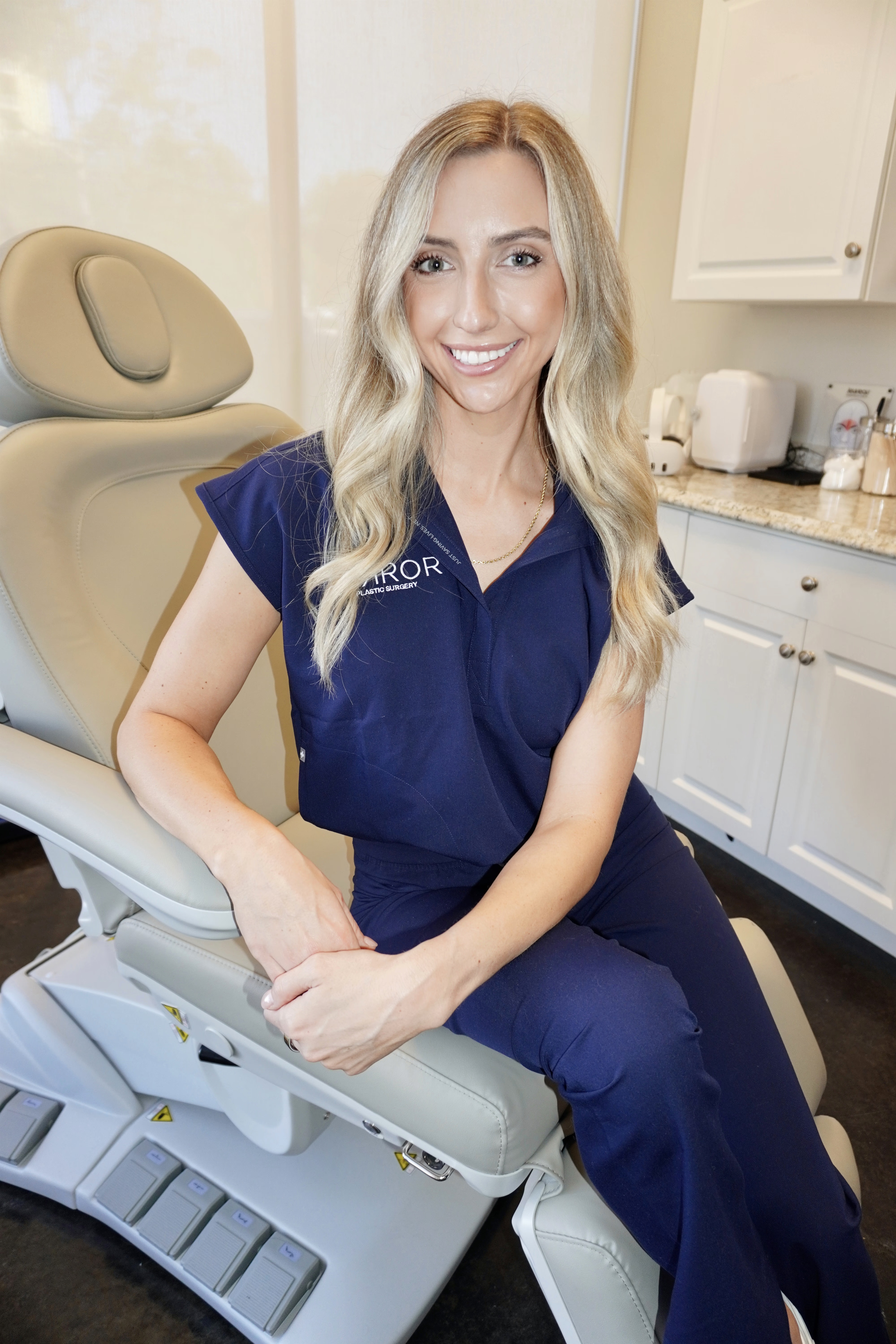
At Mirror Plastic Surgery, Ellie Pranckevicius, FNP-BC, uses a full-face approach to facial rejuvenation. Her framework prioritizes foundational restoration before volume augmentation. She addresses structural balance across the upper, middle, and lower face first, then considers any focused enhancements. This sequence helps prevent asymmetry and an overdone look that often result from single-area injections without a whole-face assessment.
Ellie’s dual background as a licensed esthetician and a Family Nurse Practitioner with four years in the Neuroscience ICU at Tampa General Hospital provides clinical depth that is uncommon in aesthetic settings. A thorough consultation must review the patient’s full treatment history because prior fillers, neuromodulators, biostimulators, lasers, and surgeries all affect the current treatment plan and outcomes.
The practice also remains supplier-neutral. Product selection reflects individual factors such as age, skin quality, tissue laxity, and desired outcome, not brand agreements or volume commitments.
Tradeoffs and Criticisms of Concierge-Style Aesthetic Care
Concierge medicine has attracted legitimate criticism in broader healthcare. Critics argue that retainer fees in concierge medicine can commodify care and raise equity concerns by serving primarily those who can pay for a more relational experience rather than the general population.
In aesthetic medicine, several tradeoffs deserve clear explanation:
- Fewer appointment slots can create longer lead times for new patients.
- A 60-minute consultation requires a time commitment before any treatment begins.
- A provider who recommends less treatment, or no treatment, may feel unfamiliar to patients used to transactional med-spa visits.
These constraints are real. They also reflect a model that values long-term outcomes more than short-term throughput. Relying exclusively on one-and-done procedures in high-volume aesthetic models creates a feast-or-famine revenue cycle that necessitates constant, expensive new patient acquisition, which then shapes clinical recommendations in ways patients rarely see.
Concierge Care Compared to High-Volume Med Spas
The commercial model of many high-volume aesthetic clinics often rewards speed and uniformity instead of individualized analysis of facial anatomy shaped by bone structure, muscle balance, aging patterns, and ethnic identity. The United States now has more than 10,400 medical spas, up from roughly 1,600 in 2010, with projections exceeding 13,000 locations by 2026, nearly matching McDonald’s 13,800 U.S. restaurants.
The most serious complications from med-spa treatments, such as vascular occlusions and infections from filler injections, frequently migrate back to board-certified plastic surgeons for correction. At Mirror Plastic Surgery, if a non-surgical complication requires surgical expertise, Ellie’s work is directly supported by Dr. Akash Chandawarkar, a Harvard-educated physician, Johns Hopkins-trained plastic surgeon, and fellowship-trained aesthetic surgeon at Manhattan Eye Ear & Throat Hospital.
Nominal supervision, in which the physician’s name appears on a medical director agreement but the physician has not examined the patient or established individualized protocols and may oversee dozens of clinics, is the arrangement most commonly associated with adverse events. Mirror Plastic Surgery operates with direct, integrated oversight rather than a nominal affiliation.
2025–2026 Trends in Regenerative and Personalized Aesthetic Care
Patient demand is shifting toward regenerative, longer-lasting treatments and away from repeated high-volume injectable maintenance. Interest in Sculptra, microneedling, and lip fillers rose in Q1 2026, reflecting a move toward biostimulatory and regenerative injectable options with longer-lasting effects.
Body contouring is also changing. Body contouring is moving beyond simple fat removal toward full-body reshaping, skin quality improvement, and structural refinement, driven by post-GLP-1 weight-loss patients seeking solutions for loose skin and tissue laxity.
Ellie’s non-surgical BBL protocol at Mirror Plastic Surgery uses biostimulatory fillers, including Radiesse and AlloClae, to achieve gluteal reshaping, cellulite smoothing, stretch mark reduction, and symmetry correction.1 This protocol aligns with the regenerative medicine principles driving 2025–2026 patient demand. Energy-based noninvasive treatments are also gaining sharply, including UltraClear Laser (+85%), truSculpt (+84%), and NeoGen Plasma (+81%), as patients seek structural, long-lasting skin-quality improvements.
Hour-Long Aesthetic Consultation in Tampa: Step-by-Step
A 60-minute aesthetic consultation at Mirror Plastic Surgery follows this sequence:
- Emotional and motivational history: Why now, what outcome matters most, and what prior experiences have shaped expectations.
- Medical and treatment history: Comorbidities, medications, allergies, prior injectables, surgeries, and energy-based treatments, all of which influence current planning.
- Top-to-bottom anatomical assessment: Facial animation, skin quality, tissue laxity, bone structure, and volume distribution evaluated under multiple lighting conditions.
- Evidence-based treatment plan: Sequenced recommendations with realistic timelines, alternatives including no treatment, and clear explanation of why each product or modality is selected.
- Informed consent conversation: Benefits, risks, alternatives, and the option of no treatment are discussed comprehensively, documented, and reaffirmed before each session rather than collected once.
A meta-analysis cited in aesthetic consultation literature reports 13% prevalence of body dysmorphic disorder among patients seeking cosmetic procedures, supporting routine BDD screening with validated tools during in-depth consultations. Mirror Plastic Surgery’s extended consultation format creates the clinical space to identify these factors before treatment begins.
Key Safety and Quality Checks Before You Book
Patients evaluating any personalized medical spa in Tampa can use the following checklist before booking:
- Injector credentials: Nurse practitioners require additional specialized coursework beyond their master’s or doctoral training to perform aesthetic injections, as this is not typically part of standard NP education. Ellie holds a Master’s in Nursing from the University of South Florida, a 600-hour esthetics licensure program, and four years of Neuroscience ICU clinical experience.
- Supervision structure: The treating injector should be the same person who conducts the consultation and obtains informed consent. The actual treating practitioner, not a receptionist or junior staff member, must conduct the aesthetic consultation.
- Emergency preparedness: Clinics that stock reversal agents on site can immediately treat vascular occlusion, a rare but potentially devastating complication of filler injections that risks skin necrosis or blindness.
- Product sourcing: Verifiable product sourcing from manufacturers or authorized distributors, with disclosure of brand name and lot number, reduces the documented risk of counterfeit Botox and fillers that have caused multi-state hospitalizations.
Risks, Limitations, and How Mirror Plastic Surgery Manages Them
No aesthetic treatment is risk-free. The central issue is how a clinic structures its practice to reduce and manage those risks.
Specific risks patients should discuss during any consultation include:
- Vascular occlusion from filler placement near arterial structures
- Asymmetry from isolated single-area injections without whole-face assessment
- Product migration from inappropriate anatomical placement
- Overcorrection from volume-driven rather than anatomy-driven dosing
- Complications compounded by undisclosed prior treatments
Mirror Plastic Surgery’s safety-function-aesthetics hierarchy means that when a requested treatment conflicts with a patient’s anatomy or safety profile, the recommendation is to wait or do less, not to proceed.
Common Misconceptions About Concierge Medical Spas in Tampa
Several persistent misconceptions shape how Tampa-area patients view concierge-style providers:
- Misconception: Concierge means membership fees. Mirror Plastic Surgery’s concierge model refers to the depth and structure of care, not a retainer or subscription model.
- Misconception: More products mean better results. A good injector declines treatments that are not anatomically appropriate rather than agreeing to every patient request. Ellie often advises patients that an expensive service is not yet necessary for them, which builds long-term trust.
- Misconception: A longer consultation delays results. High-performing aesthetic practices typically allow 20–60 minutes for an initial consultation depending on treatment complexity, and sessions shorter than 20 minutes may indicate insufficient evaluation or a sales-driven approach.
- Misconception: All nurse practitioners have equivalent aesthetic training. Aesthetic injectable competence is not part of standard NP curricula and must be built through dedicated post-graduate training, supervised clinical hours, and demonstrated anatomical knowledge.
Side-by-Side Comparison of Clinic Models
The table below compares three clinic models across four structural metrics. All figures come from cited sources or Mirror Plastic Surgery’s documented practice standards.
| Model | Consult Time | Provider Credentials | Volume Model | Safety Philosophy |
|---|---|---|---|---|
| High-Volume Clinic | Short, built around throughput with financial models dependent on units of product injected per hour | Ranges from board-certified physicians to providers whose aesthetic preparation consists of a multi-day course or brief supervised observation | 5–10+ procedures per day, which incentivizes speed and uniformity over individualized anatomical analysis | Safety depends heavily on the ethics and competence of individual operators rather than standardized safeguards when physician oversight is nominal |
| Boutique Aesthetic Practice | 20–60 minutes depending on treatment complexity, with shorter sessions possibly indicating insufficient evaluation | Varies and may include board-certified physicians, NPs, or RNs with differing levels of aesthetic-specific training | Moderate volume, with personalization that varies by practice philosophy and staffing model | Varies and may lack integrated surgical backup or a formal safety-function-aesthetics hierarchy |
| Mirror Plastic Surgery (Concierge) | Up to 60 minutes, with the treating injector conducting the consultation personally and assessment preceding any treatment decision | FNP-BC with esthetics licensure and 4 years Neuroscience ICU experience, supported by a fellowship-trained plastic surgeon | 1–2 surgeries daily, with the entire clinical team focused on one patient at a time | Explicit safety-function-aesthetics hierarchy, supplier-neutral product selection, direct surgical backup on site, and recommendations to wait or do less when clinically appropriate |
Conclusion and Next Steps for Tampa Patients
True concierge-style care in a Tampa medical spa depends on consultation length, the credentials and continuity of the treating provider, a low-volume practice structure, supplier-neutral product selection, and a clear commitment to safety before aesthetics.
Mirror Plastic Surgery’s model, which includes 60-minute assessments, Ellie Pranckevicius’s dual esthetician and advanced nursing background, direct integration with Dr. Akash Chandawarkar’s surgical expertise, and a safety-function-aesthetics hierarchy, offers a structurally different approach from the high-volume clinics that dominate the Tampa Bay market.
Tampa-area adults who have experienced rushed consultations, upselling pressure, or results that required correction can benefit from a single, unhurried conversation with a provider who will explain what you need and what you do not.
Book a consultation with Ellie at Mirror Plastic Surgery, located at 780 4th Ave S, St. Petersburg, FL 33701. Call or text 727-361-6515, or email hello@mirrorplasticsurgery.com.
Frequently Asked Questions
What makes Mirror Plastic Surgery different from other medical spas in Tampa?
Mirror Plastic Surgery operates on a concierge medicine model that limits itself to performing only one to two surgeries per day. Every new patient receives a comprehensive assessment with Ellie Pranckevicius, FNP-BC, the same provider who will perform the treatment. The practice is supplier-neutral, so product recommendations reflect individual anatomy and goals rather than brand agreements or volume quotas. When a requested treatment is not appropriate for a patient’s anatomy or safety profile, the recommendation is to wait or do less. This philosophy contrasts directly with high-volume clinics where financial models incentivize product throughput over individualized care.
What credentials does Ellie Pranckevicius hold, and why do they matter for injectable treatments?
Ellie holds a Bachelor’s in Health Science from Boston University, completed a 600-hour esthetics licensure program, and earned both her Bachelor’s and Master’s in Nursing from the University of South Florida. Before joining Mirror Plastic Surgery, she spent four years as a nurse in the Neuroscience ICU at Tampa General Hospital. Her career in aesthetics began in 2019 at a high-end Boston medical spa, where she progressed from esthetician to medical esthetician. This combination of esthetics training and advanced clinical nursing experience gives her a comprehensive understanding of surface and subdermal anatomy that is uncommon in aesthetic settings. Her work is directly supported by Dr. Akash Chandawarkar, a Harvard-educated, Johns Hopkins-trained plastic surgeon with fellowship training at Manhattan Eye Ear & Throat Hospital, which provides integrated surgical oversight that most standalone med spas cannot offer.
What is a non-surgical BBL, and how does Mirror Plastic Surgery approach it?
A non-surgical Brazilian Butt Lift uses injectable biostimulatory fillers to reshape the gluteal region without surgery. At Mirror Plastic Surgery, Ellie uses a combination of biostimulatory fillers, including Radiesse and AlloClae, to achieve volume, smooth cellulite, reduce the appearance of stretch marks, and correct asymmetry including hip dips.1 The approach is tailored to each patient’s goals, whether they are seeking significant volume, subtle enhancement, or structural correction. Regenerative medicine principles guide the protocol, so the fillers are selected for their ability to stimulate the body’s own collagen production over time rather than simply adding temporary bulk.1 Each treatment plan is developed during the initial consultation based on individual anatomy and desired outcome.
How should I evaluate any medical spa before booking an injectable appointment?
Four criteria are most predictive of safe, natural outcomes. First, verify that the treating injector, not a receptionist or junior staff member, conducts the consultation and obtains informed consent personally. Second, confirm the injector’s credentials include both aesthetic-specific training and substantive clinical nursing or medical experience, not only a short certification course. Third, ask whether the clinic is supplier-neutral or has brand volume commitments that could influence product recommendations. Fourth, ask about emergency preparedness, including whether the clinic stocks hyaluronidase on site for immediate management of vascular occlusion, a rare but serious complication of certain filler injections. A clinic that cannot answer these questions clearly is providing diagnostic information about its priorities.
Does Mirror Plastic Surgery offer treatments beyond injectables?
Yes. Mirror Plastic Surgery offers a comprehensive spectrum of surgical and non-surgical treatments for the face, neck, breast, body, and hair. Non-surgical options performed by Ellie include neuromodulators (Botox, Dysport, Xeomin, Daxxify, Jeuveau), dermal fillers for facial and body applications, lip augmentation, Kybella for submental fat reduction, energy-based skin tightening using radiofrequency, ultrasound, and laser, and resurfacing treatments including microneedling. In-office minor procedures performed by both Ellie and Dr. Akash include cellulite treatment with Avéli, AlloClae for buttocks, hip dips, and breasts, and hair restoration with Acorn Biolabs Secretome and Platelet-Rich Plasma. Surgical procedures are performed by Dr. Akash Chandawarkar. All treatment planning follows the same safety-function-aesthetics hierarchy regardless of modality.
Disclaimer: Results may vary from person to person. Editorial content, before and after images, and patient testimonials do not constitute a guarantee of specific results.
1 Results may vary from person to person. Editorial content, before and after images, and patient testimonials do not constitute a guarantee of specific results.