
Written by: Ellie Pranckevicius, FNP-BC, Aesthetic Nurse Practitioner & Aesthetic Injector | Facial Restoration & Regenerative Injectable Specialist, Mirror Plastic Surgery
Key Takeaways for Tampa Patients
- Clinical alternatives to traditional medical spas include boutique aesthetic clinics, longevity centers, and concierge plastic surgery practices, each with distinct credentials, consultation depth, and safety infrastructure.
- High-volume medical spas often lack on-site physician oversight and standardized anatomical training, which increases complication risk and reduces individualized care.
- Board-certified plastic surgeons bring the deepest anatomical expertise and maintain rigorous safety protocols, which makes them the safest choice for non-surgical aesthetic treatments.1
- Patients should evaluate providers based on consultation length, on-site emergency readiness, supplier neutrality, and documented follow-up protocols before booking injectable treatments.
- Schedule your personalized consultation with Ellie at Mirror Plastic Surgery to experience concierge-level care that prioritizes safety, anatomy, and natural results.
Why Many Traditional Medical Spas Put You at Risk
The structural model of high-volume medical spas often pushes safety and individualized care behind speed and sales. Medical directors at many med spas are not present during treatments and in some states can supervise multiple facilities they never visit, which makes the quality of supervision highly variable. Injection skill in these settings is typically gained through continuing education or certification courses rather than standardized residency training. A med spa injector may have completed only a weekend certification course, while board-certified plastic surgeons possess thousands of hours of accredited operating-room training in facial anatomy, nerve pathways, and vascular structures.
The clinical consequences of this gap are measurable. Lower complication rates for non-surgical facial aesthetics cluster in regulated, clinician-led settings with written and rehearsed complication protocols, in-date hyaluronidase on premises, defined escalation pathways, and longitudinal training, while higher rates cluster in unregulated environments with inadequately trained operators lacking on-site emergency capability. A systematic review of complications and legal disputes in nonsurgical facial aesthetics found that litigation is most commonly linked to injectables and energy-based devices due to procedural errors, inadequate informed consent, and incomplete documentation.
These safety concerns are driving measurable changes in patient behavior. Patient preferences are shifting in direct response to these realities. The AAFPRS 2025 Annual Survey reports that patients are focused on avoiding unnatural results, with the AAFPRS president noting that “subtlety has become the new status symbol, placing a premium on precision, restraint, and expertise.”
Why Plastic Surgery Practices Offer Safer Injectable Care
Board-certified plastic surgeons complete six or more years of surgical training after medical school, giving them the deepest surgical anatomy training of any provider type. This training covers facial planes, vascular anatomy, nerve pathways, and the full spectrum of tissue behavior. That depth of knowledge directly supports safer injectable technique, especially in high-risk zones.
High-risk anatomical zones for filler-associated visual loss include the glabella, nasal dorsum and tip, forehead, nasolabial fold, and periorbital region. In these areas, providers with formal anatomical training are better prepared to recognize and manage vascular occlusion emergencies. A dedicated plastic surgery practice follows medical-grade sterility and safety protocols that go far beyond standard spa regulations, with emergency protocols and agents to reverse issues like vascular occlusion immediately available on-site.
Treatments conducted by board-certified physicians or under direct physician supervision result in significantly fewer adverse events, such as infections and vascular occlusions, compared to those performed by unsupervised or inadequately trained non-physician providers. Plastic surgery practices also provide the full spectrum of advice, including an honest assessment of when non-surgical treatments are insufficient, which is not available in settings limited to non-surgical tools alone.
How Longevity and Wellness Clinics Fit Into Your Plan
Longevity and wellness centers offer a broader health lens that can complement aesthetic care. These centers represent a growing category of clinical alternative that integrates regenerative treatments, hormonal support, and biomarker-driven care alongside aesthetic services. Clinics are integrating biomarker testing, hormonal optimization, and metabolic health assessments into offerings as patients shift from seeking to look younger to aging better across all dimensions of health.
This shift shows up clearly in consumer data. A BCG and WWD April 2026 survey of 5,000 US beauty consumers found that 80% of high-spending aesthetic optimizers say beauty is about how they feel physically and mentally, not just appearance, which signals strong demand for providers offering integrated clinical-grade and longevity-focused care. Longevity clinics often serve this demand well for systemic health goals. However, their injectable precision and surgical backup capabilities vary considerably. Providers at these centers may not carry the same depth of facial anatomy training as fellowship-trained plastic surgeons, and their complication management protocols for injectables are not uniformly standardized. For patients whose goals include both systemic optimization and precise facial or body contouring, a concierge plastic surgery practice with regenerative capabilities offers a more complete clinical framework.
How to Judge Credentials and Consultation Quality
The consultation itself is the most reliable diagnostic tool available to prospective patients. To function as a true diagnostic tool, a consultation must allow time for a thorough medical history review, physical examination, anatomical assessment, goals discussion, and risk counseling. A 15-to-20-minute appointment cannot accommodate all these essential components simultaneously, which makes consultation length a key quality indicator.
Key questions to ask any prospective provider before booking treatment:
- What is your formal training in facial and subdermal anatomy, and where did you complete it?
- Is a board-certified physician on-site during all injectable treatments?
- Do you carry hyaluronidase on-site and maintain a written vascular occlusion protocol?
- Are your product recommendations supplier-neutral, or are you affiliated with specific brand quotas?
- How long is the initial consultation, and does it include a physical anatomical assessment?
- Can you show before-and-after results from patients with similar anatomy and goals to mine?
- What is your protocol if I experience a complication after leaving the office?
A 2026 LaserAway/Morning Consult survey found that patients value medical expertise in aesthetic care. Verifying board certification through the American Board of Plastic Surgery, confirming active state licensure, and reviewing the provider’s documented training history are non-negotiable steps before any injectable treatment.
How Non-Surgical Injectables Deliver Precise, Natural Results
RealSelf Q1 2026 data shows strong growth in biostimulatory injectables and collagen-stimulating treatments as patients seek approaches that integrate with tissue biology and deliver results that build over time. Biostimulatory fillers such as Radiesse and AlloClae sit at the center of this shift, particularly for non-surgical body contouring including the non-surgical BBL.
Calcium hydroxylapatite (CaHA/Radiesse) induces neocollagenesis through direct fibroblast-microsphere mechanotransduction, leading to elevated procollagen gene expression and sustained collagen production. This mechanism makes it a clinically appropriate choice for gluteal contouring, hip dip correction, and full-body harmonization. Patients see structural improvement that accumulates over months rather than temporary volume alone.1
Supplier-neutral product selection keeps this process truly patient-centered. When a practice has no brand affiliations or quota obligations, the provider can select the product best suited to the patient’s anatomy, skin quality, age, and goals, rather than the product generating the highest margin. This neutrality supports evidence-based planning, grounded in a full anatomical assessment, so the provider can determine which modality, which product, and which sequence of treatments will produce the most natural and durable outcome.
Red Flags That Signal a High-Volume Med Spa
Certain patterns in a practice’s structure and communication style reliably indicate that volume is prioritized over individualized care. Patients who recognize these signals early avoid the frustration and cost of corrective treatment later.
- Consultations lasting fewer than 20 minutes with no physical anatomical examination
- Treatment recommendations made before a full medical history is reviewed
- Pressure to purchase multiple treatments or product packages during the first visit
- Inability to clearly explain the anatomical rationale for a recommended product or technique
- No documented protocol for managing vascular occlusion or anaphylaxis on-site
- Medical director listed on paperwork but not present or reachable during treatments
- No structured follow-up at 24 hours, 72 hours, or two weeks post-treatment
- Results framed around dramatic transformation rather than natural enhancement and preservation
The dominant determinants of harm in non-surgical facial aesthetics are operator training, regulatory environment, and clinic-level protocol rather than product brand, patient demographics, or anatomical site alone. A practice’s willingness to discuss its emergency protocols, provider credentials, and follow-up structure openly is itself a meaningful quality signal.
Decision Checklist for Tampa Injectable Patients
Before committing to any non-surgical aesthetic provider in the Tampa Bay area, use the following checklist to evaluate whether the practice meets clinical-grade standards:
- Credentials verified: Is the injector an NP, PA, or MD with documented aesthetic training and active state licensure? Is a board-certified plastic surgeon on-site or immediately available?
- Consultation depth: Does the initial appointment include a full physical anatomical assessment lasting at least 45–60 minutes, not a brief intake and product pitch?
- Safety infrastructure: Does the practice maintain written, rehearsed emergency protocols and carry reversal agents such as hyaluronidase on-site?
- Supplier neutrality: Are product recommendations driven by your anatomy and goals, or by brand partnerships and volume incentives?
- Result philosophy: Does the provider prioritize natural, long-term outcomes and honest expectation-setting, including advising against unnecessary treatments?
- Follow-up structure: Is there a documented post-treatment follow-up protocol, and can you reach your provider directly with concerns after your appointment?
- Surgical backup: If a complication or a need for surgical correction arises, does the practice have the in-house capability to manage it?
Why Mirror Plastic Surgery Is Different in Tampa Bay
Mirror Plastic Surgery is a concierge plastic surgery practice serving St. Petersburg and the greater Tampa Bay area, built on a clinical philosophy that places safety first, function second, and aesthetics third, in that order without exception.
The practice is founded by Dr. Akash Chandawarkar, a Harvard-educated physician, Johns Hopkins-trained plastic surgeon, fellowship-trained aesthetic surgeon at the Manhattan Eye Ear & Throat Hospital (MEETH)/Lenox Hill Hospital, and medical device innovation-trained clinician from Stanford University. This credential stack, which includes the six-plus years of surgical training discussed earlier, represents one of the most rigorous pathways available in aesthetic surgery and directly informs every non-surgical treatment plan at the practice.
Non-surgical injectable services are led by Ellie Pranckevicius, FNP-BC, an Aesthetic Nurse Practitioner whose background is genuinely uncommon in the Tampa Bay market. Ellie holds a Bachelor’s in Health Science from Boston University, completed a 600-hour aesthetics licensure program, and earned both her Bachelor’s and Master’s in Nursing from the University of South Florida. Before joining Mirror Plastic Surgery, she spent four years in the Neuroscience ICU at Tampa General Hospital, an environment that sharpened her clinical judgment, complication recognition, and understanding of human physiology at a level most aesthetic injectors never encounter. Her career began in 2019 at a high-end medical spa in Boston, which gave her direct experience with the limitations of the high-volume model she now contrasts with Mirror’s approach.
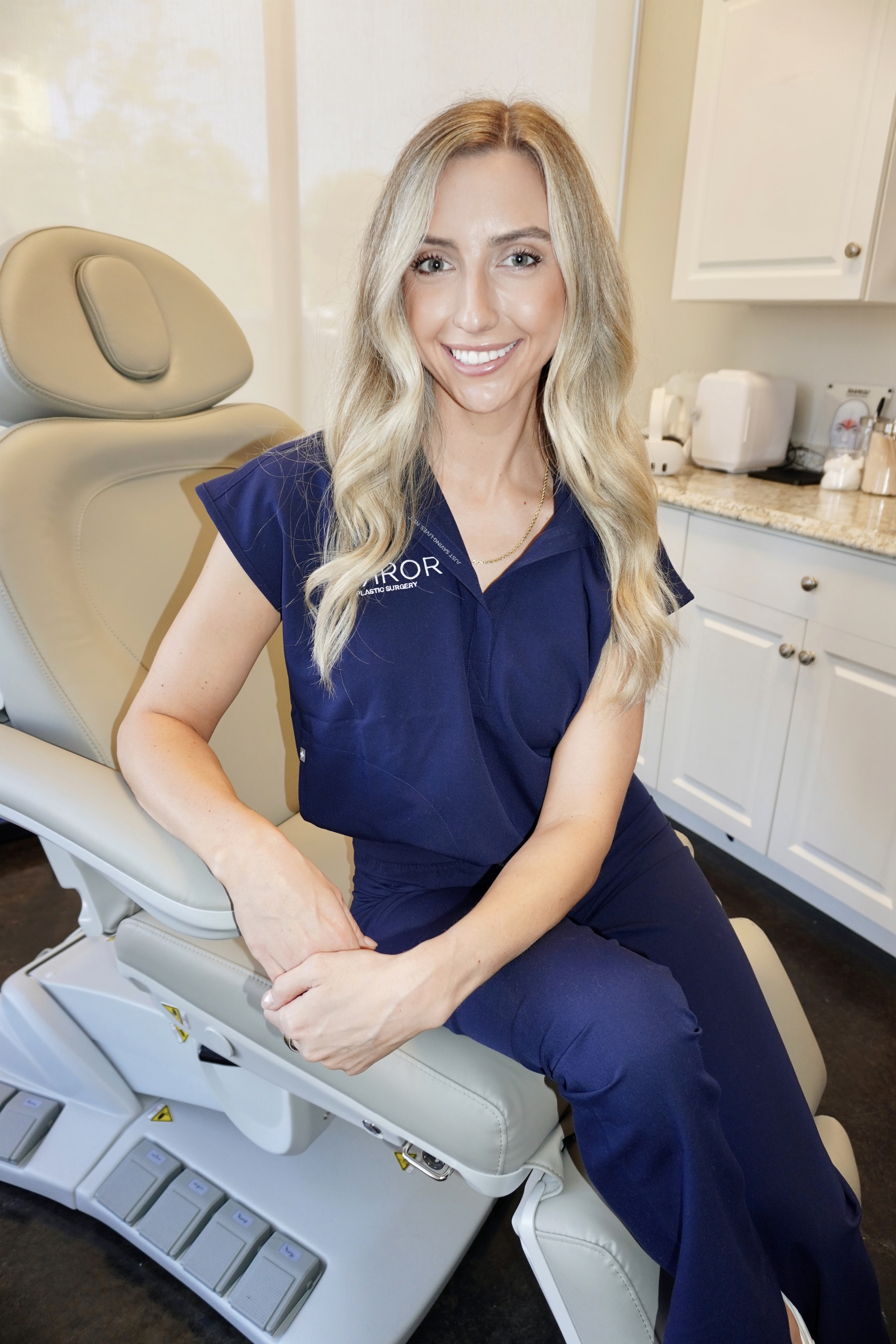
Ellie’s treatment philosophy centers on full-face harmonization rather than isolated area correction. This approach is most likely to produce natural, balanced results and least likely to create the overdone appearance patients fear.1 She routinely advises patients when an expensive service is not yet necessary for them, and that transparency builds the kind of long-term trust no upselling model can replicate.
Mirror Plastic Surgery limits itself to one to two surgeries per day so the entire clinical team can focus fully on each patient before, during, and after their procedure. Initial consultations extend up to an hour and include a top-to-bottom anatomical assessment, open-ended discussion of emotional drivers and long-term goals, and a documented, evidence-based treatment plan. Product selection remains supplier-neutral, which means the team chooses the right product for the patient’s anatomy rather than the product tied to a brand agreement.
Mirror Plastic Surgery’s model embodies the AAFPRS emphasis on experience and specialized training as the foundation of exceptional treatment, the same principle that drives patients toward subtlety and expertise over volume and novelty.
Frequently Asked Questions
What is the difference between a medical spa and a concierge plastic surgery practice for injectables?
A medical spa is a licensed medical facility where injectable treatments are performed by RNs, NPs, or PAs under a physician medical director who may or may not be on-site during treatments. The consultation model is typically 20–45 minutes and oriented around a treatment menu rather than a comprehensive anatomical assessment. A concierge plastic surgery practice operates under direct on-site oversight by a board-certified plastic surgeon, conducts extended consultations that include a full physical anatomical examination, maintains medical-grade emergency protocols, and selects products based on the patient’s individual anatomy rather than brand affiliations or volume incentives. The depth of anatomical training, the safety infrastructure, and the individualization of care differ substantially between the two models.
Is a non-surgical BBL safe, and what products does Mirror Plastic Surgery use?
A non-surgical BBL performed with appropriate biostimulatory agents by a clinically trained injector in a properly equipped setting is a well-established aesthetic procedure.1 At Mirror Plastic Surgery, biostimulatory fillers are used for non-surgical BBL treatments. These fillers stimulate the body’s own collagen production, so structural improvement builds over time rather than relying on temporary volume alone. Ellie’s approach is tailored to each patient’s individual goals, whether that involves significant volume, subtle enhancement, symmetry correction, or reduction of the appearance of hip dips and cellulite, and is grounded in regenerative medicine principles. The presence of Dr. Akash Chandawarkar as on-site surgical backup ensures that any complication can be managed at the clinical level required.
How do I know if my injector has sufficient anatomical training?
The most reliable indicators are formal educational credentials, documented training hours, and the clinical setting in which the injector practices. An injector holding a Master’s or Doctorate in Nursing with a national board certification (FNP-BC) and additional aesthetic training has a substantially different anatomical knowledge base than someone who completed a weekend certification course. Ask directly about their training background, where they completed their aesthetic education, how many hours of hands-on training they received, and whether a board-certified physician is available on-site during treatments. A provider who cannot answer these questions clearly, or who deflects them, sends a meaningful signal. At Mirror Plastic Surgery, Ellie’s dual background in esthetics and advanced nursing, combined with four years of Neuroscience ICU experience, gives her a depth of anatomical and physiological understanding that is uncommon among aesthetic injectors in the Tampa Bay market.
What should I expect during a consultation at Mirror Plastic Surgery?
An initial consultation at Mirror Plastic Surgery is a comprehensive, up-to-one-hour appointment that begins with an open-ended discussion of your concerns, emotional drivers for seeking treatment, and long-term aesthetic goals. Ellie then conducts a detailed top-to-bottom physical assessment, evaluating skin quality, facial volume distribution, structural symmetry, subdermal anatomy, and any areas of concern using a structured diagnostic framework. She explains findings in plain language, including the physiology behind any recommended treatment. You receive a personalized, evidence-based treatment plan with clear rationale for each recommendation. Ellie is known for advising patients when a treatment is not yet necessary, which reflects the practice’s commitment to honest, unbiased communication over volume-driven upselling.
How does Mirror Plastic Surgery approach full-face rejuvenation differently from high-volume practices?
Most high-volume practices address isolated areas of concern, such as a single line or a single zone, without evaluating how that intervention interacts with the rest of the face. This approach frequently produces the asymmetry and overdone appearance that patients most want to avoid. Mirror Plastic Surgery’s approach begins with foundational restoration of the face’s inherent characteristics before considering volume augmentation. Ellie evaluates the upper, middle, and lower facial regions as an integrated system so that any treatment produces a seamless, harmonized result across all zones. Volume augmentation is considered only after foundational restoration is addressed. This sequencing, grounded in a full anatomical assessment and a safety-first philosophy, consistently produces natural-looking, long-term results rather than short-lived or correction-requiring outcomes.1
Disclaimer: Results may vary from person to person. Editorial content, before and after images, and patient testimonials do not constitute a guarantee of specific results.
1 Results may vary from person to person. Editorial content, before and after images, and patient testimonials do not constitute a guarantee of specific results.