

Written by: Dr. Akash Chandawarkar, Board Certified Plastic Surgeon, Mirror Plastic Surgery | Last updated: September 9, 2026
Key Takeaways
- Lip filler prices range from $400 to $1,500 per syringe based on injector credentials, product quality, and facility standards.
- Board-certified plastic surgeons who personally inject often charge more than med-spa RNs or NPs, and their advanced training lowers complication risk.
- Geography, filler brand, and syringe volume all influence price, while hidden costs such as follow-ups or dissolving fees can change the final total.
- Pricing under $400 per syringe, unbranded products, or pressure to buy multiple syringes upfront often signal safety or product concerns.
- Choosing an experienced, board-certified injector protects both your safety and your results, and supports long-term value.
Average Lip Filler Cost And What Drives It
One milliliter of lip filler, or one standard syringe, costs an average of $743 nationally, according to the American Society of Plastic Surgeons (ASPS). That figure reflects physician fees. The realistic market range for a single syringe runs $500 to $1,200 at most U.S. practices, with premium physician injectors reaching $1,000 to $1,500 per syringe in 2026. Most patients need one to two syringes per session. A typical first visit lands around $600 to $1,200, or $700 to $1,500 once injector fees are included.
The following factors explain why two practices can quote the same patient prices that differ by $600 or more for an identical volume of the same product.
- Geographic location and local market overhead
- Injector credentials and level of training
- Filler brand and formulation technology
- Volume of product used (syringe amount)
- Facility overhead and care standards
- Hidden costs such as consultation, follow-up, and dissolving fees
Each factor plays a different role, starting with where the practice is located.
How Location Changes Lip Filler Pricing
Geography is one of the most straightforward pricing variables. Practices in metropolitan areas carry higher commercial rent, staff salaries, and malpractice insurance, and those costs appear in treatment fees. Major metros such as New York, Los Angeles, San Francisco, and Chicago typically range from $800 to $1,200 per syringe, while suburban and mid-size cities range from $500 to $850, and smaller or rural markets from $400 to $700.
Florida averages $550 to $800 per syringe, which positions the Tampa Bay and St. Petersburg market competitively relative to coastal metros. Within that range, a physician-led practice offering concierge-level care and a board-certified surgeon performing every injection will price differently than a high-volume med spa. The difference reflects training, time, and safety infrastructure.
Traveling to a less expensive market often appears cost-effective at first. If a complication arises after you return home, your injector will not be available for follow-up. Dissolving unwanted filler with hyaluronidase costs $150 to $500 per session, and that corrective expense can quickly erase any geographic savings.
How Injector Experience Affects Lip Filler Cost
Injector expertise is the single most important factor in both safety and outcome, and it is also the largest variable in pricing. The lips contain a dense, complex vascular network. Poor technique can cause lumps, asymmetry, migration, or, in rare cases, vascular occlusion, which is a blockage of a blood vessel that can lead to tissue damage if not treated immediately.
The clinical data on technique are clear. A retrospective cohort of 370 dermatologists spanning over 1.6 million syringes found vascular occlusion rates of 1 in 6,410 syringes for needles versus 1 in 40,882 for cannulas (JAMA Dermatology, 2021), a difference of more than sixfold. Technique and training change risk in measurable ways. The same research identified operator training, regulatory environment, and clinic-level protocol as the dominant determinants of harm, rather than product brand or patient demographics.
Price tiers by injector type reflect these credential differences. Board-certified plastic surgeons or dermatologists who personally perform injections typically charge $900 to $1,500 per syringe. Physician-led med spas where an NP or PA injects under physician oversight charge $750 to $1,100. Standard med spas with RN injectors charge $650 to $950, and trainee or discount clinics may charge $400 to $650.
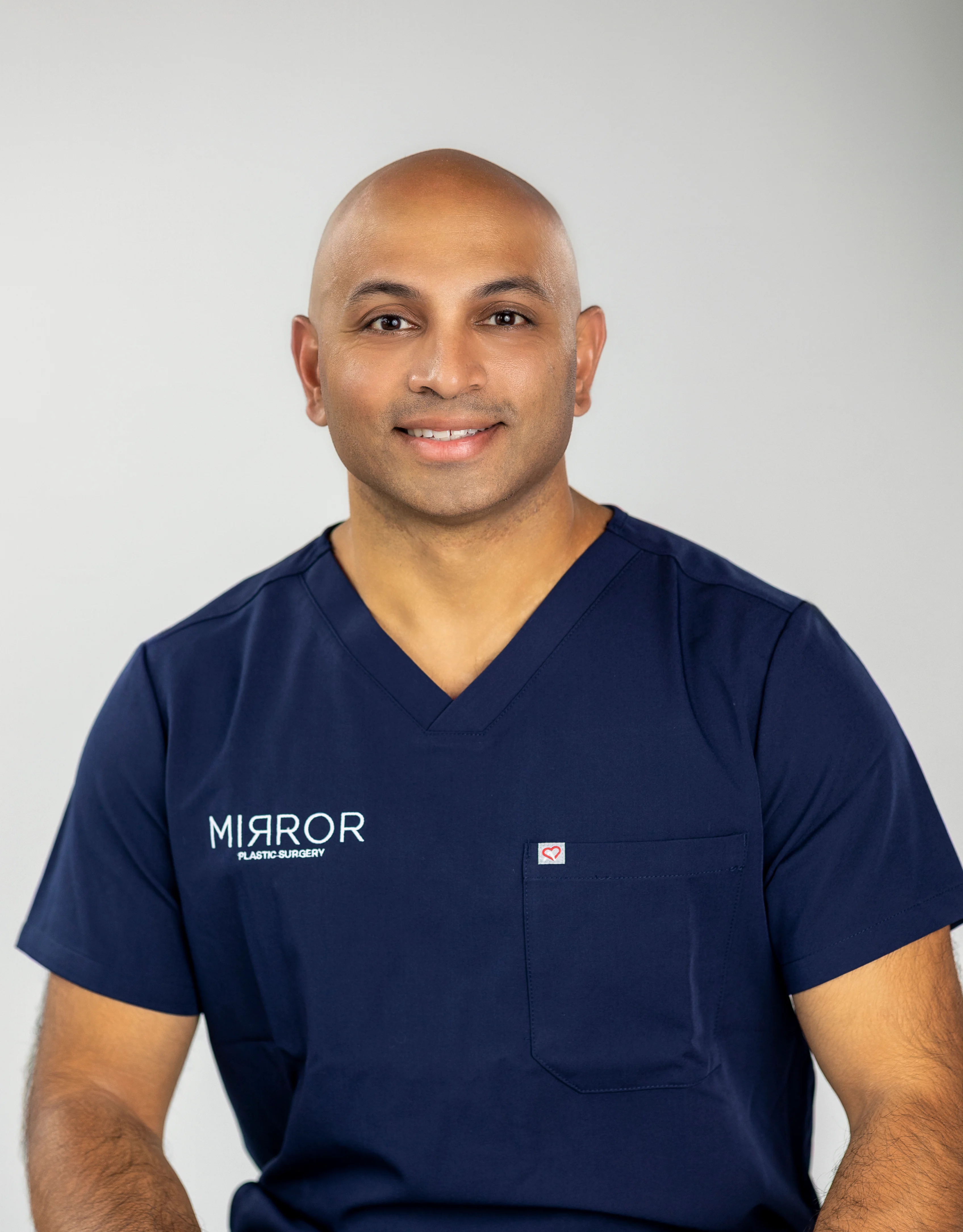
At Mirror Plastic Surgery, Dr. Akash Chandawarkar is Harvard-educated, Johns Hopkins-trained, and fellowship-trained in aesthetic surgery at Manhattan Eye Ear & Throat Hospital (MEETH)/Lenox Hill Hospital. He serves on advisory boards for several injectable product companies, including Merz Aesthetics and Tiger Aesthetics, and he personally performs every lip filler treatment. Most med spas use a different model, where a physician supervises but does not inject.
Before booking anywhere, ask these questions:
- Are you board-certified by the American Board of Plastic Surgery or Dermatology?
- How many lip filler procedures do you perform annually?
- Do you have hyaluronidase on-site to reverse complications immediately?
- What is your written protocol for managing a vascular occlusion?
Schedule your consultation with Dr. Chandawarkar to review your goals and medical history in detail.
How Filler Type And Amount Change The Price
Filler choice and volume also shape your final cost. Different hyaluronic acid fillers use different cross-linking technologies that affect texture, longevity, and price. Juvederm products use Vycross cross-linking technology, which produces a smoother, more cohesive gel that integrates naturally and tends to last longer. Restylane products use NASHA or OBT technology, producing a firmer gel suited to structural support or, in newer lines like Kysse, a more flexible result.
Typical per-syringe ranges for common lip fillers include:
Newer formulations built on Vycross, XpresHA, or RHA technologies typically cost $100 to $300 more per syringe than older NASHA-based products. Their longer duration can lower the effective cost per month of results. For lips specifically, hyaluronic acid fillers are the standard of care because they are reversible with hyaluronidase, which is a critical safety advantage.
Volume directly multiplies cost. A conservative enhancement using 0.5 mL costs $300 to $700. A standard treatment using 1 mL costs $500 to $1,200, and a full transformation using 2 mL costs $1,000 to $2,400. A skilled injector recommends the right amount for your anatomy rather than overselling volume. A staged, conservative approach that adds product across sessions is safer and produces more natural results than overfilling in a single visit.1
What A Lip Filler Quote Should Include
A quoted per-syringe price rarely represents the total cost of treatment. A transparent, all-inclusive quote should specify:
- Consultation fee (typically $50–$150, often credited toward treatment)
- The filler product itself, named by brand and formulation
- Injector fee and facility fee
- Numbing cream or topical anesthetic
- Follow-up visit policy, either included or billed separately at $0–$150
Dissolving unwanted filler with hyaluronidase is typically billed separately at $150 to $500 per session, and bargain hunters frequently encounter that cost when correcting poor results from discount providers. A $350 budget filler that creates an asymmetric or bumpy result can cost $700 or more to fix, which exceeds a properly priced first treatment.
One wording trick appears often. Some providers quote per “vial” rather than per syringe. This can mean receiving less than 1 mL of product while paying a price that appears comparable to a full syringe. Always confirm the exact volume in milliliters.
Mirror Plastic Surgery provides transparent, itemized quotes during consultation with no hidden fees and no quota-driven upselling.
How To Compare Lip Filler Quotes Confidently
Comparing quotes works best when you ask the same clear questions at every practice. Use this checklist with each provider:
- What specific brand and formulation of filler will you use?
- How many syringes, in mL, does the quoted price include?
- Is the consultation fee included or credited toward treatment?
- What is your policy on follow-up visits and touch-ups?
- Do you have hyaluronidase on-site in case of complications?
- What are your credentials, and how many lip filler procedures have you performed?
The lowest quote in your area is rarely the best value once you factor in revision costs, dissolving fees, or a result that does not match your anatomy. When comparing quotes, focus on finding the best value, which means the safest technique, the most appropriate product, and the most experienced hands.
Request a lip filler consultation with Dr. Chandawarkar to receive an honest, anatomy-first assessment.
Red Flags For “Too Cheap” Lip Filler
Certain pricing and practice patterns act as reliable warning signs of compromised safety or product quality.
- Per-syringe prices significantly below local market norms. Anything advertised under $400 per syringe is worth questioning, because genuine product and an experienced injector both cost the clinic money.
- Injectors without medical licenses or verifiable board certification
- Use of unapproved, unbranded, or unidentified products. Permanent lip fillers such as silicone or PMMA are unsafe in lips and not reversible.
- Home-visit injections or “filler parties” without a proper medical setting
- Refusal to name the exact product being used
- High-pressure tactics to commit to multiple syringes upfront on a first visit
- Portfolios where every patient looks identical regardless of facial structure
These red flags align with what research shows about safety. Lower complication rates cluster in regulated, clinician-led settings. These settings have written and rehearsed protocols, in-date hyaluronidase, defined escalation pathways, and longitudinal training. Higher rates cluster in unregulated environments with inadequately trained operators who lack on-site emergency capability.
Mirror Plastic Surgery follows a safety-first model, with function second and aesthetics third. Dr. Chandawarkar maintains hyaluronidase on-site, follows written vascular occlusion protocols, and limits his daily schedule so every patient receives his full attention.
Financing And Payment Options For Lip Filler
Lip filler is an out-of-pocket cosmetic expense that health insurance does not cover. Many practices offer financing through CareCredit, Alphaeon, or in-house payment plans, with promotional 0% APR periods of 6 to 18 months common for totals over $1,000. Mirror Plastic Surgery can discuss payment options during your consultation.
Frequently Asked Questions
How Long Do Lip Fillers Last?
Most hyaluronic acid lip fillers last 6 to 12 months, with some newer formulations lasting up to 15 months.1 Lips metabolize filler faster than most other areas because they move constantly. Speaking, eating, and expressing emotion all accelerate breakdown. Individual metabolism also plays a role, so two patients receiving the same product and volume may see different longevity. Most patients on a maintenance schedule return once or twice per year.
Why Does Lip Filler Sometimes Look Unnatural?
An overdone or “duck lip” appearance almost always results from overfilling, poor product placement, or filler that has migrated over time. A skilled injector who respects your anatomy avoids this by using conservative amounts, selecting the right formulation for your lip structure, and staging volume across sessions rather than maximizing product in a single visit. Dr. Chandawarkar’s approach prioritizes restoring natural proportions before considering volume augmentation. This philosophy produces results that look believable in motion and at rest.1
Is Lip Filler Worth It?
When performed correctly by a qualified injector, lip filler can enhance facial harmony, restore volume lost to aging, and improve confidence.1 Provider selection remains the key variable. A board-certified plastic surgeon with deep anatomical knowledge, a conservative philosophy, and on-site emergency capability delivers a fundamentally different experience and result than a high-volume discount clinic. The investment in expertise also reduces the likelihood of corrective costs that poor technique generates.
What Is The Difference Between 0.5 mL And 1 mL Of Filler?
A half-syringe (0.5 mL) provides subtle hydration and mild definition, which works well for first-time patients who want to test results or for touch-ups between full treatments. A full syringe (1 mL) delivers more noticeable volume, shape change, and definition. Most first-time patients who want a visible difference need 1 mL. A skilled injector will assess your baseline lip volume, skin quality, and facial proportions before recommending an amount, rather than defaulting to the maximum.
How Do I Find A Good Injector For Lip Filler?
Look for board certification from the American Board of Plastic Surgery or Dermatology, extensive documented experience with lip injections specifically, and a portfolio of natural-looking results across diverse facial structures. Choose a practice that stocks hyaluronidase on-site. Ask directly about their vascular occlusion protocol, and expect a clear answer. Avoid any provider who cannot or will not name the exact product they plan to use or who pressures you to commit to more volume than you requested.
Choosing Safe, High-Value Lip Filler In St. Petersburg
Lip filler price is shaped by geography, injector credentials, product formulation, syringe volume, facility overhead, and hidden costs. The factor most worth paying for is the expertise of the person holding the syringe. A board-certified plastic surgeon with a surgeon’s command of facial anatomy, a written complication protocol, and hyaluronidase on-site provides the standard of care that keeps this procedure genuinely safe.
At Mirror Plastic Surgery, Dr. Akash Chandawarkar personally performs every injection, spends up to an hour in consultation understanding your anatomy and goals, and will tell you honestly if a procedure is not right for you yet. That transparency, supported by robust safety infrastructure, defines a well-priced lip filler treatment.
Call or text Mirror Plastic Surgery at 727-361-6515, or visit us at 780 4th Ave S, St. Petersburg, FL 33701, to talk through your options.
Schedule your lip filler consultation with Dr. Chandawarkar and receive an honest, personalized assessment of your goals.
Disclaimer: Results may vary from person to person. Editorial content, before and after images, and patient testimonials do not constitute a guarantee of specific results.
1 Results may vary from person to person. Editorial content, before and after images, and patient testimonials do not constitute a guarantee of specific results.


