
Written by: Dr. Akash Chandawarkar, Board Certified Plastic Surgeon, Mirror Plastic Surgery | Last updated: September 9, 2026
Key Takeaways
- Hip dip filler is an off-label procedure, so surgeon experience and true board certification are essential for safety.
- Only American Board of Plastic Surgery (ABPS) board-certified plastic surgeons have the training needed for safe hip dip filler placement.
- Tools like ABMS Certification Matters and the ABPS website let you confirm a surgeon’s credentials in minutes.
- Red flags such as vague credentials, rushed consultations, or non-physician injectors often signal unsafe practices.
- Seek a board-certified plastic surgeon who prioritizes safety, clear communication, and personalized care for hip dip filler.
What Board Certified Means and Why It Matters for Hip Dip Fillers
A board-certified plastic surgeon has completed an accredited plastic surgery residency and passed written and oral exams from the American Board of Plastic Surgery (ABPS). This certification shows verified expertise across the full range of surgical and non-surgical procedures in the specialty.
The ABPS is the only plastic surgery board recognized by the American Board of Medical Specialties (ABMS). Certification requires medical school, at least six years of accredited residency covering reconstruction, hand surgery, microsurgery, craniofacial surgery, and aesthetic surgery. Surgeons must also pass a written qualifying exam and an oral certifying exam where they defend real operative cases before board examiners.
The phrase “board certified” is not a protected term in medicine. Any licensed physician can legally call themselves “board certified” as long as they hold certification from some board, even one unrelated to the procedure they perform. Boards with “cosmetic surgery” in their name are not recognized by the ABMS and do not require a plastic surgery residency.
Hip dip filler injections demand detailed knowledge of gluteal anatomy. The lateral trochanteric depression sits near vessels and nerves, and safe technique keeps filler in the subcutaneous fat layer above the muscle fascia using a long blunt-tipped cannula. A weekend course does not teach this level of three-dimensional anatomy or complication management. A board-certified plastic surgeon brings surgeon-level command of this region.
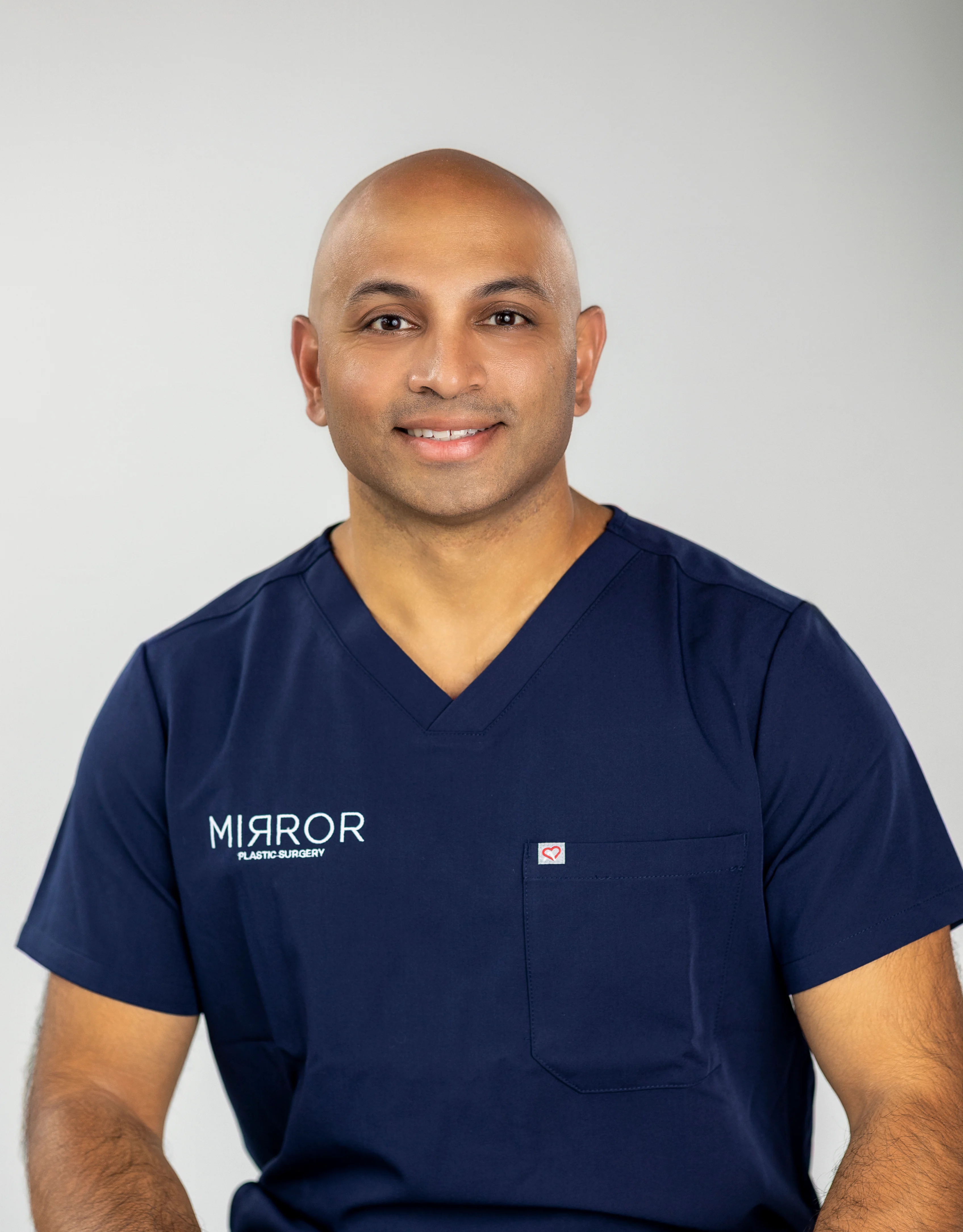
Dr. Akash Chandawarkar is board-certified by the ABPS, Harvard-educated, Johns Hopkins-trained, and fellowship-trained in aesthetic surgery at Manhattan Eye Ear & Throat Hospital. These credentials position him uniquely for safe hip dip filler treatment in the St. Petersburg and Tampa Bay area. Even with this level of training, patients still need to understand the regulatory landscape and FDA guidance around body fillers.
FDA Safety Warnings and the Regulatory Reality of Body Fillers
The FDA has not approved injectable silicone or any injectable fillers for body contouring or enhancement. Use in these areas can cause serious injury, including long-term pain, infection, permanent scarring or disfigurement, and death. An FDA communication from October 2025 reiterated this position.
Off-label use remains legal. Physicians may prescribe approved products for unapproved indications, but only when they understand the higher risk profile and have the skills to reduce that risk. A 2026 systematic review in Aesthetic Plastic Surgery found that permanent complications from dermal fillers are usually linked to poor anatomical understanding, wrong filler selection, poor technique, and poor diagnosis and management. Filler permanence also strongly influences the chance of irreversible injury.
Hip dip filler safety also depends on precise placement. The lateral trochanteric depression contains only tiny superficial vessels averaging under 0.9 mm in diameter, which makes it anatomically safer than a deep BBL where the inferior gluteal vein can reach 13.65 mm in diameter. This safety advantage holds only when the injector stays in the correct subcutaneous plane. A board-certified plastic surgeon is best prepared to maintain that level of precision.
Mirror Plastic Surgery uses Radiesse, a biostimulatory filler, and AlloClae, an adipose-derived filler, for hip dip correction. Dr. Akash serves on advisory boards for Merz Aesthetics (Radiesse) and Tiger Aesthetics (AlloClae), and he bases product selection on clinical evidence and patient safety.
Step-by-Step Guide to Verifying a Surgeon’s Board Certification
Credential verification is quick, free, and essential. The ABMS maintains board-certification records on more than 997,000 physicians, refreshed daily from all 24 of its member boards, and these records count as primary source verification for The Joint Commission, NCQA, and URAC. Follow these steps before scheduling any consultation:
- Check the ABPS verification tool. Visit abplasticsurgery.org and use the “Is Your Surgeon Certified” tool. Confirm that the surgeon holds current ABPS certification in plastic surgery, the only ABMS-recognized board for this specialty.
- Cross-reference with ABMS Certification Matters. certificationmatters.org lists all 24 ABMS member boards and refreshes records daily. Use it as an independent confirmation of active certification.
- Verify American Society of Plastic Surgeons membership. The American Society of Plastic Surgeons requires ABPS certification for membership. This adds another layer of assurance that the surgeon meets the specialty’s baseline standard.
- Review training and fellowship experience. Look for accredited residency completion, aesthetic surgery fellowships, and documented experience with body filler procedures.
- Examine before-and-after photos. Confirm that photos show the surgeon’s own work. Ask directly whether any images come from stock libraries or other practices.
- Read patient reviews critically. Pay attention to comments about safety protocols, communication, and how the practice handled any complications, along with aesthetic outcomes.
Patients can verify Dr. Akash’s credentials through each of these channels. Mirror Plastic Surgery shares clear information about his training and board certification throughout the patient experience.
Questions to Ask During Your Hip Dip Filler Consultation
A qualified surgeon welcomes detailed questions and answers them clearly. An unqualified provider often avoids specifics. Bring these questions to any hip dip filler consultation:
- “Are you board-certified by the American Board of Plastic Surgery?”
- “How many hip dip filler procedures have you performed?”
- “What type of filler do you recommend for my anatomy, and why?”
- “What are the specific risks of hip dip filler, and how do you manage complications like vascular occlusion?”
- “Can I see before-and-after photos of your actual hip dip filler patients?”
- “What is your approach to achieving natural-looking results that respect my body proportions?”
- “Do you keep reversal agents on site, and what is your protocol if a complication develops?”
Dr. Akash encourages these questions. Consultations at Mirror Plastic Surgery often last up to an hour and reflect the practice’s concierge medicine philosophy. Each visit includes a detailed anatomical assessment before any treatment plan is suggested. That assessment also guides whether injectable filler or surgical fat transfer better fits your anatomy and goals.
Schedule a consultation to experience a thorough, unhurried evaluation focused on your safety and long-term results.
Red Flags When Choosing a Hip Dip Filler Provider
Certain patterns should immediately raise concern about any provider offering hip dip filler injections:
- No ABPS board certification or vague language like “board certified” without naming the board and specialty. This is a fundamental warning sign because it suggests the provider may lack the anatomical training needed for safe hip dip filler placement.
- Deep discounts or package deals that do not match the amount of product and expertise required. Aggressive pricing often signals shortcuts in safety, product quality, or follow-up care.
- Rushed consultations under 15 minutes with little time for questions or anatomical assessment. Short visits rarely allow for proper risk discussion or individualized planning.
- Inability or unwillingness to show before-and-after photos of actual patients from the practice. Limited or generic images can indicate minimal experience with hip dip filler.
- Downplaying risks or failing to explain complication management protocols, including what happens if problems arise. This attitude suggests poor preparation for rare but serious events.
- Non-physician injectors performing the procedure without direct physician oversight. Lack of medical training increases the chance of misjudging anatomy and complications.
- Vague credential language. Phrases like “board certified” with no board name are a red flag because legitimate credentials are specific and easy to verify.
Mirror Plastic Surgery takes the opposite approach to each of these concerns. Dr. Akash personally performs all injections, consultations are unhurried, and the practice follows a guiding principle of safety first, function second, and aesthetics third.
Why Mirror Plastic Surgery Is a Safety-Focused Choice for Hip Dip Fillers
As detailed earlier, Dr. Akash’s credentials, including ABPS board certification, Harvard education, Johns Hopkins training, and a fellowship at Manhattan Eye Ear & Throat Hospital, are rare in aesthetic medicine. He also completed medical innovation training at Stanford University and serves on advisory boards for Merz Aesthetics (Radiesse) and Tiger Aesthetics (AlloClae). His product recommendations reflect clinical evidence and patient safety priorities.
Every injectable treatment at Mirror Plastic Surgery is performed by Dr. Akash himself. A surgeon’s command of subdermal anatomy guides every syringe placed in the lateral trochanteric depression. To preserve that level of attention, the practice limits itself to one to two procedures per day so each patient receives the team’s full focus before, during, and after treatment.
Mirror Plastic Surgery serves the St. Petersburg and Tampa Bay area from 780 4th Ave S, St. Petersburg, FL 33701. Patients can call or text 727-361-6515 or email hello@mirrorplasticsurgery.com for direct assistance.
Request your appointment to learn whether hip dip filler aligns with your anatomy, lifestyle, and goals.
Frequently Asked Questions About Hip Dip Filler Safety and Provider Selection
Is Hip Dip Filler FDA Approved?
Hip dip filler does not have specific FDA approval. The FDA has not approved any dermal filler for injection into the hips, thighs, or buttocks for cosmetic volume enhancement. All hip dip filler procedures in the United States use products approved for facial indications in an off-label manner. Off-label use is legal, but it requires a provider with deep anatomical knowledge and proven complication management skills. This need makes ABPS board certification a critical requirement for this procedure.
How Long Do Hip Dip Fillers Last?
Longevity depends mainly on the product used and your individual biology. Biostimulatory fillers like Radiesse typically last 12 to 18 months as the body maintains the collagen they stimulate.1 AlloClae, an adipose-derived filler, offers a regenerative mechanism with its own duration profile that your surgeon will explain during consultation. Metabolism, filler volume, and injection technique all influence how long results hold.1 Most patients benefit from a maintenance plan rather than a single permanent treatment, and a board-certified plastic surgeon will set realistic expectations for your specific anatomy.1
Are Hip Dip Fillers Safe?
Hip dip fillers can be performed with a manageable risk profile when a board-certified plastic surgeon uses proper technique and understands the anatomy. The lateral trochanteric depression is safer than deeper gluteal planes because it contains only small superficial vessels, as long as the injector stays in the correct subcutaneous plane with appropriate cannula technique. All filler procedures still carry risks such as bruising, swelling, infection, nodule formation, and, rarely, vascular occlusion. FDA warnings about unapproved body contouring use highlight why provider expertise remains the most important safety factor.
What Is the Difference Between Hip Dip Filler and Fat Transfer?
Hip dip filler is a non-surgical, in-office procedure that uses injectable biostimulatory or adipose-derived products to add volume and stimulate collagen in the lateral trochanteric depression. It involves no incisions and minimal downtime. Fat transfer is a surgical procedure that harvests your own fat via liposuction and transfers it to the hip dip area. As noted earlier, about 60 to 80 percent of transferred fat survives long term, and surviving fat is generally permanent.1 Fat transfer requires a recovery period of several weeks, and final results may take months to appear.1 The right choice depends on your anatomy, available donor fat, goals, and readiness for surgery. A board-certified plastic surgeon who offers both options can provide an unbiased recommendation.
How Much Does Hip Dip Filler Cost?
Cost varies based on the volume of filler needed, the specific product used, and the provider’s expertise and location. Hip dip depth, width, and asymmetry all affect the amount of product required, so Mirror Plastic Surgery offers personalized quotes during consultation instead of a single published price. A board-certified plastic surgeon may charge more than a med-spa, and that difference reflects higher safety standards, deeper anatomical knowledge, and stronger complication management. Scheduling a consultation provides an accurate, anatomy-specific estimate.
Conclusion: Your Safety Starts With the Right Surgeon
The surgeon who performs your injections is the most important decision in any hip dip filler journey. Board certification by the American Board of Plastic Surgery sets the baseline standard. FDA safety warnings confirm that off-label body contouring requires surgical-level anatomical expertise. The questions you ask during consultation reveal whether a provider has both the skill and the honesty to protect your long-term health.
Mirror Plastic Surgery and Dr. Akash Chandawarkar combine strong credentials, a concierge-style experience, and a safety-first philosophy for hip dip filler injections. Consultations are unhurried, every injection is performed by a board-certified plastic surgeon, and each treatment plan centers on your anatomy, goals, and well-being.
Contact Mirror Plastic Surgery to begin a safety-focused evaluation for hip dip filler. You can also call or text 727-361-6515, email hello@mirrorplasticsurgery.com, or visit 780 4th Ave S, St. Petersburg, FL 33701.
Disclaimer: Results may vary from person to person. Editorial content, before and after images, and patient testimonials do not constitute a guarantee of specific results.
1 Results may vary from person to person. Editorial content, before and after images, and patient testimonials do not constitute a guarantee of specific results.