
Written by: Ellie Pranckevicius, FNP-BC, Aesthetic Nurse Practitioner & Aesthetic Injector | Facial Restoration & Regenerative Injectable Specialist, Mirror Plastic Surgery | Last updated: June 15, 2026
Key Takeaways for Fat Loss and Muscle Preservation
-
Preserving skeletal muscle during weight loss keeps metabolism higher and slows age-related strength and function decline.
-
GLP-1 receptor agonists like semaglutide and tirzepatide drive significant fat loss but often reduce lean mass without resistance training and adequate protein.
-
Growth-hormone secretagogues such as tesamorelin and CJC-1295 + Ipamorelin elevate IGF-1, support muscle-protein synthesis, and improve body composition when paired with GLP-1 therapy.
-
Evidence-ranked comparisons show tesamorelin has the strongest data for visceral-fat reduction and lean-mass gains, while AOD-9604 focuses on fat breakdown without anabolic effects.
-
Patients who want a personalized, lab-guided peptide protocol for fat loss and muscle preservation can schedule a consultation at Mirror Plastic Surgery.
Meet Ellie Pranckevicius, Lead Practitioner for Peptide Protocols
Ellie Pranckevicius, FNP-BC, leads peptide therapies and non-surgical aesthetics at Mirror Plastic Surgery in St. Petersburg, Florida. She holds a Bachelor’s in Health Science from Boston University on the premedical track, completed an aesthetics licensure program, and earned both her Bachelor’s and Master’s in Nursing from the University of South Florida.
Before entering clinical practice, she worked at a high-end medical spa in Boston and developed expertise in skin physiology and aesthetic assessment. This combined background in aesthetics and advanced nursing shapes her peptide protocols so every recommendation is grounded in lab data, explained in plain language, and tailored to each patient’s physiology and goals.
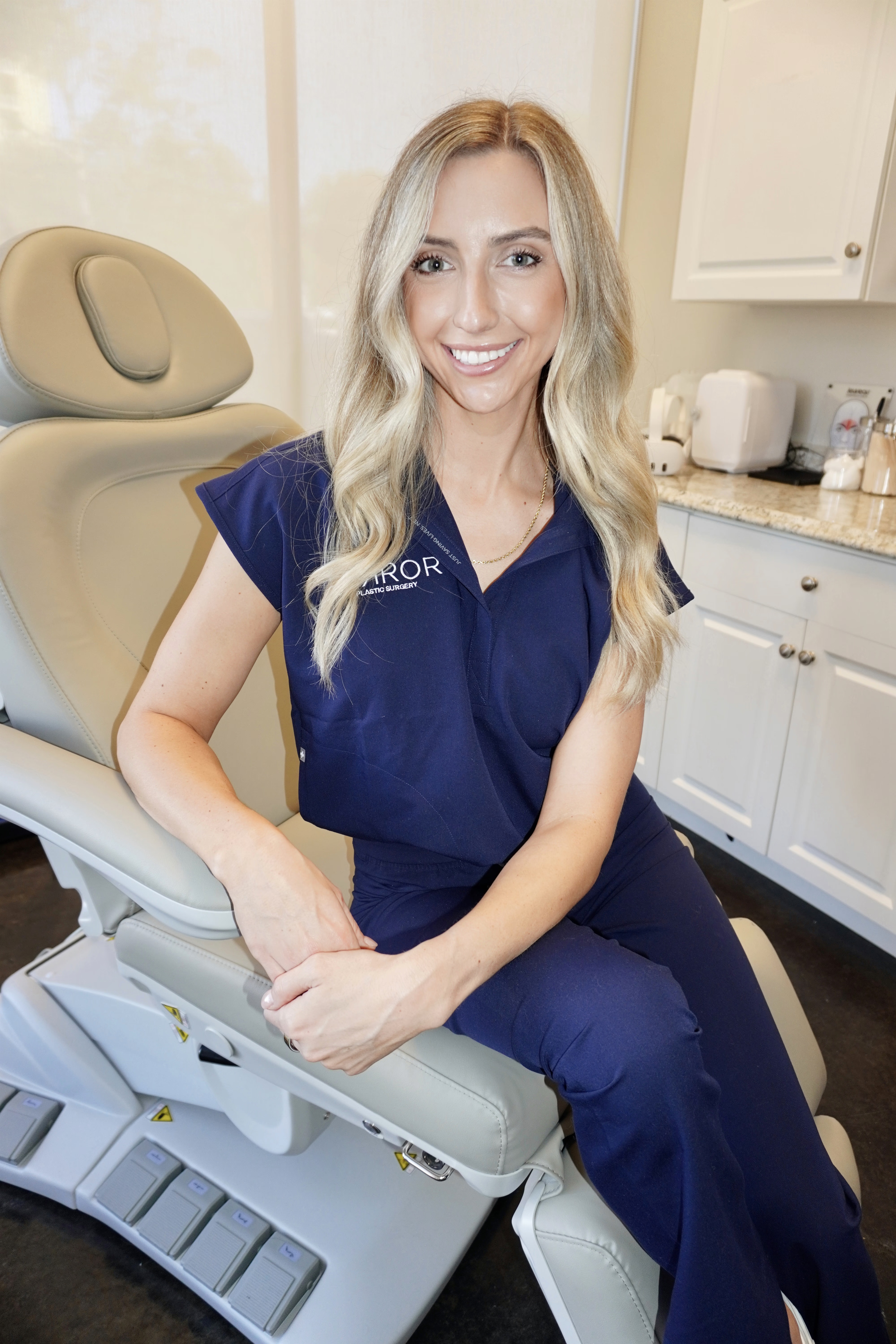
Book an appointment with Ellie to discuss a personalized, lab-guided peptide protocol for fat loss and muscle preservation.
Key Terms for Peptide-Based Body Recomposition
GLP-1 receptor agonists are synthetic analogs of glucagon-like peptide-1, a gut-derived hormone that slows gastric emptying, suppresses appetite, and improves insulin sensitivity. FDA-approved examples include semaglutide (Wegovy, Ozempic) and tirzepatide (Zepbound), which also activates the GIP receptor.
Growth hormone secretagogues (GHS) are peptides that stimulate the pituitary gland to release the body’s own growth hormone in its natural pulsatile pattern. They include GHRH receptor agonists (sermorelin, tesamorelin, CJC-1295) and ghrelin receptor agonists (ipamorelin). Combining a GHRH analog with a ghrelin-receptor agonist produces a synergistic GH response exceeding either pathway alone, without suppressing endogenous production the way exogenous GH injections do.
Muscle-protein synthesis (MPS) is the cellular process by which amino acids are assembled into new contractile proteins. Adequate dietary protein (current evidence supports ≥1.6 g/kg/day), resistance training, and anabolic signaling through the IGF-1/PI3K-Akt-mTORC1 pathway all drive MPS. Peptides that elevate IGF-1, particularly GH secretagogues, support this pathway.
How Fat-Loss Peptides Differ from Muscle-Retention Peptides
GLP-1 receptor agonists primarily reduce body weight by suppressing appetite and improving insulin sensitivity. They produce meaningful fat loss but do not directly stimulate muscle anabolism. A 2024 commentary in The Lancet Diabetes & Endocrinology noted that reductions in lean body mass are consistent across GLP-1 studies and that skeletal muscle is particularly vulnerable when movement is not part of the treatment plan.
GH secretagogues work through a different pathway and elevate circulating GH and IGF-1. This activation supports downstream anabolic signaling that helps retain lean mass and improves fat partitioning.
Beyond these two primary classes of appetite suppressors and anabolic agents, AOD-9604 represents a third category. It is a modified fragment of human growth hormone (amino acids 176–191) that isolates lipolytic effects while avoiding the anabolic, growth-promoting, or blood-glucose impacts of full GH, which makes it relevant for targeted fat mobilization when broader GH stimulation is not appropriate.
How a Supervised Peptide Program Works at Mirror Plastic Surgery
Mirror Plastic Surgery uses a concierge model that structures peptide protocols across five stages. First, a 30–60 minute consultation with the lead practitioner reviews full medical history, current medications, and body-composition goals. Lab panels, including thyroid, liver, kidney, diabetes markers, and hormone panels, are reviewed or ordered.
Second, a custom peptide stack is selected based on those results and matches mechanism to the patient’s specific deficit, such as appetite dysregulation, visceral adiposity, or lean-mass loss on existing GLP-1 therapy. Third, patients receive detailed administration education with reconstitution instructions and video demonstrations for injectable peptides. Fourth, ongoing monitoring includes IGF-1 rechecked at six weeks for GH secretagogue protocols, with full metabolic panels at three months and every six months after that, consistent with established monitoring parameters for GH secretagogue metabolic protocols.
Fifth, a maintenance protocol is established to sustain outcomes. Benefits fade when any health regimen stops abruptly without a transition plan, so this final step protects long-term results.
Current Options for GLP-1 Medications and Adjunct GH Peptides
The GLP-1 class has expanded rapidly in recent years. Tirzepatide’s dual GIP/GLP-1 mechanism produces greater weight loss than semaglutide monotherapy in head-to-head trials. Retatrutide, a triple agonist targeting GIP, GLP-1, and glucagon receptors, demonstrated large average weight reductions in Phase 2 obesity data published in The New England Journal of Medicine but remains unapproved by the FDA as of June 2026.
Mirror Plastic Surgery’s GLP-3R compounding represents a newer-generation formulation reported to carry fewer gastrointestinal side effects and a lower muscle-wasting profile than older GLP-1 analogs.
Alongside these appetite-focused agents, GH secretagogues have gained traction for body-recomposition goals. Tesamorelin is particularly valuable for patients who have lost muscle on GLP-1 therapies because it helps preserve muscle while supporting fat partitioning, unlike GLP-1s that primarily reduce appetite. The CJC-1295 + Ipamorelin combination remains widely used for sustained pulsatile GH release, improved recovery, and lean-mass support.
Evidence-Ranked Comparison of Peptides for Body Composition
The table below compares key peptides on fat-loss effect, lean-mass impact, and evidence strength. All figures come from peer-reviewed sources cited inline. Peptides with no direct human body-composition randomized controlled trial data are noted, and cross-peptide comparisons on a shared percentage scale are avoided where trial designs differ, so those entries are described qualitatively.
|
Peptide |
Primary Fat-Loss Effect |
Lean-Mass Impact |
Evidence Strength |
|---|---|---|---|
|
Semaglutide (GLP-1 RA) |
Meaningful fat loss with studies reporting lean mass as a portion of total weight lost |
High, with multiple Phase 3 randomized controlled trials and meta-analyses |
|
|
Tirzepatide (GIP/GLP-1 RA) |
Greater weight loss than semaglutide in head-to-head trials, with studies reporting lean mass as a portion of total weight lost |
High, with Phase 3 randomized controlled trials and meta-analyses |
|
|
Tesamorelin (GHRH analog) |
Moderate to high, FDA-approved for HIV lipodystrophy with multiple randomized controlled trials and limited data in general obesity |
||
|
CJC-1295 + Ipamorelin (GHS stack) |
Indirect fat loss through GH-driven lipolysis, often used in body recomposition protocols |
Low to moderate, with human pharmacokinetic and pharmacodynamic data but no large body-composition randomized controlled trials and FDA compounding concerns noted |
|
|
AOD-9604 (GH fragment 176–191) |
Does not stimulate muscle hypertrophy and preserves lean mass by avoiding catabolic cortisol elevation |
Low, with preclinical and small human studies and no large randomized controlled trials |
Book an appointment with the lead practitioner to review which peptides for fat loss and muscle preservation align with your lab results and body-composition goals.
Decision-Making Factors for a Safe Peptide Plan
Peptide selection depends on several intersecting variables, and sourcing quality sits at the top of that list. Unregulated online sources have demonstrated incorrect identity, 50–200% dosing errors, bacterial endotoxin, heavy metals, and non-sterile preparations, while licensed 503A and 503B compounding pharmacies must verify identity, potency, sterility, and purity. Mirror Plastic Surgery sources exclusively from reputable providers with batch testing.
Lab monitoring anchors safety throughout treatment. For GH secretagogue protocols, baseline IGF-1, fasting insulin, and HbA1c are measured before initiation, with IGF-1 rechecked at six weeks and a full metabolic panel repeated at three months.
In patients with pre-existing insulin resistance (HOMA-IR >2.0 or HbA1c >5.7), GH secretagogue therapy requires metabolic optimization first because GH can transiently worsen insulin sensitivity during the initial 4–8 weeks.
Behavioral anchors function as primary determinants of outcome rather than optional extras. Resistance training combined with adequate protein intake improves lean-mass preservation and can outperform weight-loss approaches that lack these measures.
A 2025 cross-sectional study in Frontiers in Nutrition found that people using GLP-1 receptor agonists frequently consume less protein than required to maintain muscle mass, which highlights the need to manage dietary protein targets actively.
Realistic Risks and Limitations of Peptide Therapy
GLP-1 receptor agonists carry well-documented gastrointestinal side effects. As of July 31, 2025, the FDA had received 605 adverse event reports associated with compounded semaglutide and 545 with compounded tirzepatide, including nausea, vomiting, diarrhea, abdominal pain, and constipation, with some cases requiring hospitalization due to dosing errors.
GH secretagogues carry absolute contraindications that include active malignancy, uncontrolled diabetes, proliferative diabetic retinopathy, and untreated pituitary tumors.
Growth hormone secretagogues are contraindicated in patients with active cancer or a personal or familial history of cancer due to their potential to promote tumor growth and spread. Common transient side effects include mild water retention that usually resolves within 2–4 weeks, paresthesia, increased appetite, vivid dreams, and injection-site reactions.
Current data do not support the idea that all peptides cause uniform muscle loss. GLP-1 medicines do not result in disproportionate or pathological loss of muscle mass or function in obese mice and humans, and relative muscle mass and power-to-weight ratios improve despite modest absolute mass reductions, although the human pilot included only 10 male participants and requires replication in larger, more diverse cohorts.
Peptide stacking also does not guarantee better outcomes. A stack is reasonable only when it meets four criteria: different primary mechanisms, a clear problem statement, human evidence for at least one component, and objective monitoring capability via labs and body composition.
Frequently Asked Questions
Are the peptides used for weight loss and muscle preservation FDA-approved?
Some peptides carry FDA approval, while others do not. Semaglutide (Wegovy, Ozempic) and tirzepatide (Zepbound) are FDA-approved prescription medications with robust Phase 3 trial data.
Tesamorelin (Egrifta) is FDA-approved specifically for HIV-associated lipodystrophy. CJC-1295, ipamorelin, AOD-9604, and sermorelin are not FDA-approved for weight management or muscle preservation, although clinicians use them in supervised settings and source them through licensed compounding pharmacies.
The absence of FDA approval does not automatically mean a peptide is ineffective, but it does mean that quality control, dosing accuracy, and patient selection depend entirely on the supervising practitioner and the sourcing pharmacy. At Mirror Plastic Surgery, all peptides are sourced from reputable providers with batch testing, and every protocol is preceded by a thorough medical history review and lab evaluation.
How much muscle will I lose on a GLP-1 medication?
Muscle loss on GLP-1 therapy varies by medication and by the support strategies in place. Research indicates that lean mass can account for a notable portion of total weight lost with semaglutide and tirzepatide. When resistance training is integrated into the treatment program, this proportion can decrease.
Protein intake plays an equally important role. People on GLP-1 therapies frequently under-consume protein because of appetite suppression, which accelerates lean-mass loss. A supervised protocol that includes lab monitoring, protein targets, and structured resistance training can change body-composition outcomes compared with GLP-1 therapy alone.
What is the difference between CJC-1295 with Ipamorelin and Tesamorelin for body recomposition?
CJC-1295 and ipamorelin are both growth hormone secretagogues, yet they differ from tesamorelin in mechanism, half-life, and evidence base. CJC-1295 is a GHRH analog that extends GH pulse amplitude with a half-life of 6–8 days through albumin binding.
Ipamorelin is a ghrelin receptor agonist that increases GH pulse frequency without significantly elevating cortisol. Their combination is often considered a gold standard for body recomposition because it maximizes physiologic GH output through two complementary pathways.
Tesamorelin is also a GHRH analog but has a shorter half-life and is the only FDA-approved GHRH analog, with the strongest clinical evidence base for visceral fat reduction and lean-mass preservation. The meta-analysis cited in the comparison table found tesamorelin produced these dual benefits in five randomized controlled trials.
Clinicians often prefer tesamorelin when visceral adiposity and lean-mass loss on GLP-1 therapy are the primary concerns, while CJC-1295 + Ipamorelin is used more broadly for recovery, sleep support, and general body recomposition.
How long does it take to see results from a peptide protocol for fat loss and muscle preservation?
Timelines depend on the peptide, the individual’s baseline metabolic health, adherence to behavioral anchors, and the specific outcome measured. GLP-1 receptor agonists typically produce measurable weight reduction within the first four to eight weeks of dose escalation, with peak effects observed over six to twelve months in pivotal trials.1
GH secretagogue protocols generally require six to twelve weeks before IGF-1 levels stabilize in the therapeutic range. Body-composition changes, particularly lean-mass gains and visceral fat reduction, usually become measurable at three to six months.1
Patients following supervised metabolic peptide protocols that include resistance training and protein optimization have reported 10–20% reductions in body fat over three to six months alongside improved fasting glucose and energy levels.1
Individual results vary based on genetics, diet, training consistency, sleep quality, and baseline hormone status, which is why lab monitoring at defined intervals is built into every protocol at Mirror Plastic Surgery.
Is it safe to combine a GLP-1 medication with a growth hormone secretagogue?
Combining these two classes targets different physiological systems and can support patients who are losing lean mass on GLP-1 therapy. GLP-1 medications focus on appetite and insulin sensitivity, while GH secretagogues support anabolism and fat partitioning. Clinicians use this combination in supervised settings for carefully selected patients.
Safety depends on patient selection and monitoring. GH secretagogues can transiently worsen insulin sensitivity during the initial four to eight weeks, which matters for patients already managing glucose metabolism with a GLP-1 agent. Absolute contraindications for GH secretagogues, including active malignancy, uncontrolled diabetes, proliferative diabetic retinopathy, and untreated pituitary tumors, must be ruled out before initiation.
Baseline and follow-up labs that include IGF-1, fasting insulin, and HbA1c are required to detect early metabolic changes. At Mirror Plastic Surgery, no stack begins without a full lab review, and the lead practitioner remains available for direct communication throughout the protocol to address any emerging side effects promptly.
Summary: Choosing a Personalized Peptide Strategy
Clinical evidence from 2023–2026 supports a clear framework for peptide-based body recomposition. GLP-1 receptor agonists produce meaningful fat loss but carry a consistent lean-mass loss ratio that resistance training and adequate protein intake can substantially reduce.
GH secretagogues, particularly tesamorelin and the CJC-1295 + Ipamorelin combination, address the anabolic side of body recomposition through distinct mechanisms and offer the most value when foundational behavioral strategies are already in place.
No peptide removes the need for individualized assessment, quality-controlled sourcing, and ongoing lab monitoring. The difference between a protocol that preserves muscle and one that does not often comes down to the depth of supervision behind it.
Book an appointment with Ellie at Mirror Plastic Surgery in St. Petersburg, Florida, to begin a lab-guided, concierge peptide protocol built around your specific body-composition goals.
1 Results may vary from person to person. Editorial content, before and after images, and patient testimonials do not constitute a guarantee of specific results.
Peptide therapy is intended for wellness and optimization purposes and is not prescribed to diagnose, treat, cure, or prevent disease unless specifically stated. Many peptides are not FDA-approved and may be used off-label. Some have limited long-term safety data, with a potential for unknown risks, complications, or desensitization with prolonged use.