
Written by: Ellie Pranckevicius, FNP-BC, Aesthetic Nurse Practitioner & Aesthetic Injector | Facial Restoration & Regenerative Injectable Specialist, Mirror Plastic Surgery | Last updated: July 13, 2026
Key Takeaways
- Personalized peptide therapy at Mirror Plastic Surgery starts with a board-certified practitioner reviewing your full medical history and targeted lab panels, then building custom amino-acid protocols that match your physiology.
- Ellie Pranckevicius, FNP-BC, combines critical-care nursing experience, advanced credentials, and 24/7 direct access to deliver lab-guided peptide care at Mirror Plastic Surgery.
- Protocols use evidence-based peptides such as BPC-157, GHK-Cu, and growth-hormone secretagogues, chosen only after baseline labs confirm safety and suitability.
- Regular monitoring every 4–8 weeks, strict sourcing from verified compounding pharmacies, and ongoing lifestyle support work together to protect safety and support measurable outcomes.1
- Schedule your personalized consultation today at Mirror Plastic Surgery to begin a medically supervised peptide evaluation.
Ellie’s Background in Critical Care and Aesthetics
Ellie Pranckevicius, FNP-BC, leads peptide therapy and non-surgical aesthetics at Mirror Plastic Surgery in St. Petersburg, Florida. She holds a Bachelor’s in Health Science from Boston University on the premedical track, completed a rigorous aesthetics licensure program, and earned both her Bachelor’s and Master’s in Nursing from the University of South Florida. Four years in the Neuroscience ICU at Tampa General Hospital sharpened her command of critical-care physiology, metabolic health, and the body’s capacity for recovery, and this clinical depth informs every peptide protocol she designs.
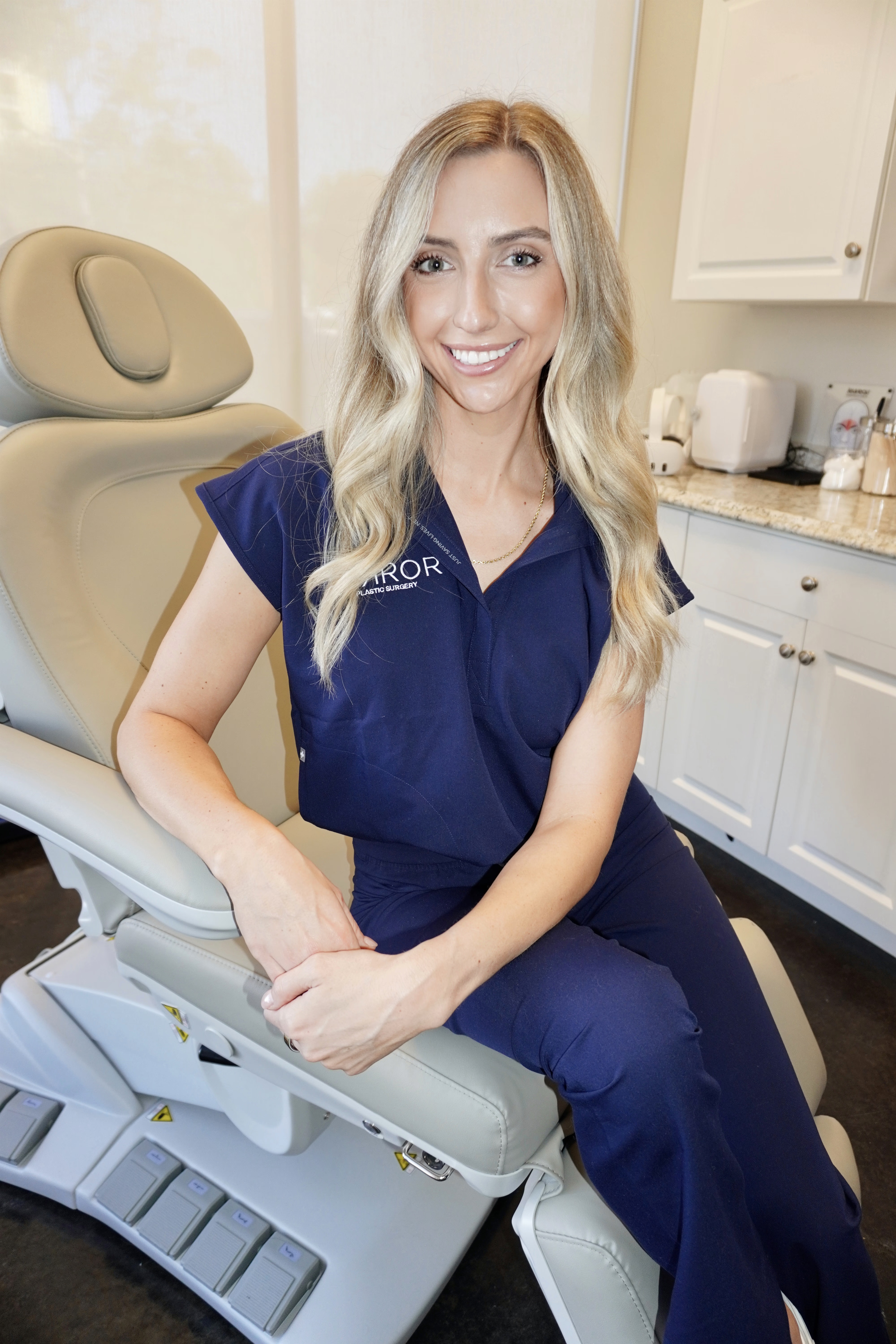
That clinical foundation is complemented by aesthetic expertise developed early in her career. Ellie began at a high-end medical spa in Boston, which gives her a dual perspective that connects aesthetic goals with advanced clinical science. Her approach is rooted in education and transparency, and she explains the physiology behind each recommendation in plain terms. She also tells patients when a therapy is not yet necessary for them.
Patients receive 24/7 direct text access to Ellie throughout their protocol. Consultations and ongoing care are available in person at the St. Petersburg clinic or fully remotely, with prescription delivery across the continental United States, including Hawaii and Alaska.
Schedule your remote or in-person consultation to begin a lab-guided peptide evaluation.
Peptide Basics and Common Protocol Components
Peptides are short chains of amino acids that act as signaling molecules and tell cells and tissues to perform specific biological tasks. They differ from many conventional pharmaceuticals because they mimic naturally occurring signals instead of introducing synthetic compounds that are foreign to the body’s chemistry. Over 80 FDA-approved peptide drugs are currently on the market, with well-characterized safety profiles established through large clinical trials, which distinguishes the peptide class broadly from the narrower subset of unregulated wellness peptides.
Clinical practice distinguishes single-peptide use from rational custom stacking. A stack combines compounds with complementary mechanisms to address multiple physiological targets at the same time. The following list shows the range of peptides Ellie may consider when designing a custom protocol, each selected based on the specific physiological targets identified in your lab work:
- GHK-Cu, which supports collagen and elastin production and helps with skin, hair, and nail rejuvenation
- BPC-157, which addresses systemic inflammation and supports muscle, tendon, ligament, and joint repair
- TB500 (Thymosin Beta-4), which targets soft tissue inflammation and wound repair
- Sermorelin / Ipamorelin, which act as growth hormone secretagogues that support muscle retention
- NAD, which supports mitochondrial energy production and cellular anti-aging pathways
- KPV, which focuses on gut microbiome inflammation
- GLP-3R, which supports weight management and insulin resistance with a reduced side-effect profile compared to earlier GLP formulations
- PT-141, Kisspeptin, Selank, which support sexual wellness, fertility, and anxiety management respectively
Ellie always determines peptide selection after reviewing lab results, never before.
Step-by-Step: How Personalized Peptide Care Works
Every protocol at Mirror Plastic Surgery starts with a 30- to 60-minute consultation with Ellie. The session covers full medical history, current medications, surgical history, and specific wellness goals. Baseline labs should be drawn within two weeks of starting any peptide protocol to establish reference values for efficacy, safety, and dose calibration.
For weight management, metabolic, or inflammatory indications, Ellie orders or reviews a comprehensive panel that includes:
- Thyroid markers: TSH, Free T3, Free T4
- Liver function: ALT, AST, GGT, total bilirubin
- Kidney function: creatinine, eGFR, BUN
- Metabolic and diabetes markers: fasting glucose, fasting insulin, HbA1c, lipid panel
- Inflammatory markers: hsCRP
- Hormone panels as clinically indicated
After the baseline assessment, Ellie creates a custom peptide stack and administration protocol. Monitoring and protocol adjustment occur every 4–8 weeks, and these visits track symptoms, lab values, and side effects. Growth-hormone secretagogue protocols commonly run 12–16 weeks followed by a rest period equal in length to reset receptor sensitivity.
Peptide Demand, Regulation, and Clinical Advantage
Patient interest in peptide therapies has expanded substantially since GLP-1 medications showed that targeted biological therapies can produce measurable outcomes. As of early 2026, patients are encountering and asking clinicians about peptide therapies daily, and the follow-on question about what else is available beyond GLP-1s now drives demand for practitioner-led protocols.
Regulatory activity has shaped the supply side of this demand. Following the FDA’s late-2023 placement of 19 peptides on the Category 2 restricted compounding list, the FDA removed 12 peptides from Category 2 due to withdrawn nominations and scheduled July 2026 PCAC meetings to evaluate them for potential inclusion on the 503A bulk drug substances list. This shift may expand access through licensed compounding channels.
Within this changing landscape, a credentialed practitioner who offers lab-guided, remotely accessible care provides a clear advantage for patients who want safe access. Physician organizations including the Endocrine Society have called for more standardized clinical guidance as peptide therapies become more widely sought.
Start with medical supervision to access a medically supervised protocol rather than navigating the gray market alone.
Key Factors That Shape Individual Results
Several practical factors determine whether a peptide protocol delivers its intended outcomes.1
- Sourcing: Third-party analyses of unregulated peptides have documented incorrect peptide identity, dosing errors with actual potency ranging from 50 to 200 percent of labeled concentration, bacterial endotoxin contamination, and non-sterile preparations. To eliminate these risks, Mirror Plastic Surgery sources exclusively from reputable suppliers with batch-specific Certificates of Analysis.
- Direct clinician access: Ellie is reachable via text 24/7 for questions, side-effect reporting, and refill requests, which is a level of access that most online or high-volume clinic models do not provide.
- Expected timelines: Some conditions show initial improvements within the first week, while goals such as collagen remodeling or hormonal balance require consistent use over months.1
- Maintenance requirements: Peptide therapy amplifies a healthy foundation rather than replacing it, and diet, sleep, exercise, and stress management remain essential variables.
- Outcome variability: Genetics, lifestyle, adherence, and the specific protocol all influence individual results, and no two patients follow identical trajectories.1
Risks, Limitations, and Screening Needs
The most significant safety risk in peptide therapy involves where products are sourced. Risks include harmful contaminants or solutions in non-professional products, and consulting a healthcare provider and sourcing from compounding pharmacies reduces many of these concerns.
Pre-existing condition screening is mandatory before starting any protocol. Absolute contraindications for growth hormone secretagogues include active malignancy, uncontrolled diabetes, active proliferative diabetic retinopathy, and untreated pituitary tumors. Beyond these absolute exclusions, patients with autoimmune conditions or endocrine sensitivity require careful evaluation before initiating peptide therapy, because their physiology may respond unpredictably. Pregnancy and breastfeeding represent a separate category of relative contraindications across all peptide classes due to insufficient human safety data.
Common mild side effects include injection-site redness, transient fatigue, headache, and nausea, particularly with metabolic peptides. Growth hormone secretagogues can unmask subclinical hypothyroidism by reducing T4-to-T3 conversion, which makes a baseline thyroid panel mandatory before starting sermorelin or ipamorelin. Results also differ by genetics, lifestyle, and adherence, and no practitioner can guarantee uniform outcomes across patients.1
Clearing Up Common Peptide Misconceptions
Peptides are only for weight loss. GLP-1 medications have dominated headlines, but the peptide class addresses a far broader range of physiology, including systemic inflammation, post-surgical recovery, collagen production, mitochondrial energy, neurological health, sexual wellness, and fertility. Weight management is one application among many.
Benefits disappear permanently when use stops. Effects diminish when a protocol ends, similar to discontinuing any health regimen. Inflammation that was being managed will likely return to its prior state. A maintenance protocol sustains the gains achieved during the active phase and does not require indefinite high-dose use.
All peptide sources are equivalent. An FDA-approved peptide drug is not equivalent to a compounded medication, which in turn differs from a research chemical, topical cosmetic peptide, or investigational compound still in clinical trials. Products labeled “for research use only” are not required to undergo sterility testing, endotoxin testing, identity verification, potency validation, or stability studies. The regulatory and quality gap between a licensed compounding pharmacy and an online research vendor is substantial.
Peptides are equivalent to anabolic steroids. Steroids are synthetic hormones that directly flood the body with testosterone and suppress natural production, while peptides are signaling molecules that stimulate the body’s own natural processes without suppressing hormone production or carrying the same liver, cardiovascular, or masculinizing risks.
Frequently Asked Questions
Who can prescribe peptides near me?
Peptides intended for human therapeutic use must be prescribed by a licensed healthcare provider, typically a physician, nurse practitioner, or physician assistant operating within their scope of practice. Board-certified family nurse practitioners like Ellie Pranckevicius, FNP-BC, are qualified to evaluate, prescribe, and monitor peptide protocols. The prescription is then filled by a state-licensed compounding pharmacy that follows Good Manufacturing Practice standards. Providers who offer peptides without requiring a consultation, lab work, or a valid prescription are operating outside the standard of care.
How do I get peptides prescribed?
The process starts with a comprehensive consultation at Mirror Plastic Surgery, which is a 30- to 60-minute session with Ellie that covers medical history, current medications, and wellness goals. For most indications, a lab panel is ordered or reviewed before any peptide is selected. The practitioner then designs a custom protocol, issues a prescription to a licensed compounding pharmacy, and provides detailed instructions for reconstitution and self-administration, often with video demonstrations. Ongoing monitoring follows at regular intervals, with lab rechecks at key milestones to track safety and progress.
What is the safest place to buy peptides?
The safest source is a state-licensed 503A or 503B compounding pharmacy operating under a valid prescription from a licensed provider. These facilities must meet USP <797> sterile compounding standards, conduct sterility and endotoxin testing, and provide lot-specific Certificates of Analysis confirming purity and identity. Research-grade peptides sold online without a prescription are labeled “for research use only” and lack the quality controls described earlier, which makes them unsuitable for therapeutic use. Mirror Plastic Surgery sources exclusively from reputable suppliers with verified batch testing.
What happens if I stop taking peptides?
When a peptide protocol ends, the physiological effects it was producing gradually diminish. For inflammation management, the immune dysregulation that was being modulated will likely return toward its prior baseline. For growth hormone secretagogues, IGF-1 levels decline back to pre-treatment ranges. This pattern does not represent a permanent loss and instead reflects the body returning to its unsupported state. A maintenance protocol, typically at a lower dose or reduced frequency, is often recommended to sustain the outcomes achieved during the active treatment phase, and Ellie discusses maintenance planning as part of every initial protocol design.
Will everyone see the same results from peptide therapy?
Outcomes vary significantly based on genetics, baseline lab values, diet, sleep quality, exercise habits, adherence to the protocol, and the specific peptides prescribed.1 A patient with well-controlled metabolic markers and a strong lifestyle foundation will generally respond differently than one managing multiple chronic conditions at the same time.1 This variability is the reason a personalized, lab-guided approach matters, because a protocol calibrated to an individual’s actual physiology produces more predictable and meaningful results than a generic stack selected without clinical context.1
Are peptides approved by the FDA?
The FDA has approved numerous peptide-based drugs, including insulin, GLP-1 receptor agonists such as semaglutide and tirzepatide, and PT-141 (bremelanotide). However, many peptides used in wellness and recovery protocols, including BPC-157, GHK-Cu, and various growth hormone secretagogues, are not FDA-approved for human therapeutic use and fall under the agency’s compounding regulations. The FDA has placed a number of these substances on its Category 2 list, indicating potential safety concerns with unregulated compounding. Risk increases when these compounds are obtained from unregulated sources without medical supervision, proper dosing, or quality testing.
Disclaimer: The information on this page is provided for educational purposes only and does not constitute medical advice. Peptide therapies discussed here are not FDA-approved for all indications described. Individual results vary. Consult a qualified, licensed healthcare provider before beginning any peptide protocol. Mirror Plastic Surgery’s peptide services are provided under the supervision of a board-certified nurse practitioner and are tailored to each patient’s individual health profile and laboratory findings.
Conclusion
A dedicated healthcare professional offering personalized peptide therapy care brings together rigorous credentials, comprehensive laboratory analysis, batch-tested sourcing, and continuous clinical oversight in a single, coherent patient experience. At Mirror Plastic Surgery, that practitioner is Ellie Pranckevicius, FNP-BC, a board-certified family nurse practitioner whose background in critical-care nursing, aesthetics, and advanced clinical medicine positions her to design protocols that are both scientifically grounded and individually calibrated. Whether the goal is managing chronic inflammation, supporting weight management, accelerating post-surgical recovery, or addressing cellular aging, the pathway to safe and effective peptide therapy starts with a qualified clinical conversation, not an online search.
Talk with Ellie in a personalized consultation to start your lab-guided peptide therapy evaluation at Mirror Plastic Surgery.
1 Results may vary from person to person. Editorial content, before and after images, and patient testimonials do not constitute a guarantee of specific results.
Peptide therapy is intended for wellness and optimization purposes and is not prescribed to diagnose, treat, cure, or prevent disease unless specifically stated. Many peptides are not FDA-approved and may be used off-label. Some have limited long-term safety data, with a potential for unknown risks, complications, or desensitization with prolonged use.