
Written by: Dr. Akash Chandawarkar, Board Certified Plastic Surgeon, Mirror Plastic Surgery | Last updated: July 5, 2026
Key Takeaways for Natural-Feeling Breast Implants in 2026
- Cohesive-gel silicone implants, especially highly cohesive and viscoelastic options like Motiva Ergonomix, feel most natural when matched to your anatomy.1
- Implant placement, profile, and projection should follow tissue-based planning that measures chest wall size, skin thickness, and elasticity.
- A 60-minute consultation at Mirror Plastic Surgery includes full anatomical assessment, 3D imaging, and a clear review of risks, recovery, and long-term monitoring.
- 2026 options such as Motiva SmoothSilk and MENTOR MemoryGel Enhanced implants improve shape retention, lower capsular contracture rates, and offer adaptive gel behavior.1
- Schedule your personalized consultation today at Mirror Plastic Surgery to explore natural-feeling breast augmentation with Dr. Akash.
How Cohesive-Gel Breast Implants Behave in the Body
Cohesive-gel breast implants are silicone devices filled with cross-linked silicone molecules that form a stable, semi-solid mass. This structure allows the gel to behave more like natural breast tissue than saline or earlier free-flowing silicone.1 Available in soft, standard, and highly cohesive (form-stable) formulations, these implants maintain their shape under compression while still moving with your body. Silicone implants now hold a 62% global market share, largely because patients prefer their natural feel and appearance.1
How Placement, Profile, and Projection Shape Natural Feel
Even the most advanced cohesive-gel implant will not feel natural if it is placed incorrectly. Placement plane is one of the most consequential decisions in breast augmentation. The dual-plane technique positions the upper portion of the implant beneath the pectoralis major muscle while the lower portion sits under the breast gland. The muscle adds coverage over the upper edge of the implant and softens any visible transition. For patients with thin tissue, this muscular padding often makes the difference between a natural slope and a sharp, artificial step.
Athletic patients with strong muscle development may benefit from subfascial placement beneath the fascia. This approach can reduce distortion during movement while preserving a smooth, natural contour.
Implant profile describes how far the implant projects forward compared with its base width. Moderate or demi profiles spread volume more broadly across the chest wall than high-profile implants. This distribution often recreates a gentle, natural slope in patients with a flatter chest wall. High-profile implants concentrate projection and work better for patients with a narrower chest base who want more forward fullness.
Tissue-based planning that uses breast measurements such as base width, nipple-to-fold distance, skin elasticity, and soft-tissue thickness should guide these choices. Matching implant width and projection to your actual anatomy supports both natural feel and long-term comfort.
Implant Types and How They Tend to Feel
| Implant Type | Cohesivity Level | Reported Feel | Key 2026 Data |
|---|---|---|---|
| Saline | None (liquid fill) | Firmer with more visible rippling, especially in thin patients | Remains FDA-approved, but less preferred for natural feel in patients with limited tissue |
| Standard silicone gel | Low–moderate | Softer and more natural than saline with reduced rippling | Long-term studies document capsular contracture and rupture rates |
| Highly cohesive (“gummy bear”) | High (form-stable) | Natural feel with strong shape retention and resistance to gel migration if the shell fails1 | Lower rupture risk and fewer revisions than earlier generations |
| Motiva SmoothSilk Ergonomix (FDA-approved 2024) | Viscoelastic / adaptive | Flows into a teardrop shape when upright and redistributes to round when lying down, closely mimicking natural tissue dynamics1 | Prospective studies show low capsular contracture and rupture rates1 |
What a Thorough 60-Minute Breast Augmentation Consultation Includes
A thorough consultation sets the stage for a natural result. At Mirror Plastic Surgery, every breast augmentation consultation with Dr. Akash lasts a full hour, which contrasts with the brief visits common at high-volume practices.
A complete consultation covers a top-to-bottom anatomical assessment, including chest wall architecture, breast base width, sternum-to-nipple distance, upper-pole pinch thickness, and rib cage symmetry. It also includes tissue-based planning that relies on objective measurements instead of cup-size targets. You then review 3D imaging simulations that show how different implant sizes and shapes look on your actual anatomy.
The visit continues with a full medical history review, including smoking status, GLP-1 medication use, and weight stability. You discuss implant failure modes, strategies to reduce capsular contracture, and possible changes in nipple sensation. Finally, you receive week-by-week recovery expectations, including compression garment use and activity restrictions.
A study in the Aesthetic Surgery Journal that used a patient-involvement size-selection process with sizers and Vectra 3D simulation reported low long-term size-related dissatisfaction.1 This research supports structured, measurement-driven consultations as a path to long-lasting satisfaction.1
Recovery in Tampa and Ongoing Capsule Monitoring
Recovery at Mirror Plastic Surgery is tailored to your implant type, placement plane, and activity level. Typical milestones include light walking within a few days and avoiding upper-body resistance training for six weeks. You then return to Tampa Bay activities such as paddleboarding, swimming, and cycling on a timeline approved by your surgeon.
Long-term monitoring protects your results and your health. Noninvasive imaging such as MRI or high-resolution ultrasound remains recommended even for modern highly cohesive implants. These devices have no automatic expiration date, but they are not considered lifetime devices.
Mirror Plastic Surgery uses in-office ultrasound for precise pre-operative and post-operative assessment. This approach allows early detection of integrity changes without radiation exposure. Annual follow-up visits after surgery are standard and allow the team to monitor capsule formation, implant position, and overall breast health over time.
2026 Implant Innovations That Support Natural Feel
In September 2024, the FDA approved Motiva SmoothSilk Ergonomix and Motiva SmoothSilk Round implants for primary and revision augmentation. This approval made Motiva the fourth FDA-approved manufacturer in the United States, joining Mentor, Allergan, and Tiger (formerly Sientra). Motiva’s sixth-generation implants use proprietary gels that maintain shape memory while staying very soft. These properties support smaller incisions and stable long-term aesthetics.
Johnson & Johnson MedTech released MENTOR MemoryGel Enhanced Breast Implants in May 2025. These implants feature a 4-layer shell that reduces rupture risk and a specialized surface that aims to lower capsular contracture rates. Establishment Labs launched Preservé breast augmentation technology in Brazil in February 2025. This platform focuses on preserving breast tissue during augmentation for more natural structural outcomes.
The FDA also approved new larger implant volumes up to 1,445 cc to expand reconstruction options. At the same time, hybrid augmentation that combines implants with autologous fat transfer has gained popularity. Surgeons harvest fat from areas such as the abdomen or thighs and inject it around the implants to smooth transitions and soften visible edges. Dr. Akash serves on the advisory board for Motiva and brings early insight into these technologies as they reach US patients.
Misconceptions About Natural Feel and Rippling
Many patients assume implant type alone determines whether breasts look and feel natural. In reality, natural-looking results come from proportion, balance, and harmony with your anatomy, not implant shape alone. Rippling, which is the visible or palpable wrinkling of an implant through the skin, usually reflects a tissue-coverage problem rather than an implant-brand problem.
Visible implants most often occur when there is not enough soft-tissue coverage. Thin subcutaneous fat and glandular tissue can create a sharp upper-pole step-off when implants sit directly under the gland. Adequate coverage through correct plane selection, appropriate implant sizing, and, when needed, hybrid fat transfer reduces rippling more reliably than switching brands.
Anatomical (teardrop) implants require a textured surface to prevent rotation, and that texture has been linked to breast implant-associated anaplastic large cell lymphoma (BIA-ALCL). This association has driven a sharp decline in their cosmetic use in the United States. Modern smooth round implants avoid this specific risk.
Step-by-Step Framework for Matching Implants to Your Anatomy
Choosing the right implant works best as a stepwise, measurement-based process that builds from one decision to the next.
- Step 1 — Measure chest base width: Implant width must equal or be less than the measured breast width diameter. This limit helps prevent lateral extension, symmastia, and wide cleavage gaps.
- Step 2 — Assess tissue thickness: Once the safe implant width is known, the next question is how much tissue will cover it. Ideal candidates for undetectable results have at least 2 cm of pinchable upper-pole tissue. Thinner patients may need dual-plane placement and possibly hybrid fat transfer to maintain a soft, natural feel.
- Step 3 — Evaluate skin elasticity: Tissue thickness describes what you have today, while skin elasticity predicts how that tissue will respond over time. Skin quality influences how the breast envelope accommodates and settles around the implant, which affects whether the size chosen in Steps 1 and 2 will remain stable.
- Step 4 — Define activity level: Lifestyle then refines the size range. More patients now prefer proportionate implants that suit active routines, with 2026 trends favoring sizes in the 250–325 cc range for balanced enhancement that reduces long-term stress on breast tissue and the chest wall.
- Step 5 — Align aesthetic goals with anatomy: Desired look must still respect your frame. Key measurements include breast base width, chest wall shape, skin quality, natural breast position, shoulder width, and hip proportions. These details guide a size and shape that feel like “your” body.
- Step 6 — Select profile: With size and anatomy defined, profile fine-tunes projection. Moderate profiles often suit broader chest walls and active patients. High profiles better match narrower bases with higher projection goals.
- Step 7 — Confirm with 3D simulation: Imaging tools convert all these measurements into visual previews. This step helps you see the likely outcome and reduces size-related dissatisfaction.
How Surgeon Training and Case Volume Influence Results
Advanced implant technology still depends on precise surgical technique. Board certification by the American Board of Plastic Surgery sets a baseline, while fellowship training in aesthetic surgery adds focused expertise that directly affects breast augmentation outcomes.
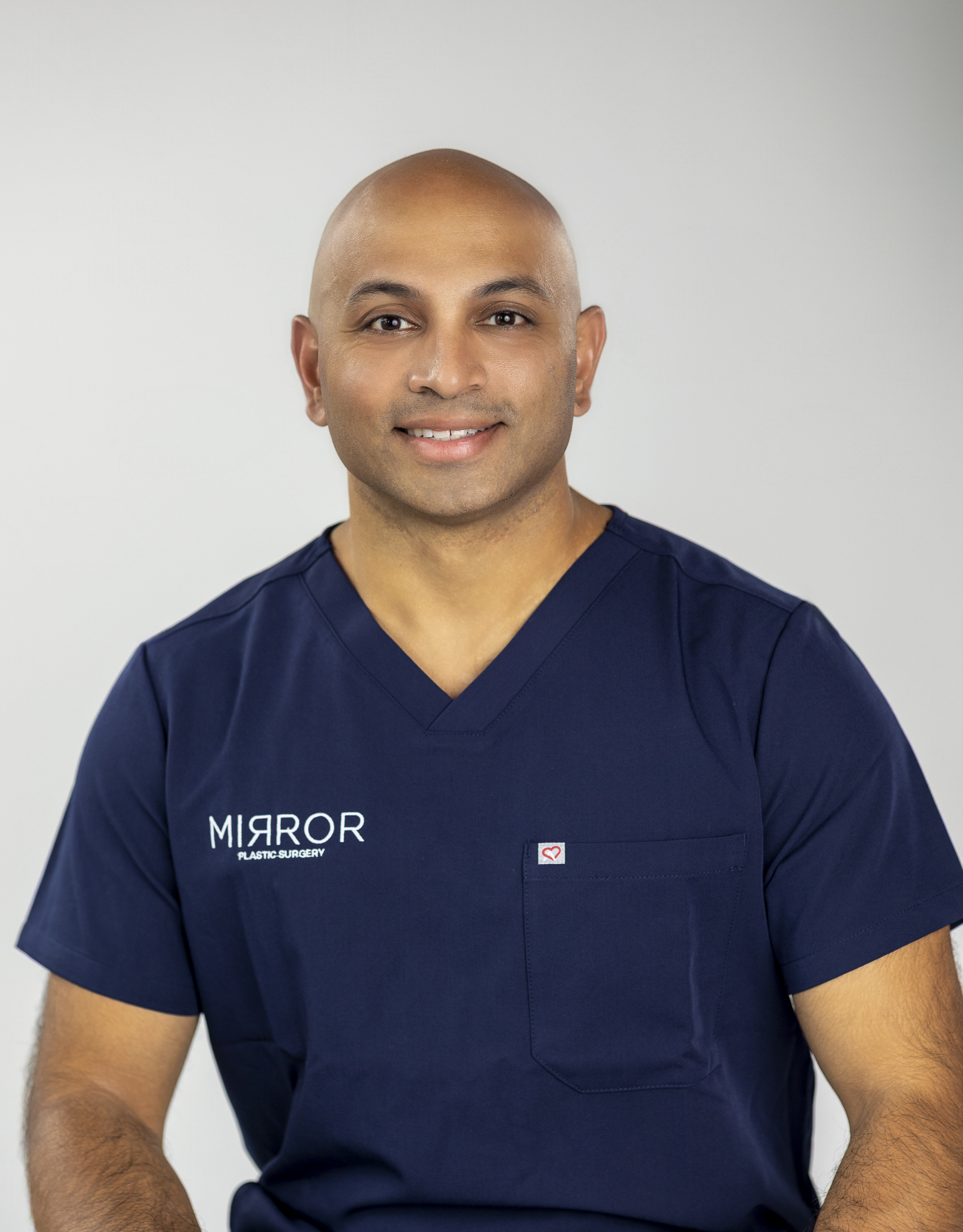
Dr. Akash completed his medical degree through the Harvard-MIT Division of Health Sciences and Technology and graduated from Harvard Medical School with Honors. He then completed a seven-year integrated plastic and reconstructive surgery residency at Johns Hopkins University, with rotations at the Johns Hopkins Hospital, the R Adams Cowley Shock Trauma Center, and the Curtis National Hand Center. After residency, he pursued a highly competitive aesthetic surgery fellowship at the Manhattan Eye, Ear and Throat Hospital (MEETH), which represents the highest level of cosmetic surgery specialization.
His Stanford University Biodesign Innovation Fellowship places him at the intersection of surgical technique and emerging implant technology. He has testified before the US Food and Drug Administration on breast implant safety, a distinction held by very few surgeons. He has also appeared on Newsweek’s America’s Best Plastic Surgeons list for two consecutive years. As a Motiva advisory board member, he brings the latest implant science directly to Mirror Plastic Surgery patients.
Surgical volume also shapes outcomes. Mirror Plastic Surgery limits its schedule to one or two surgeries per day. Many high-volume practices perform five to ten surgeries daily and divide team attention across several operating rooms. At Mirror, every pre-operative measurement, intraoperative decision, and post-operative follow-up receives the full focus of the entire care team.
Frequently Asked Questions
What are the best breast implants for natural feel and look?
Modern cohesive silicone gel implants, especially highly cohesive (“gummy bear”) and viscoelastic adaptive options like Motiva Ergonomix, usually provide the most natural feel and appearance when they match your anatomy through tissue-based planning. Implant type is only one factor. Placement plane, implant profile relative to chest base width, and the amount of native tissue covering the implant matter just as much.
Patients with thin tissue often achieve the most natural results with dual-plane placement, appropriately sized moderate-profile implants, and, in some cases, hybrid fat transfer to increase coverage over the upper pole. No single brand can guarantee a natural result without careful planning and precise surgery.
What are the new breast implants for 2026?
The most notable 2026 change is full US availability of Motiva SmoothSilk implants, which the FDA approved in September 2024. These implants use a viscoelastic gel that adapts to body position and a SmoothSilk surface associated with a 0.5% capsular contracture rate at three years.1 Johnson & Johnson MedTech released MENTOR MemoryGel Enhanced implants in May 2025 with a 4-layer shell design.
Establishment Labs introduced Preservé technology in 2025 to help preserve breast tissue during augmentation. The FDA also cleared six new larger implant volumes up to 1,445 cc for reconstruction patients. Hybrid augmentation that pairs smaller implants with autologous fat transfer continues to grow, especially for active patients who want proportional enhancement rather than a dramatic size increase.
What type of breast implants look and feel the most natural?
Smooth cohesive silicone gel implants placed in the dual-plane position consistently deliver the most natural look and feel across many body types. When placed correctly, highly cohesive gel settles toward the lower pole under gravity when you stand, which creates a gentle slope, and then redistributes when you lie down. This behavior closely mirrors natural breast tissue.
Motiva Ergonomix implants extend this effect with a viscoelastic gel that actively adapts to body position. Textured anatomical implants were designed to mimic a natural slope but carry a documented association with BIA-ALCL and now see limited cosmetic use in the United States. The most natural results come from matching implant width and projection to your measured anatomy, not from choosing a single “perfect” brand or shape.
How should I prepare for a breast augmentation consultation in Tampa?
Preparation starts with a complete medical history that lists all medications, especially GLP-1 drugs such as semaglutide or tirzepatide, which must stop at least one month before surgery under general anesthesia. You should also document your smoking status honestly, since any nicotine use increases wound-healing risks and must stop at least six weeks before surgery.
Bring photos that show your aesthetic goals, and focus on proportions that suit your frame instead of a specific cup size. Prepare clear questions about implant options, placement planes, recovery timelines, and long-term monitoring. Consider bringing a trusted support person who can help remember recovery instructions. At Mirror Plastic Surgery, Dr. Akash dedicates a full hour to each consultation, and the comprehensive assessment described earlier helps you understand your anatomy, options, and realistic outcomes before you decide.
Conclusion: Bringing Technology and Technique Together for Natural Results
Natural-feeling breast augmentation in 2026 depends on advanced cohesive-gel implants, anatomy-driven planning, precise surgical technique, and unhurried education before surgery. Generic advice and rushed visits cannot replace a fellowship-trained surgeon who measures carefully, plans thoughtfully, and operates with the focused schedule that one or two surgeries per day allow. Tampa Bay patients deserve that level of care.
1 Results may vary from person to person. Editorial content, before and after images, and patient testimonials do not constitute a guarantee of specific results.