How to Verify a Board-Certified Hip Dip Filler Injector
Content
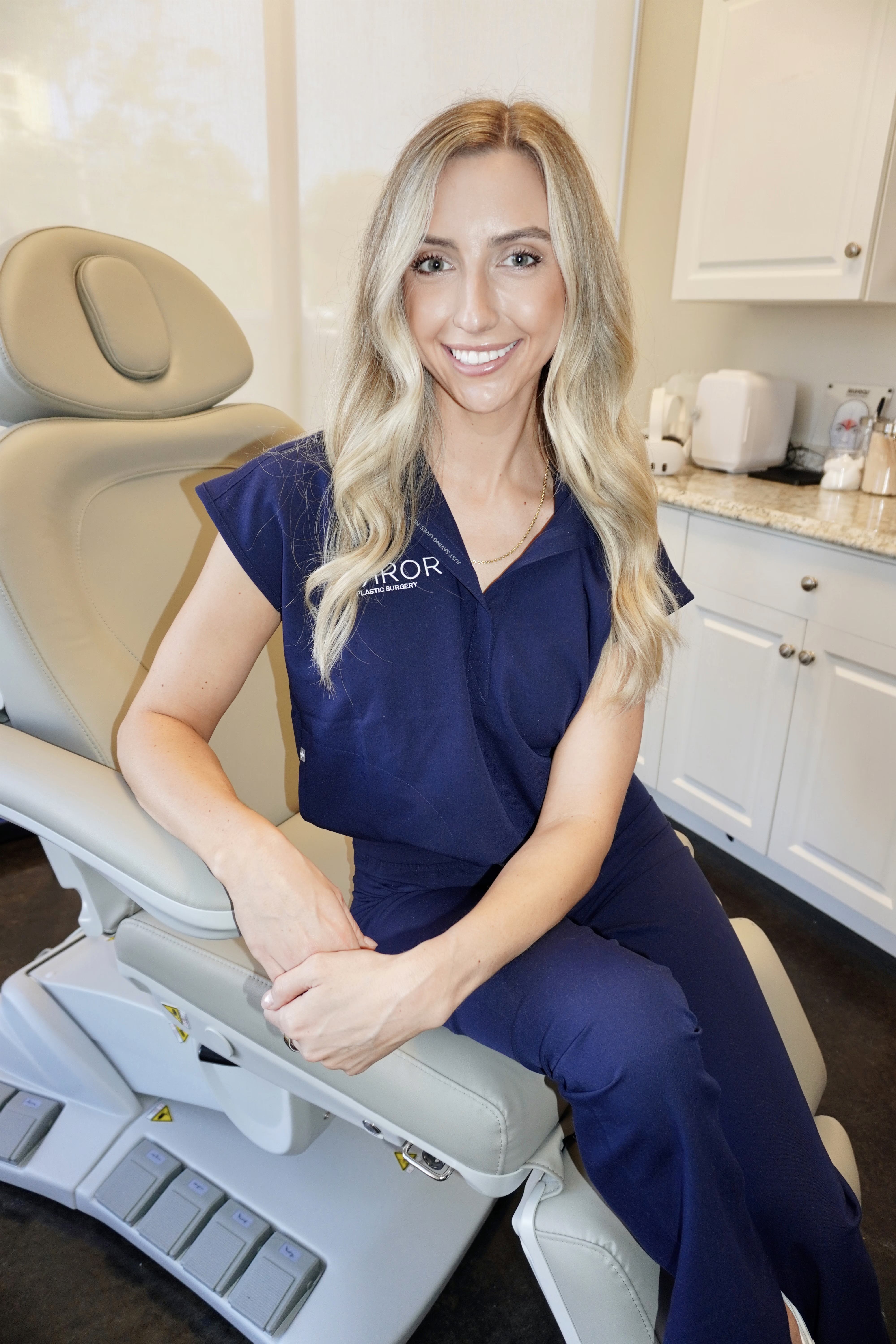
Written by: Ellie Pranckevicius, FNP-BC, Aesthetic Nurse Practitioner & Aesthetic Injector | Facial Restoration & Regenerative Injectable Specialist, Mirror Plastic Surgery | Last updated: July 12, 2026
Hip dip filler can reshape your silhouette, but it also carries real medical risk when done by the wrong person.1 Florida allows many types of practitioners to offer injectables, so checking credentials becomes your main safety tool. The seven steps below work together as a system to help you confirm that your injector is properly trained, supervised, and prepared to manage complications before you commit to treatment.
Key Takeaways
Board certification through an ABMS member board is the primary credential confirming a physician’s specialized training and ongoing professional development beyond state licensure.
Always verify a provider’s ABMS board certification via ABMS CertiFACTS and confirm active Florida licensure and disciplinary history through the Florida Department of Health portal.
Body-contouring injectors must demonstrate specific gluteal and hip-dip case volume, documented physician supervision, and use of blunt-tipped cannulas with on-site reversal agents and emergency protocols.
Confirm product authenticity, FDA status, and biostimulatory preference by inspecting vials, lot numbers, and sourcing documentation; off-label use requires explicit consent and clinical justification.
Schedule your consultation at Mirror Plastic Surgery to receive physician-supervised hip-dip filler treatment from a board-certified plastic surgeon and an experienced, protocol-driven injector.
Step 1: Confirm ABMS or ABPS Board Certification
Start by confirming that the supervising or performing physician holds active board certification through an ABMS member board. ABMS CertiFACTS is the only online resource offering daily database updates across all 24 ABMS member boards and is considered Primary Source Verified (PSV). Once you locate the physician’s record by NPI or state license number, review the details carefully to confirm that their certification is current and appropriate for plastic or aesthetic surgery.
Visit ABMS CertiFACTS and search the physician’s name, NPI, or state license number.
Confirm the specialty board (for example, American Board of Plastic Surgery) and that certification is current, not lapsed.
Red Flag: A provider who cannot supply a board certification number, deflects the question, or claims certification through a non-ABMS organization as equivalent should not be trusted for body contouring injections.
At Mirror Plastic Surgery, Dr. Akash Chandawarkar is a Harvard-educated physician and Johns Hopkins-trained plastic surgeon with fellowship training in aesthetic surgery at Manhattan Eye Ear & Throat Hospital (MEETH)/Lenox Hill Hospital and medical innovation training at Stanford University. These credentials are verifiable through ABMS CertiFACTS.
Step 2: Check Florida License Status and Disciplinary History
Board certification confirms specialty training, but it does not prove that a physician holds an active license to practice in Florida or that their record is free of sanctions. Active state licensure is legally separate from board certification, so you must verify both. In Florida, the Florida Department of Health’s license verification portal allows the public to confirm a provider’s license status, license type, expiration date, and any disciplinary history. Injecting Botox or dermal fillers without an appropriate active Florida license is prohibited under Florida Statute 456.065.
Search the provider’s full name on the Florida Department of Health license lookup tool.
Confirm the license type (MD, DO, ARNP, PA) and that it is active and in good standing.
Review any disciplinary actions, complaints, or restrictions on the license record.
Verify that an established supervisory protocol exists if the injector is an ARNP or PA, as required under Florida Statute 458.348 and 464.012.
Ask how many hip dip and gluteal filler procedures the practice performs each month to understand their real-world body-contouring experience.
Red Flag: Providers who are estheticians, cosmetologists, LPNs, or medical assistants cannot legally inject dermal fillers in Florida. Any clinic that cannot produce documented physician supervision agreements for non-physician injectors is non-compliant.
Step 3: Verify Body-Filler Case Volume and Supervision
Hip and gluteal injections require anatomy-specific experience that general injectable work does not provide. Patients should confirm the provider has specific training in body contouring injections for the hips and buttocks, not just general aesthetics or facial injectables. This distinction matters even more in Florida, where ARNPs performing injectable procedures must operate under an established supervisory protocol with a supervising physician pursuant to Florida Statute 458.348 and 464.012. Physician oversight becomes a legal requirement, not an optional safety perk.
Ask how many gluteal and hip dip filler cases the injector has performed independently.
Confirm the supervising physician’s name, board certification, and availability during procedures.
Ask whether the injector uses blunt-tipped cannulas rather than sharp needles for gluteal injections, which significantly reduces blood vessel injury risk.
Verify that the practice maintains reversal agents on-site and a written vascular occlusion emergency protocol.
Red Flag: An injector who cannot name their supervising physician, cannot describe their complication management protocol, or who has performed body contouring only as an add-on to facial filler work lacks the specialized experience this anatomy demands.
At Mirror Plastic Surgery, non-surgical body contouring is led by Ellie Pranckevicius, FNP-BC, under the direct oversight of Dr. Chandawarkar. Ellie’s background includes four years in the Neuroscience ICU at Tampa General Hospital, 600 hours of hands-on aesthetics training, and focused experience in non-surgical BBL injectables using biostimulatory fillers within a low-volume, detail-oriented practice.
Step 4: Confirm Product Authenticity and Off-Label Filler Use
FDA approval for dermal fillers is product-specific and applies only to named products and their labeled indications, not to broad material categories. This matters because the clinically preferred options for hip dip correction, biostimulatory fillers such as Sculptra (poly-L-lactic acid) and Radiesse (calcium hydroxylapatite), are not FDA-approved for gluteal use. These products stimulate the body’s own collagen production, so patients are left with tissue the body built in response to the treatment rather than a temporary gel.1 Their use for gluteal body contouring is classified as off-label, and the FDA recommends against using dermal fillers for body contouring, so providers must show careful clinical judgment, documented training, explicit patient consent, and thorough documentation.
Ask to see the product vial or syringe and confirm the brand name, lot number, and expiration date.
Verify the product is sourced from an FDA-licensed distributor under a licensed prescriber’s authority.
Confirm the provider can explain why the selected filler fits your anatomy and goals better than alternatives.
Ask whether the practice documents lot numbers in patient charts, as required by Florida compliance standards.
Red Flag: Any provider who cannot produce product documentation, sources fillers from unverified suppliers, or describes off-label body contouring use as “FDA-approved” is misrepresenting the regulatory status of the procedure.
Mirror Plastic Surgery is a supplier-neutral practice. Product selection, including Radiesse, Sculptra, and AlloClae, is driven by patient anatomy and published outcomes, not distributor agreements or sales quotas.
Step 5: Confirm Facility Standards and Emergency Readiness
Ask whether the facility has written emergency protocols for vascular occlusion and anaphylaxis.
Confirm reversal agents are stocked on-site.
Ask whether a physician is reachable by phone or on-site during all injection appointments.
Request a copy of the informed consent document and confirm it addresses body-contouring-specific risks.
Red Flag: A facility that cannot produce written emergency protocols, does not stock reversal agents, or where no physician is reachable during procedures fails the minimum Florida compliance standard for injectable programs.
Verify our emergency protocols in person at Mirror Plastic Surgery, where physician-led response and board-certified oversight are built into every body contouring appointment.
Step 6: Use the Consultation to Test Anatomy Expertise
A qualified provider evaluates hip dip depth, width, symmetry, and skin thickness during assessment and custom treatment planning. The consultation becomes a live test of the provider’s anatomical knowledge and attention to detail. Its length, depth, and specificity reveal whether the injector truly understands gluteal anatomy or treats hip dips like a quick add-on service.
Ask the provider to explain the injection zones they plan to use and why, based on your standing anatomy.
Ask how they assess symmetry and plan for correction across both sides simultaneously.
Ask what their post-treatment massage protocol is and how they prevent nodule formation.
How many hip dip filler procedures have you performed?
Inexperienced injectors increase the risk of complications such as nodules, irregular contours, or unnatural results because biostimulatory products are irreversible and require precision in dilution, placement, and dosing. A provider should give a specific case count for body contouring procedures, not just a general years-in-practice figure, and should describe how their technique has evolved with experience.
What volume and dilution protocol do you use for my anatomy?
Hip dip correction typically requires 4–10 vials per session, and shallow corrections may need four to six vials while deeper dips can require ten, twenty, or more across both sides. A provider who gives a fixed volume answer without first conducting a hands-on standing assessment is not individualizing treatment to your anatomy.
Red Flag: A consultation shorter than 30 minutes for a body contouring procedure, a provider who cannot explain their dilution rationale, or a practice that does not assess patients in a standing position before mapping injection zones lacks the clinical rigor this procedure requires.
Mirror Plastic Surgery’s initial consultations extend up to an hour and include a top-to-bottom anatomical assessment. Ellie evaluates each patient’s hip dip depth, skin quality, symmetry, and long-term goals before proposing any treatment plan.
Step 7: Review Hip Dip Results and Follow-Up Structure
Request before-and-after images specifically for hip dip or gluteal filler cases, not facial work.
Ask how long the consultation will last and what the assessment process involves.
Confirm the provider photographs patients in a standing position to assess symmetry before and after treatment.
Ask whether the treatment plan is single-session or multi-session and what the follow-up protocol includes.
Red Flag: A provider who shows only facial before-and-afters for a body contouring consultation, offers a treatment plan in under 15 minutes, or cannot describe a structured follow-up protocol has not demonstrated the case-specific experience this procedure demands.
Experience a full-hour hip dip consultation at Mirror Plastic Surgery, including detailed photography, honest product discussion, and a personalized multi-session plan when appropriate.
Downloadable Credential Checklist
Use this seven-step checklist at every provider consultation before committing to hip dip filler treatment. Bring it to your appointment and ask each question directly.
Confirm ABMS board certification via CertiFACTS (physician name plus NPI).
Verify active Florida license and disciplinary history on the Florida Department of Health portal.
Confirm body-specific case volume and written physician supervision agreement.
Request product vial documentation: brand, lot number, expiration, and sourcing channel.
Confirm written vascular occlusion emergency protocol and on-site reversal agents.
Ask anatomy-specific questions: injection zones, volume, dilution, and symmetry assessment.
Review body contouring before-and-after portfolio and confirm consultation length exceeds 30 minutes.
Key Considerations for Hip Dip Filler Candidacy
Hip dip correction with biostimulatory fillers is not a one-size-fits-all procedure. Candidacy depends on the depth and width of the lateral femoral depression, skin thickness, underlying muscle mass, and the patient’s long-term aesthetic goals. Realistic expectations include gradual collagen stimulation over several weeks to months, potential multi-session treatment plans, and results that vary based on individual tissue response.1 Mirror Plastic Surgery’s holistic approach evaluates all of these factors before recommending any treatment, and Ellie’s background in regenerative medicine principles supports body contouring plans that prioritize long-term tissue health alongside immediate aesthetic goals.
Home injections and unlicensed providers represent the highest-risk category. In Florida, injecting dermal fillers without an appropriate active license is prohibited under Florida Statute 456.065. Physician oversight is not optional for non-physician injectors in this state; it is a legal requirement. Vascular occlusion is the most critical emergency in dermal filler procedures, with early signs including severe pain, blanching, mottling, and slow capillary refill, and it requires immediate medical response. Only practices with written emergency protocols and physician oversight can manage these events appropriately.
Frequently Asked Questions
What is the difference between board certification and a medical license for an injector?
A medical license is the legal minimum required to practice medicine in a given state and is issued by the state medical board after verifying training, exam passage, and professional fitness. Board certification is a separate, voluntary credential issued by an ABMS member board confirming that a physician has completed advanced specialty training and passed rigorous examinations beyond licensure requirements. For patients evaluating injectors, both matter: the license confirms legal authority to practice in Florida, while board certification confirms the depth of specialty training. At Mirror Plastic Surgery, Dr. Akash Chandawarkar holds both active Florida licensure and ABMS board certification in plastic surgery.
Can a nurse practitioner legally perform hip dip filler injections in Florida?
Yes, but with specific requirements. Florida law mandates physician supervision for ARNPs performing dermal filler procedures, as detailed in Step 3, but the supervising physician is not required to be physically present during the procedure. The physician must be available for consultation by phone or electronic means and must provide documented ongoing oversight. Ellie Pranckevicius, FNP-BC, operates within this framework at Mirror Plastic Surgery under the direct oversight of Dr. Akash Chandawarkar, satisfying all Florida statutory requirements.
Are Sculptra and Radiesse FDA-approved for hip dip correction?
Sculptra is FDA-approved for facial cosmetic use, and Radiesse is FDA-approved for facial wrinkles and hand rejuvenation. Their use for hip dip correction and gluteal body contouring is classified as off-label. As noted in Step 4, the FDA’s position against body contouring with dermal fillers means any provider performing these treatments must obtain explicit informed consent, document the off-label nature of the procedure, and demonstrate the clinical judgment and training to perform it safely. Off-label use is legal and common in medicine when supported by clinical evidence and performed by qualified providers, but patients should always be informed of this distinction before treatment.
What are the most important red flags when evaluating a hip dip filler provider?
The most significant red flags include a provider who cannot verify their supervising physician’s board certification, a consultation shorter than 30 minutes for a body contouring procedure, inability to produce product lot numbers or sourcing documentation, no written vascular occlusion emergency protocol on-site, a before-and-after portfolio that contains only facial filler cases, and any claim that the procedure is fully FDA-approved for gluteal use. In Florida, additional red flags include RNs or ARNPs advertising independent injectable services without documented physician oversight and any provider who cannot produce a written supervision agreement.
How is Mirror Plastic Surgery different from a high-volume med spa for hip dip fillers?
Mirror Plastic Surgery limits itself to one to two procedures per day to maintain undivided clinical focus on each patient. Initial consultations extend up to an hour and include a comprehensive top-to-bottom anatomical assessment. The practice is supplier-neutral, meaning product selection is based entirely on patient anatomy and evidence, not distributor agreements. Ellie Pranckevicius performs non-surgical body contouring under the direct oversight of Dr. Akash Chandawarkar, a Johns Hopkins-trained, ABMS board-certified plastic surgeon. This structure satisfies every verification criterion outlined in this guide and contrasts with high-volume practices where rushed consultations and quota-driven product recommendations are common.
Disclaimer
Disclaimer: Results may vary from person to person. Editorial content, before and after images, and patient testimonials do not constitute a guarantee of specific results.
1 Results may vary from person to person. Editorial content, before and after images, and patient testimonials do not constitute a guarantee of specific results.