
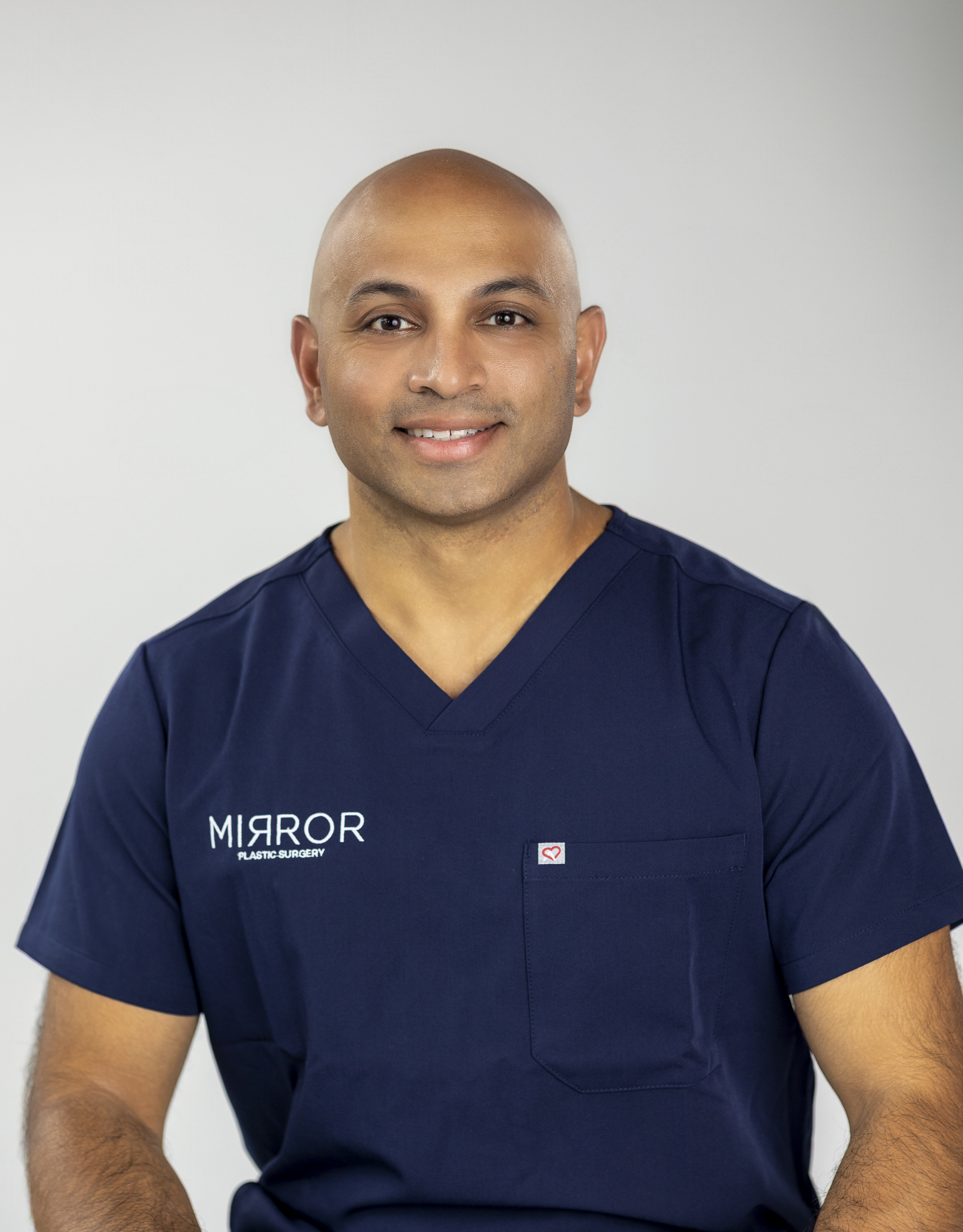
Written by: Dr. Akash Chandawarkar, Board Certified Plastic Surgeon, Mirror Plastic Surgery | Last updated: June 24, 2026
Key Takeaways for Upper Eyelid Recovery
- Upper eyelid surgery recovery follows a predictable timeline. Visible bruising and swelling usually resolve within 10–14 days, while full scar maturation can take up to a year.1
- Structured post-operative care, including head elevation, cold compresses, and strict activity limits, reduces complications and supports smoother healing at every stage.
- Key milestones include suture removal around Days 5–7, social readiness by Days 10–14, and gradual return to exercise between Weeks 3–6, with refined results visible by Month 6.1
- Consistent scar care, sun protection, and follow-up appointments help minimize scarring and support your aesthetic outcome.
- Schedule your personalized recovery consultation at Mirror Plastic Surgery for guidance tailored to your anatomy and schedule.
Upper Blepharoplasty Recovery Timeline Overview
Recovery from upper blepharoplasty unfolds across several phases. Each phase has specific care steps, activity restrictions, and visual milestones. The sections below address each phase in detail, including checklists, realistic appearance descriptions, and follow-up appointment guidance. The timeline begins with the immediate post-operative period.
Schedule your personalized recovery consultation to receive a plan built around your anatomy and schedule.
Days 1–3: Upper Eyelid Swelling Peak
Days 1 through 3 represent the peak swelling window. Eyelids look significantly puffy, and bruising in shades of purple and yellow often extends from the lash line toward the brow and sometimes into the upper cheek. The incision line is visible but sits within the natural eyelid crease. Some patients notice mild tightness, light sensitivity, and watery eyes. Vision remains intact, although the lids can feel heavy.
Days 1–3 Care Checklist:
- Maintain head elevation at 45 degrees at all times, including during sleep, using a wedge pillow or stacked pillows to limit fluid buildup.
- Apply cold compresses or chilled gel masks for 15 to 20 minutes every hour while awake during the first 48 hours to reduce the swelling that elevation helps prevent.
- Keep the incision area clean and dry while swelling is at its peak, and apply prescribed antibiotic ointment as directed.
- Avoid bending at the waist, straining, or lifting anything over 10 pounds to prevent pressure spikes around the eyes.
- Wear UV-blocking sunglasses whenever outdoors, since direct sun exposure to healing incisions accelerates scar pigmentation.
- Take prescribed medications on schedule, and avoid aspirin or ibuprofen unless your surgeon has cleared them.
- Avoid alcohol and smoking, which impair tissue oxygenation and slow healing.
- Rest your eyes frequently, and limit screen time, reading, and contact lens use.
Days 4–7: Early Healing and Suture Removal
By Day 4, swelling begins to plateau and then gradually decline. Bruising shifts from deep purple toward yellow-green as your body reabsorbs pooled blood. The eyelids remain visibly swollen but look less dramatic than during the peak days. Many patients find this period psychologically challenging because improvement is real but subtle.
Suture removal usually occurs between Days 5 and 7, based on your surgeon’s assessment of healing progress. The Aesthetic Society notes that blepharoplasty sutures are generally fine, absorbable, or removable within this window, and timely removal reduces the risk of suture track scarring.
At Mirror Plastic Surgery, Dr. Akash, named among America’s Best Plastic Surgeons 2025 by Newsweek for two consecutive years, limits the practice to one to two surgeries per day. This schedule ensures that post-operative follow-up appointments receive the same focused attention as the procedure itself, rather than being compressed into a high-volume day.
Days 4–7 Care Checklist:
- Continue head elevation during sleep through at least Day 7 to support ongoing swelling reduction.
- Transition from cold compresses to room-temperature compresses after 48 hours for comfort as bruising changes color.
- Attend your suture removal appointment, and never attempt self-removal.
- Begin gentle eyelid cleaning with saline or diluted baby shampoo as instructed.
- Continue sun protection with UV-blocking sunglasses outdoors.
- Avoid driving until cleared by your surgeon, especially if vision feels affected by swelling or eye drops.
Weeks 1–2: Social Recovery and Makeup Timing
Most patients are presentable to the public in 10–14 days after eyelid surgery.1
Makeup resumption is a common focus during this phase. Patients are typically cleared to apply makeup to the surrounding eye area, while avoiding the incision line, at about 10 to 14 days after surgery once sutures are removed and the incision is fully closed. Applying makeup directly to an open or incompletely healed incision introduces bacteria and disrupts the new epithelial layer. Cleveland Clinic advises patients to follow their surgeon’s specific guidance on makeup timing, because individual healing rates differ.
Weeks 1–2 Care Checklist:
- Resume light daily activities and desk work when cleared, usually around Day 7–10.
- Add SPF 30 or higher sunscreen to the periorbital area once the incision is fully closed, continuing the UV protection started with sunglasses.
- Begin scar gel or silicone sheeting as directed after incision closure.
- Follow surgeon guidance on makeup resumption, as outlined above.
- Continue avoiding strenuous activity, heavy lifting, and aerobic exercise.
Weeks 3–6: Scar Refinement and Activity Progression
Residual swelling continues to improve through this phase, although subtle puffiness may persist, especially in the mornings. The incision line shifts from pink-red to a lighter pink. Scar care becomes the main focus.
Low-impact cardiovascular exercise, such as walking, is often cleared around Week 3. Higher-impact activities, including running, cycling, and weightlifting, are usually reintroduced between Weeks 4 and 6, with surgeon approval. Contact sports and activities with significant head-impact risk require a longer restriction period.
Weeks 3–6 Care Checklist:
- Apply silicone scar gel or sheeting twice daily to the incision line.
- Continue daily SPF protection as established in earlier phases.
- Resume low-impact exercise at Week 3 if your surgeon has cleared you.
- Avoid direct sun exposure to the incision for a minimum of 6 months.
- Attend your scheduled follow-up appointment to assess scar progress.
Months 3–6: Final Results and Scar Maturation
The incision line fades progressively through this period and usually settles into a fine, pale line concealed within the natural eyelid crease. Residual firmness or mild irregularity in the scar softens as collagen remodeling completes. The final aesthetic result, including full definition of the upper eyelid crease and correction of excess skin, becomes visible and stable by Month 6.1 Patients with thicker skin or significant pre-operative laxity may need the full 6-month window to appreciate the complete outcome.
Book a consultation with Dr. Akash to review your anatomy, realistic timelines, and what final results typically look like for your specific eyelid structure.
Follow-Up Appointment Preparation Checklist
A structured follow-up schedule supports safe recovery. Post-operative visits occur at key intervals to monitor healing progress, adjust care, and answer questions. Each visit serves a specific clinical purpose.
What to bring and prepare for each follow-up visit:
- A written list of any symptoms, concerns, or questions that arose since the last visit.
- All current medications, supplements, and eye drops you are using.
- Photos taken at home documenting daily appearance, if you would like to track progress.
- Sunglasses for the drive home, since eyes may feel sensitive after examination.
- A clear account of your activity levels and any deviations from the care protocol.
Red Flag Symptoms and When to Call
Most upper blepharoplasty recoveries progress smoothly. Certain symptoms, however, require immediate contact with your surgical team.
- Sudden, significant increase in pain after an initial period of improvement.
- Rapidly expanding swelling or bruising on one side only.
- Any change in vision, including blurring, double vision, or loss of peripheral vision.
- Inability to fully close the eyelid (lagophthalmos) beyond the first 48 hours.
- Signs of infection, such as increasing redness, warmth, discharge, or fever above 101°F.
- Bleeding that does not stop with gentle pressure within 10 minutes.
Dr. Akash holds board certification from the American Board of Plastic Surgery, which includes privileged hospital access in the rare event that a complication requires a higher level of care. This safety layer is not available with every aesthetic provider.
Frequently Asked Questions
Upper Eyelid Recovery Timeline Before You Look Normal
Most patients look socially presentable, meaning bruising and swelling are not immediately obvious to others, between Days 10 and 14.1 Returning to an office environment or low-key social settings is realistic within this window for many patients. Residual mild puffiness can persist for several weeks, especially in the mornings, but usually is not noticeable to others. The final refined result, including full scar fading, takes about 3 to 6 months.1
Eye Makeup After Upper Blepharoplasty
Makeup can usually be applied to the surrounding eye area once sutures are removed and the incision is fully closed, which is generally around Days 10 to 14. Applying makeup directly on the incision line before it has healed increases infection risk and can disrupt healing tissue. Your surgeon will confirm clearance at your follow-up visit based on how your incision has healed.
High-Volume Practices vs Concierge Care for Recovery
High-volume practices that perform five to ten surgeries per day often have limited capacity for individualized post-operative attention. A concierge model, such as the one at Mirror Plastic Surgery where Dr. Akash performs one to two surgeries per day, allows follow-up appointments to proceed without being compressed or rushed. Each post-operative visit receives the same focused clinical attention as the initial consultation, which is especially valuable during the first two weeks when early complications are most likely to be identified and treated.
Key Risks to Discuss Before Upper Eyelid Surgery
Upper blepharoplasty is a precise procedure performed close to the eye. Risks include asymmetry, lagophthalmos, dry eye exacerbation, visible scarring, and, in rare cases, vision changes. Choosing a surgeon with fellowship-level training in facial and oculoplastic surgery helps reduce these risks. Dr. Akash completed a dedicated aesthetic surgery fellowship at the Manhattan Eye, Ear and Throat Hospital, one of the most competitive facial surgery training programs in the country, focused specifically on periorbital procedures.
Preparing for Your Upper Blepharoplasty Consultation
Arrive with a clear description of your primary concerns, such as excess skin, heaviness, asymmetry, or visual field obstruction. Bring a list of all medications and supplements, because several common ones, including fish oil, vitamin E, and aspirin, require discontinuation before surgery. Photographs of your eyes at different ages can help your surgeon understand how your eyelids have changed over time. Mirror Plastic Surgery consultations are structured as hour-long assessments, providing time for a thorough anatomical evaluation and honest discussion of realistic outcomes before any decision is made. This extended format ensures you have the information needed to make a confident choice.
Schedule your consultation at Mirror Plastic Surgery in St. Petersburg to experience this comprehensive evaluation approach with Dr. Akash, a Newsweek-recognized surgeon among America’s Best Plastic Surgeons 2025.
1 Results may vary from person to person. Editorial content, before and after images, and patient testimonials do not constitute a guarantee of specific results.