
Written by: Dr. Akash Chandawarkar, Board Certified Plastic Surgeon, Mirror Plastic Surgery | Last updated: September 9, 2026
Key Takeaways
- A med spa consultation is a medical appointment with a qualified provider, focused on your anatomy, goals, and a personalized plan.
- The process usually follows seven steps: booking and preparation, medical history review, physical assessment, goal discussion, treatment planning, pricing, and consent.
- Patients should ask about credentials, who performs treatments, experience level, risks, emergency plans, product brands, realistic outcomes, and follow-up care.
- Warning signs include rushed visits under 15 minutes, pressure to book, unverifiable medical directors, vague product answers, very low prices, and no emergency protocol.
- At Mirror Plastic Surgery, Dr. Akash Chandawarkar personally performs all treatments with a surgeon’s anatomical expertise; schedule a consultation with Ellie at Mirror Plastic Surgery to experience a physician-led, safety-focused visit.
What A Med Spa Consultation Really Is
A med spa consultation is a clinical encounter, unlike a casual beauty counter chat. The American Med Spa Association (AmSpa) describes it as a good faith exam where the practitioner reviews your medical history and physical condition and establishes a practitioner-patient relationship before recommending treatment. In most states, this face-to-face evaluation is legally required before injectable or laser services.
The consultation confirms that you are a good candidate, explains your options, and builds a safe, personalized plan. Medical oversight is the key distinction between a med spa and a day spa, so the focus stays on candidacy, contraindications, and procedural planning. A quick, rushed visit at a high-volume clinic cannot replace this process. A thoughtful consultation lays the groundwork for safe, natural-looking results.1
The 7-Step Med Spa Consultation Process
- Booking And Pre-Appointment Preparation: When you schedule, you receive intake forms covering your aesthetic goals, medical history, current medications, supplements, allergies, and prior treatments. Bringing photos of yourself from five to ten years ago, a written list of concerns, and a comfortable budget range helps your provider tailor the conversation from the start.
- Intake And Medical History Review: The provider reviews your health history in detail, including medical conditions, prior procedures, skin reactions, and any complications. Current medications, supplements, and topical regimens are reviewed because they can affect bruising, irritation, sensitivity, and recovery. Some treatments require timing adjustments when you use certain prescriptions or active ingredients at home.
- Physical Assessment And Analysis: The provider examines the treatment area under proper lighting, both at rest and in motion, often with gentle palpation. This hands-on assessment evaluates skin quality, volume distribution, asymmetry, and movement patterns. At Mirror Plastic Surgery, this top-to-bottom assessment can take up to an hour, reflecting the practice’s concierge philosophy.
- Discussion Of Goals And Concerns: You describe what you want to change or maintain. The provider listens and asks follow-up questions to understand both your aesthetic goals and the emotions behind them. Questions such as “What results are you hoping to achieve?” and “What does success look like for you?” keep the conversation centered on clinical planning instead of selling.
- Personalized Treatment Plan: The provider recommends specific treatments, products, and a timeline, and explains the reasoning for each choice. A quality provider also explains which treatments they would avoid for you. Willingness to recommend less than you expected, or to refer you elsewhere when appropriate, is a strong sign of integrity. Dr. Akash is known for this transparency and sometimes advises that an expensive service is not necessary yet.
- Transparent Pricing And Time To Decide: Clear, transparent pricing should be provided with no pressure to book immediately. You receive a full cost breakdown and time to consider your options. A reputable practice encourages you to go home, think things over, and return when you feel ready.
- Informed Consent And Next Steps: Informed consent for injectable treatments is a legal and ethical requirement. You receive plain-language information on risks, benefits, limitations, and aftercare before you decide whether to proceed.
10 Questions To Bring To Your Med Spa Consultation
Arriving with questions helps you get clear answers and gauge the provider’s transparency. A reputable provider welcomes detailed questions and responds directly.
- What are your credentials, and who is the medical director?
- Who will actually perform my treatment?
- How many times have you performed this specific treatment?
- What are the risks and potential side effects?
- What is your protocol if something goes wrong, and do you have hyaluronidase on-site for filler emergencies?
- Can I see before-and-after photos of patients with similar concerns and skin type?
- What products or brands will you use, and are they FDA-approved?
- What results can I realistically expect, and what results are unlikely for me?
- How do you handle follow-up care?
- What is your policy on booking after the consultation?
Red Flags: 7 Warning Signs To Avoid
A 2022 survey in the Journal of the American Academy of Dermatology found that nearly 25% of med spas had no board-certified physician overseeing clinical procedures. Recognizing warning signs helps you steer clear of unsafe or high-pressure environments.
- Rushed consultations under 15 minutes with little personalized attention. A thorough consultation usually takes at least 30 to 60 minutes.
- Pressure to book or upsell on the spot. Alex Thiersch, JD, CEO and founder of AmSpa, notes that feeling rushed or pressured is a red flag and would be unusual in a typical doctor’s office. Phrases like “this discount expires today” signal sales tactics rather than clinical guidance.
- Unidentifiable or unverifiable medical director. Every operating medical spa in the US must have a licensed Medical Director responsible for clinical oversight. If the clinic cannot name that person or you cannot verify their license through your state medical board, leave and seek another provider.
- Unwillingness to discuss risks or show before-and-after photos. A provider who cannot clearly explain risks, expected results, and why a treatment fits you may lack clinical competence or transparency.
- Vague answers about products or refusal to show packaging. Patients have the right to see product packaging. Unmarked vials, refusal to show the box, or unfamiliar brand names raise concern, and the FDA has flagged unbranded or foreign-language packaging as a counterfeit warning sign.
- Prices far below market rates. Heavy discounting can signal under-trained staff, diluted product, counterfeit product, or non-FDA-approved product. Legitimate providers cannot consistently sell treatments at a fraction of wholesale cost.
- No clear follow-up, aftercare plan, or emergency protocol. Ask, “If I have a vascular occlusion from filler, what is your protocol?” The right answer includes immediate hyaluronidase, a clear escalation path, and the ability to recognize early signs such as blanching, severe pain, and color change.
How To Prepare For Your Med Spa Consultation
Thoughtful preparation makes your consultation more productive and supports safer treatment. Bring a current list of medications and supplements, a written description of your specific concerns, and one or two reference photos of your desired outcome. Disclose all prior injectables, even if you disliked the results, because filler often persists longer than its marketed duration, and a provider who does not know what is already present cannot plan safely.
What To Avoid Before A Med Spa Appointment
For injectable treatments, avoid NSAIDs and blood-thinning supplements such as fish oil and vitamin E for five to seven days, and skip alcohol for 24 hours. For laser treatments, avoid sun exposure and self-tanner for two to four weeks and pause retinoids three to five days before your visit. Arrive with a clean, makeup-free face if a skin assessment is likely. Avoid filler dissolving or aggressive treatments in the two weeks before your consultation, and avoid a fresh tan because most laser and skin treatments require untanned skin.
Med Spa Tipping Etiquette
Tipping is not expected or appropriate for medical services. Many med spas do not accept tips because tipping is uncommon in healthcare and can create ethical concerns for non-physician providers. Medical spa treatments are healthcare procedures performed by licensed professionals, so focus on choosing a qualified provider rather than planning a tip.
Why Provider Credentials Matter
Provider training and oversight shape both your safety and your results.1 A board-certified plastic surgeon completes years of formal training in facial and body anatomy, which is crucial for injectable treatments where a few millimeters can separate a smooth outcome from a complication.1 In Florida, injectable treatments must be performed by a licensed healthcare provider such as an RN, NP, PA, or physician, and laser or energy-based treatments have additional scope-of-practice rules based on the device and energy level.
At a typical high-volume clinic, a consultation may last 15 minutes or less and may be conducted by a staff member rather than the treating provider. It often ends in a same-day booking before you have time to consider your options. Pricing may feel unclear, and the medical director may be a name on the wall instead of an actively involved clinician. A “ghost practice,” where a med spa lists a physician as Medical Director who is not physically present and provides only remote supervision, is illegal or heavily restricted in most US states.
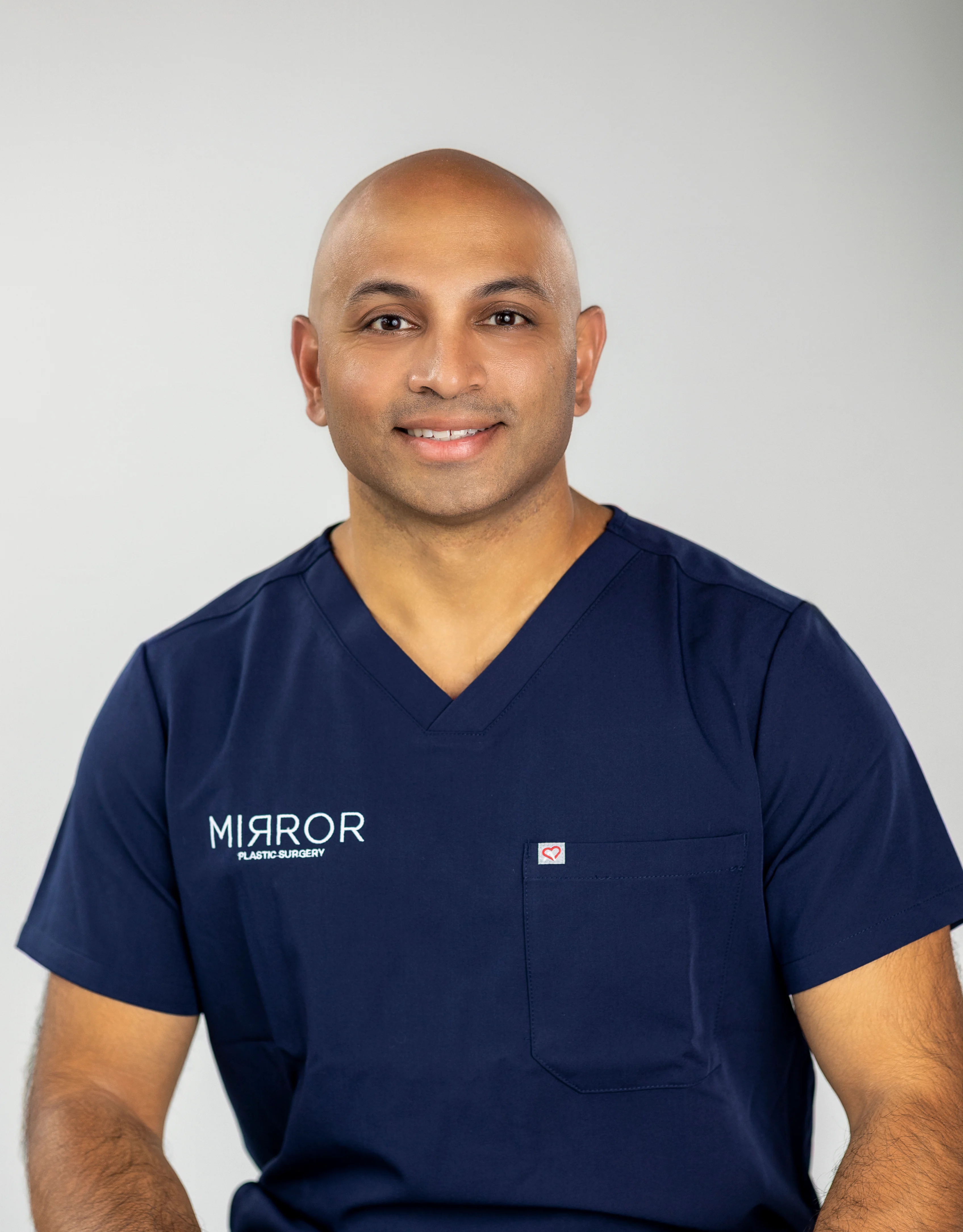
At Mirror Plastic Surgery, Dr. Akash personally performs all injections. Every neuromodulator and dermal filler is placed by a physician with a surgeon’s command of facial and subdermal anatomy. Consultations can run up to an hour. The practice performs only one to two procedures per day so the team can focus fully on you before, during, and after your appointment. The guiding philosophy places safety first, function second, and aesthetics third.
What To Expect After Your Consultation
After your consultation, you may receive a written summary of your treatment plan and can reach out with follow-up questions at any time. A reputable practice offers ongoing support and follow-up, and you should feel free to decide on timing without pressure. Many first consultations end without treatment, which can be the right outcome. Sometimes the best choice is a different treatment than you expected, waiting until a later time, or accepting a referral elsewhere. That level of honesty signals a provider who values your well-being over revenue.
Frequently Asked Questions
How Long Does A Med Spa Consultation Take?
A thorough consultation typically takes 30 to 60 minutes. At Mirror Plastic Surgery, Dr. Akash often spends up to an hour to understand your goals, review your medical history, and create a personalized plan. A visit that wraps up in under 15 minutes usually indicates that your care is not receiving adequate attention.
What Is The Typical Process Of A Consultation?
The process includes intake paperwork and medical history review, a physical assessment of the treatment area at rest and in motion, a discussion of your goals and concerns, a personalized treatment recommendation with clear reasoning, transparent pricing with time to decide, and informed consent. The appointment focuses on determining candidacy and creating a safe, tailored plan rather than selling a package.
Can I Get A Treatment On The Same Day As My Consultation?
Some practices offer same-day treatment, which can work for straightforward cases. For more significant treatments such as filler or laser procedures, many patients prefer time to think through options. A reputable provider may offer same-day treatment when it makes clinical sense but does not pressure you to accept it. If declining same-day treatment feels uncomfortable or a discount disappears once you leave, you are likely experiencing a sales tactic.
What Are Red Flags At A Med Spa?
As covered in the red flags section, watch for pressure to book, unverifiable medical direction, vague answers about products or risks, very low pricing, and lack of medical history review or emergency planning. If you notice these issues, seek a second opinion from a physician-led practice.
What Questions Should I Ask At A Med Spa Consultation?
Ask about the provider’s credentials and board certifications, who will perform your treatment, how often they perform that specific procedure, what the risks are and how complications are handled, whether hyaluronidase is available on-site for filler emergencies, which product brands they use and whether those products are FDA-approved, what realistic outcomes look like for your anatomy, how follow-up care works, and how they handle booking decisions after the visit. A provider who welcomes these questions and answers clearly demonstrates the transparency that defines quality care.
Conclusion: Choose A Consultation That Puts You First
A med spa consultation is a medical appointment focused on your safety, your anatomy, and your long-term goals. Understanding the steps, asking informed questions, and recognizing red flags helps you choose a provider who prioritizes your well-being over revenue. The contrast between a rushed, high-volume experience and a concierge, physician-led consultation directly affects both your safety and your results.1
At Mirror Plastic Surgery, Dr. Akash Chandawarkar brings a board-certified plastic surgeon’s precision, a Harvard and Johns Hopkins education, and a commitment to honest, unbiased communication to every consultation. This philosophy means you will not be pushed toward treatments that do not fit your needs.
Disclaimer: Results may vary from person to person. Editorial content, before and after images, and patient testimonials do not constitute a guarantee of specific results.
1 Results may vary from person to person. Editorial content, before and after images, and patient testimonials do not constitute a guarantee of specific results.