

Written by: Ellie Pranckevicius, FNP-BC, Aesthetic Nurse Practitioner & Aesthetic Injector | Facial Restoration & Regenerative Injectable Specialist, Mirror Plastic Surgery | Last updated: July 15, 2026
Key Takeaways
- Cellular rejuvenation in 2026 spans epigenetic reprogramming, senescent cell clearance, mitochondrial repair, and targeted peptide signaling, with the first human partial-reprogramming trial now underway.
- Key peptide classes, including GHK-Cu, BPC-157, TB-500, MOTS-c, and incretin agonists, support collagen synthesis, tissue repair, metabolic restoration, and inflammation modulation, although human evidence levels vary widely.
- Regulatory changes effective April 2026 removed several peptides from the FDA Category 2 list, with further review scheduled for July 2026, yet none carry approval for anti-aging or general wellness uses.
- Medical supervision is essential. Batch-tested 503A compounding, pre-treatment lab screening, individualized dosing, and ongoing biomarker monitoring help reduce risks such as angiogenic effects, hormonal disruption, and dosing errors.
- Patients seeking lab-informed, personalized peptide protocols can schedule a consultation with Ellie Pranckevicius, FNP-BC at Mirror Plastic Surgery for safe, evidence-based care.
2026 Cellular Rejuvenation Milestones and Trials
The most consequential 2026 milestone in cellular rejuvenation science is the first human dosing of a partial epigenetic reprogramming therapy. Life Biosciences announced on June 9, 2026, that the first participant had been dosed in its Phase 1 trial of ER-100, a gene therapy that uses a proprietary OSK cocktail (OCT-4, SOX-2, KLF-4) to partially reset epigenetic age in retinal ganglion cells damaged by glaucoma and non-arteritic anterior ischemic optic neuropathy. The trial received FDA Investigational New Drug clearance and is enrolling up to 18 participants across sites in Boston, New York, Los Angeles, and Charleston. Life Biosciences closed an $80 million Series D in April 2026 to sustain operations into the second half of 2027. No efficacy data are yet available. This is a Phase 1 safety and dosing study.
On the metabolic peptide front, SURMOUNT-5 was the first large randomized head-to-head trial comparing tirzepatide against semaglutide, demonstrating greater mean weight reduction with the dual GIP/GLP-1 agonist. Retatrutide’s TRIUMPH-1 Phase 3 trial (n=2,339, 80 weeks) reported 28.3% mean weight loss at the 12 mg dose, the highest published figure for any incretin compound at the time of writing. These trials confirm that the incretin class is effective. The current research question focuses on which receptor-agonist design performs best for a given patient profile.
On the regulatory front, effective April 22, 2026, the FDA removed twelve peptides, including BPC-157, TB-500, GHK-Cu, MOTS-C, Epitalon, Semax, and KPV, from its Category 2 restricted compounding list. The FDA’s Pharmacy Compounding Advisory Committee is scheduled to review seven of those peptides during its July 23–24, 2026 meeting for potential inclusion on the Section 503A Bulks List. Removal from Category 2 and the upcoming PCAC review do not constitute FDA drug approval. FDA staff reviewers stated ahead of the July meeting that human evidence remains limited for several of the peptides under consideration. The full decision process is expected to extend into 2027.
Key Mechanisms: Reprogramming, Senolytics, and Mitochondrial Support
Beyond regulatory developments, the biological mechanisms behind these therapies explain their potential and their limits. Partial epigenetic reprogramming is the most structurally novel mechanism in the 2026 landscape. Preclinical studies of ER-100 demonstrated that controlled expression of OCT-4, SOX-2, and KLF-4 can reset epigenetic patterns and restore visual function in animal models. As noted earlier, ER-100’s OSK cocktail deliberately excludes c-Myc to prevent full dedifferentiation, a design choice validated in models that showed restored visual function without tumor formation. David Sinclair, co-founder of Life Biosciences, has stated that aging is driven largely by loss of epigenetic information rather than irreversible damage. That hypothesis is now entering its first human test.
Senolytic and senomorphic activity targets the SASP, the inflammatory secretome of senescent cells that drives tissue dysfunction. GHK-Cu partially suppresses SASP by reducing IL-6 and IL-8 secretion from senescent fibroblasts without directly reversing the senescent growth arrest itself. A 2026 ScienceDirect companion review notes that integrating senolytics with epigenetic reprogramming offers a dual approach for improving healthspan, with each strategy reinforcing the other.
Mitochondrial peptides now represent a validated pharmacological target. This shift followed the FDA approval of elamipretide (Forzinity) on September 19, 2025, as the first disease-specific treatment for Barth syndrome. Elamipretide enhances mitochondrial energy production by selectively binding cardiolipin in the inner mitochondrial membrane and remains in Phase 3 development for dry age-related macular degeneration and mitochondrial myopathies. MOTS-c, a 16-amino-acid mitochondrially encoded peptide, completed Phase 1/2a human trials from 2023–2026 demonstrating metabolic improvements and physical performance gains in sedentary individuals, although no large-scale randomized controlled trials have been published.
Peptide Categories and Their Roles in Cellular Health
GHK-Cu (copper peptide) is the most evidence-supported peptide for dermal cellular rejuvenation. Plasma GHK-Cu levels decline from approximately 200 ng/mL at age 20 to 80 ng/mL by age 60, correlating with reduced skin repair capacity. The peptide delivers bioavailable copper to lysyl oxidase for collagen and elastin crosslinking, superoxide dismutase for antioxidant defense, and cytochrome c oxidase for mitochondrial energy production. A 2026 C. elegans study confirmed that GHK-Cu extends lifespan, preserves mitochondrial membrane potential, and activates the DAF-16 and SKN-1 longevity pathways.
BPC-157 and TB-500 are tissue-repair peptides with extensive preclinical data. A 2021 retrospective pilot study of intra-articular BPC-157 for knee pain reported significant relief in 11 of 12 patients that lasted 6–12 months.1 TB-500 promotes soft tissue repair and wound healing. Both peptides lack large-scale randomized controlled trials in humans. A 2026 analysis by UNSW Sydney researchers concluded that high-quality human evidence for these peptides remains limited.
KPV is a tripeptide that acts as a PepT1 transporter substrate, enabling direct uptake into intestinal epithelial cells for local NF-kB inhibition in inflamed gut tissue. It is under PCAC review for wound healing and inflammatory conditions.
NAD+ and GHRPs address two distinct aging drivers. NAD+ supports mitochondrial energy production and sirtuin activity, with age-related decline linked to reduced cellular repair capacity. Growth hormone-releasing peptides such as sermorelin and ipamorelin address somatopause. Growth hormone secretion drops roughly 14% per decade after the mid-20s, contributing to age-related declines in muscle mass, tissue repair, and metabolic function. A randomized controlled trial published in the Journal of Clinical Endocrinology and Metabolism found that growth hormone-releasing peptides significantly increased IGF-1 levels and lean body mass in older adults.
Safe Access, Quality Sourcing, and Medical Oversight
The regulatory landscape for peptides is in active transition, but the safety calculus for individual patients has not changed. Unsupervised use of unverified peptides carries meaningful risk regardless of regulatory category.
In early 2026, three people in the United States were fined thousands of dollars for providing peptide injections at an anti-aging festival in Las Vegas that left two women critically ill, with authorities unable to determine the exact contents of the serums. Independent testing of gray-market suppliers has documented mislabeling, contamination, and incorrect dosing. Direct-to-consumer gray-market peptides carry the highest risk due to lack of pharmaceutical-grade compounding, physician oversight, and quality assurance on purity and dosing accuracy.
Key safety considerations for any peptide protocol include:
- Angiogenic risk: Theoretical concerns about angiogenic peptides such as BPC-157 potentially promoting tumor vascularization remain unaddressed in human studies, making pre-treatment screening essential before initiating therapy.
- Hormonal disruption: Beyond tumor risk, GH-axis peptides can elevate IGF-1 and affect glucose metabolism, which is why baseline and follow-up labs are required to detect dysregulation early.
- Injection technique: Even when the peptide itself is safe, infection, abscess, and tissue damage risks are real when self-administered without sterile technique.
- Drug interactions: Peptides also interact with existing medications. MOTS-c carries hypoglycemia risk in patients on glucose-lowering medications, making a full medication review mandatory before initiating any protocol.
- Long-term data gaps: A 2026 narrative review identified significant knowledge gaps including optimal dosing regimens, combination therapy effects, and biomarkers for monitoring efficacy for most investigational peptides, underscoring the need for ongoing medical oversight.
Batch-tested compounding from a licensed 503A pharmacy under physician prescription is the minimum standard for safe access. Medical supervision adds individualized dosing, contraindication screening, and ongoing biomarker monitoring that no online retailer can provide.
Who Benefits from Peptides and How Consultations Work
Candidates most likely to benefit from a supervised peptide protocol share several characteristics. Many have chronic low-grade inflammation documented by elevated hsCRP or IL-6, metabolic concerns such as insulin resistance or visceral adiposity, age-related decline in skin integrity or tissue repair capacity, or post-surgical recovery needs where reducing inflammation and accelerating healing are clinical priorities.
At Mirror Plastic Surgery, the consultation process with Ellie Pranckevicius, FNP-BC, runs 30 to 60 minutes and covers a full medical history review, current medications, and specific health goals. For weight management or inflammatory conditions, in-depth lab panels, including thyroid, liver, kidney, diabetes markers, and hormone panels, are reviewed or ordered before any protocol is designed. This lab-informed approach ensures that the peptide stack selected addresses the patient’s actual physiology rather than a generic template.
After the initial consultation, Ellie builds a custom protocol and provides detailed reconstitution and self-administration instructions, often with video demonstrations. Patients have direct text access to Ellie for ongoing questions, dose adjustments, and refill requests. The entire process, from consultation through prescription and shipping, is available in person at the St. Petersburg, Florida office or remotely across the United States.
Realistic Outcomes, Timelines, and Maintenance
Outcome expectations should match the evidence tier of each peptide class. GLP-1 receptor agonists have the strongest human data, with metabolic improvements appearing within weeks and significant body composition changes over months. The GH secretagogues discussed earlier typically show changes in body composition and sleep quality over three to six months of consistent use.1 Tissue-repair peptides such as BPC-157 are generally used in shorter cycles of four to twelve weeks, with injectable peptides typically producing initial pain relief within one to two weeks and significant improvement by weeks four to eight1.
A 2026 meta-analysis of 19 randomized controlled trials found that oral peptides significantly improved skin hydration and brightness1. Individual variability is substantial. Genetics, baseline metabolic status, lifestyle factors, and the specific peptide protocol all influence outcomes.
Maintenance protocols are typically necessary to sustain benefits. Most protocols run eight to twelve weeks of active administration followed by a structured break to prevent receptor desensitization. Biomarker monitoring, including fasting glucose, insulin, HOMA-IR, HbA1c, complete metabolic panel, and lipid panel, at baseline and at eight to twelve weeks is standard practice for responsible protocol management. Ellie adjusts protocols based on lab response rather than fixed timelines, reflecting the iterative nature of evidence-based peptide medicine.
About Ellie Pranckevicius, FNP-BC
Ellie Pranckevicius, FNP-BC, is the lead practitioner for peptide therapies and non-surgical aesthetics at Mirror Plastic Surgery. She is a board-certified Family Nurse Practitioner who earned her Bachelor’s in Health Science from Boston University, completed an aesthetics licensure program, and obtained both her Bachelor’s and Master’s in Nursing from the University of South Florida. Her clinical foundation includes four years in the Neuroscience ICU at Tampa General Hospital, where she developed deep expertise in physiology, metabolic health, and complex patient recovery. That experience directly informs her approach to peptide protocol design.
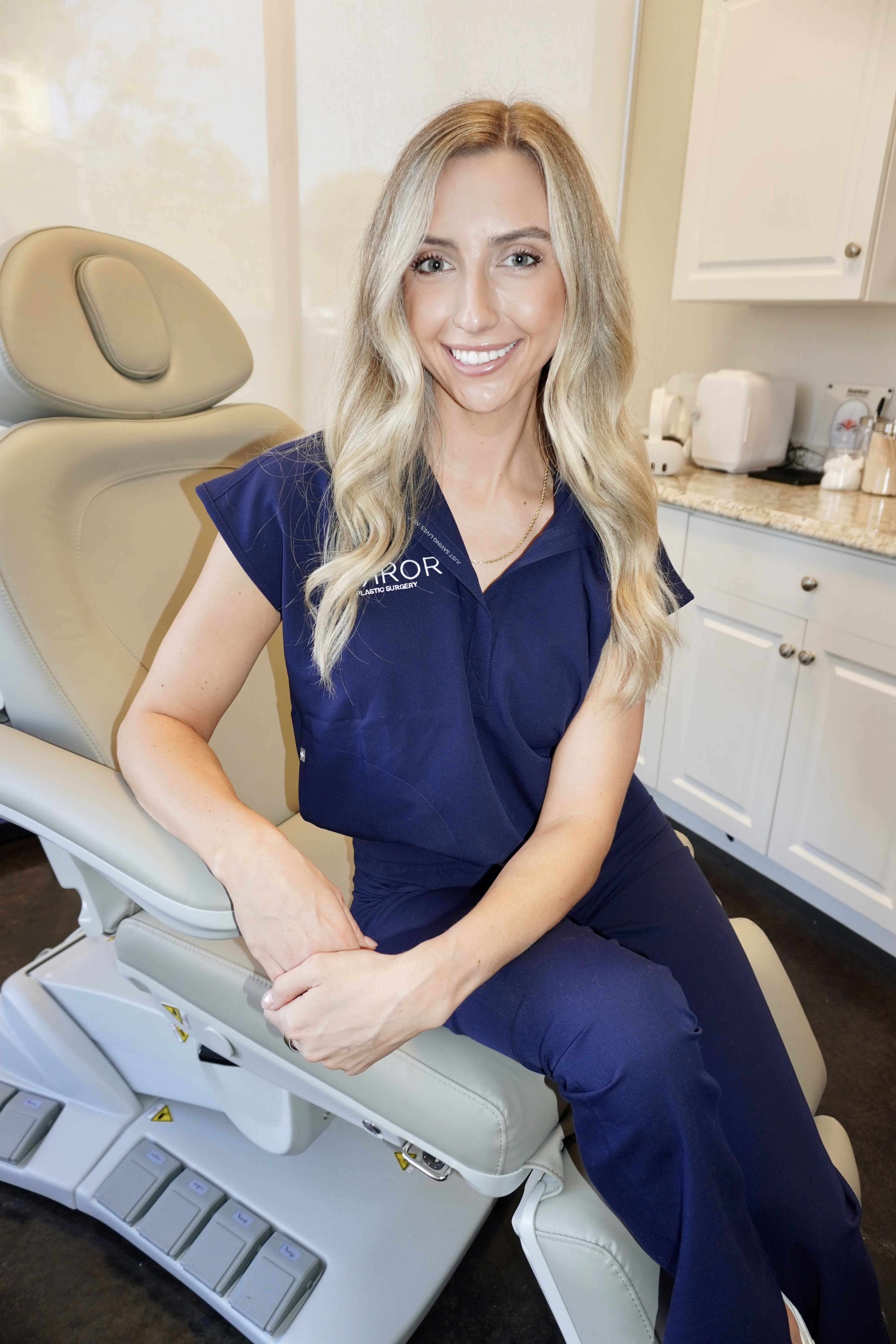
Ellie’s combination of esthetician training and advanced nursing credentials allows her to address both the aesthetic goals patients want to achieve and the clinical science required to get there safely.
Frequently Asked Questions
What is the current FDA status of peptides used for cellular rejuvenation?
Most peptides discussed in the context of cellular rejuvenation, including BPC-157, TB-500, GHK-Cu, MOTS-c, KPV, and Epitalon, are not FDA-approved drugs. As of April 2026, twelve of these peptides were removed from the FDA’s Category 2 restricted compounding list, and seven are under review by the Pharmacy Compounding Advisory Committee during its July 23–24, 2026 meeting for potential inclusion on the Section 503A Bulks List. Removal from Category 2 and PCAC review do not constitute drug approval. A small number of peptides with direct relevance to aging, including elamipretide (approved September 2025 for Barth syndrome) and tesamorelin (approved for HIV-associated lipodystrophy), do carry active FDA approval for specific indications. Any peptide protocol at Mirror Plastic Surgery is designed within the current legal and regulatory framework, using batch-tested compounding sources and physician oversight.
What happens if I stop taking peptides?
Benefits from peptide therapy are generally not permanent once a protocol ends. The degree of regression depends on the peptide class and the underlying condition being addressed. For inflammatory conditions managed with anti-inflammatory peptides, inflammation is likely to return toward its prior baseline without ongoing support. For tissue-repair cycles, the structural improvements achieved during the active protocol tend to persist longer than the peptide itself remains active, but the repair stimulus ends. For metabolic peptides, metabolic markers typically trend back toward baseline over weeks to months. Ellie therefore designs maintenance protocols for patients with chronic conditions. These involve lower-dose, less frequent administration that sustains the gains achieved during the initial cycle. The goal is not indefinite open-ended prescribing but a structured plan that matches the biology of each patient’s condition.
Will everyone see the same results from a peptide protocol?
Results vary significantly between individuals based on genetics, baseline lab values, metabolic health, lifestyle factors, concurrent medications, and the specific peptide or combination used.1 A patient with well-controlled inflammation and optimized sleep will respond differently than one with unaddressed insulin resistance or nutrient deficiencies. This variation is why Mirror Plastic Surgery’s approach begins with comprehensive lab analysis rather than a standardized protocol. Ellie reviews each patient’s full clinical picture before recommending any peptide stack, and she adjusts dosing and composition based on how biomarkers respond over the course of the protocol. Patients who pair peptide therapy with lifestyle changes such as structured exercise, sleep hygiene, and nutrition consistently show better outcomes than those relying on peptides in isolation.1
Why is medical supervision necessary for peptide therapy?
Medical supervision addresses risks that cannot be managed through self-directed use. First, contraindication screening is essential. Certain peptides carry theoretical risks for patients with undetected tumors, active autoimmune flares, or specific hormonal conditions that only a clinical evaluation can identify. Second, quality assurance matters. Compounded peptides from licensed 503A pharmacies with batch testing differ materially in purity and potency from research-grade chemicals sold online, where independent testing has documented mislabeling and contamination.
Third, dosing precision is critical. Peptides do not have a one-size-fits-all dose. Body composition, baseline labs, concurrent medications, and treatment goals all affect the correct starting point and titration schedule. Fourth, ongoing monitoring protects long-term safety. Biomarker tracking at eight to twelve week intervals allows dose adjustments based on actual physiological response rather than anecdotal reports. At Mirror Plastic Surgery, Ellie provides all four of these elements within a concierge care model that includes direct text access and telemedicine follow-up throughout the protocol.
Conclusion: Moving Forward with Supervised Peptide Therapy
Cellular rejuvenation research reached a genuine inflection point in 2026 with the first human partial-reprogramming trial, continued Phase 3 readouts from incretin-class peptides, and a meaningful regulatory shift that is moving several compounding-eligible peptides toward clearer legal status. The evidence base remains uneven. GLP-1 receptor agonists and elamipretide carry robust human trial data, while tissue-repair and longevity-focused peptides such as BPC-157, GHK-Cu, and MOTS-c show promising preclinical and limited clinical findings that have not yet been confirmed in large randomized trials.
That evidence gap makes medical supervision a clinical necessity. Pre-treatment lab panels, batch-tested sourcing, individualized dosing, and structured biomarker follow-up form the core of responsible peptide care. Mirror Plastic Surgery’s concierge model, led by Ellie Pranckevicius, FNP-BC, delivers this standard of care for patients in the St. Petersburg and Tampa Bay area and remotely across the United States.
Medical and Regulatory Disclaimer: The peptide therapies described in this article are not FDA-approved for the anti-aging, cellular rejuvenation, or general wellness indications discussed. Many remain investigational, with evidence derived primarily from preclinical studies and limited human trials. This content is provided for educational purposes only and does not constitute medical advice, diagnosis, or a treatment recommendation. Individual results vary. All peptide protocols at Mirror Plastic Surgery are initiated only after a comprehensive clinical consultation, including review of relevant laboratory data, to assess appropriateness for each patient’s specific health profile. Patients with active cancer, pregnancy, uncontrolled systemic illness, or other contraindications identified during evaluation may not be candidates for peptide therapy.
1 Results may vary from person to person. Editorial content, before and after images, and patient testimonials do not constitute a guarantee of specific results.
Peptide therapy is intended for wellness and optimization purposes and is not prescribed to diagnose, treat, cure, or prevent disease unless specifically stated. Many peptides are not FDA-approved and may be used off-label. Some have limited long-term safety data, with a potential for unknown risks, complications, or desensitization with prolonged use.



