
Written by: Dr. Akash Chandawarkar, Board Certified Plastic Surgeon, Mirror Plastic Surgery | Last updated: June 26, 2026
Key Takeaways
- Blepharoplasty is a precise operation where small errors in tissue removal can cause permanent, sometimes unfixable changes.
- Surgeons with focused fellowship training in facial and periorbital surgery, such as Dr. Akash at Mirror Plastic Surgery, are best equipped to create natural results.
- Modern techniques favor preserving and repositioning eyelid fat instead of removing it, which maintains youthful volume and avoids a hollow look.1
- Reviewing before-and-after photos, checking brow position, and asking targeted questions help you find a surgeon who values restraint and anatomy.
- Choosing the right surgeon from the start protects long-term facial harmony.1 Schedule your personalized evaluation at Mirror Plastic Surgery to discuss your eyelid goals.
Why Surgeon Credentials Matter for Natural Eyelid Results
Board certification alone does not guarantee advanced eyelid expertise. The American Society of Plastic Surgeons certification confirms broad competence, but eyelid surgery requires deeper, more focused training. Surgeons who complete fellowships centered on facial and periorbital anatomy, such as ASOPRS-affiliated programs or elite aesthetic surgery fellowships, typically develop more refined eyelid skills.
Dr. Akash at Mirror Plastic Surgery completed his medical degree through the Harvard-MIT Division of Health Sciences and Technology and graduated from Harvard Medical School with Honors. He then completed a seven-year integrated plastic and reconstructive surgery residency at Johns Hopkins University, a program known for rigorous training and complex anatomy. After residency, he pursued a competitive aesthetic surgery fellowship at the Manhattan Eye, Ear and Throat Hospital (MEETH), a center with a strong focus on periorbital and facial surgery, where he trained under leaders in facial rejuvenation.
He is board certified by the American Board of Plastic Surgery and has been named in America’s Best Plastic Surgeons 2025 by Newsweek for two consecutive years. This path of elite science education, comprehensive reconstructive residency, and dedicated facial aesthetic fellowship sets a high standard for surgeons who perform blepharoplasty with a tissue-preservation approach.
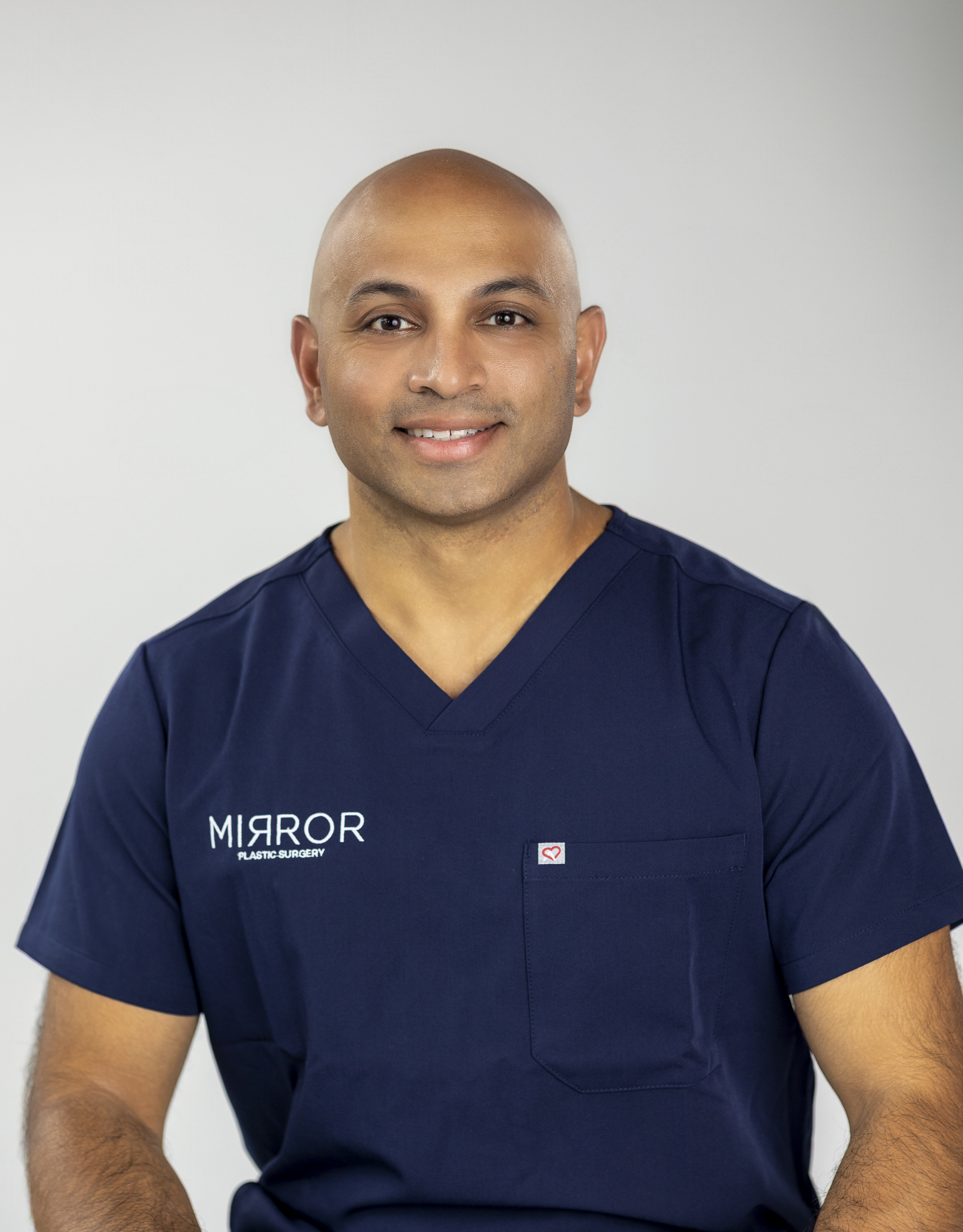
Schedule a consultation with Dr. Akash to review your eyelid anatomy and discuss whether natural blepharoplasty is appropriate for you.
Stage 1: Key Anatomy and Goals for Natural-Looking Blepharoplasty
Modern blepharoplasty focuses on selective, anatomy-guided refinement instead of maximum tissue removal. In upper eyelid surgery, the goal is to remove only the skin and, when appropriate, muscle that truly affects crease definition or vision. The objective is not to erase every fold or create an overly tight lid.
Aggressive fat removal from the upper orbit often causes a hollow, over-operated look. Preserving or gently repositioning fat, rather than routinely excising it, now represents the standard in evidence-based practice. This approach maintains soft volume and supports a natural contour as you age.1
Lower eyelid surgery requires even more caution. The fat compartments beneath the lower lid support the lid and midface. Removing this fat without a plan can create a sunken appearance that makes the face look older instead of younger. Repositioning prolapsed orbital fat over the orbital rim smooths the tear trough and keeps volume where it is needed.
Ethnic anatomy also shapes the surgical plan. East Asian eyelids, for example, have different relationships between the orbital septum and levator aponeurosis. A surgeon who understands these patterns can refine the lid while preserving natural ethnic character. A surgeon who does not may unintentionally erase that identity.
Stage 2: Confirm Focused Eyelid and Facial Training
Your surgeon should have training that goes beyond a general plastic surgery residency. Fellowship training in facial or periorbital surgery signals dedicated time spent on eyelids, brows, and surrounding structures. ASOPRS fellowship status indicates focused oculoplastic training. Aesthetic fellowships at institutions like MEETH point to advanced facial rejuvenation experience.
Integrated plastic surgery residencies at academic centers with strong craniofacial and reconstructive programs also build deep anatomical knowledge. That depth translates into safer, more precise eyelid surgery. In contrast, generalist surgeons who treat blepharoplasty as one of many occasional procedures may not have the same volume or focus on delicate periorbital planes.
Ask specific questions about training and practice patterns. Ask how many blepharoplasties the surgeon performs each year. Ask what percentage of their work involves the face. Ask where they completed fellowship training and whether it centered on facial or periorbital surgery.
Stage 3: Read Before-and-After Photos for Signs of Restraint
Before-and-after photos reveal a surgeon’s aesthetic style more clearly than any description. Natural results share common features. The upper lid crease looks defined but not sharply carved. The brow position appears stable or appropriately elevated. The lower lid margin rests at or just below the iris without extra white showing. The eyes look rested and alert, not surgically altered.
Look for patients who resemble you in age, anatomy, and ethnicity. Matching cases give you a realistic sense of what that surgeon tends to create. Pay attention to subtle improvements, not only dramatic changes.
Watch for warning signs in galleries. Hollow or skeletonized upper lids, visible white sclera below the iris, loss of gentle fullness in the outer upper lid, or brows that sit lower after surgery all suggest over-resection or missed brow issues. Galleries that show only extreme makeovers, with no examples of quiet, age-appropriate refinement, may reflect a high-resection style.
Stage 4: Check Brow Position and Its Effect on the Upper Lid
Brow position strongly influences how the upper eyelid looks. When the brow drops below the orbital rim, a condition called brow ptosis, it pushes skin onto the upper lid. That extra skin often comes from the brow, not the lid itself.
If a surgeon removes this skin without addressing the brow, the brow continues to push downward over time. The result can look unnatural and may require revision. A careful surgeon evaluates brow position at rest with the frontalis muscle relaxed before recommending upper lid surgery.
Some patients benefit more from a brow lift than from aggressive upper lid skin removal. In those cases, an endoscopic, direct, or temporal brow lift may come first, with blepharoplasty as a smaller, secondary step. Surgeons who skip brow assessment or do not offer brow procedures have fewer tools to create consistently natural upper eyelid results.
Stage 5: Use Targeted Questions During Your Consultation
A structured consultation helps you understand a surgeon’s philosophy and decision-making. The questions below give you a clear framework.
- Do you usually preserve or reposition orbital fat, or remove it, and why is that your default?
- How do you evaluate brow position before planning upper lid surgery?
- What is your revision rate for primary blepharoplasty, and why do most patients seek revision?
- How do you adjust your technique for my specific ethnic anatomy?
- What is the minimum amount of skin you would remove in my case to keep the result natural?
- Do you perform lower lid blepharoplasty through a transconjunctival or external approach, and what guides that choice?
- How do you protect lower lid position and reduce the risk of retraction after surgery?
- Which functional assessments, such as visual field testing, dry eye evaluation, or lid closure checks, do you perform before and after surgery?
Listen for detailed, anatomy-based answers instead of vague reassurance. Specific explanations show that the surgeon understands complex eyelid dynamics and has a clear plan for your situation.
Stage 6: Confirm Safety Standards, Follow-Up, and Revision Support
Accredited surgical facilities and qualified anesthesia teams form the foundation of safe care. Your procedure should take place in an accredited operating room or surgical suite. A board-certified physician anesthesiologist should oversee anesthesia, rather than a nurse anesthetist working without physician supervision. Hospital privileges add another layer of safety if a rare complication requires higher-level care.
Structured follow-up visits matter for long-term results. A schedule that includes at least one week, one month, three months, and one year allows the surgeon to track lid position, scar healing, and function over time. Some issues, such as subtle lid retraction, may appear months after surgery, so ongoing monitoring is valuable.
Clear revision policies work hand in hand with this follow-up plan. Written details about what the initial fee covers and what counts as a separate procedure show that the practice stands behind its work over the full healing period. This combination of thoughtful follow-up and transparent revision support reflects a focus on long-term relationships, not just single operations.
Common Misunderstandings About Blepharoplasty Surgeons
Myth: Any board-certified plastic surgeon is equally qualified for eyelid surgery. Board certification confirms broad training but does not prove specialization in periorbital anatomy or high-volume eyelid experience. Fellowship training and a focused eyelid and facial practice are more meaningful indicators.
Myth: Removing more skin always creates a fresher, younger look. Heavy skin excision can tighten the lid but often strips away the soft volume that signals youth. The result can look tight, hollow, and obviously operated. Conservative skin removal combined with thoughtful fat preservation or repositioning tends to age more gracefully.
Myth: Lower lid blepharoplasty is safer than upper lid surgery. Lower lid procedures carry distinct risks, including ectropion, scleral show, and lid retraction. These problems often stem from aggressive skin removal or poor support of the lid margin. Surgeons without dedicated lower lid experience should not perform this operation.
How Natural Eyelid Surgery Supports Overall Facial Harmony
The eyes anchor facial expression and social connection. An unnatural blepharoplasty affects more than the eyelids. It can change how the entire face expresses emotion and how others perceive you.
When eyelid surgery respects anatomy and uses restraint, the results blend into the rest of the face. Patients usually look like a rested version of themselves rather than a different person.1 This harmony depends on choices made during the first surgery.
Revision blepharoplasty is more complex than primary surgery and carries higher risks. Removed tissue is difficult or impossible to fully replace. Choosing a surgeon who prioritizes preservation and long-term planning is one of the most effective ways to protect both appearance and eyelid function over many years.
Schedule your personalized evaluation at Mirror Plastic Surgery to discuss how Dr. Akash’s anatomy-first, tissue-preserving approach applies to your eyelids and brow.
Frequently Asked Questions
What is the typical revision rate after primary blepharoplasty and what causes most revisions?
Revision rates vary based on technique, patient selection, and whether the surgeon evaluated the brow and lower lid support before surgery. Common reasons for revision include over-resection of upper lid skin that creates a hollow or tight look, untreated brow ptosis that causes recurrent upper lid skin excess, and lower lid retraction or ectropion after aggressive skin removal or poor lid support.
Asymmetry in crease height or fat distribution can also prompt revision. Overly aggressive fat removal in either lid often leaves volume deficits that require fat grafting or other procedures. Surgeons who preserve fat when possible, carefully assess brow position, and remove only the minimum necessary tissue tend to report lower revision rates than surgeons who favor heavy resection.
Should blepharoplasty be performed by an oculoplastic surgeon or a plastic surgeon?
Both oculoplastic and plastic surgeons can perform blepharoplasty safely when they have deep periorbital training and high eyelid surgery volume. Oculoplastic surgeons complete ophthalmology residency followed by ASOPRS-accredited fellowship training focused on eyelids, the orbit, and the lacrimal system, which builds strong functional expertise.
Plastic surgeons who complete dedicated aesthetic fellowships at facially focused centers such as MEETH gain comparable anatomical knowledge along with broader facial rejuvenation skills, including brow, midface, and lower face integration. The key factor is not the specialty title but whether the surgeon’s training, fellowship, and ongoing practice center on the periorbital and facial region.
Can blepharoplasty look natural if too much fat is removed?
As discussed earlier, over-resection of orbital fat creates permanent volume loss that is difficult to fully correct. The upper orbit can look hollow and skeletal, and the lower lid can develop a sunken tear trough with a visible orbital rim.
Fat grafting or hyaluronic acid filler may soften these deficits but cannot perfectly replace the original tissue. This reality explains why many surgeons now favor conservative fat management, preserving upper lid fat when possible and repositioning lower lid fat instead of removing it. When you meet with a surgeon, ask how they plan to manage your orbital fat and be cautious if they routinely remove large amounts without a clear, individualized reason.
How does preoperative brow assessment affect long-term eyelid results?
As explained in the brow assessment section, unrecognized brow ptosis often leads to recurrent upper lid skin excess and can require revision within a few years. Proper preoperative evaluation helps separate brow-related issues from true eyelid problems.
Brow assessment includes checking brow position at rest with the frontalis muscle relaxed and measuring the distance from the brow to the orbital rim. The surgeon also clarifies whether your main concern comes from the lid, the brow, or both. When brow ptosis is present, the plan may include brow elevation through an endoscopic, direct, or temporal approach, either alone or combined with blepharoplasty. Surgeons who follow this structured assessment process are better positioned to deliver natural, durable upper eyelid results.
1 Results may vary from person to person. Editorial content, before and after images, and patient testimonials do not constitute a guarantee of specific results.