
Written by: Ellie Pranckevicius, FNP-BC, Aesthetic Nurse Practitioner & Aesthetic Injector | Facial Restoration & Regenerative Injectable Specialist, Mirror Plastic Surgery | Last updated: August 7, 2026
Key Takeaways
- Peptide therapy uses targeted amino-acid chains to influence inflammation, tissue repair, metabolism, and hormone signaling. Evidence strength ranges from A to C depending on the compound and goal.
- Timelines vary by target. Anti-inflammatory signals may appear in 7–14 days, structural repair markers at 21–28 days, and metabolic or skin benefits over 4–12 weeks or longer.1
- Medical oversight is essential. Unregulated sourcing carries risks of contamination, mislabeling, and missed contraindications such as active cancer, pregnancy, or specific endocrine disorders.
- Maintenance protocols and serial lab monitoring are usually required to sustain benefits because stopping therapy often reverses physiological adaptations.
- Schedule a personalized consultation at Mirror Plastic Surgery to review your labs and design an evidence-guided peptide protocol tailored to your goals.
How BPC-157 Works and When You May Notice Changes
BPC-157 (Body Protective Compound 157) is a synthetic pentadecapeptide derived from a gastric protein. Researchers propose that it supports new blood vessel formation through VEGFR2-Akt-eNOS signaling and modulates pro-inflammatory cytokines such as TNF-α, IL-1β, and IL-6 in rodent models of colitis, adjuvant arthritis, and sepsis. In preclinical tissue-repair models, measurable anti-inflammatory signals appear within 7–14 days, and structural repair markers emerge at 21–28 days.1
Human data remain sparse. Published human safety data include an uncontrolled retrospective knee injection review (n=16), an uncontrolled interstitial cystitis pilot (n=12), and a two-person IV infusion safety pilot. None of these qualify as randomized controlled trials. In 2023, the FDA banned BPC-157 from production by U.S. compounding pharmacies due to significant safety concerns, and WADA classifies it as a prohibited S0 substance.
At Mirror Plastic Surgery, Ellie Pranckevicius reviews each patient’s complete medical history and current lab panels before any protocol is designed. This step is not optional. It allows batch-tested sourcing and individualized dosing to replace the guesswork that often occurs with unsupervised online use. That same comprehensive review becomes even more critical when patients consider combining multiple peptides, because interaction risks can compound in ways that single-agent safety profiles do not reveal.
Peptide Combinations and Situations That Require Extra Caution
Peptide stacking without clinical oversight introduces compounding risks that individual compound reviews cannot predict. Several documented considerations apply across common peptide categories.
Growth hormone secretagogues such as Sermorelin and Ipamorelin require comprehensive hormone panels before initiation. These panels assess natural growth hormone production, testosterone, thyroid function, and cortisol to avoid disrupting existing endocrine balance. Standardized dosing can be too low to trigger a physiological response or high enough to cause receptor desensitization that halts progress. Only serial biomarker monitoring can reliably detect these patterns.
Angiogenic peptides including BPC-157 and TB-500 require extra caution in anyone with a cancer history. Several peptides promote angiogenesis that can theoretically accelerate tumor progression. Peptides should be avoided entirely during pregnancy because developmental effects remain unknown and are contraindicated in active cancer and breastfeeding. Physicians may also contraindicate peptide therapy for patients with specific underlying endocrine or autoimmune conditions identified during comprehensive medical history review.
GLP-1 and GLP-3R analogs carry their own interaction profile. Semaglutide is contraindicated in patients with a personal or family history of medullary thyroid carcinoma or Multiple Endocrine Neoplasia syndrome type 2. Patients planning pregnancy must discontinue semaglutide at least two months before conception because of its long half-life.
Doctors limit peptide combinations when multiple agents would increase complexity without clear clinical benefit. They often favor single-peptide or minimal regimens to reduce unnecessary exposure. Ellie’s review of your full medication list and lab values at Mirror Plastic Surgery is the safest way to identify these contraindications before they become adverse events.
Evidence Snapshot: Peptides Commonly Used for Men
Evidence grades vary substantially across the peptides Mirror Plastic Surgery offers. The following summary reflects 2026 TelehealthAlly evidence grading and peer-reviewed data where available.
- GHK-Cu: Holds the highest evidence grade (B) among common anti-aging peptides. Human studies support collagen synthesis, hair follicle enlargement, wound healing, and activation of 31 tissue-repair genes.1 Broad Institute Connectivity Map analysis showed that GHK-Cu modulates over 4,000 human genes, suppressing pro-inflammatory programs while upregulating collagen synthesis and DNA repair pathways.
- Sermorelin / Ipamorelin: Grade B for growth hormone elevation and grade C for anti-aging outcomes. These compounds produce documented body-composition effects in growth hormone deficient populations with preserved feedback mechanisms.1
- BPC-157: Grade C for anti-aging and tissue-repair applications in humans. Tissue-repair mechanisms are well characterized preclinically, but no human randomized controlled trials exist.
- TB-500: All available efficacy evidence remains preclinical. Fewer than 12 peer-reviewed human clinical trials have been published as of 2026.
- Selank: Acts on GABAergic pathways for anxiety without the dependency profile of benzodiazepines. Human trial data are limited, but the mechanism is distinct from addictive pharmacology.
- PT-141 (Bremelanotide): FDA-approved for hypoactive sexual desire disorder in premenopausal women. Melanocortin receptor agonism supports libido applications in men under clinical supervision.1
- KPV: Targets gut mucosal inflammation. Preclinical data support inflammatory bowel disease applications, though human trial data remain early-stage.
- NAD+: Functions as a mitochondrial cofactor with a well-characterized biochemical role in cellular energy production. Clinical evidence for systemic anti-aging outcomes in healthy adults is still accumulating.
The safest sourcing route for human-use peptides remains 503A and 503B compounding pharmacies operating under FDA oversight. These pharmacies must provide a Certificate of Analysis showing HPLC purity above 95 percent, mass spectrometry verification, and endotoxin testing. Mirror Plastic Surgery sources exclusively from suppliers that meet these standards.
Balancing Peptide Therapy Benefits and Side Effects
The benefit-to-risk ratio of peptide therapy depends heavily on sourcing quality and medical oversight. Provider-supervised peptide therapy from a U.S.-based FDA-regulated 503A compounding pharmacy has a favorable safety profile. The most common side effect is mild, brief injection-site irritation that typically resolves within 30 to 60 minutes. Meta-analyses of randomized controlled trials have found peptides to be generally well tolerated with minimal adverse events and no severe safety concerns in studied populations.
Unregulated online sources present a very different picture. Analyses of commercially available research peptides have found that some contained impurities or did not match their labeled concentration. Gray-market peptides carry the largest real-world risk, and studies have documented mislabeling and contamination. Dan Cushman, a sports medicine doctor at the University of Utah, notes that very little information exists on most peptides or the effects of combining them without medical oversight.
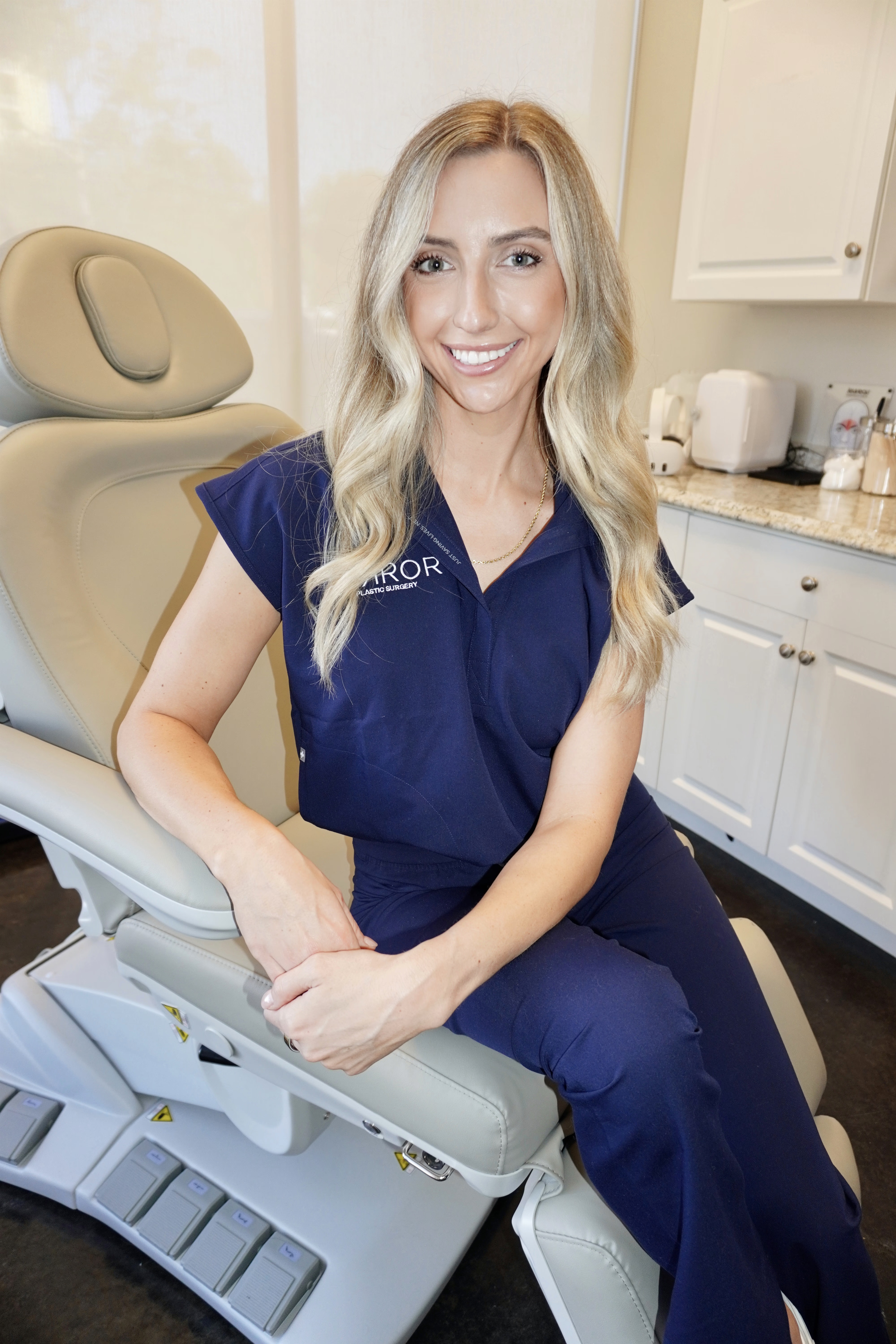
Ellie Pranckevicius, FNP-BC, leads all peptide therapy at Mirror Plastic Surgery. Her background spans four years in the Neuroscience ICU at Tampa General Hospital, a premedical degree from Boston University, and dual training as both a licensed esthetician and a board-certified Family Nurse Practitioner from the University of South Florida. This combination of critical-care physiology and aesthetic science means she evaluates both the clinical safety profile and the cosmetic or wellness goal at the same time. She will also tell patients when a peptide is not yet warranted for their profile.
How Peptide Therapy Works at Mirror Plastic Surgery
Every peptide patient at Mirror Plastic Surgery moves through a structured, lab-anchored process. Serial biomarker draws across repeated peptide cycles produce individualized dose-response information that published clinical trials cannot provide for a specific person. This data supports better dose refinement and maintenance planning.
- Initial consultation (30–60 minutes): Ellie reviews full medical history, current medications, and wellness goals. For weight management or inflammatory conditions, lab panels covering thyroid, liver, kidney, diabetes markers, and hormone levels are ordered or reviewed.
- Custom stack design: Based on lab results and goals, a personalized peptide protocol is created with single-compound or stacked options. Cycling periods are defined to maintain cellular sensitivity and prevent receptor downregulation.
- Administration and sourcing: Peptides are sourced from batch-tested compounding pharmacies. Ellie provides detailed reconstitution and self-administration instructions, including video demonstrations when needed. The full process is available remotely across all 50 states.
- Ongoing monitoring: Eligibility for peptide therapy is not a one-time assessment. Quarterly bloodwork and regular medical check-ins keep protocols aligned with current biology. Ellie is available via text 24/7 for questions, side-effect assessment, and refill requests.
Book an appointment with Ellie to begin your lab-guided peptide therapy consultation at Mirror Plastic Surgery.
Current Peptide Trends and Emerging Clinical Protocols
Several developments are reshaping supervised peptide therapy in 2025 and 2026. GLP-3R compounding represents a newer generation of metabolic peptides that builds on the GLP-1 framework. Compared with older GLP-1 formulations, GLP-3R is reported to carry a reduced gastrointestinal side-effect burden, lower muscle-wasting risk, and broader indications including insulin resistance and cardiovascular risk factor management. Large-scale randomized controlled trial data comparable to the SELECT trial’s 20 percent reduction in major adverse cardiovascular events with semaglutide are not yet available for GLP-3R specifically.
Mitochondrial-focused peptides, including NAD+ and investigational compounds such as SS-31 (elamipretide), are also attracting clinical attention. SS-31 is undergoing clinical trials targeting mitochondrial dysfunction in heart failure and Barth syndrome. Demand for supervised access is rising as awareness of gray-market risks grows. Subjective experience alone is insufficient for peptide users because it cannot distinguish a 5 percent IGF-1 elevation from a 50 percent elevation even when both feel like improved sleep or recovery. Serial lab monitoring closes that gap.
Key Decision Factors: Sourcing, Maintenance, and Expectations
Three common misconceptions consistently lead to poor outcomes in unsupervised peptide use.
First, peptides are not exclusively weight-loss tools. The peptide landscape spans inflammation management, post-surgical recovery, neurological support via nootropics like Selank, sexual wellness, fertility, and mitochondrial energy. Each category requires a different protocol and monitoring approach.
Second, results are not permanent without maintenance. Discontinuing a peptide protocol resembles stopping a structured exercise program. The physiological adaptations that were supported by the intervention gradually reverse. Continued use through a maintenance protocol, guided by periodic lab reassessment, is usually required to sustain benefits.
Third, outcomes vary by individual. Physicians personalize peptide therapy protocols by calculating individualized dosing from a patient’s age, body composition, laboratory results, and overall health status rather than using standardized doses. Genetics, diet, lifestyle, and baseline biomarker status all influence response magnitude and timeline.
Risks, Limitations, and When Peptides Are Not Appropriate
Most peptides used in wellness contexts are not FDA-approved for those indications. Esraa Askar, M.B.B.Ch., endocrinologist and clinical assistant professor at Stony Brook Medicine, notes that some peptides show anti-inflammatory or healing effects in lab and animal research, but solid human evidence is mostly lacking. Certainty about efficacy for anti-aging peptides is substantially lower than for FDA-approved medications that completed Phase III trials.
Specific contraindications and risk factors include the following.
- Active cancer or unresolved cancer history, because angiogenic peptides carry theoretical tumor-progression risk.
- Pregnancy and breastfeeding, because developmental effects are unknown.
- Personal or family history of medullary thyroid carcinoma or MEN2, which is a contraindication with GLP-1 and GLP-3R analogs.
- Certain endocrine or autoimmune conditions, which require individualized assessment before any protocol begins.
- Limited long-term safety data beyond five years of continuous use for most therapeutic peptides, with exceptions including Thymosin Alpha-1 and Sermorelin.
Serious adverse events are exceptionally rare with therapeutic peptides when used at appropriate doses under medical supervision that includes baseline lab work, individualized dosing, drug-interaction screening, and ongoing monitoring. The risk profile shifts dramatically when sourcing is unverified and oversight is absent.
Frequently Asked Questions
Are peptides FDA-approved?
Over 80 FDA-approved peptide drugs are currently on the market, including insulin and GLP-1 receptor agonists like semaglutide. However, many peptides used in wellness and biohacking contexts, including those discussed earlier such as BPC-157, are not FDA-approved for those specific indications and were removed from U.S. compounding pharmacy formularies in 2023. The main risk with non-approved peptides comes from unverified sourcing rather than the molecules themselves. Mirror Plastic Surgery maintains the batch-tested sourcing standards detailed earlier, with third-party verification of purity, potency, and sterility for every compound.
How long before I notice results from peptide therapy?
Timeline depends on the peptide, the goal, and the individual’s baseline biology. As noted in the BPC-157 discussion, initial signals typically appear within the first two weeks, with structural changes following over the next month. Skin hydration and wrinkle improvements in human randomized controlled trials are measured over 4–12 weeks. Metabolic peptides like GLP-1 analogs show initial weight signals at 4–8 weeks with full effect at 16–68 weeks. Vitality and energy improvements from NAD+ or growth hormone secretagogues are often subjective within 4–8 weeks, with biomarker confirmation at 8–12 weeks.1 Ellie tracks your progress through the serial lab monitoring described earlier, which provides objective confirmation beyond subjective improvements.
What are the risks of buying peptides online without supervision?
Unregulated online peptides carry risks of bacterial endotoxin contamination, heavy metal residues, mislabeled concentrations, and degraded compounds from improper storage. Analyses of commercially available research peptides have found that some did not match their labeled concentration. Beyond product quality, unsupervised use means no screening for contraindications, no drug-interaction review, and no dose adjustment based on biomarker response. These are the primary failure modes in do-it-yourself peptide use, not the molecules themselves when properly sourced and supervised.
Will I need to take peptides indefinitely to maintain results?
For most applications, ongoing maintenance is required to sustain benefits. When a peptide is discontinued, the physiological support it provided is removed, and the underlying condition it was managing tends to return toward its baseline state. This pattern resembles what happens when someone stops any structured health intervention. Ellie designs protocols with defined cycling periods and periodic reassessment to determine when maintenance doses can be reduced, adjusted, or paused based on your evolving lab results and clinical picture.
Is peptide therapy only for weight loss?
Peptide therapy extends far beyond weight loss. While GLP-1 and GLP-3R analogs have received significant public attention for weight management, the peptide landscape is substantially broader. Mirror Plastic Surgery’s offerings address systemic and gut inflammation, post-surgical recovery, collagen and elastin production for skin aging, mitochondrial energy via NAD+, anxiety and mood via Selank, sexual wellness via PT-141, fertility support via Kisspeptin, and immune modulation. Each application requires a distinct protocol, different monitoring markers, and individualized dosing, which is why the consultation and lab review process is the starting point for every patient.
Conclusion: Moving from Research to a Personalized Peptide Plan
Peptide therapy can offer measurable but modest improvements across recovery, inflammation, metabolism, and vitality when protocols are grounded in lab data, sourced from verified compounding pharmacies, and supervised by a qualified clinician.1 The evidence base ranges from robust Phase III randomized controlled trial data for GLP-1 analogs to preclinical-only data for TB-500, and that distinction matters for setting realistic expectations. Outcomes are not uniform. Genetics, lifestyle, baseline biomarkers, and the quality of ongoing monitoring all influence how much benefit any individual realizes.1
The concierge model at Mirror Plastic Surgery, led by Ellie Pranckevicius with 24/7 direct access, serial lab monitoring, and batch-tested sourcing, is designed to close the gap between the promise of peptide biohacking and the risks of unsupervised use. If you are ready to move from online research to a personalized, lab-guided protocol, the next step is a one-on-one consultation.
Schedule your personalized peptide consultation at Mirror Plastic Surgery and begin your evidence-guided therapy journey today.
1 Results may vary from person to person. Editorial content, before and after images, and patient testimonials do not constitute a guarantee of specific results.
Peptide therapy is intended for wellness and optimization purposes and is not prescribed to diagnose, treat, cure, or prevent disease unless specifically stated. Many peptides are not FDA-approved and may be used off-label. Some have limited long-term safety data, with a potential for unknown risks, complications, or desensitization with prolonged use.