
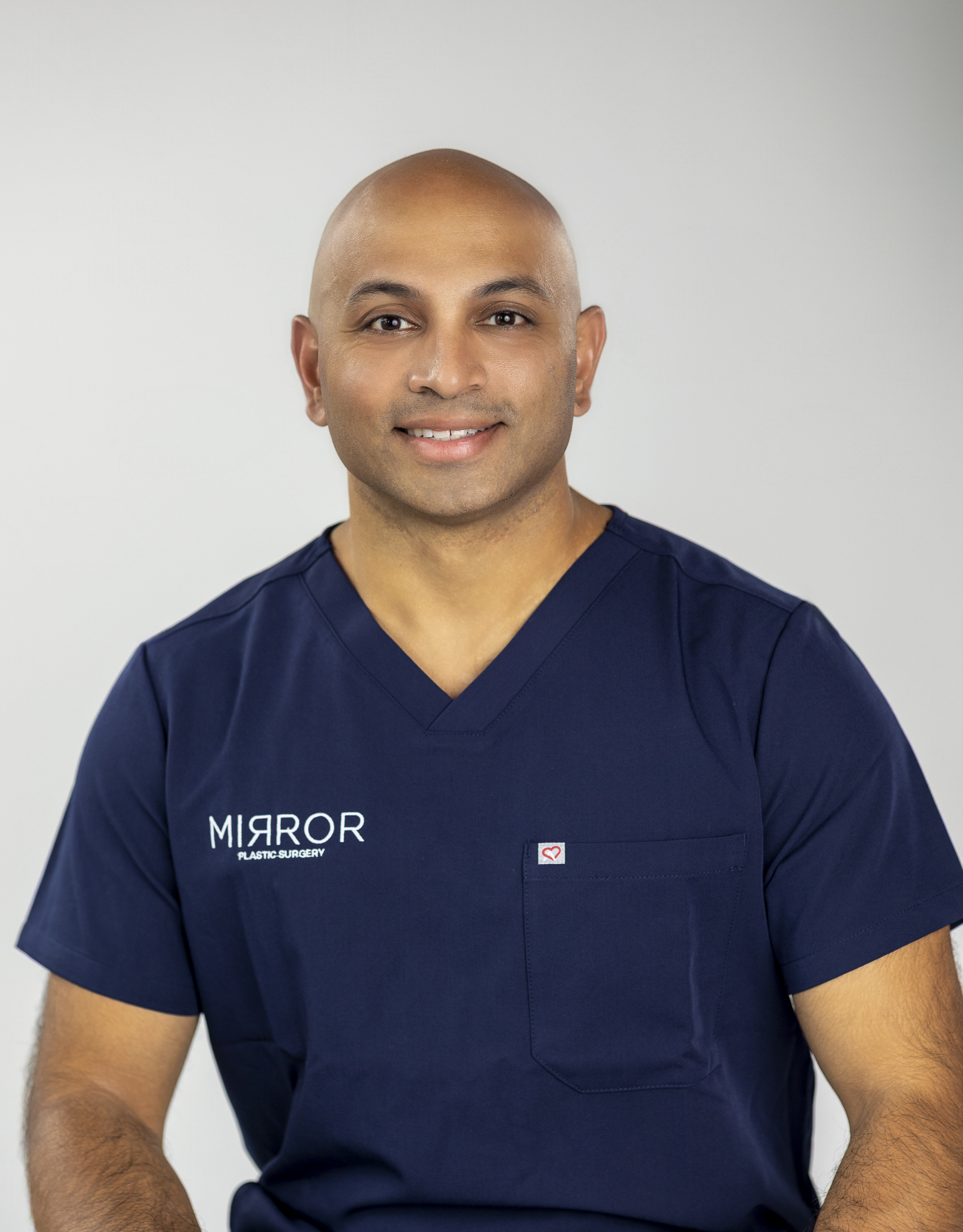
Written by: Dr. Akash Chandawarkar, Board Certified Plastic Surgeon, Mirror Plastic Surgery | Last updated: June 27, 2026
Key Takeaways
-
Eyelid surgery carries real risks like lagophthalmos and ectropion when underqualified surgeons perform it, so a structured evaluation protects your eyes and results.
-
Board certification through ABPS or ASOPRS fellowship training, combined with steady monthly blepharoplasty volume, separates focused eyelid specialists from occasional practitioners.
-
Modern techniques such as fat repositioning and muscle preservation create more natural, longer-lasting results than older fat-excision-only methods.1
-
Accredited facilities, hospital privileges, pre-operative dry-eye assessments, and realistic consultation length are essential safety and quality markers, not extras.
-
Patients ready to begin their evaluation can book a consultation with Dr. Akash at Mirror Plastic Surgery to review credentials and discuss personalized options.
The Benchmark: How Dr. Akash’s Training Guides This Checklist
Dr. Akash represents the credential standard against which any Tampa blepharoplasty surgeon can be measured. He completed his medical degree through the Harvard-MIT Division of Health Sciences and Technology and graduated from Harvard Medical School with Honors.
He then completed a seven-year integrated plastic and reconstructive surgery residency at Johns Hopkins University. His aesthetic surgery fellowship at the Manhattan Eye, Ear and Throat Hospital (MEETH) provided advanced, focused training in facial rejuvenation including blepharoplasty.
Newsweek has named him one of America’s Best Plastic Surgeons two years in a row. This combination of credentials establishes the benchmark for the evaluation steps below, and each of the following ten steps helps you find surgeons who meet or approach this standard.
Step 1: Confirm ABPS Board Certification and Fellowship-Level Eyelid Training
The American Board of Plastic Surgery (ABPS) and the American Society of Ophthalmic Plastic and Reconstructive Surgery (ASOPRS) represent the two primary credentialing pathways for blepharoplasty surgeons. ABPS-certified plastic surgeons complete a minimum five-year surgical residency followed by comprehensive written and oral examinations. ASOPRS fellowship-trained oculoplastic surgeons complete ophthalmology residency plus a two-year subspecialty fellowship focused exclusively on periorbital anatomy. Both pathways are legitimate. The critical point is that the surgeon holds active board certification, not just eligibility, and has completed formal fellowship training in facial or periorbital surgery. Red flag: A surgeon who cannot name their certifying board or whose certificate has lapsed.
Step 2: Verify Annual and Monthly Blepharoplasty Volume with Tampa-Relevant Thresholds
Surgical volume directly supports pattern recognition, complication avoidance, and technical refinement. Ask prospective surgeons how many blepharoplasties they perform per month and per year, and request that the answer distinguish between upper, lower, and combined procedures. This distinction matters because upper and lower techniques require different skills, and a surgeon who mostly performs one type may lack fluency in the other. Use two to three blepharoplasties per month as a minimum threshold for ongoing technical fluency. Below that volume, surgeons are unlikely to maintain the anatomical intuition needed to recognize asymmetric orbital fat compartments, ptosis, and brow ptosis before making the first incision. Red flag: Vague answers such as “quite a few” or “it varies” without a specific number.
Step 3: Look for Technique Customization with Fat Repositioning and Muscle Preservation
Older blepharoplasty techniques relied on aggressive fat excision, which can create a hollowed, operated appearance over time as the midface descends. Contemporary evidence-based techniques prioritize fat repositioning, which redistributes prolapsed orbital fat into the tear-trough depression, and orbicularis muscle preservation to maintain eyelid support and natural contour. Ask specifically whether the surgeon performs fat repositioning for lower blepharoplasty and whether they preserve or resect the orbicularis oculi. A surgeon who defaults to excision-only technique for all patients is not customizing to individual anatomy. Red flag: A surgeon who cannot explain the difference between fat excision and fat repositioning, or who offers a single technique for every patient.
Step 4: Confirm Accredited Surgical Facility Use and Local Hospital Privileges
Accredited facilities and hospital privileges provide critical safety backstops for eyelid surgery. Florida law permits certain outpatient procedures in office-based settings, but accreditation by bodies such as the Accreditation Association for Ambulatory Health Care (AAAHC) or The Joint Commission signals that the facility meets rigorous standards for equipment, staffing, and emergency protocols. Confirm that the surgeon also holds active hospital privileges at a local Tampa Bay hospital. Hospital privileges require peer review of a surgeon’s credentials and outcomes, which creates a meaningful external check on quality. Mirror Plastic Surgery operates within accredited surgical facilities, and Dr. Akash maintains hospital privileges for rare complication management. Red flag: A surgeon who operates exclusively in unaccredited settings and cannot confirm hospital privileges.
Step 5: Review Before-and-After Galleries for Your Demographic and Eye Type
A surgeon’s gallery functions as a portfolio of judgment as much as a display of technical skill. Focus on patients who share your age range, skin laxity level, ethnicity, and eyelid anatomy. Tampa Bay’s diverse population includes patients of Asian, Hispanic, and Caribbean descent whose eyelid anatomy differs significantly from Northern European norms, especially regarding the supratarsal crease and orbital fat distribution. A gallery populated exclusively with one demographic type suggests limited experience with anatomical variation. Red flag: Galleries with fewer than 20 to 30 blepharoplasty cases, heavily filtered images, or no lower-lid cases when the surgeon claims to perform them.
Step 6: Evaluate Dry-Eye and Ectropion Risk Protocols
Lower blepharoplasty carries inherent risk of ectropion, which is outward turning of the lower lid, and both upper and lower procedures can worsen pre-existing dry-eye disease. A qualified surgeon conducts a pre-operative dry-eye assessment, reviews tear production, and evaluates lower-lid laxity with a snap-back test before recommending surgery. Patients with significant dry-eye may need staged treatment or adjunctive procedures. Ask the surgeon to describe their protocol for patients who present with dry-eye symptoms. Red flag: No pre-operative ocular surface assessment, or a surgeon who dismisses dry-eye concerns as irrelevant to surgical planning.
Step 7: Separate Cosmetic Cases from Insurance-Covered Functional Blepharoplasty
Some upper blepharoplasty procedures qualify as functional surgery when dermatochalasis obstructs the superior visual field. These cases may receive insurance coverage when documentation includes a formal visual field test that demonstrates functional impairment. A surgeon experienced in functional blepharoplasty understands how to obtain pre-authorization, document medical necessity, and coordinate with ophthalmology when needed. This distinction also reflects diagnostic depth, because a surgeon who evaluates every patient for functional impairment applies a more thorough standard of care. Red flag: A surgeon who never discusses functional blepharoplasty or who cannot explain the visual field testing requirement.
Step 8: Ask Direct Consultation Questions on Revision Rates and Complication Management
Clear, direct questions reveal how a surgeon handles real-world outcomes. Ask, “What is your revision rate for blepharoplasty?” and “How do you manage a patient who develops ectropion or lagophthalmos postoperatively?” A surgeon with genuine experience will answer specifically, cite their own revision rate, describe their revision protocol, and explain the timeline for intervention. Evasive or generalized answers suggest limited experience with complications. Also ask whether revision surgery is included in the original fee or billed separately, because this affects the true cost of care. Red flag: A surgeon who claims a zero complication rate or who deflects complication questions entirely.
Step 9: Compare Concierge and High-Volume Practice Models
Practice model directly shapes the attention your case receives. A surgeon performing five to ten surgeries per day divides attention, energy, and team focus across multiple patients at once. Mirror Plastic Surgery limits Dr. Akash to one to two surgeries per day, which keeps the full clinical team focused on a single patient before, during, and after the procedure. Consultations at Mirror can run up to one hour, allowing comprehensive anatomical assessment, brow-position evaluation, and honest discussion of realistic outcomes. High-volume practices frequently offer 15-to-20-minute consultations that cannot accommodate this depth. Red flag: A consultation that lasts fewer than 30 minutes, with no anatomical explanation of the surgical plan.
Step 10: Use a Printable Side-by-Side Comparison Table
Once you have gathered information across all nine evaluation areas, a structured comparison tool helps you weigh options objectively. Bring the table below to every consultation. Fill in each column as you meet with prospective surgeons and compare responses side by side before making a decision.
|
Evaluation Criterion |
Mirror Plastic Surgery / Dr. Akash |
Surgeon B |
Surgeon C |
|---|---|---|---|
|
ABPS Board Certified |
Yes |
||
|
Aesthetic Fellowship (MEETH or equivalent) |
Yes |
||
|
Monthly Blepharoplasty Volume |
Ask at consultation |
||
|
Fat Repositioning Technique Available |
Ask at consultation |
||
|
Accredited Facility + Hospital Privileges |
Yes |
||
|
Pre-Op Dry-Eye Assessment |
Ask at consultation |
||
|
Surgeries Per Day (max) |
1–2 |
||
|
Consultation Length |
Up to 1 hour |
||
|
Newsweek Recognition |
Yes, 2 years |
Common Misunderstandings About Blepharoplasty Surgeons
Many patients assume that any board-certified plastic surgeon performs equivalent eyelid work. Board certification in plastic surgery confirms broad surgical competency, but it does not confirm subspecialty volume or technique depth in periorbital anatomy. A surgeon who performs primarily breast and body procedures and adds occasional blepharoplasty operates with very different pattern recognition than a surgeon whose practice focuses on facial surgery.
Another frequent oversight is skipping brow-position assessment before scheduling blepharoplasty. Brow ptosis, which is descent of the eyebrow below the orbital rim, mimics upper-eyelid hooding and is often misdiagnosed as excess upper-lid skin. Removing upper-lid skin without addressing brow ptosis can produce an operated look and may worsen brow descent over time. A thorough pre-operative evaluation always includes brow-position assessment and a direct discussion of whether a brow lift is indicated before or at the same time as blepharoplasty.
Printable Tampa Blepharoplasty Surgeon Evaluation Checklist
Print this checklist and bring it to every consultation.
☐ Surgeon holds active ABPS board certification (verify at certificationmatters.org)
☐ Surgeon completed a formal aesthetic or oculoplastic fellowship
☐ Surgeon provided a specific monthly blepharoplasty volume
☐ Surgeon explained fat repositioning vs. fat excision for my anatomy
☐ Surgery will be performed in an accredited facility
☐ Surgeon confirmed active hospital privileges in Tampa Bay
☐ Gallery includes patients with similar demographics and eye types
☐ Surgeon conducted or ordered a pre-operative dry-eye assessment
☐ Surgeon discussed functional vs. cosmetic blepharoplasty distinction
☐ Surgeon answered revision rate and complication management questions specifically
Frequently Asked Questions
What is the regret rate for blepharoplasty?
Blepharoplasty ranks among the highest patient-satisfaction procedures in aesthetic surgery when a qualified specialist treats an appropriately selected candidate. Regret most often stems from three situations. The first is unrealistic expectations set during a rushed or incomplete consultation. The second is a technique mismatch with the patient’s anatomy, such as aggressive fat excision that produces hollowing. The third is a functional complication, such as dry eye or ectropion, that was not identified before surgery. The structured evaluation framework in this article, especially Steps 3, 6, and 8, directly addresses these drivers of regret. Patients who undergo thorough pre-operative assessment, receive an honest anatomical explanation of their planned procedure, and select a surgeon with demonstrated volume and technique customization report significantly higher satisfaction.1
What is the typical recovery timeline after eyelid surgery?
Most patients undergoing upper blepharoplasty return to desk work within seven to ten days.1 Residual swelling and bruising usually resolve over two to four weeks.1 Lower blepharoplasty, particularly the transconjunctival approach with fat repositioning, follows a similar timeline but may involve more pronounced swelling in the first week. Final results, including full incision line maturation and subtle swelling resolution, are typically visible at three to six months.1 Patients with physically demanding jobs or significant public-facing roles should plan for about two weeks of social downtime. Individual recovery varies based on skin quality, the extent of tissue addressed, and adherence to post-operative protocols such as cold compresses, head elevation, and sun avoidance.
How can I verify a surgeon’s credentials online?
You can confirm board certification through the American Board of Plastic Surgery’s public verification tool at certificationmatters.org, which the American Board of Medical Specialties maintains. Florida medical license status and any disciplinary history are publicly searchable through the Florida Department of Health’s MQA Online Services portal. Hospital privilege status is not publicly listed, so ask the surgeon directly and request written confirmation. ASOPRS fellowship training can be verified through the ASOPRS member directory at asoprs.org. Cross-referencing board certification, state licensure, and fellowship training provides a complete credential picture before you commit to a consultation.
Conclusion: Use a Structured Process to Protect Your Eyes and Results
Selecting a blepharoplasty surgeon in Tampa works best when you follow a structured evaluation across credentials, volume, technique, facility safety, and practice model. The 10-step framework above gives you a repeatable, objective process for distinguishing true specialists from generalists. Mirror Plastic Surgery’s model, which includes one to two surgeries per day, hour-long consultations, ABPS board certification, the specialized fellowship training described earlier, and the Newsweek recognition mentioned earlier, represents the standard each step in this checklist is designed to identify. Eyelid surgery affects both how you look and how your eyes function for decades. Your evaluation process deserves the same level of rigor as the surgery itself.
Book a consultation with Dr. Akash at Mirror Plastic Surgery in St. Petersburg, Florida.
1 Results may vary from person to person. Editorial content, before and after images, and patient testimonials do not constitute a guarantee of specific results.